
Water Your Tomatoes This One Way And Watch Your Biggest Yield Yet Roll In
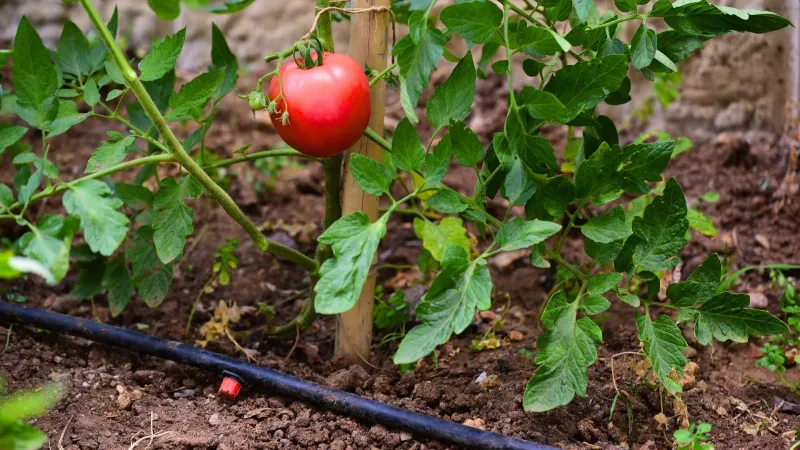
Most gardeners water their tomatoes the same way they water everything else, a quick sprinkle over the top and move on. The problem is that tomato roots need more than a damp surface to do their job well. Getting water down where the roots actually live can reduce stress on the plant, support better fruit quality, and help you avoid some of the most common tomato problems. This article breaks down exactly how to do that, and what to realistically expect when you get it right.
Surface Sprinkles Leave Tomato Roots Shortchanged
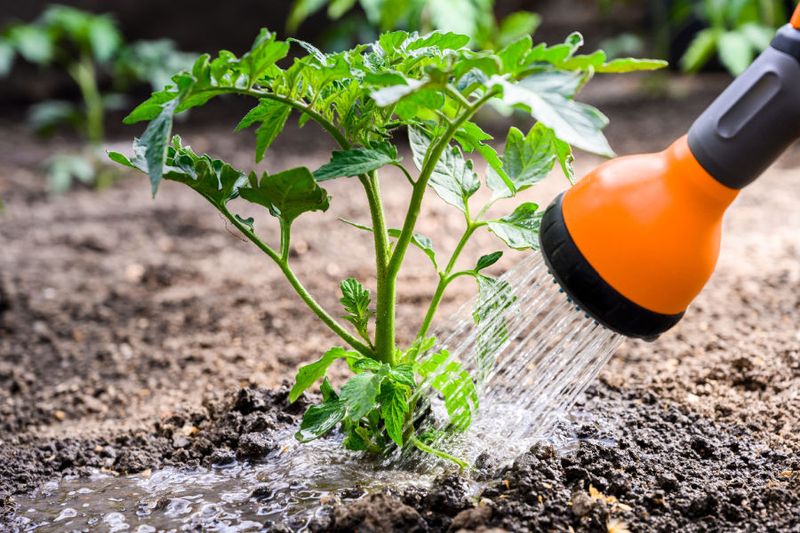
A quick pass with the hose feels productive, but if the water only wets the top inch or two of soil, the roots below that layer stay dry. Tomato roots, especially on established plants, extend several inches down and spread outward well beyond the base of the stem. Dampening the surface repeatedly without soaking deeper encourages those roots to cluster near the top, where they are far more vulnerable to heat, rapid drying, and competition from weeds.
Shallow-rooted plants are essentially living closer to the edge. A hot afternoon or a skipped watering day can stress them faster than plants with roots anchored deeper in cooler, more stable soil. That stress shows up in the fruit before it shows up on the plant, contributing to poor texture, reduced flavor, and quality problems that build over the season.
UMN Extension guidance on growing tomatoes is clear that light, frequent watering can promote shallow root development and reduce a plant’s ability to handle dry spells. The fix is not to water more often or to use a larger volume automatically. The goal is to deliver water deeply enough that the active root zone actually gets wet, then allow the soil to partially dry before watering again. That cycle, done consistently, gives roots a reason to grow deeper and gives the plant a steadier supply of moisture between sessions.
More water is not the answer on its own; water delivered where roots can reach it is what matters.
How to Wet the Active Root Zone
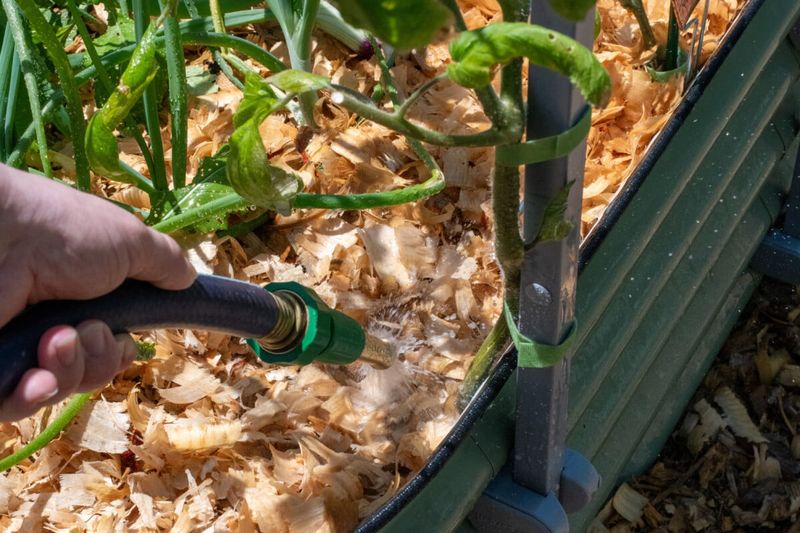
The practical goal is simple: get water moving through the soil until the entire active root zone is moist, not just the surface crust. For most in-ground or raised-bed tomatoes, that means wetting the soil several inches down and across a radius that extends beyond the stem. A slow, steady application works better than a fast blast, because it gives water time to soak in rather than run off the surface or channel straight down a narrow path.
The most reliable way to know if you have watered enough is to check the soil rather than rely on how long you ran the hose. Push a trowel or your finger four to six inches into the soil near the plant, not right at the stem. If that depth feels dry or barely damp, the root zone has not received enough water yet. If it feels moist throughout, you are in good shape.
Surface appearance and timer settings cannot tell you this; only the soil itself can.
Thorough watering is not the same as flooding. Oregon State University Extension guidance on growing tomatoes notes that soil needs both water and air for healthy root function. If water is pooling on the surface or the soil feels soggy an hour after watering, drainage is a problem worth addressing through bed preparation or amended soil structure, not by watering less. The target is moist soil that holds water without becoming waterlogged.
Once you confirm the root zone is adequately wet, step back and let the plant use that moisture before applying more.
Steady Moisture Matters More Than a Rigid Schedule
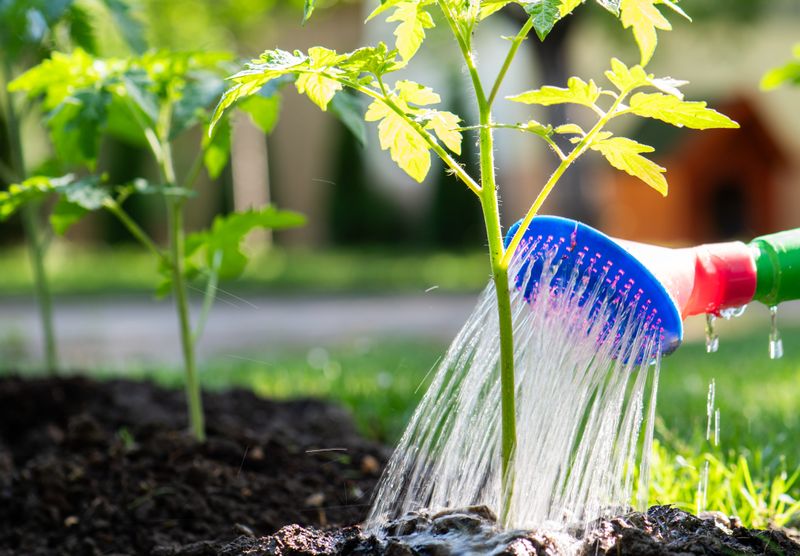
A weekly water target is a useful starting point, not a rule to follow blindly. University extension sources commonly reference around one inch of water per week, with some guidance citing a range of one to two inches depending on conditions. Those figures help frame how much water tomatoes generally need, but they cannot account for your specific soil, your local weather this week, or whether it rained two days ago. Treating any number as a fixed schedule is one of the most common ways gardeners end up either underwatering in a heat wave or overwatering in a cool, cloudy stretch.
UMN Extension guidance on irrigation strategies for vegetables emphasizes that the soil moisture level, not the calendar, should drive your watering decisions. Check the root zone regularly and water when the soil is approaching dryness several inches down, before the plant reaches the point of stress. During flowering and early fruit development especially, big swings between very dry and very wet conditions create real problems.
Blossom-end rot and fruit cracking are both associated with inconsistent moisture during the period when fruit is forming and expanding. UNH Extension’s fact sheet on managing blossom-end rot explains that even moisture supports the plant’s ability to move nutrients into developing fruit. Consistent does not mean constantly wet; it means the soil stays in a reasonable moisture range without severe drying at one extreme or saturation at the other. Adjust your schedule whenever conditions change, because a routine that worked perfectly last week may already be wrong this week.
Your Soil and Weather Set the Frequency
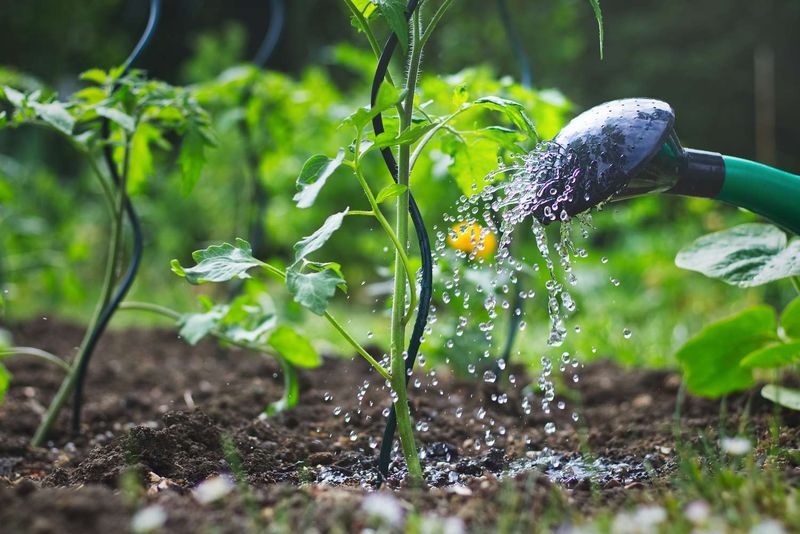
Sandy soil drains quickly, which means the moisture you applied yesterday may already be unavailable to roots today. In contrast, heavy clay or loam soil holds water longer but absorbs it more slowly, so applying water too fast can cause runoff before it penetrates. Neither type follows a neat weekly schedule, and both require you to check actual soil conditions rather than assume a fixed interval is working.
Weather adds another layer. Hot days with low humidity and any wind can dry out a garden bed surprisingly fast, especially when plants are large and actively fruiting. Rainfall counts toward your weekly total, so skip a scheduled watering session if the soil already feels moist several inches down after a good rain. Mulch helps here by slowing evaporation from the soil surface and reducing the speed of wet-dry swings between waterings, which makes frequency management a little more forgiving across all soil types.
Utah State University Extension’s guide to growing tomatoes notes that plant maturity also shifts water demand; larger plants with more leaf area and a heavier fruit load pull more moisture from the soil than seedlings do. Adjust upward as the season progresses. Container growers face a different challenge entirely. Illinois Extension’s discussion of blossom-end rot highlights that pots and grow bags dry out much faster than in-ground beds, particularly during hot, windy weather.
A container tomato may need checking daily or even twice a day in peak summer heat, depending on pot size, potting mix, and plant size. The phrase “deep and infrequent” describes the technique of wetting the root zone thoroughly, not a fixed schedule that applies equally to every garden or container.
Keep the Water at the Soil Line
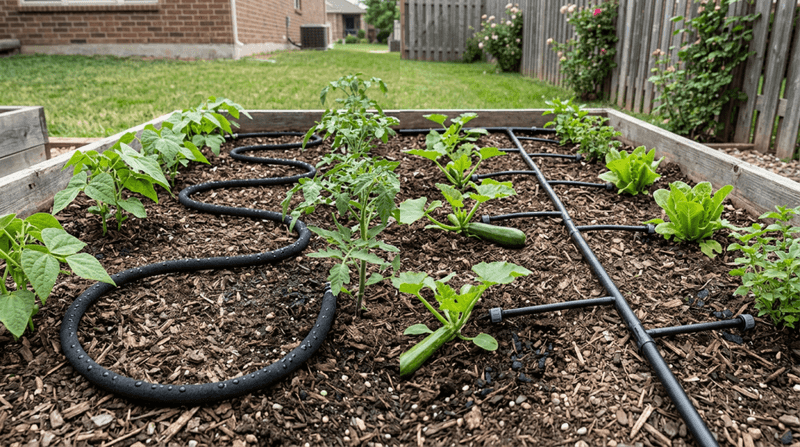
Keeping water off the foliage is one of the simpler adjustments that pays off over the course of a season. Wet leaves, especially when watering happens late in the day, create conditions where fungal diseases are more likely to take hold. Soil splash during overhead watering can also move soilborne pathogens up onto lower leaves and fruit. Drip irrigation, soaker hoses, or careful hand-watering aimed at the soil rather than the plant all reduce that risk without requiring any complicated setup.
Colorado State University Extension’s guide to drip irrigation for home gardens explains that the effectiveness of a drip system depends heavily on emitter flow rate, spacing, placement relative to roots, and whether emitters are functioning and unclogged. A drip system that looks like it is running is not automatically watering the root zone adequately. Checking soil moisture with a trowel remains the best confirmation regardless of which method you use. Oregon State University Extension’s educator’s guide to vegetable gardening reinforces that soil-level watering is generally preferred, while noting that execution matters as much as equipment choice.
Mulch works alongside any watering method by slowing evaporation and moderating soil temperature, which helps keep the root zone in a stable moisture range between sessions. Organic mulches like straw, wood chips, or shredded leaves are commonly used and break down slowly enough to last a season. Apply a few inches around the plant, but leave a gap of a couple of inches between the mulch and the stem itself. USU Extension’s tomato growing guide recommends this spacing to reduce the risk of stem rot and crown moisture buildup at the soil line.
What This Method Can—and Cannot—Prevent
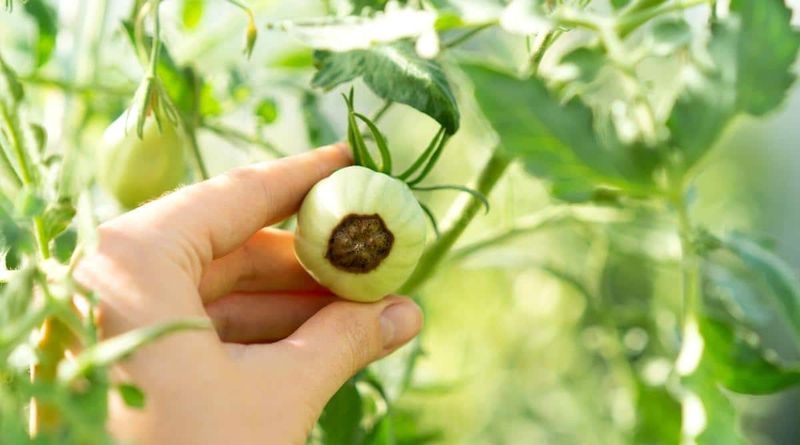
Even moisture management can reduce the likelihood of two of the most frustrating tomato problems: blossom-end rot and fruit cracking. Blossom-end rot appears as a dark, sunken area on the bottom of developing fruit. UNH Extension’s blossom-end rot fact sheet explains that the affected tissue lacks adequate calcium, but the underlying cause is usually impaired calcium transport rather than a simple shortage of calcium in the soil. Moisture stress, root injury, rapid growth, salinity, and nutrient imbalances can all disrupt the plant’s ability to move calcium into developing fruit.
Adding more water does not automatically solve it, and neither do popular shortcuts. UMN Extension’s review of common soil health home remedies notes that crushed eggshells decompose far too slowly to address an active blossom-end rot problem, and that Epsom salts should only be used when a soil test has confirmed a magnesium deficiency because excess magnesium can actually interfere with calcium uptake. Waterlogged soil causes its own version of the same problem by damaging roots and limiting their function. UMN Extension’s tomato disorders resource also notes that large slicers and plum-type tomatoes tend to be more susceptible to blossom-end rot than cherry varieties, so cultivar choice plays a role too.
Irrigation quality can support better fruit outcomes, and some controlled research backs this up. Studies on drip-irrigated tomatoes, including a 2023 greenhouse study on drip irrigation frequency and tomato yield and research examining moderate water stress and fruit development, found yield or water-use benefits under specific conditions. Those experiments involved controlled environments, defined cultivars, and precise irrigation targets. They support the general principle of thoughtful moisture management, but they do not translate into a guaranteed record harvest for every backyard grower.
Variety, pollination success, temperature, disease pressure, soil fertility, light, spacing, support structures, and harvest timing all shape what your plants ultimately produce.
Use a Root-Zone Check as Your Watering Routine
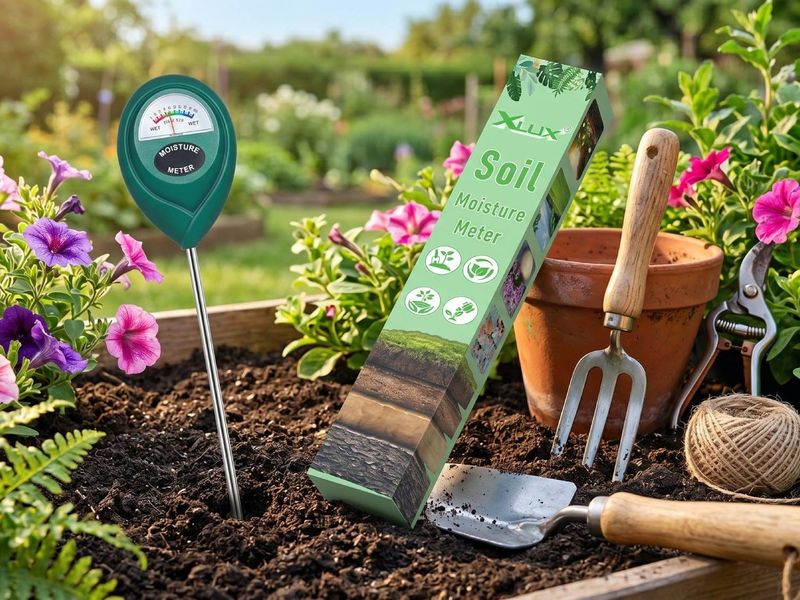
Building a simple check into your routine takes less than a minute and removes most of the guesswork from tomato watering. Before you reach for the hose, push a trowel or your finger four to six inches into the soil near the base of the plant. If it feels moist at that depth, hold off. If it feels dry or barely damp, water thoroughly at the soil line until moisture reaches the full root zone, then let the soil drain and partially dry before checking again.
UMN Extension’s tomato growing guidance and UNH Extension’s blossom-end rot resource both support this approach: check the root zone, respond to what you find, and adjust frequency as conditions change. The realistic goal is not permanently wet soil or a guaranteed bumper crop. The goal is keeping the active root zone adequately and evenly supplied, which reduces avoidable water stress and gives everything else you are already doing, good soil, appropriate fertilizing, proper spacing, disease management, the best chance to pay off. A plant that is never left severely thirsty or sitting in saturated ground simply has fewer obstacles to producing well.