
What It Really Means When A Praying Mantis Sets Up In Your North Carolina Garden
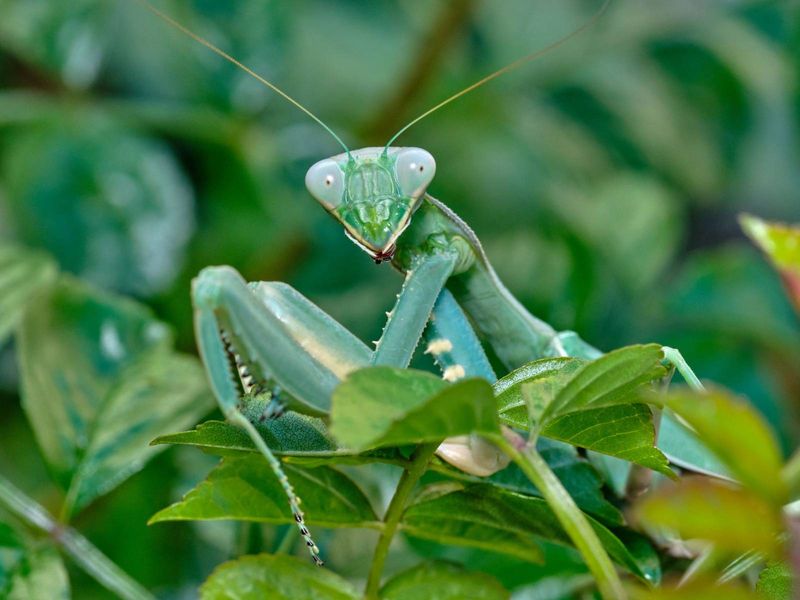
Spotting a praying mantis perched on a tomato cage or peering from a shrub can stop any North Carolina gardener in their tracks. These insects look prehistoric and purposeful, which makes it tempting to read a big meaning into their appearance.
Understanding what a mantis visit actually signals, and what it does not, helps you make smarter decisions for your yard without falling for garden myths.
Late summer makes mantises easier to notice
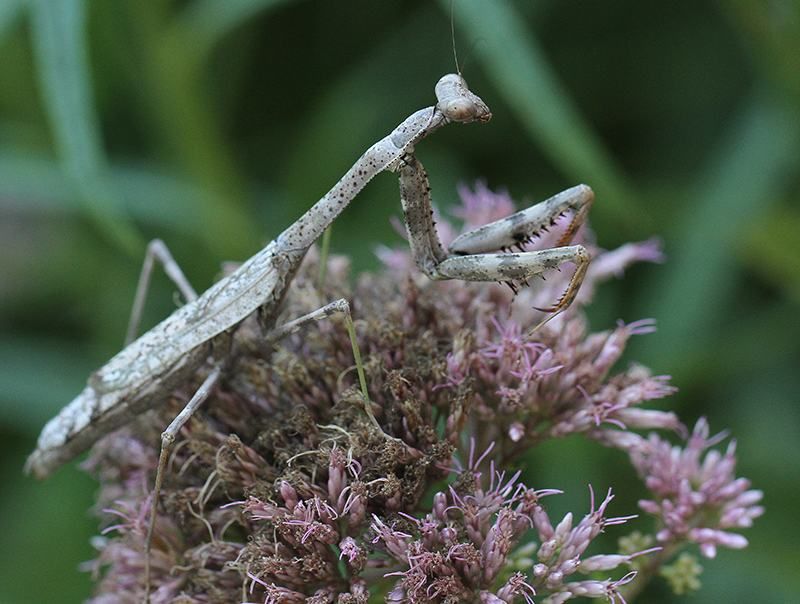
Every summer in North Carolina, praying mantis eggs hatch in spring, and the tiny nymphs spend months feeding and molting through a series of growth stages. By late summer, survivors have reached full adult size, and that size is the main reason you suddenly notice them.
A mantis that was thumb-sized and easy to overlook in June becomes a striking, palm-length insect by August or September.
Adult mantises are also more active in late summer for reasons beyond just feeding. Females are mating, and many are actively searching for the right spot to attach an egg case before temperatures drop.
NC State Extension’s overview of praying mantid biology confirms that egg cases are formed in late summer or fall, attached to shrubs, herbaceous perennials, twigs, and fence posts throughout the state. That combination of larger bodies, mating behavior, and egg-laying activity means mantises are simply out and about more than they were earlier in the season.
Regional extension guidance reinforces this point plainly: University of Maryland Extension’s September gardening calendar notes that adult mantises and their egg cases become especially noticeable from late summer into fall. Nothing unusual has to happen for a mantis to appear in your yard in August or September.
The insect did not migrate in from somewhere alarming, and your garden did not suddenly change overnight.
What you are seeing is a normal seasonal event: a predator that spent the entire summer growing up in or near your yard has finally reached a size where it is hard to miss. University of Maryland Extension’s October 2022 IPM report notes that adults are simply larger and more visible later in the season, not evidence of a population explosion.
Treat the sighting as an interesting late-summer observation rather than a mystery that demands an explanation.
What does one mantis actually say about your yard?
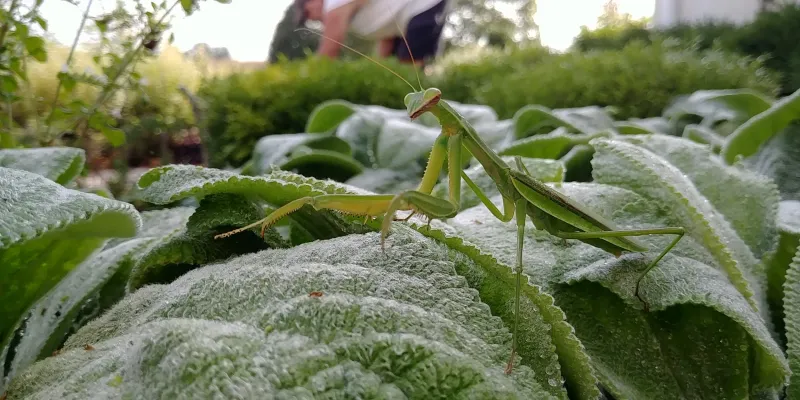
Finding a mantis in your yard does tell you something reasonable: at that moment, one predator found enough vegetation, shelter, and insect prey to survive and grow to adulthood nearby. That is genuinely compatible with a yard that offers habitat value, and there is nothing wrong with feeling good about that.
The problem comes when the sighting gets stretched into a bigger story than the evidence supports.
One mantis cannot tell you whether your soil is healthy, whether your pest populations are balanced, whether you have used too many or too few pesticides, or whether your yard supports a diverse food web. Those conclusions require monitoring across many species over time, not a single insect sighting on a Tuesday afternoon.
NC State Extension’s Carolina mantid profile describes mantises as nonselective ambush predators, meaning they wait for whatever prey happens to pass by rather than actively patrolling for specific insects or responding to pest outbreaks.
A generalist, sit-and-wait predator is not a diagnostic tool. Its presence reflects opportunity, not a report card on your gardening practices.
A yard loaded with aphids could host a mantis just as easily as a yard with a well-balanced insect community, because the mantis will eat whatever it can catch, including beneficial insects, not just the ones you consider pests.
NC State’s integrated pest management handbook makes clear that sound garden decisions depend on monitoring, identification, and evidence of actual damage, not on the presence or absence of any single predator species. The right response to a mantis sighting is straightforward: appreciate it, observe it if you like, and leave it alone.
Just resist the urge to promote it from interesting visitor to proof that everything in your garden is going exactly right.
North Carolina has native and introduced mantises
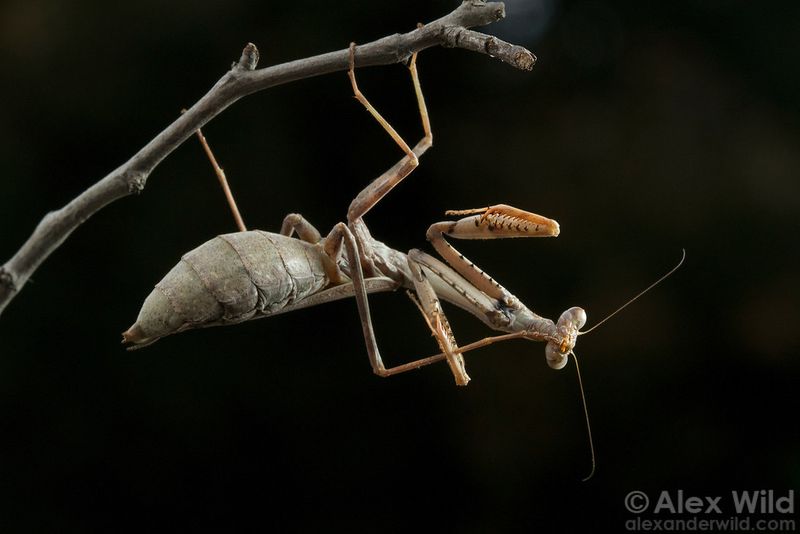
Not every mantis you spot in a North Carolina yard belongs to the same species. The state has a native mantis, Stagmomantis carolina, commonly called the Carolina mantid.
It tends to run smaller than the mantises many gardeners picture, typically around two inches long as an adult. One useful field mark is wing coverage: NC State Extension’s Carolina mantid page notes that adult wings cover only roughly two-thirds of the abdomen, leaving the tip visibly exposed, which distinguishes it from some of the larger introduced species.
Two non-native species also turn up regularly in the eastern United States: the Chinese mantis, Tenodera sinensis, and the European mantis, Mantis religiosa. Both are considerably larger than the Carolina mantid and were introduced to North America decades ago.
The Chinese mantis in particular is now widespread and is often the big green or brownish mantis that surprises homeowners on their porches or vegetable beds in late summer.
Appearance-based identification in the field is approximate at best. Coloration, lighting, angle, and individual variation can all make a Carolina mantid look larger than expected or a Chinese mantis look smaller.
If you want a confident species identification, a clear photograph submitted to your local NC Cooperative Extension office or a university entomologist is more reliable than a quick glance.
From a practical standpoint, knowing the species is interesting but does not automatically change what you should do. All three mantises are predators, and removing an individual non-native mantis from your yard is not a meaningful pest-management strategy.
The more useful takeaway is that the large mantis on your pepper plant could be native or introduced, and either way, the sensible response is to observe it rather than disturb it.
An egg case deserves identification before removal
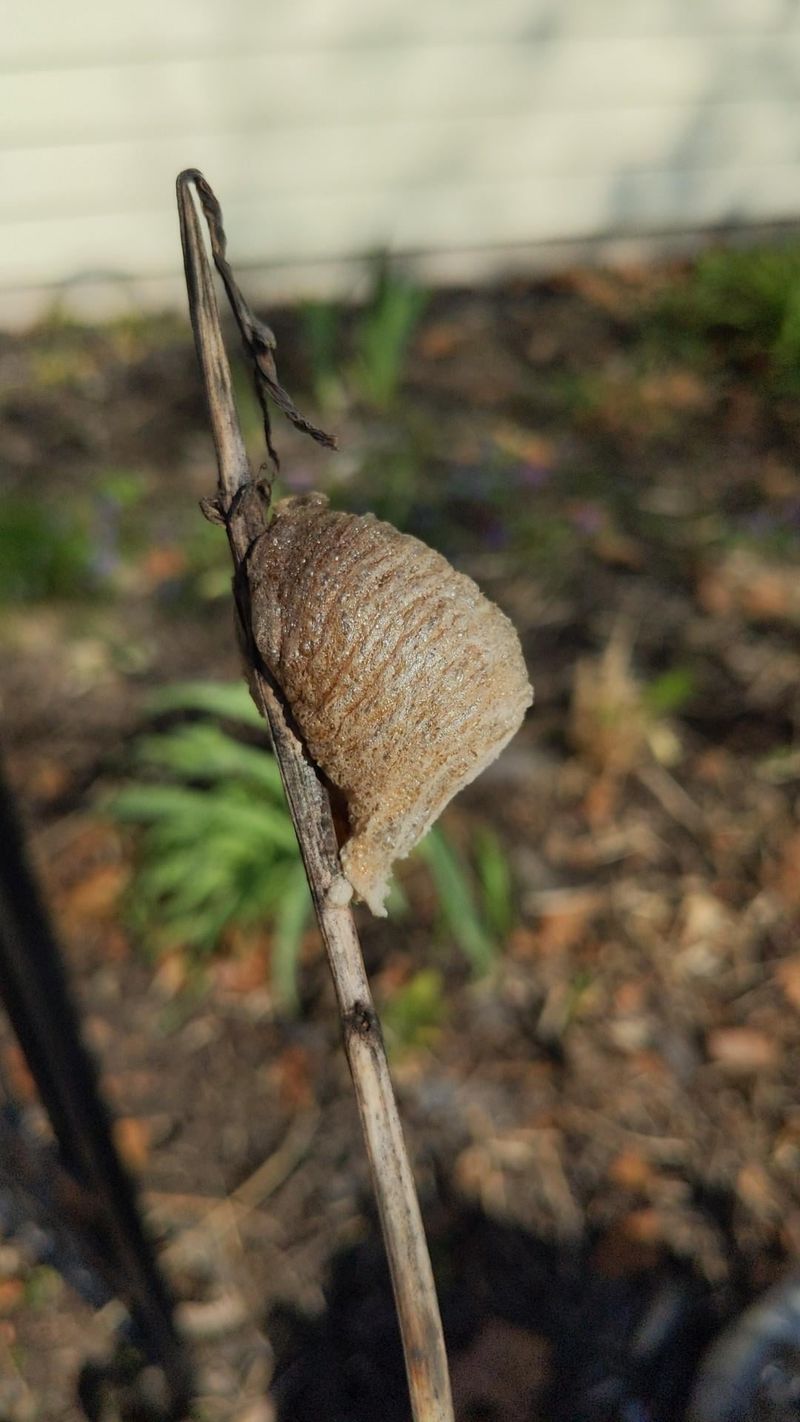
After mating, a female mantis produces an egg case called an ootheca. She secretes a frothy protein foam, deposits her eggs inside it, and the foam hardens into a raised, spongy structure that protects the eggs through fall and winter.
NC State Extension’s mantid overview describes Carolina mantid oothecae as relatively slender and elongated, often with a lighter central ridge, while Chinese mantid cases are larger and more block-shaped. In a residential yard, you might find one attached to a shrub stem, a dried perennial stalk, a fence post, or even the side of a shed.
Before removing any egg mass you find outdoors, take a moment to figure out what it actually is. Mantis oothecae are raised and foam-like, with a somewhat rounded or layered surface that stands out from the twig or stem it sits on.
Spotted lanternfly egg masses, by contrast, are generally flat, gray-brown deposits that look almost like dried mud smeared onto a surface, with rows of seed-like eggs sometimes visible underneath a waxy coating. USDA APHIS guidance on invasive egg masses encourages residents to look carefully before acting, because destroying the wrong egg mass helps neither the garden nor pest-management efforts.
When you are not certain what you are looking at, confirm the identification before doing anything. A photo sent to NC Cooperative Extension or compared against extension resources can settle the question quickly.
Destroying a mantis ootheca by mistake removes dozens to hundreds of future predators from your yard for no reason.
Once you have confirmed a mantis egg case, leave it exactly where it is through fall and winter. Ask Extension’s guidance on mantis egg cases explains that bringing an ootheca indoors exposes the eggs to warm indoor temperatures, which can trigger hatching weeks or months before outdoor prey is available.
The nymphs that emerge indoors in January have nowhere to go and nothing to eat. The egg case does not need your help to survive winter outdoors; it was built for exactly that purpose.
University of Maryland Extension similarly advises leaving cases attached to their original stems rather than moving them.
A mantis is a predator, not a private pest-control service
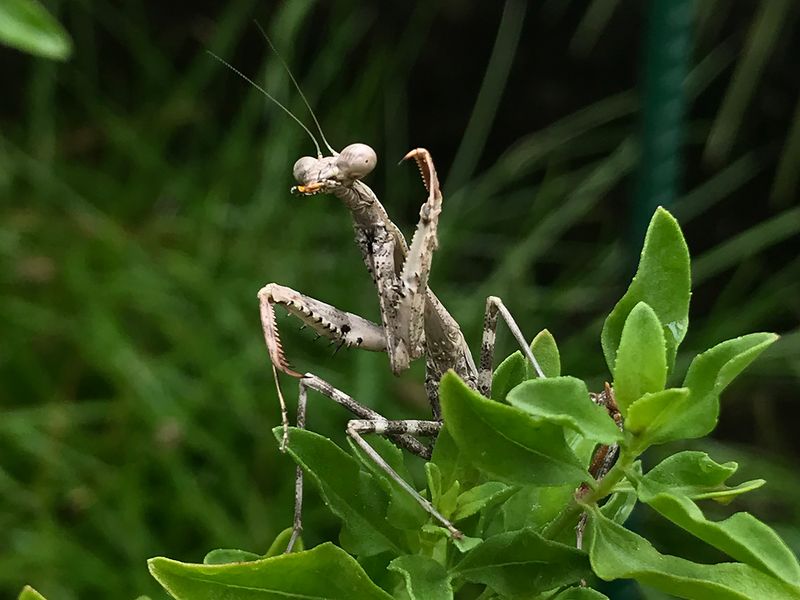
Mantises have a reputation as garden guardians, and the image is appealing: a fierce, attentive hunter standing watch over your vegetables. The reality is more complicated and worth understanding before you count on one to solve a pest problem.
Mantises are ambush predators. They pick a spot, hold still, and strike at whatever prey moves within reach.
That strategy means they eat what comes to them, not what the garden most needs controlled.
The menu is genuinely broad. A mantis may consume flies, crickets, caterpillars, grasshoppers, and aphids, insects many gardeners are happy to lose.
University of Maryland Extension’s 2022 landscape IPM report notes that mantises can also prey on bees, butterflies, beetles, and other beneficial insects, because the insect does not distinguish between a pest and a pollinator. A mantis sitting on a flower is just as likely to catch a native bee visiting for nectar as it is to catch an aphid.
That nonselective behavior is the core reason why mantises do not function as reliable biological control for any specific pest. NC State Extension’s Carolina mantid profile states plainly that Carolina mantids have no demonstrated value in pest management.
They are predators, not pest-management partners, and there is an important difference between those two things.
Calling a mantis beneficial is accurate in the loose sense that it eats insects. Calling it a solution to a specific pest outbreak is not accurate.
NC State’s IPM handbook points out that commercially sold mantises are not very effective for home gardeners, partly because the insects are mobile and will simply move on, partly because they may cannibalize one another, and partly because their generalist feeding behavior means they are just as likely to eat something you value as something you want gone. Appreciate the mantis for what it is: an impressive, ancient-looking predator doing what predators do.
Just do not assign it a job it was never designed to perform.
Use integrated pest management when the garden has a real problem
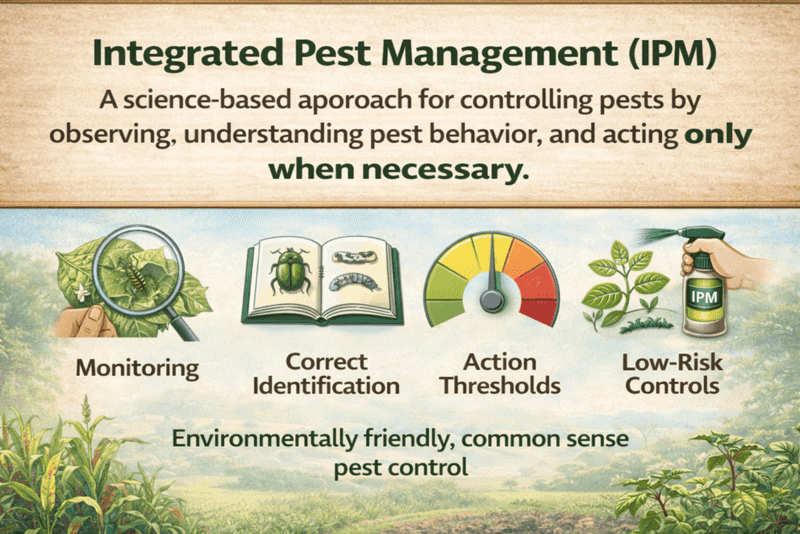
A mantis in your yard is not a reason to ignore a genuine pest problem, and it is certainly not a substitute for one. If something is actually damaging your plants, the right path forward starts with identification.
Before spending money on treatments or worrying about harming beneficial insects, confirm what pest you are dealing with and how much damage it is actually causing. Some insect feeding is cosmetic and does not threaten plant health or yield.
NC State’s integrated pest management handbook lays out a clear sequence: monitor for pests and damage, establish whether the problem has reached a level that requires action, and then move through a hierarchy of responses. Cultural practices come first, things like choosing resistant plant varieties, improving drainage, rotating crops, and removing diseased material.
Physical methods, hand-picking insects, placing row covers, or setting sticky traps, often follow. Sanitation, clearing debris where pests overwinter or breed, reduces future pressure without any chemical input at all.
Pesticides enter the picture only when those approaches have not kept damage within acceptable limits. NC State’s guide to insect and related pests of vegetables stresses using only a product labeled for the specific pest and plant, reading the label fully, and choosing the least disruptive effective option.
Broad-spectrum insecticides kill indiscriminately. A single application can eliminate the mantises, ground beetles, parasitic wasps, and other predators that were already working in your yard, often leaving the pest population to rebound faster than the beneficial community can recover.
NC State’s Extension Gardener Handbook chapter on insects notes that selective products and careful timing can reduce harm to beneficial organisms when a pesticide is genuinely necessary. Buying and releasing mantis egg cases is not a workaround for this process.
Purchased mantises may be non-native, will disperse widely, may eat beneficial insects, and offer no consistent suppression of whatever pest prompted the purchase in the first place.
Leave the mantis, but keep the interpretation modest
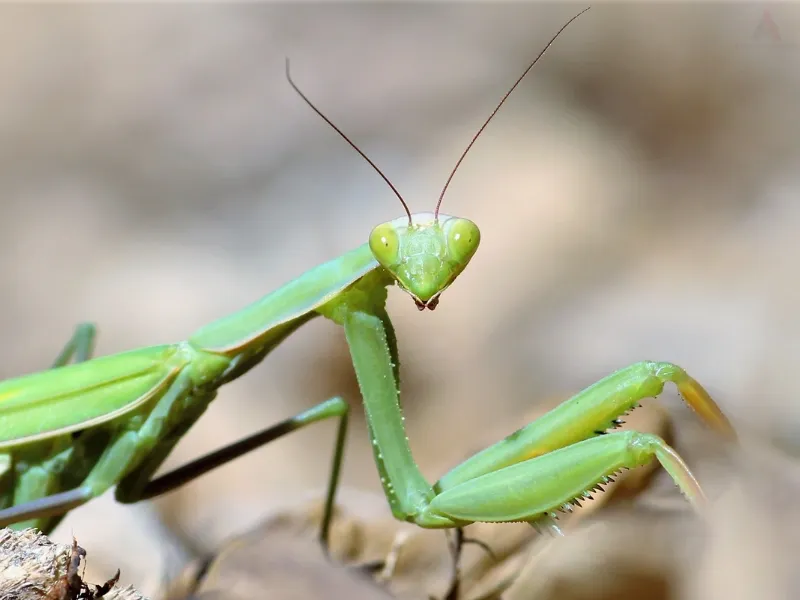
The practical takeaway from a mantis sighting is simpler than the mythology surrounding it. If you find an adult outdoors, leave it where it is.
Observe it if you enjoy watching insects, but there is no garden-management reason to move it, kill it, or relocate it. University of Maryland Extension and NC State Extension both recommend leaving mantises undisturbed in ordinary yard situations.
If you find an egg case, identify it before doing anything. A confirmed mantis ootheca should stay attached to its stem outdoors through fall and winter.
Do not bring it inside, and do not purchase or release mantis egg cases as a pest-control strategy. NC State’s IPM guidance is clear that commercially sold mantises are not a dependable or effective approach for home gardeners.
Most of all, keep the interpretation of the sighting proportionate. A mantis appearing in your North Carolina yard in late summer means one predator found suitable vegetation, shelter, and prey at that moment in the season.
That is genuinely interesting, and it is enough. It does not mean your entire garden is thriving, your pest populations are balanced, or that you have earned a pass on monitoring and maintenance.
A yard that hosts a mantis is a yard where one remarkable insect found what it needed for now, and that is a fine thing to notice without asking it to mean more.