
What It Really Means When Goldfinches Start Swarming Your North Carolina Yard In Late Summer
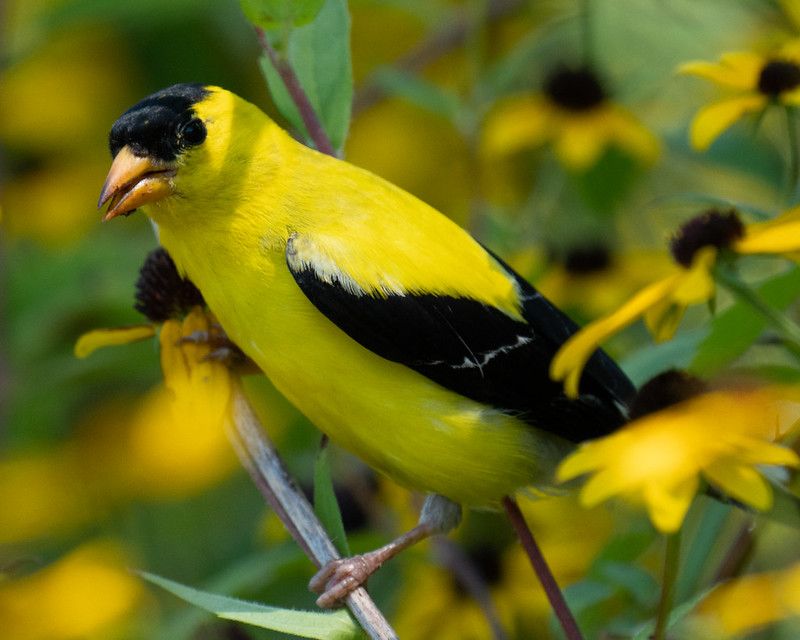
Bright yellow goldfinches suddenly filling your yard in late summer can feel like a reward for all that time you spent gardening. Before you take it as proof that your yard has passed some kind of ecological test, though, the real story is a bit more specific.
These birds are telling you something useful about your yard’s food and habitat right now, and knowing what they are actually responding to can help you make smarter decisions before fall arrives.
The flock is a food-and-habitat clue, not a yard report card
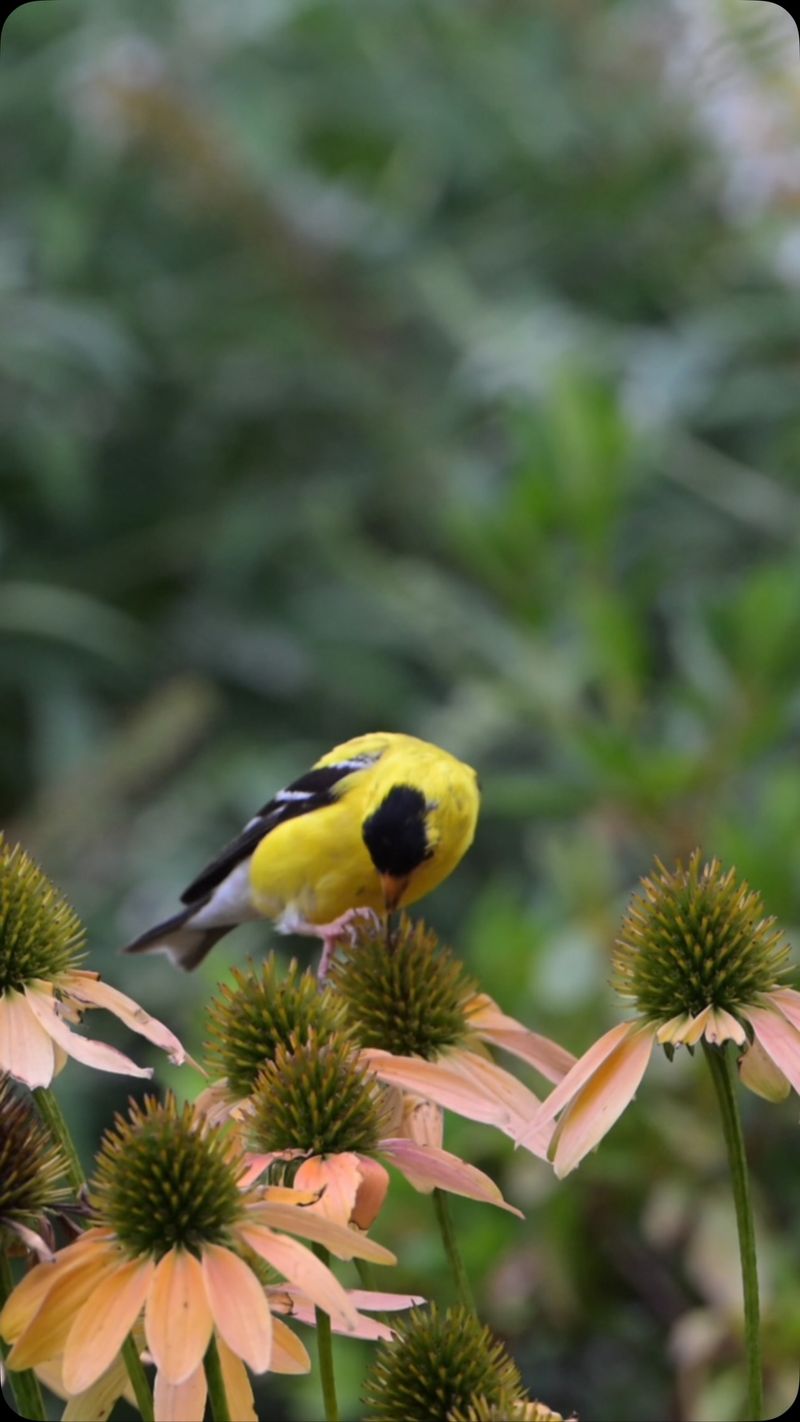
Spotting a wave of American Goldfinches working through your yard in late summer is genuinely encouraging, but it is worth being clear about what the birds are actually telling you. Their presence most likely means they have located a dependable source of seeds, a reliable feeder, or the kind of open, brushy, or edge habitat they prefer.
Cornell Lab’s American Goldfinch overview confirms that these birds feed heavily on seeds from thistles, composite plants, and a wide range of weedy and cultivated areas, including backyards, roadsides, orchards, and floodplains.
NC State Extension specifically notes that goldfinches commonly feed on coneflower seeds in fall and winter, which matters because coneflowers are among the most manageable and widely available native plants for a North Carolina residential yard. If your coneflowers, native sunflowers, or other seed-bearing plants are maturing right now, that is very likely what drew the birds in.
NC State’s wildlife-landscaping guidance identifies these plants as genuinely useful food sources adapted to local soils and wildlife.
What the flock cannot tell you is whether your yard scores well on a broader ecological health scale. Flock size and timing depend on regional seed supplies, weather, breeding status, nearby feeders, and seasonal movement patterns, none of which are controlled by one yard alone.
A goldfinch visit is an encouraging signal about current conditions, not a comprehensive verdict on your landscape. The right response is to look carefully at what the birds are using before changing anything, because the plants or structures they are responding to may be exactly what you want to keep.
Why late summer does not automatically mean migration
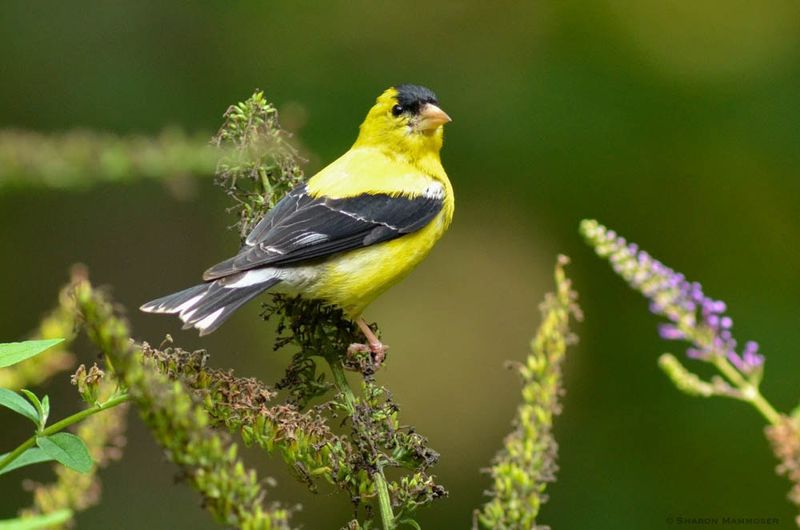
Many North Carolina homeowners assume that a late-summer surge of goldfinches means the birds are passing through on their way south from Canada. That picture is incomplete, and in some cases it is just wrong. eBird Status and Trends data places the American Goldfinch breeding season at roughly May 31 through August 16, with the post-breeding migratory period running from late August into November.
A flock appearing in your yard during this window may include local breeders that never left, recently fledged young birds, post-breeding wanderers moving short distances, or birds tracking regional food availability rather than executing a long-distance flight.
North Carolina supports goldfinches year-round in many areas. The Carolina Bird Club’s distribution reference reports that goldfinches breed over most of the state but appear in larger numbers during winter, with somewhat less breeding presence in the extreme eastern and southeastern portions.
A Blue Ridge homeowner and a Coastal Plain homeowner may see different patterns in timing and abundance, so regional context matters when you are trying to interpret what you are observing.
Research published in Ornithology describes goldfinch flock movements as closely tied to local seed availability, including supplemental feeders, rather than being driven by fixed migratory schedules alone. That connection is practical news for North Carolina homeowners: the birds in your yard right now may be responding to what your neighborhood and surrounding landscape are currently producing, not to a starting gun fired somewhere far to the north.
Knowing that helps you focus on the habitat and food your yard is offering instead of waiting for a migration story that may not fit what you are actually seeing.
Read the yard before you rearrange it
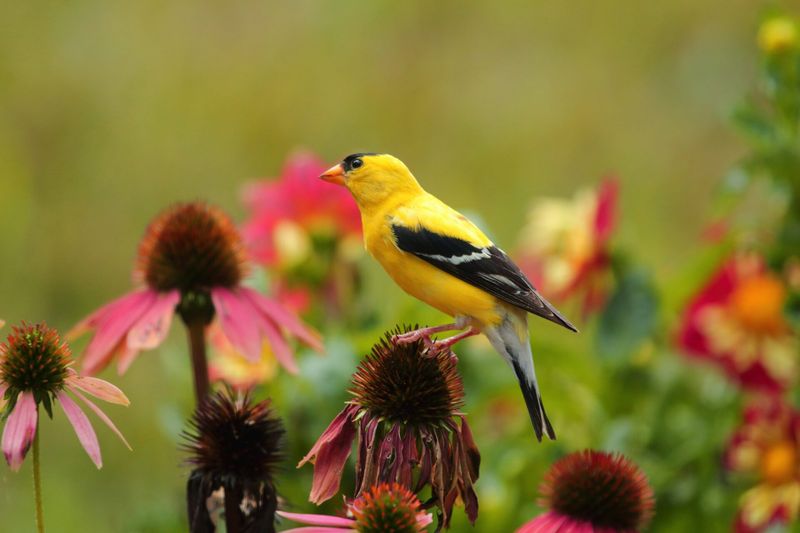
Before pulling anything out or planting anything new, spend a few mornings watching where the goldfinches actually land and feed. NC State’s songbird guidance identifies native sunflowers, native grasses, ragweed, and other seed-bearing plants as food sources used by goldfinches and other songbirds.
Look for maturing coneflowers, open weedy patches, brushy edges, or any native composite plants the birds seem to favor. If you have a feeder, note whether the birds are using it more than the plants, or splitting their time between both.
Plant identification matters here before you decide what to keep. NC State’s native-landscaping guidance is direct about this: some plants that look weedy or that birds clearly enjoy are actually invasive species capable of spreading aggressively and displacing native habitat.
Bull thistle, for example, is a nonnative species that goldfinches will visit, but retaining or propagating it is not a sound stewardship choice. NC State’s invasive-plants resource can help you distinguish problem species from native look-alikes worth keeping.
A visible increase in goldfinch numbers may also reflect conditions across a wider area rather than a sudden improvement in your yard alone. If seed crops in nearby fields, roadsides, or neighboring properties are peaking, birds may be moving through your yard as part of a larger foraging circuit.
Cornell’s goldfinch overview notes that these birds use a broad range of open and semi-open habitats, so your yard is often one piece of a larger landscape they are working. The U.S.
Fish and Wildlife Service recommends observing which plants and structures wildlife actually use before making changes, which is exactly the right starting point here.
A defined patch of standing seed heads can serve the flock
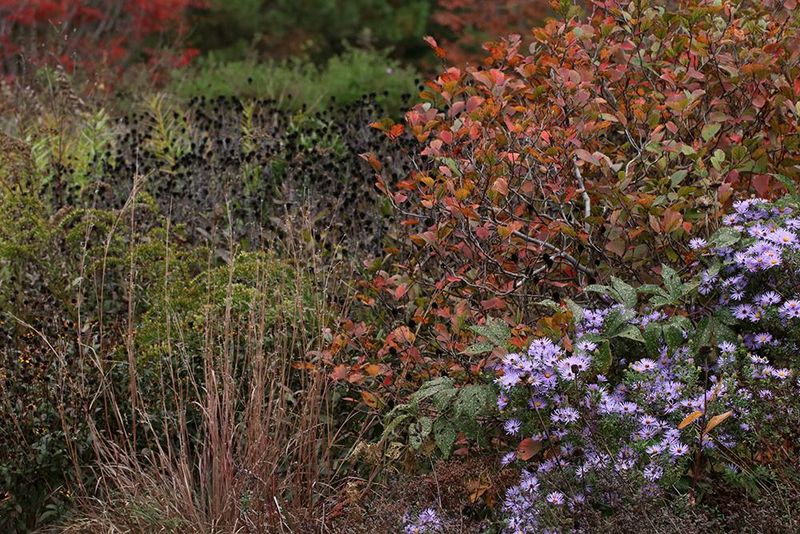
Once you know what the goldfinches are using, the most practical thing you can do is protect a portion of it through the season. NC State’s backyard bird habitat guidance recommends leaving portions of a yard or garden unmowed or unmanicured so that fruit- and seed-producing plants can mature fully, especially during late summer, fall, and winter.
Seed heads that look spent to you are still a working food source for goldfinches and other birds moving through the colder months.
The key word is “portion.” You do not need to let the entire property go unmanaged, and doing so would actually work against you by allowing invasive plants to spread and creating safety or access problems. A single defined patch of native seed-bearing plants, or a few smaller staggered patches placed in less-trafficked corners of the yard, can deliver real habitat value without turning your yard into an obstacle course.
NC State’s landscaping-for-wildlife resource supports creating smaller unmowed or semi-wild zones rather than eliminating maintenance altogether, and that approach fits comfortably in a typical North Carolina residential lot.
Standing vegetation does more than hold seeds. The U.S.
Fish and Wildlife Service notes that tall grasses and wildflowers left in place also provide cover and nesting materials for birds and other wildlife. Keeping your paths, play areas, sightlines to the street, and access routes fully maintained means the wild patches stay intentional rather than accidental.
A clearly edged border between a maintained lawn and a seed-head patch signals to neighbors that the space is managed on purpose, which tends to reduce friction in residential settings. The goal is a yard that works for you and the birds at the same time, not a yard that has been handed over entirely to either one.
Which plants should stay, and which should be replaced?
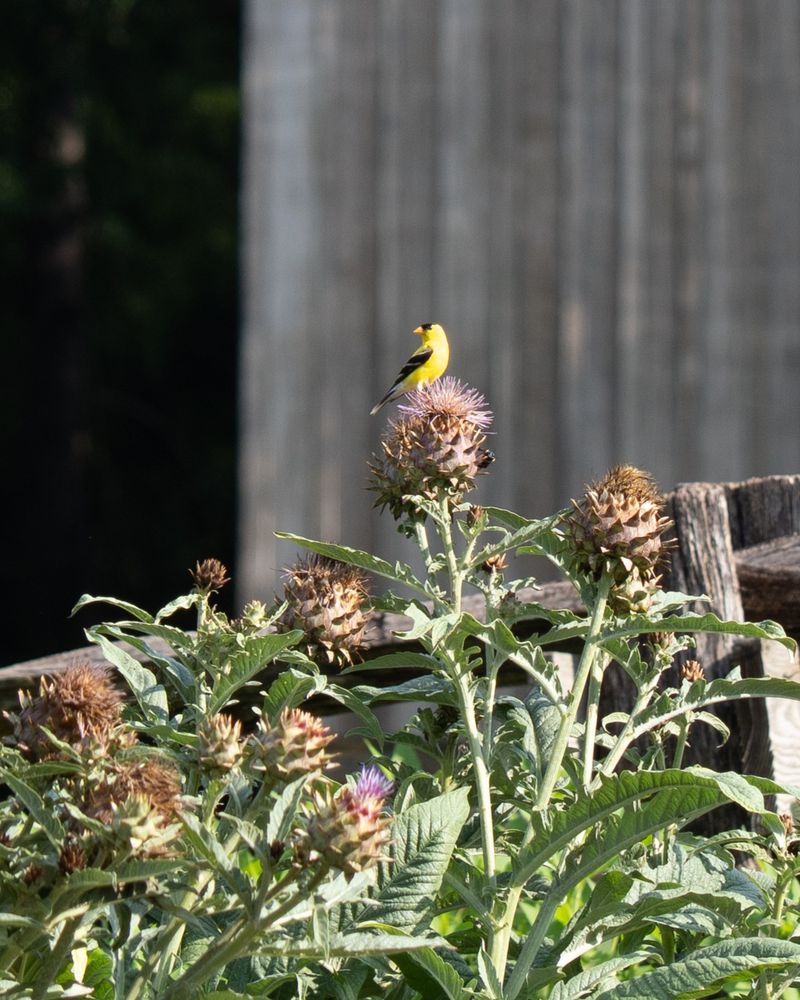
Not every plant that attracts goldfinches belongs in your yard, and not every plant that looks weedy deserves to be cleared. The productive approach is to know which plants are native and locally appropriate for your region of North Carolina and which ones are working against the habitat you are trying to build.
NC State’s wildlife-landscaping guidance specifically warns against using plants such as autumn olive, Japanese honeysuckle, multiflora rose, and privet as wildlife plantings, even though birds do visit them. These species spread through bird droppings and can displace native vegetation over time, reducing habitat quality for the very wildlife you are trying to support.
On the keep-and-expand side, NC State’s songbird resource points to native coneflowers, native sunflowers, native grasses, and ragweed as documented seed sources for goldfinches and other songbirds. Cornell recommends native thistles, other native composite plants, and native milkweed as plants that attract American Goldfinches, but the recommendation only holds for native, locally appropriate species – not for any plant sold under the name “thistle” without further identification.
NC State’s broader wildlife guidance also emphasizes selecting plants that produce flowers, fruits, and seeds at different times of year and that create varied vegetation structure, because a diverse planting supports a broader community of wildlife rather than concentrating your yard’s value around one species.
Before you retain or propagate any plant you did not deliberately place, identify it using a reliable resource. NC State’s invasive-plants reference lists species to watch for across different regions of the state.
When an invasive is found, the most habitat-protective response is to remove it and replace it with a suitable native alternative rather than clearing the space and leaving it bare. A yard that mixes coneflowers, native grasses, native sunflowers, and a shrub layer with varied fruiting times will serve goldfinches and many other species through multiple seasons, which is a more durable outcome than any single “goldfinch plant” could deliver on its own.
Feeders and pesticides require different kinds of care
Two of the most common yard practices that affect goldfinches work in completely different ways and carry different responsibilities. Feeders and pesticides are sometimes lumped together as “yard management,” but treating them separately makes it easier to handle each one correctly.
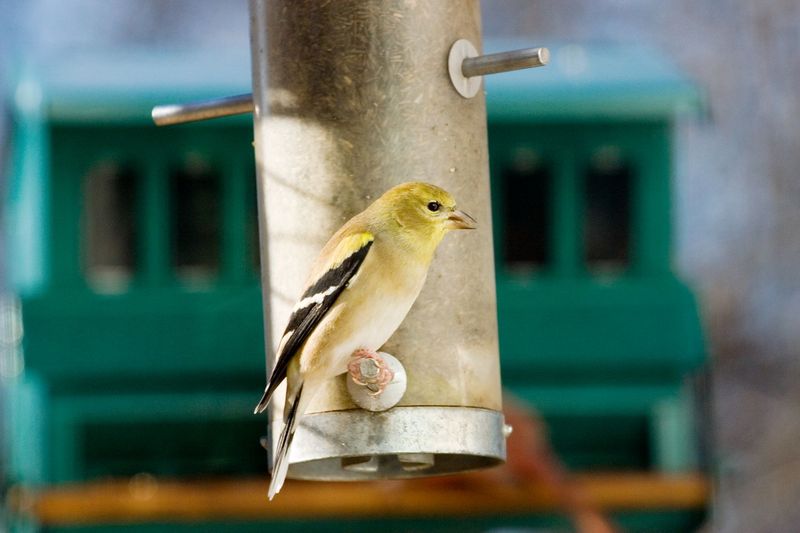
Sunflower seeds and nyjer seed (sometimes labeled thistle seed) are the feeds goldfinches use most readily at feeders, and Cornell’s goldfinch overview confirms their preference for tube-style feeders stocked with these options. That said, feeders are optional.
Native seed-producing plants can provide food without concentrating birds at a single station, and NC State’s backyard bird habitat guidance supports natural food sources as a primary strategy.
If you choose to use feeders, they come with ongoing responsibilities. CDC guidance on wildlife and backyard bird feeding recommends cleaning feeders at least monthly and more often when visibly dirty, disinfecting with a diluted bleach solution, rinsing thoroughly, and allowing feeders to dry completely before refilling.
Spilled or moldy seed should be removed promptly. If a sick or dead bird appears near your feeder, CDC advises taking the feeder and any birdbath down for two weeks, cleaning and disinfecting them, and keeping pets away from areas where contaminated seed or droppings may be present.
Feeders can concentrate birds in ways that accelerate disease transmission, so hygiene is not optional maintenance – it is the practice that makes feeding responsible.
Pesticides work in the opposite direction: they do not attract goldfinches, but they can harm them along with other non-target wildlife. EPA guidance on reducing pesticide impacts on wildlife advises using pesticides only when necessary, treating only the affected area rather than applying broadly, following product labels precisely, and avoiding runoff into water.
Birds can be exposed through direct contact, contaminated insects, or treated seeds. Reducing unnecessary applications protects not only goldfinches but also the insects and other organisms that make up the broader food web your yard depends on.
Handling feeders and pesticides as two distinct practices, each with its own protocol, is a straightforward way to keep your yard from working against the birds you are trying to support.
Keep the goldfinch signal in perspective
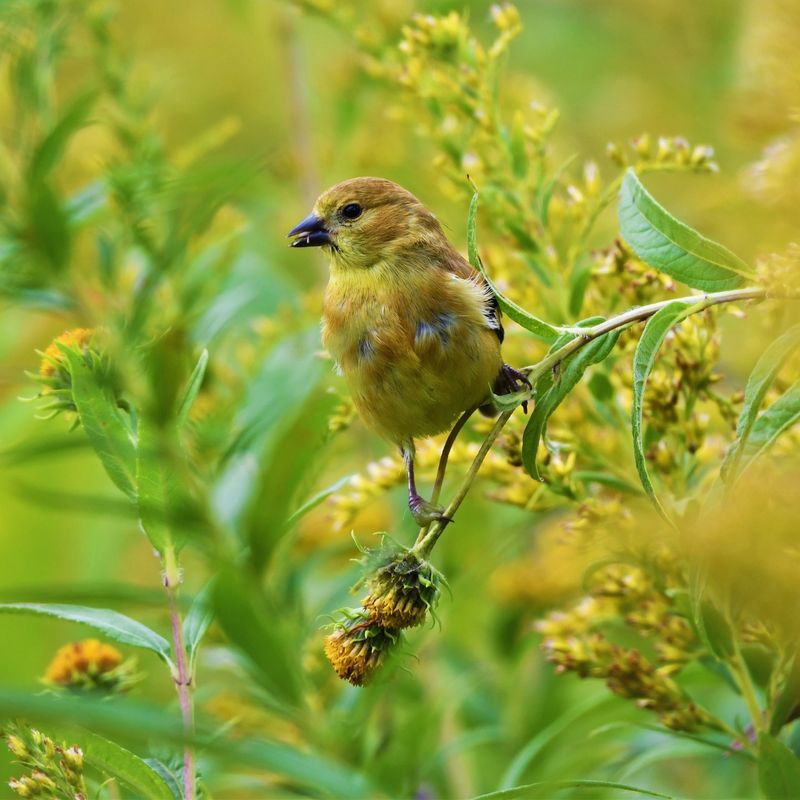
A late-summer goldfinch flock is useful feedback, not a final grade. What it reliably tells you is that your yard is currently offering something the birds find worth using, whether that is a patch of maturing coneflowers, an open brushy edge, or a well-stocked feeder.
NC State’s backyard bird habitat guidance and its native-landscaping resource both point toward the same practical response: preserve a few native, seed-rich patches, keep plant diversity high, and stay on top of invasive species before they crowd out the plants that actually support wildlife.
Watching whether birds and other wildlife continue to use the yard across seasons is more informative than any single late-summer count. Cornell’s goldfinch overview notes that these birds use a wide range of open and semi-open habitats year-round, so a yard that holds their interest through fall and into winter is doing something right.
Goldfinches are better understood as a seasonal compass than as a scoreboard – their comings and goings can guide your next management decision more reliably than any single visit can certify your yard’s overall health.