
What It Really Means When Toads Move Into Your North Carolina Garden At Night
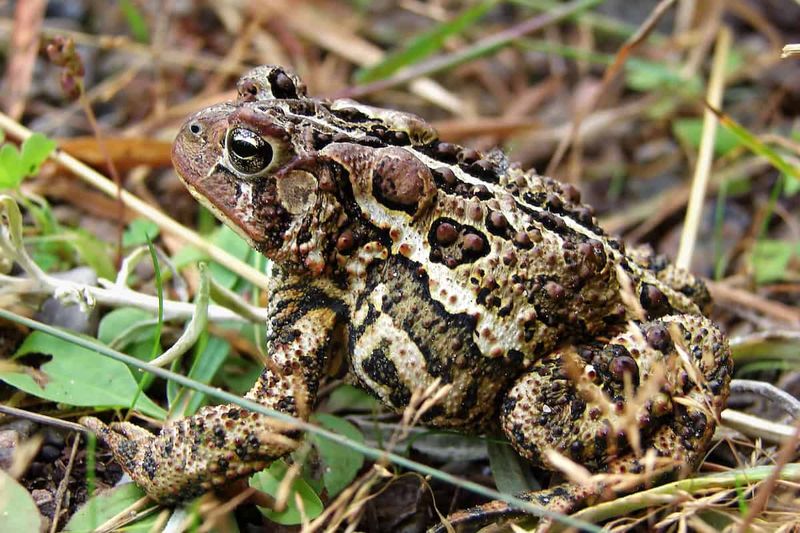
Spotting a toad crouched among your tomato plants or tucked near the back step on a warm summer night can feel like a small surprise from the natural world. Many North Carolina gardeners wonder whether the visitor is a sign of something bigger, like a pest problem brewing underground or soil that is finally in good shape.
The truth is a little more nuanced and, honestly, more interesting than either of those explanations. Understanding what a nighttime toad appearance actually signals can help you support native wildlife and manage your yard more thoughtfully.
A nighttime toad signals a usable patch of habitat
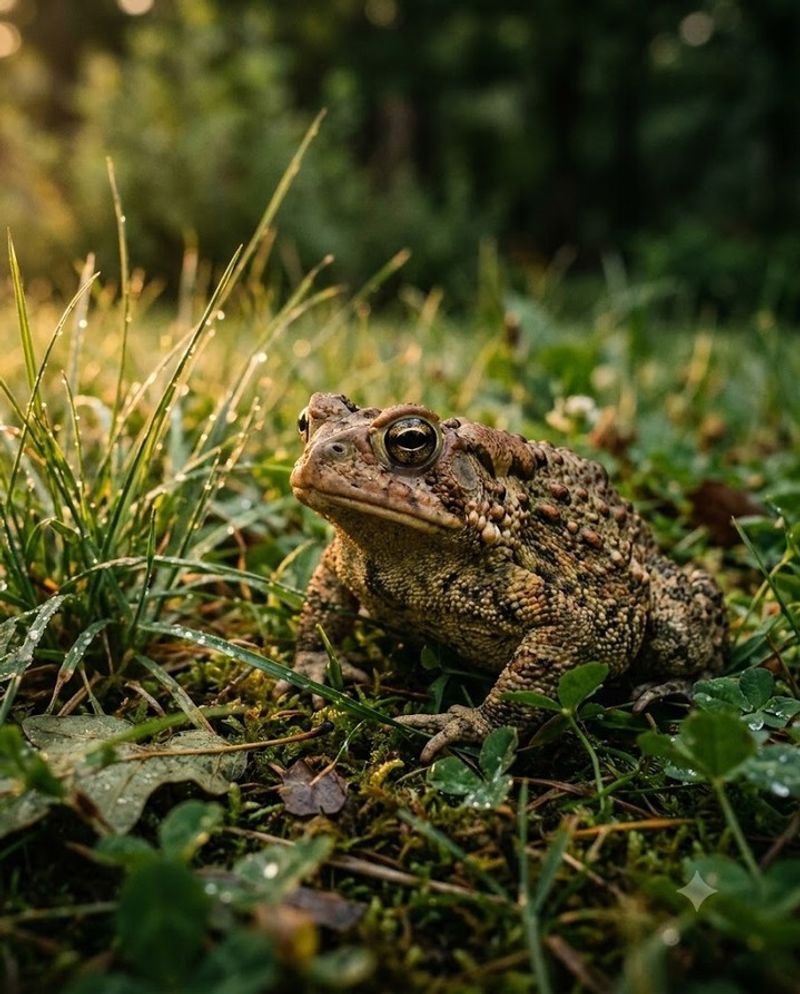
Seeing a toad in your garden after dark is less a mystery and more a straightforward message from the animal itself: your yard currently has something it needs. That something is usually a combination of moisture, some form of cover to retreat into, warm-enough nighttime temperatures, and enough small invertebrates moving through the soil and leaf litter to make foraging worthwhile.
When those conditions line up, a toad will use the space.
Nighttime foraging is completely normal behavior, not a sign of distress or displacement. NC Parks amphibian records describe American toads as mostly active after dark, with movement often peaking during the first few hours following sunset.
Warm, moist evenings bring them out reliably, while stretches of hot, dry weather push them into soil, leaf litter, or whatever shady refuge they can find until conditions improve.
What a toad appearance cannot do is measure how many pests are actually present in your garden. A toad responds to habitat conditions, not to pest population size.
Rain the night before, high humidity, a nearby pond, or seasonal movement through the neighborhood can all bring a toad through your yard even when pest numbers are perfectly ordinary. Research on toad physiology and hydration confirms that body temperature and water balance play central roles in how active these animals are on any given night, reinforcing that moisture and warmth drive activity as much as prey does.
Reading a toad sighting as a microhabitat signal rather than a pest-density report is an evidence-based inference, not a precise diagnostic test. The practical takeaway is straightforward: if a toad appeared in your garden, the yard offered something worth using at that moment.
Whether it returns depends on whether those conditions remain available.
Several native North Carolina toads may use a garden
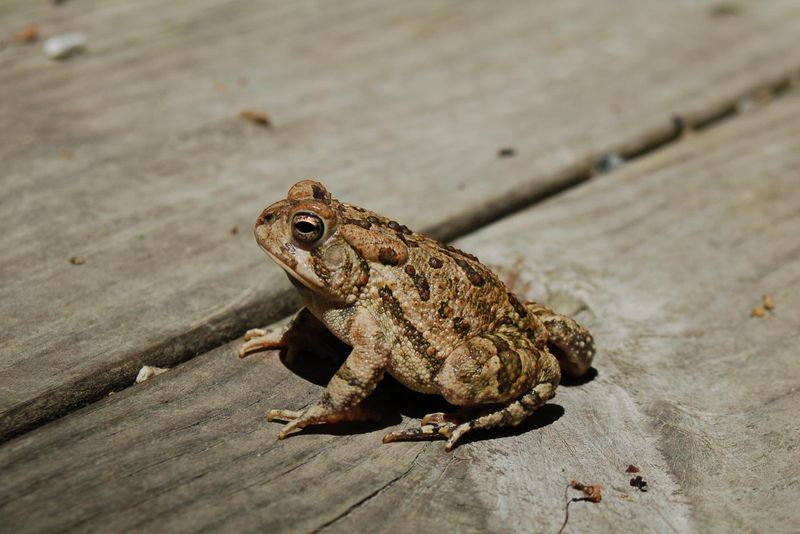
A backyard in North Carolina is not an unusual place for a native toad to show up. The state’s mix of climate zones, moist lowlands, and forested edges creates workable habitat across a wide range, and residential yards that retain some natural cover fit naturally into the landscapes these animals already move through.
North Carolina is home to four native true-toad species: the American toad, the southern toad, Fowler’s toad, and the oak toad. Each has its own regional distribution, and knowing which one you are most likely to see depends heavily on where in the state your yard sits.
NC Wildlife’s American toad profile places this species mainly across the Mountains and Piedmont, where it uses suburban areas, woodland edges, agricultural fields, and forests when cover, moisture, prey, and nearby breeding habitat are available.
The picture shifts as you move east. The Coastal Plain and Sandhills support different toad communities, and NC Parks records for the southern toad illustrate how species distributions can differ significantly by region.
Fowler’s toads also occupy parts of the state, and the oak toad, a smaller species, appears in sandy coastal habitats. Assuming that any garden toad in North Carolina is an American toad, especially east of the Piedmont, can lead to a misidentification.
A brief nighttime encounter rarely provides enough information for a confident species ID. The NC Wildlife American toad species profile notes distinguishing physical features, but applying them accurately requires a clear look at markings, warts, and parotoid gland shape, details that are easy to miss in the dark.
A photograph taken with a phone, combined with the location and any vocalizations heard during breeding season, gives a much stronger basis for identification than a fleeting garden sighting alone.
The broader point is that native toads belong in NC landscapes and regularly use yards that offer suitable conditions. Whichever species visits yours, the animal is filling a legitimate ecological role in a habitat that your gardening choices helped create.
The toad eats a range of invertebrates
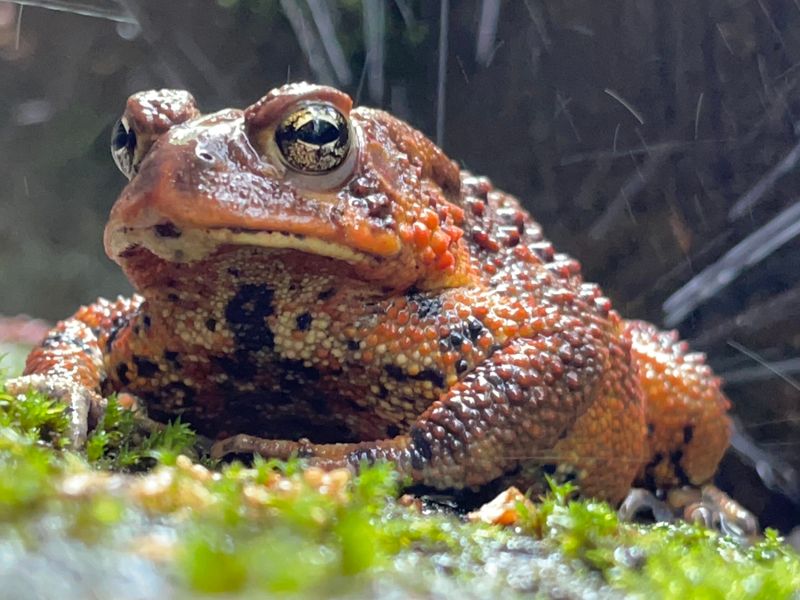
One of the first questions gardeners ask when they spot a toad is whether it will take care of their pest problem. The honest answer is that a toad will eat a wide variety of invertebrates, and some of those happen to be things gardeners dislike, but it is not hunting down only the harmful ones.
The documented prey list is genuinely broad. NC Parks amphibian records list beetles, ants, grasshoppers, fly larvae, butterflies, moths, wasps, isopods, millipedes, spiders, snails, and slugs among the invertebrates toads consume.
That range includes organisms gardeners actively want to reduce, like slugs chewing through lettuce or grasshoppers stripping bean leaves, alongside decomposers like millipedes and isopods that perform useful work breaking down organic matter in the soil.
A generalist predator takes what moves within reach and fits in its mouth. It does not assess whether a particular beetle is a cucumber pest or a beneficial ground beetle before striking.
This means a resident toad participates in the garden food web as one natural predator among many, contributing to a broader balance of invertebrate activity rather than functioning as a targeted pest-removal service.
Framing a toad as a reliable fix for a specific outbreak sets expectations too high and can lead to disappointment. NC State Extension’s pools-for-amphibians guidance supports the view that amphibians offer genuine value as part of a yard’s natural food web without overstating what a single animal can accomplish.
One toad will not eliminate a slug infestation, control every mosquito larva, or protect the entire garden from pest pressure. What it may do is take a quiet, consistent bite out of the invertebrate population it encounters each night, which is a worthwhile contribution even if it is not a guarantee.
The most accurate way to describe a toad’s garden role is as a participant, not a solution. Appreciating that distinction keeps expectations realistic and makes it easier to value what a toad actually offers.
A toad cannot serve as a soil-health test

It is tempting to look at a toad in the garden and read it as confirmation that the soil is in good shape, alive with microbes and well-drained and fertile. The reasoning feels intuitive: a healthy yard supports wildlife, so wildlife must mean a healthy yard.
The logic runs in the wrong direction, though.
A toad needs moisture, cover, and accessible prey to use a space. It does not require fertile soil, a robust microbial community, good drainage, or low contamination levels to show up and forage.
A yard with compacted, nutrient-poor soil can still host a toad if leaf litter provides cover and earthworms or beetles are present near the surface. The toad’s presence reflects microhabitat conditions, not the full picture of what is happening beneath the surface.
Soil health is evaluated through a different set of criteria entirely. Penn State Extension’s guidance on healthy garden soil points to physical structure, water infiltration, organic matter content, and biological activity as the properties that matter for plant support and long-term productivity.
Penn State’s soil health management resource further describes nutrient cycling and the interactions among soil organisms, plant roots, and water movement as the functions that define whether soil is genuinely performing well.
None of those properties can be inferred from a toad sighting. If you want to know whether your garden soil is healthy, the path forward is a soil test through your county cooperative extension office, observation of how water moves through the beds after rain, and attention to plant performance over time.
A toad in the garden is a welcome sign that the yard offers usable wildlife habitat, and that is a real positive. Just do not let it substitute for the actual soil assessment your plants depend on.
Support habitat without trying to stock the garden
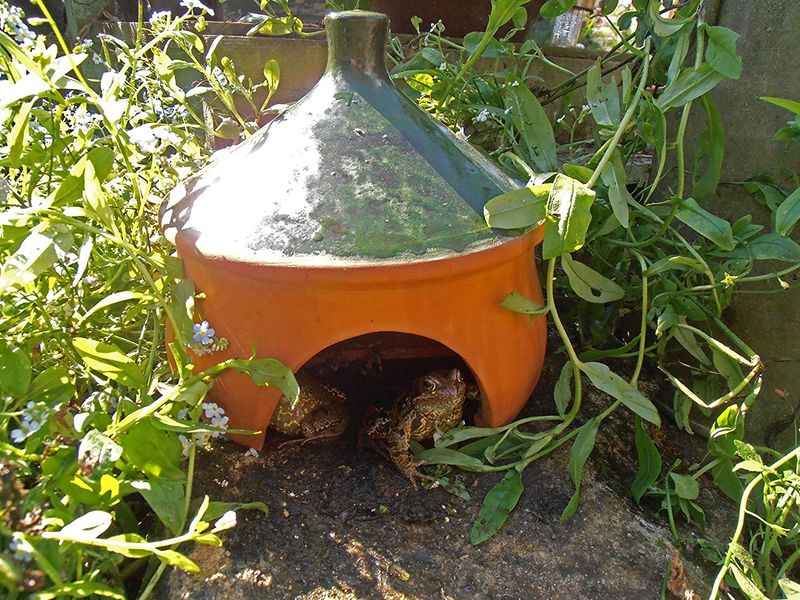
Knowing that a toad values moisture, cover, and prey gives you a practical checklist for making your yard more usable, without overbuilding or over-managing it. The best habitat improvements are often the simplest ones, and most of them cost nothing.
Leaf litter is probably the single most valuable thing you can leave in place. A layer of fallen leaves along a fence line or under a shrub provides both shelter and foraging ground, since invertebrates concentrate in decomposing organic matter.
Log piles, brush piles, and rock arrangements serve the same purpose, giving a toad somewhere cool and damp to retreat when temperatures climb. NC State Extension’s backyard reptile and amphibian guide recommends an upside-down clay pot with part of the rim chipped away to create an entrance, or a shallow depression covered with untreated plywood propped open with rocks, as straightforward shady refuges that cost very little to set up.
Adding water can expand the habitat value of a yard, particularly for species that breed in standing water. NC State Extension’s pools-for-amphibians resource recommends fishless pools because fish readily consume amphibian eggs and larvae.
Even a small, shallow container or a garden pond without fish can provide a moisture source and potential breeding site. NC Wildlife’s wetlands and ponds guidance identifies ephemeral and seasonal pools as critical breeding habitat for toads, frogs, and salamanders across the state.
A shelter or water feature is a supporting element, not a guarantee. Whether a toad uses your yard depends on regional species, habitat connectivity, nearby breeding conditions, and whether the surrounding landscape allows animals to move through safely.
NC Wildlife’s habitat conservation guidance emphasizes that connected, functional habitat matters more than any single yard feature.
One thing to avoid entirely is collecting a toad from elsewhere and releasing it in your yard. NC State Extension is clear that wild herps should be allowed to arrive on their own terms, and that moving animals from the wild to a yard is not a recommended practice.
Set up the conditions, then wait.
Protect a visiting or returning toad from avoidable risks
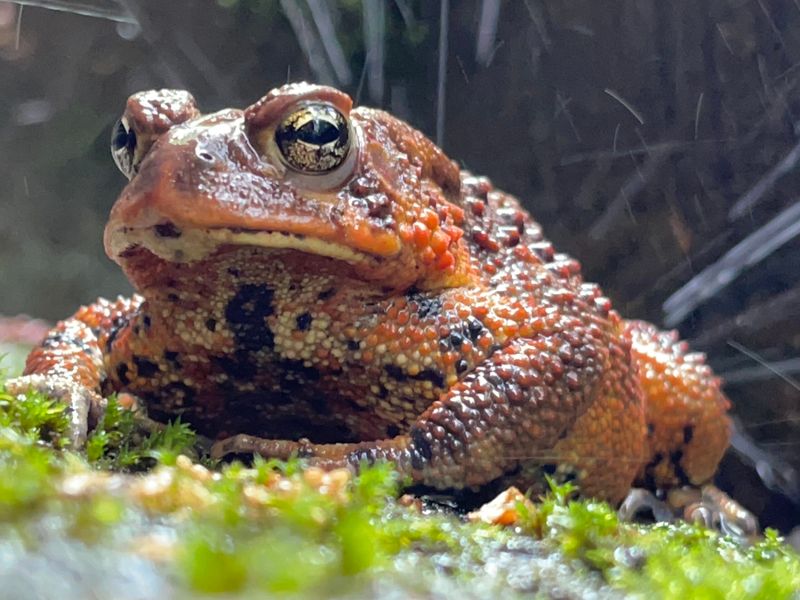
Good intentions can cause real harm when it comes to handling amphibians, and a few common garden habits can expose a toad to risks the animal cannot avoid on its own. The most protective thing most gardeners can do is simply observe from a short distance and resist the urge to pick the animal up.
Amphibian skin is permeable, meaning substances on the surface pass through it directly. Soap residue, hand lotion, sunscreen, insect repellent, or any other product on a person’s hands can be absorbed by a toad during handling.
NC State Extension’s backyard herp guide advises against handling unless it is genuinely necessary, and recommends observing from a distance as the default approach. If a toad is in immediate danger, such as a dog approaching or a mower running nearby, minimizing contact and seeking guidance from a local wildlife resource is preferable to routine relocation.
Pesticide use is the other major risk factor worth thinking through carefully. EPA research on pesticide effects on amphibians shows that frogs and toads can absorb contaminants through both their skin and their aquatic exposure routes, and that risk depends on the active ingredient, formulation, application rate, life stage, and weather conditions at the time of exposure.
There is no single safe pesticide or universally dangerous one; the label, the context, and the chemical all matter.
One specific misconception worth correcting: spraying pesticides at night is not safer for toads just because fewer people are outside. Toads are actively foraging during those hours, which means a nighttime application can result in direct contact with a hunting animal.
EPA’s pesticide hazard guidance for amphibians recommends integrated pest management, keeping chemicals out of water, avoiding applications before heavy rain events, and following product labels precisely. Natural or organic products are not automatically harmless to amphibians either; the same principles of dose, route, and formulation apply.
Reducing unnecessary pesticide applications across the yard, especially near water features, leaf litter, and moist garden beds, goes further toward protecting a toad than almost any other single choice a gardener can make.
Read the sighting as an invitation to observe, not a guarantee
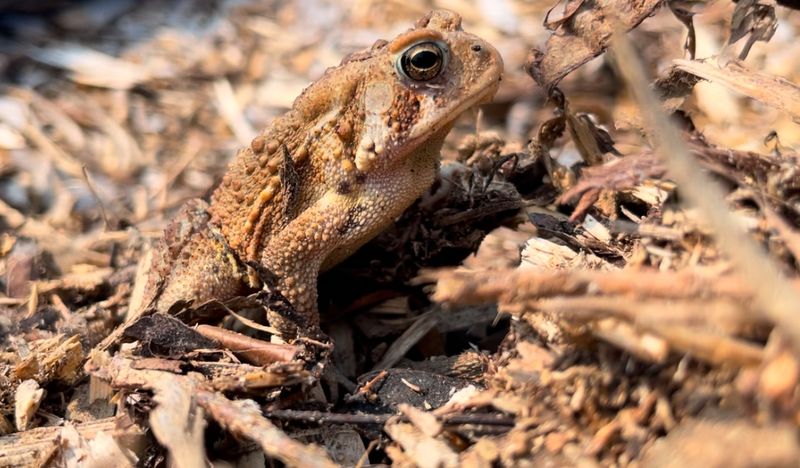
A toad appearing in your garden at night is worth pausing for, but it calls for observation more than action. What the sighting reliably tells you is that your yard offered something usable at that moment: some moisture, some cover, some prey moving through the soil.
That is a genuinely positive signal about your yard as a piece of wildlife habitat, even if it is not a pest census or a soil report.
The practical response is measured and low-effort. Watch from a comfortable distance.
Keep some leaf litter and natural cover in place. Reduce pesticide applications where you can, especially near moist areas.
Monitor actual garden problems, like slug damage on specific plants or aphid colonies on new growth, through direct observation rather than inferring pest levels from a toad’s presence. NC Parks amphibian records and NC State Extension’s backyard guide both support letting wild toads arrive and depart on their own schedule rather than managing their movements.
If you see the same toad, or what appears to be one, returning to the same corner of the yard across multiple nights or seasons, that pattern of repeated use is a better indicator of a resident animal than any single sighting. Even then, soil health and pest levels still deserve their own separate attention.
A yard that a toad finds worth visiting is a yard doing something right, and that is a quiet, useful thing to know.