
What It Really Means When You Spot A Fox Trotting Through Your North Carolina Yard
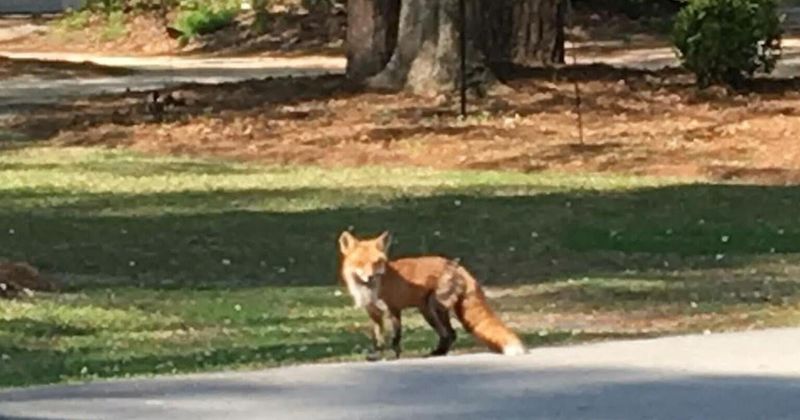
Catching a glimpse of a fox cutting across your yard can stop you in your tracks, and your first instinct might be to wonder if something is wrong. Most of the time, though, that fox is simply going about its day, and its presence tells you something useful about what your property and neighborhood have to offer.
North Carolina is home to both red and gray foxes, and these animals are showing up in residential neighborhoods more often as they learn to navigate the spaces people have shaped. Understanding what draws a fox through your yard puts you in a much better position to make smart, calm decisions.
A fox usually means your yard offers a route, cover, or meal
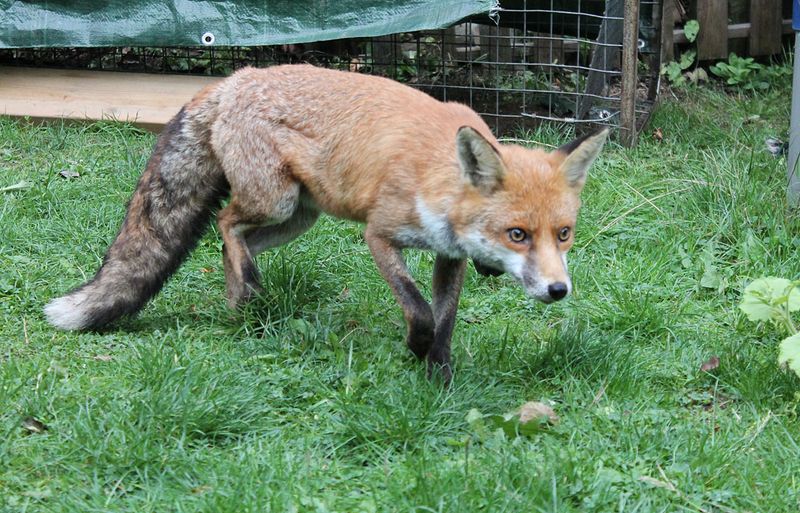
Most fox sightings in residential North Carolina yards have a straightforward explanation: the property, or the neighborhood around it, offers something useful. That something might be a familiar travel corridor between wooded patches, a dense shrub border that provides cover, a crawl space that looks like a sheltered den site, or a concentration of small prey moving through the area.
The NC Wildlife Resources Commission describes foxes as common, shy, and generally non-aggressive animals that have become increasingly capable of using neighborhoods alongside people.
North Carolina has two fox species, the red fox and the gray fox, and their ranges overlap across the Piedmont, Coastal Plain, and mountain regions. Trying to identify the species from a quick yard sighting is harder than it sounds, because coat color can vary and a brief view rarely gives you enough detail.
The practical takeaway is the same regardless of species: the animal is almost certainly using the landscape for its own purposes, not signaling that something is broken in your yard.
Foxes are not seeking conflict. NCWRC guidance on spring wildlife encounters emphasizes that foxes typically move away from people when given the chance.
The useful question to ask after a sighting is not “what went wrong?” but “what does my yard currently make available?” Ornamental plantings, brush piles, gaps under structures, garbage, pet food, fallen fruit, birdseed, and small prey can all factor into a fox’s decision to pass through or linger.
Presence alone does not mean a dangerous wildlife problem has arrived. NCWRC’s wildlife problem resources consistently frame a single sighting as a reason to observe carefully, not to panic.
Keeping that perspective steady makes every other step easier.
Its menu reflects opportunity, not a backyard pest-control service

A fox’s diet is genuinely broad, and that breadth is worth understanding before drawing conclusions from a sighting. NCWRC notes that red foxes in North Carolina eat mice, meadow voles, and rabbits as dietary staples, and that their predation on mice and woodchucks is considered beneficial to farmers.
Insects, birds, eggs, fruit, berries, and carrion round out the menu, with fruit and invertebrates becoming more prominent in warmer months.
That wide range means a fox passing through your yard might be responding to any number of things: a vole tunnel near the garden bed, ripe berries on an ornamental shrub, insects stirred up by lawn activity, spilled birdseed, or simply a convenient path between two patches of habitat. Research on red fox diet across multiple continents confirms that foxes are highly opportunistic and shift their foraging based on what is seasonally and locally available.
Residential-yard research adds another layer of nuance. A study of Raleigh-area yards found that feeders strongly increased the abundance of several prey and scavenger species, suggesting that human-provided resources can concentrate wildlife activity in ways that ripple through the local food web.
Prey and predators both clustered around those resources, though the study describes associations rather than a simple chain of cause and effect.
What this means practically is that one fox sighting cannot be read as confirmation that your yard has a particular rodent or rabbit problem, nor as proof that the fox is keeping those populations in check. A USGS study on mesocarnivores in residential yards found that fox occupancy and abundance were shaped by yard and landscape features together, not by a single prey category.
Foxes are predators and omnivores that eat small mammals and invertebrates, but counting on a backyard fox to measurably reduce your tick or mouse numbers sets expectations the available evidence simply does not support.
Daylight, spring kits, and patchy fur can all be normal

One of the most common reasons people call wildlife hotlines after a fox sighting is the time of day. Seeing a fox in broad daylight feels alarming, but NCWRC explicitly states that daytime fox activity is normal, especially in spring and summer, and is not by itself evidence of disease.
Foxes are not strictly nocturnal in backyard settings, and a healthy animal may move through a yard at any hour when it has reason to do so.
Spring and early summer bring a specific explanation for increased visibility. North Carolina foxes give birth from late February through April, and kits begin exploring outside the den in late spring and early summer.
A parent fox covering more ground to feed a litter, or young foxes making their first clumsy forays into the open, will naturally be seen more often than a solitary adult in winter. Seeing more foxes during this window is a seasonal pattern, not a population surge.
Patchy or thin fur in spring raises another round of concern, and it also has a mundane explanation most of the time. NCWRC notes that foxes shed into a summer coat in spring and that temporary hair loss during this transition can look alarming without indicating illness.
Do not attempt to medicate or feed a fox with patchy fur; if the animal genuinely appears ill or injured, contact the NCWRC Wildlife Helpline.
Behavioral signs matter far more than appearance or timing when assessing whether a fox poses a concern. Unexplained aggression toward people, stumbling, loss of coordination, paralysis, disorientation, or foaming at the mouth are the signals that warrant a call to wildlife or animal control authorities.
A fox moving purposefully through your yard on a sunny afternoon, by contrast, is almost certainly doing exactly what a healthy fox does.
Start with the food and cover your yard provides

After a fox sighting, the most productive place to start is a straightforward inventory of what your yard currently offers. Outdoor pet food left out overnight, unsecured garbage cans, fallen fruit beneath trees, food scraps in a compost pile, and spilled birdseed are all resources that can draw wildlife closer to your home.
Removing or securing these items is the single most effective step most homeowners can take, and it works without targeting the fox directly.
Bird feeders deserve a specific note. NCWRC points out that feeders can attract rodents and squirrels, which may in turn provide prey opportunities for foxes.
The goal is not to abandon feeding birds entirely but to reduce the seed that accumulates on the ground. NCWRC’s guidance on feeding wildlife responsibly recommends using feeders designed to minimize spillage and cleaning beneath them regularly so that concentrated seed does not become a wildlife magnet.
Cover is the other half of the equation. Dense brush piles, overgrown corners, and gaps under decks, porches, and sheds all look like potential shelter to a fox scouting for a denning site.
NCWRC’s coexistence guidance suggests tidying these areas and blocking obvious entry points before a den is established, which is easier than managing one that is already occupied.
The point of these adjustments is proportion. NCWRC frames a casual fox sighting as a reason to reduce attractants and observe, not to overhaul the yard.
Cutting off easy food sources and reducing obvious shelter opportunities lowers the chance that a fox passing through decides to stay, without requiring you to make your yard inhospitable to every wild animal that might wander by.
Protect pets and poultry without treating the fox as an enemy

Chickens, rabbits, guinea pigs, and small cats or dogs kept outdoors are the most realistic conflict point between foxes and North Carolina homeowners. The right response is physical protection, not confrontation.
Sturdy enclosures with hardware cloth rather than simple chicken wire, solid roofs, and latching doors that cannot be nosed open give vulnerable animals the best defense against a fox that has identified them as a food source.
Research backs up the importance of taking poultry seriously as a risk factor. A residential-yard study found that gray fox abundance was highest in yards where poultry were present, making poultry a notable potential conflict source.
The study describes an association, not a proven cause, but the practical implication is clear: if you keep backyard chickens or rabbits, invest in enclosures that can hold up to a determined predator.
Small pets benefit from the same attentiveness. Supervise dogs and cats when they are outside, especially at dawn and dusk when fox activity can pick up.
NCWRC’s guidance on handling wildlife situations reinforces that direct contact between pets and wild foxes should be avoided both for the pet’s safety and because of the disease risks involved.
Approaching, cornering, or attempting to handle the fox is never the right move, and feeding it to keep it nearby for informal pest control creates exactly the habituation problems that lead to conflict. NCWRC advises improving barriers and seeking wildlife-control guidance when a specific animal is repeatedly targeting livestock or pets.
Relocating a fox is not an option in North Carolina; the state prohibits it because relocation can spread disease and typically results in poor survival for the animal. Better fencing, not a fight with the fox, is the answer.
A den requires patience, not a rushed seal
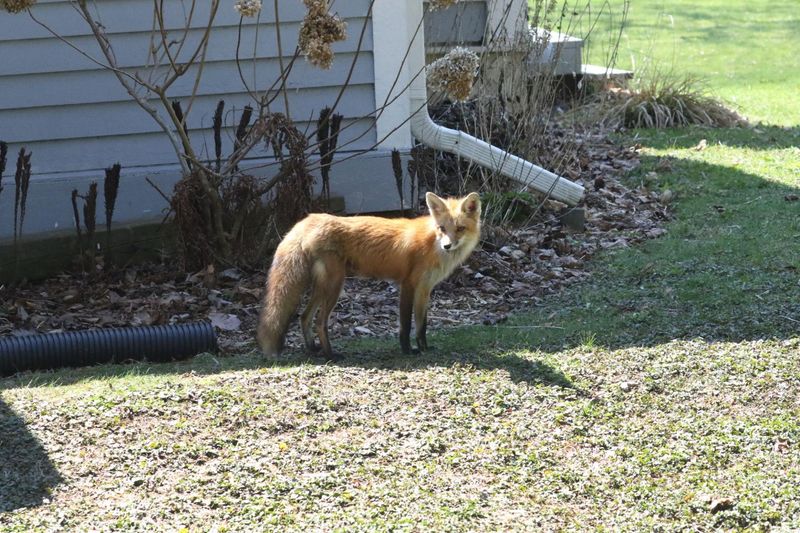
Finding a fox den under your deck, porch, shed, or crawl space is understandably unsettling, but the worst first move is to grab a shovel and seal the opening immediately. If the den holds a nursing female or a litter of kits, sealing it traps them inside, which is both inhumane and likely to create a much worse problem than the one you started with.
Patience and a methodical approach produce better outcomes for everyone involved.
NCWRC’s spring wildlife guidance recommends humane harassment as the first tool: bright lighting aimed at the den entrance, a talk radio station playing near the opening, loud intermittent noise, or a motion-activated sprinkler directed at the area. These methods make the site uncomfortable without harming the animals, and a fox family will often relocate on its own within a few days to a week once the disturbance is consistent.
Exclusion, meaning the physical blocking of the entry point, should happen only after you have confirmed the den is no longer occupied. NCWRC’s coexistence guidance suggests using a loose plug of newspaper or straw in the opening for a few days; if it goes undisturbed, the den is likely empty and the opening can be sealed permanently with hardware cloth or other durable material.
If you cannot confirm vacancy safely, a licensed wildlife-control professional can help.
Relocation is not a substitute for this process. NCWRC’s wildlife FAQs are direct on this point: foxes and other carnivores generally cannot be legally relocated in North Carolina because relocation can spread disease and typically results in poor survival.
Working with the animal’s natural behavior through harassment and timed exclusion is both the legal path and the one most likely to resolve the situation without harm.
Know when a sighting becomes a public-health issue

Watching a fox move through your yard from a window or at a respectful distance is ordinary wildlife observation. The situation changes when there is direct contact.
Any bite or scratch from a wild fox requires an immediate and specific response: wash the wound thoroughly with soap and running water for at least 15 minutes, do not attempt to catch or handle the animal, and contact a healthcare provider, your county health department, or animal control as soon as possible.
North Carolina treats foxes as high-risk rabies-vector animals. NC DHHS rabies control guidance makes clear that a bite from a fox is treated as a potential rabies exposure unless the animal is captured and tests negative.
That testing almost always requires the animal to be euthanized, which is another reason not to attempt capture yourself. State animal management protocols outline the steps public health officials follow once a bite is reported, and prompt reporting gives you the best options.
If a pet is bitten or scratched, contact your veterinarian and animal control. Pets with current rabies vaccinations still need evaluation, and unvaccinated animals face more serious post-exposure decisions.
CDC rabies prevention guidance and CDC wildlife safety information both emphasize that post-exposure treatment is highly effective when started promptly after a known or suspected exposure.
None of this means a fox spotted calmly crossing your yard is an emergency. Keep children and pets away, do not approach or corner the animal, and let it move on.
The public-health concern is specific to direct contact, not to the presence of a fox at a normal distance. Keeping that boundary clear lets you respond appropriately to each situation rather than treating every sighting as a crisis.
Let the fox be a clue, not a diagnosis

A fox trotting through your yard is carrying information, just not the kind that needs an immediate verdict. What it most reliably tells you is that the yard or surrounding landscape currently offers something worth using, whether that is a movement corridor, a patch of cover, a food source, or a combination of all three.
That is useful to know, and it points toward practical steps rather than alarm.
The proportionate response follows a clear sequence. Observe from a distance and do not approach.
Remove artificial attractants like unsecured garbage, outdoor pet food, fallen fruit, and spilled birdseed. Secure vulnerable animals in sturdy enclosures.
If a den appears under a structure, use humane harassment and wait for confirmed vacancy before sealing. NCWRC’s wildlife problem resources and spring wildlife guidance support each of these steps as the appropriate response to a routine sighting.
Escalate only when behavior is genuinely abnormal or when direct contact has occurred. NCWRC describes foxes as shy animals that typically avoid people, and that description holds for the vast majority of sightings North Carolina homeowners will ever have.
A fox in your yard is more likely a sign of a functioning neighborhood food web than a problem that needs fixing. The animal knows your landscape better than you might expect, and now, so do you.