
What North Carolina Butterfly Bush Actually Needs In Late Summer For A Better Fall Bloom

Butterfly bush puts on a dramatic show from early summer onward, and many North Carolina gardeners want to keep those flower spikes coming as the season winds down. The single most useful thing you can do right now is remove the spent flower heads before the plant shifts its energy into seeds instead of new blooms.
Fertilizer gets most of the attention in late-season garden advice, but deadheading is the step that actually has solid support behind it. Understanding why, and when fertilizer genuinely helps versus when it can cause harm, will save your shrub and your wallet.
Late summer matters more than a September deadline
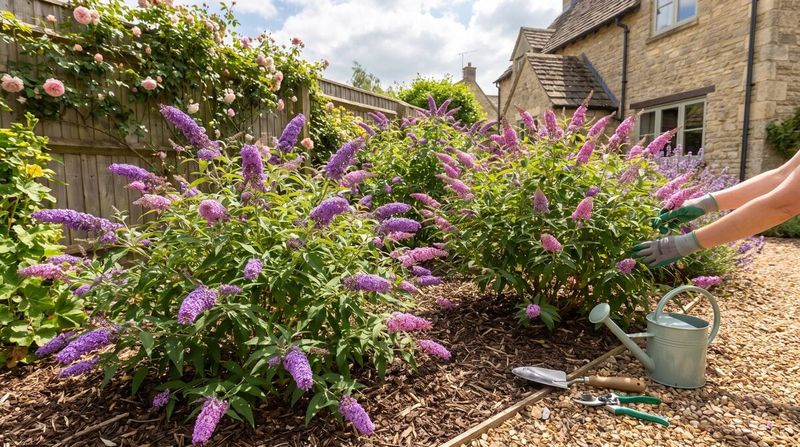
Calendar advice about butterfly bush tends to compress into a single urgent date, but the shrub does not follow a statewide schedule. NC State Extension’s woody ornamentals guidance recommends removing faded blooms in late summer to promote further flowering, using a seasonal window rather than a fixed date.
That distinction matters because a Piedmont garden near Greensboro, a Coastal Plain yard outside Wilmington, and a mountain property near Asheville do not share the same temperatures, frost timing, or growing-season length.
The useful trigger is not the calendar flipping to September. The useful trigger is the plant still actively growing and putting out new stem tissue.
When growth has slowed or stopped for the season, removing spent flowers can still tidy the shrub, but the window for encouraging another flush of bloom has largely closed. A gardener who deadheads in mid-August while the plant is vigorous is in a better position than one who waits for a specific date and finds the shrub already slowing down.
Fertilizer is a separate question entirely and a conditional one. Healthy, established shrubs in decent soil may not need any feeding at all.
The urgency in the article’s original premise, feed now or the fall flush fizzles, overstates what the research actually supports. NC State’s Buddleja davidii profile and its fertilizer guidance both make clear that plant health, soil condition, and actual growth patterns should drive any feeding decision, not a seasonal rule of thumb.
Buddleja cultivars also vary considerably. Some hybrids, including crosses with other species, bloom later or carry different growth habits than standard B. davidii.
NC State’s broader Buddleja genus page lists species and cultivars with meaningfully different bloom periods. Knowing which plant you have changes how you read its late-season signals and what you can reasonably expect from it in fall.
Remove spent flower spikes to encourage more blooms
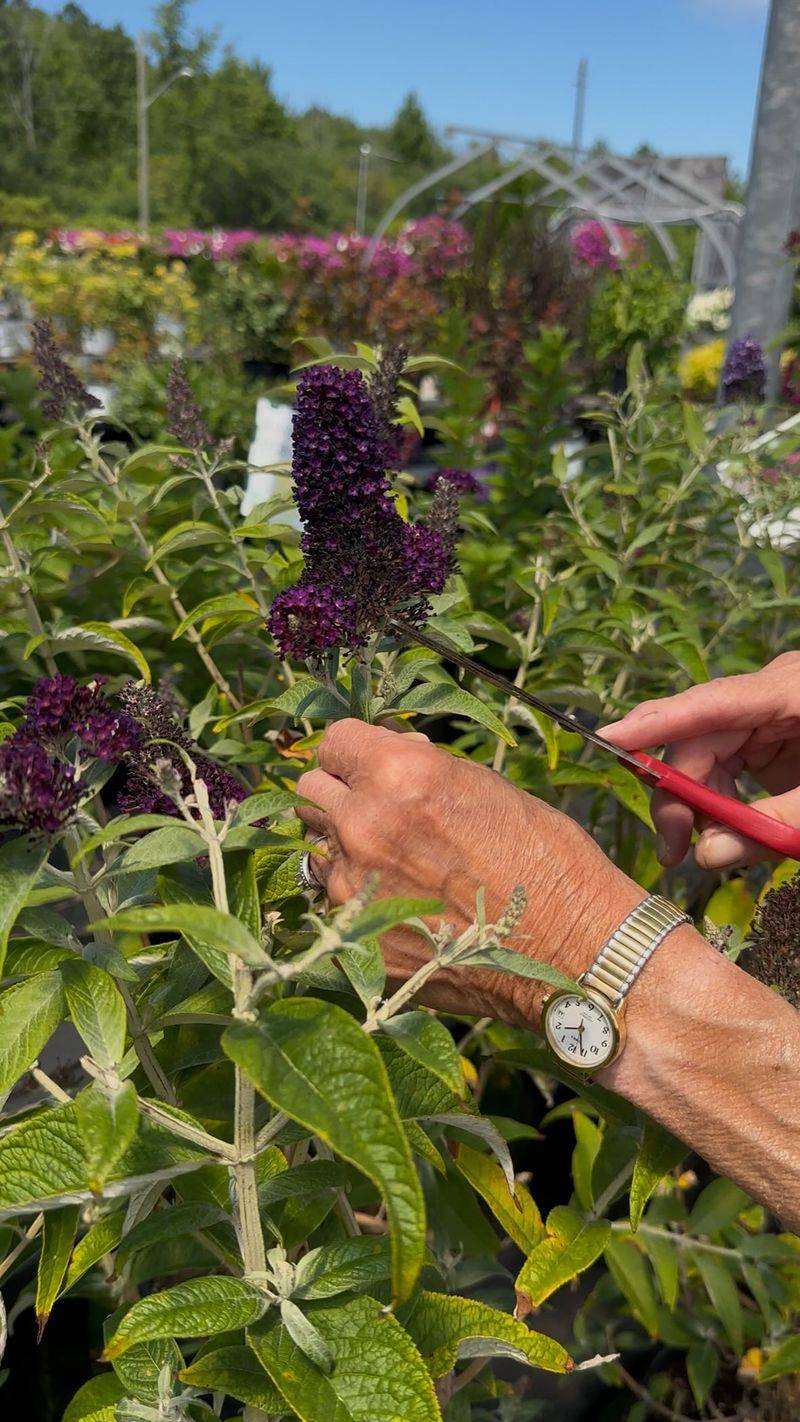
Deadheading is the practical core of late-season butterfly bush care, and its recommendation comes directly from extension research rather than garden folklore. NC State Extension’s Woody Ornamentals chapter specifically lists removing faded blooms in late summer as a way to promote further flowering, and the pruning table for butterfly bush includes deadheading across both summer and fall.
That is a meaningful endorsement from a land-grant university with direct knowledge of North Carolina conditions.
Why does it help? Butterfly bush, like many flowering shrubs, redirects energy toward seed production once a flower head finishes.
Removing the spent panicle before seeds mature tells the plant, in a sense, that the reproductive job is not done yet. A healthy, actively growing shrub can respond by pushing out new flowering stems from buds that were waiting further down the branch.
The key phrase there is healthy and actively growing. Deadheading is not a rescue operation for a struggling plant; it is a way to help a vigorous one keep doing what it does well.
The task targets finished flower panicles, not the shrub’s leafy framework. Pulling off spent heads while leaving the green stem structure intact preserves the growth the plant has already put in and avoids setting it back unnecessarily.
This is a lighter touch than the hard structural pruning that NC State recommends for late winter or early spring, and the two jobs should not be confused with each other.
One realistic note: a second flush of bloom, if it comes, may be smaller or less dramatic than the first. The amount of remaining growing season, the cultivar, the plant’s overall health, and the available sunlight all shape the outcome.
Deadheading improves the odds; it does not guarantee a repeat performance of the summer show.
Cut each finished panicle back to healthy growth
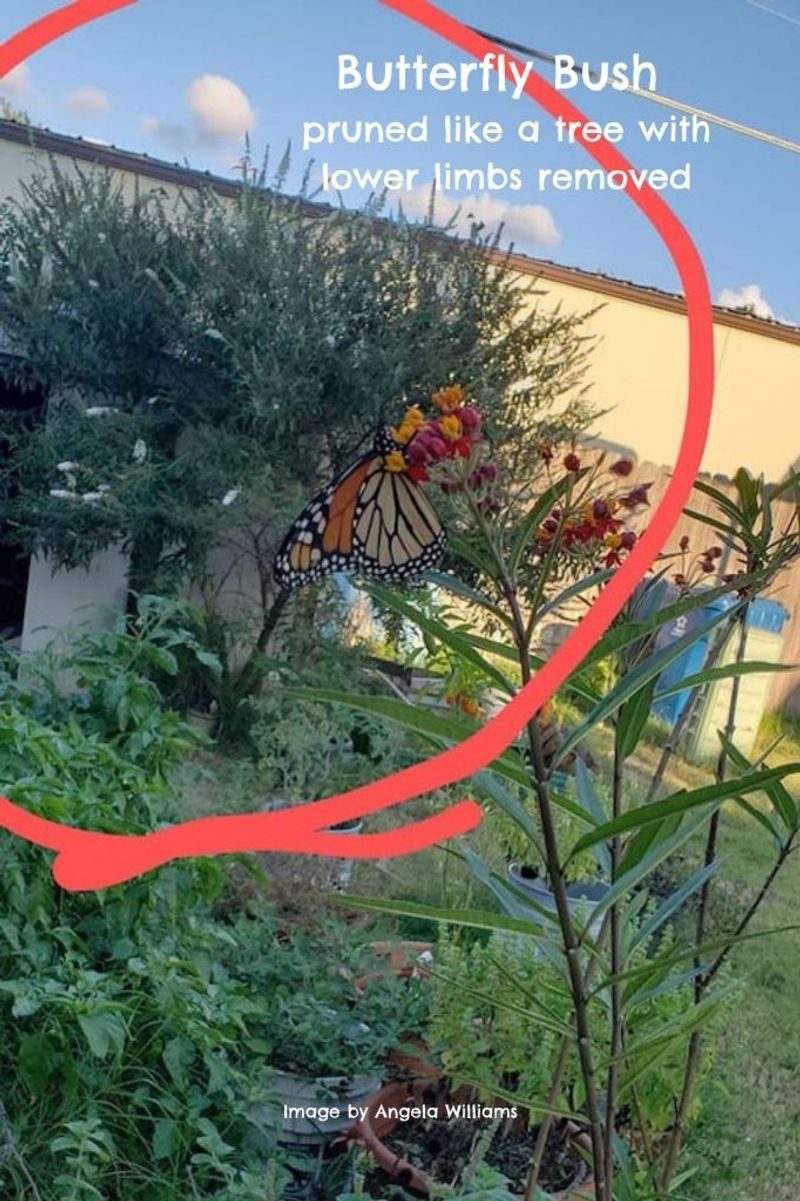
Technique matters more than most gardeners expect when deadheading butterfly bush. The goal is to remove the finished flower head without taking a long section of healthy stem along with it.
Start by gripping the spent panicle and tracing its stem downward until you find the first healthy leaf node or visible side shoot below it. That junction is where your cut belongs.
Missouri Botanical Garden’s deadheading guidance recommends cutting spent flowering stems back to healthy growth, and notes that the exact cut location can vary depending on the plant’s form. For butterfly bush, a modest cut just above a leaf node or branching point is the practical standard.
You are removing the finished flower and a small section of stem, not reshaping the shrub.
Use clean, sharp bypass pruners rather than dull blades or hedge shears. A clean cut heals faster and reduces the entry points for disease.
Wiping blades with a diluted bleach solution or rubbing alcohol between plants is a reasonable precaution if you are working through a garden with any sign of disease, though it is not strictly necessary for a healthy shrub in good condition.
Work across the entire shrub rather than stopping after the most obvious finished heads. NC State Extension’s pruning table for butterfly bush lists deadheading as an ongoing summer and fall task, which implies repeated passes rather than a single session.
Buds at different stages mean some panicles finish before others, so checking the shrub every week or two during the active growing season lets you catch spent heads before they progress to seed.
One practical tip: collect the removed flower heads in a bag as you work, especially if seeds are beginning to form. Disposing of them properly, rather than leaving them on the ground below the shrub, reduces the chance of volunteer seedlings turning up nearby next season.
Diagnose before you reach for fertilizer

Fertilizer is the part of late-season butterfly bush advice that most often gets oversimplified. The idea that every shrub needs a September feeding to produce fall flowers is not supported by what extension specialists actually recommend.
NC State’s guide to fertilizing trees and shrubs is direct on this point: healthy established shrubs may not need fertilizer at all, and applications should be based on soil tests, plant vigor, soil conditions, and the amount of existing growth rather than a seasonal calendar.
Weak growth is not proof of nutrient deficiency. A butterfly bush that blooms poorly or grows sluggishly might be dealing with compacted soil, poor drainage, inadequate sunlight, root damage, pest pressure, winter injury, or a cultivar that simply performs differently than expected.
Reaching for fertilizer before ruling out those possibilities can mask the real problem while adding unnecessary inputs to the soil. The correct first step is to figure out why the plant is struggling, not to assume it is hungry.
If a soil test or a clearly visible nutrient deficiency, such as specific leaf discoloration patterns consistent with a known shortage, points toward a nutrient problem, then fertilizer is appropriate. North Carolina residents can submit soil samples through the NCDA&CS state laboratory; NC State describes the soil testing service as free for most of the year, with a fee during the December 1 through March 31 peak season.
The test results will tell you what the soil actually needs, which is far more useful than guessing.
Generic bloom booster products and high-phosphorus fertilizers deserve particular skepticism. NC State warns that unnecessary fertilizer can produce excessive vegetative growth, increase pest and disease risk, damage plant roots, and contribute to water pollution through runoff.
UMass Extension’s fertilizing guidance for trees and shrubs similarly cautions that over-application causes more harm than under-application for most established woody plants. When fertilizer is genuinely warranted, follow the soil test recommendations and the product label rather than applying extra in hopes of a bigger bloom.
Fix water and site problems before expecting a fall flush
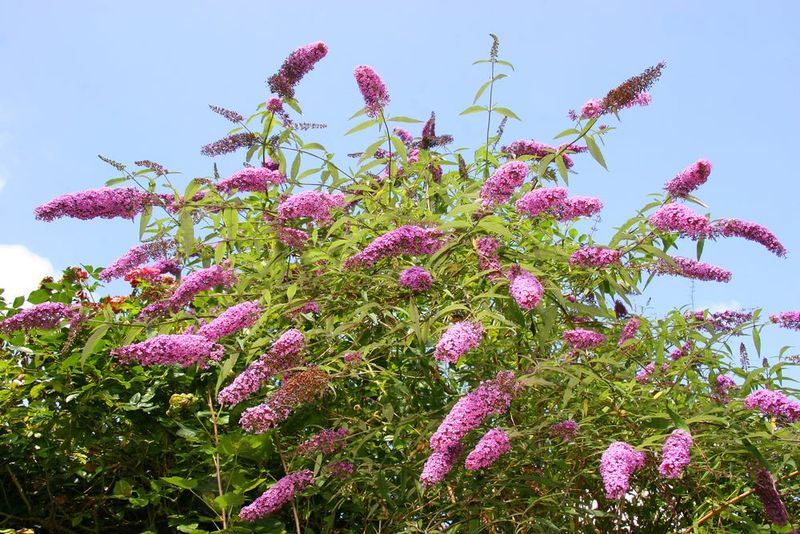
Poor flowering in late summer often has nothing to do with deadheading or fertilizer. NC State’s Buddleja davidii profile lists full sun and well-drained soil as the plant’s core requirements, and a shrub that lacks either one will underperform regardless of what you remove or apply.
A butterfly bush planted in partial shade or sitting in clay that holds water after rain is working against its own biology from the start.
Drought stress is a particularly common problem across North Carolina during late summer. A plant that has been struggling through weeks of dry heat is not in a position to push out new flowering stems after deadheading.
Watering appropriately during dry spells, deeply and at the root zone rather than with a light daily sprinkle, is a more urgent intervention than any fertilizer application. NC State and other extension sources are consistent on this: do not fertilize a drought-stressed or otherwise significantly stressed plant.
Water and site problems need to be addressed first.
Other factors worth checking before assuming the plant needs feeding include pest damage, such as spider mites or aphids that can slow growth noticeably during hot dry periods, and disease issues like root rot in poorly drained spots. Winter injury is relevant in the mountains and occasionally in the Piedmont after a hard freeze; a plant that came back slowly from die-back may simply not have the stored energy for a strong fall display.
NC State’s fertilizer guide reinforces that fertilizer does not solve structural site problems or compensate for pest and disease pressure.
Cultivar differences add another layer. Some butterfly bush selections are simply less floriferous in late summer than others, and a modest late-season showing may be normal for that particular plant.
If the shrub has always performed this way, the site and cultivar combination may be the honest answer rather than a care failure.
Plan for a possible second flush, not a guaranteed repeat
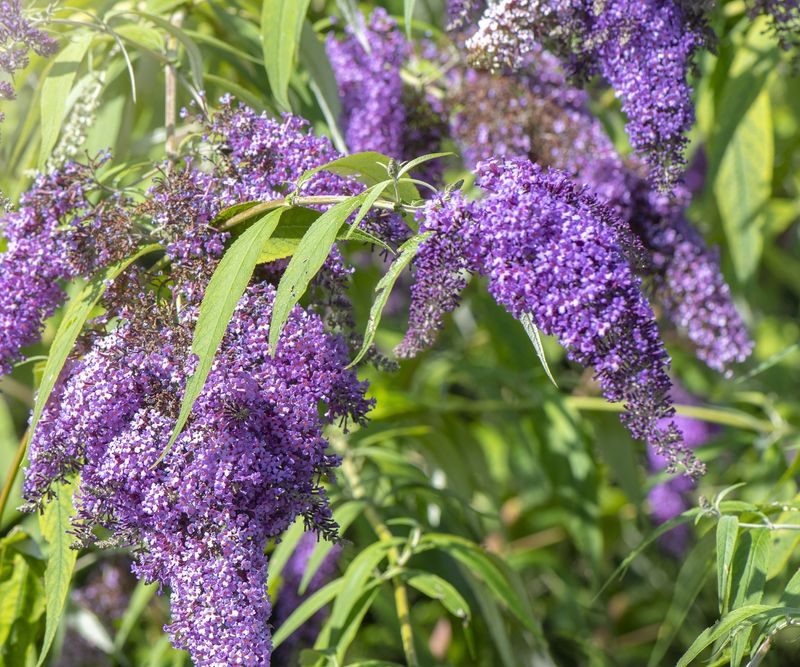
Deadheading gives a healthy butterfly bush a better chance at producing more flowers, but the size and timing of any later display depend on factors the gardener does not fully control. Penn State Extension’s pruning guidance notes that reblooming plants do not always produce a second display equal in size to the first.
For butterfly bush in North Carolina, that means a later flush may be modest, arriving as a scattering of smaller panicles rather than the full summer performance.
How much growing season remains after deadheading plays a significant role. A Coastal Plain gardener who removes spent heads in early August still has weeks of warm weather ahead.
A mountain gardener doing the same task in mid-September may have only a few warm weeks before the first frost closes the season. The shrub needs time to push new growth and develop flower buds, so earlier deadheading, while the plant is still actively growing, generally offers a better return than waiting.
NC State’s Buddleja genus page shows that bloom timing varies meaningfully across species and cultivars. Some hybrids extend into late September or October; others wrap up their main show earlier.
Knowing your specific cultivar’s natural bloom window helps calibrate expectations rather than interpreting a slowing plant as a care failure.
One structural point deserves emphasis: late-season deadheading is not the same as cutting the shrub hard to the ground. NC State Extension recommends severe pruning in late winter or early spring, before new growth begins, because butterfly bush flowers on new wood.
Cutting the entire shrub back in September removes the very stems that could carry fall flower buds, and it leaves fresh cuts exposed to whatever weather arrives before winter. Save the major structural work for late February or March, and let deadheading do its narrower job in the meantime.
Use deadheading to reduce seed spread where it matters
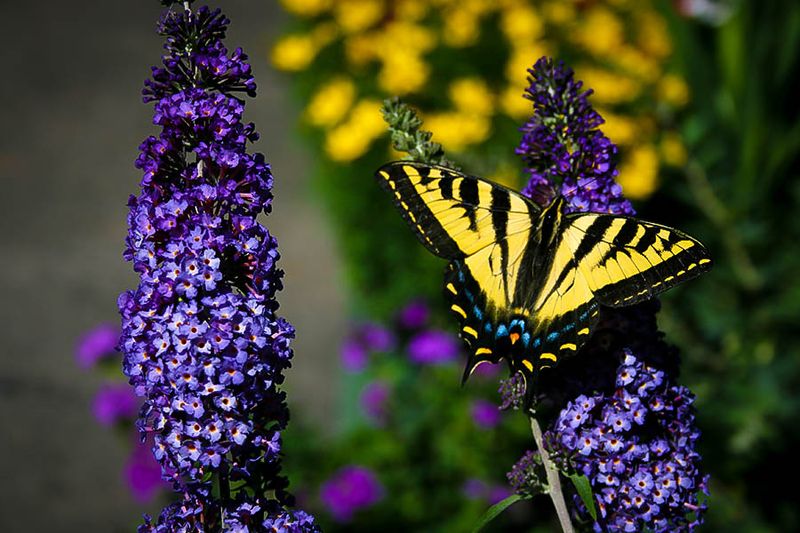
Deadheading butterfly bush has a stewardship benefit beyond encouraging more flowers. NC State lists Buddleja davidii as invasive in the Mountain and Piedmont regions of North Carolina, describing it as capable of self-seeding and naturalizing outside of cultivated areas.
Each spent flower head that matures into seed is a potential source of new plants in roadsides, stream banks, and disturbed areas where the shrub can outcompete native vegetation.
Removing finished flower heads before seeds mature is one concrete way to reduce that spread. Oregon State Extension’s guide on invasive species for gardeners specifically recommends removing spent flowers before seeds mature as a management step for invasive butterfly bush.
The same logic applies in North Carolina’s affected regions. You do not have to stop growing the plant to be a responsible steward of it; you do need to be consistent about catching spent heads before they go to seed.
Disposal matters too. Flower heads that have already begun forming seeds should not go into a compost pile that stays in your yard, because seeds can survive composting conditions and spread from there.
Follow your local solid waste or yard waste guidance for disposing of potentially seedy plant material; many areas accept it in yard waste collection where it goes to a managed facility rather than back into the landscape.
One distinction worth making clearly: butterfly bush offers nectar to adult butterflies, and that benefit is real. NC State’s butterflies resource separates nectar value from larval host value.
Native butterfly caterpillars generally cannot use butterfly bush foliage as food, so the plant does not support the full butterfly life cycle. A yard centered on butterfly bush alone misses the larval host plants that native species actually need to complete their development.
Follow a conditional September care checklist
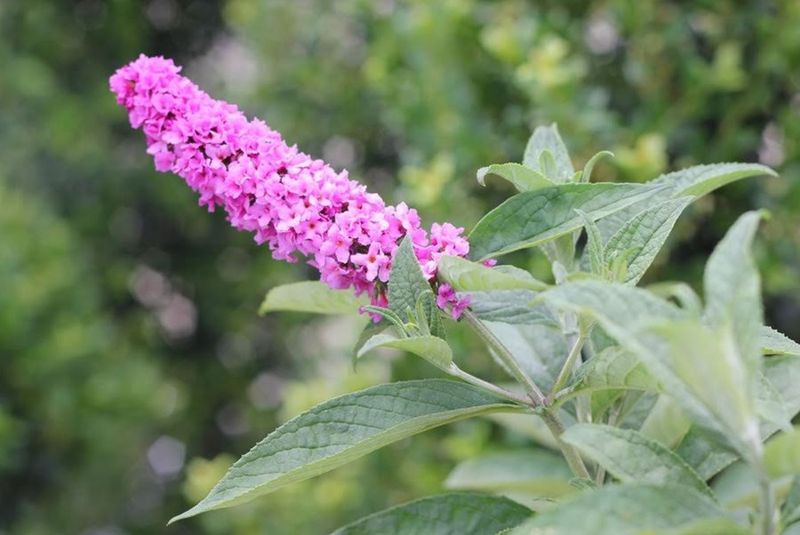
Pulling together the practical steps: start by deadheading faded flower spikes while the plant is still actively growing, cutting each spent panicle back to a healthy leaf node or side shoot. NC State Extension’s pruning guidance supports this as the most useful late-season task for encouraging further flowering.
Next, check water and site conditions honestly. If the shrub has been dry, water it at the root zone before doing anything else.
NC State’s fertilizer guide is clear that stressed plants should not be fertilized; address drought or drainage problems first. If growth looks genuinely weak and you suspect a nutrient issue, get a soil test rather than guessing.
Apply fertilizer only when the test or a visible deficiency supports it, and follow the label.
Save hard structural pruning for late winter or early spring. NC State recommends severe pruning before new growth begins because butterfly bush flowers on new wood; cutting the shrub to the ground in September removes the stems that could carry fall buds.
None of these steps guarantee a full second flush, and September is not a universal deadline across North Carolina’s varied regions and cultivars. What they do is give a healthy, well-sited shrub its best realistic chance at more late-season color, which is the honest version of the promise.