
What North Carolina Crape Myrtles Actually Need Before Summer Ends
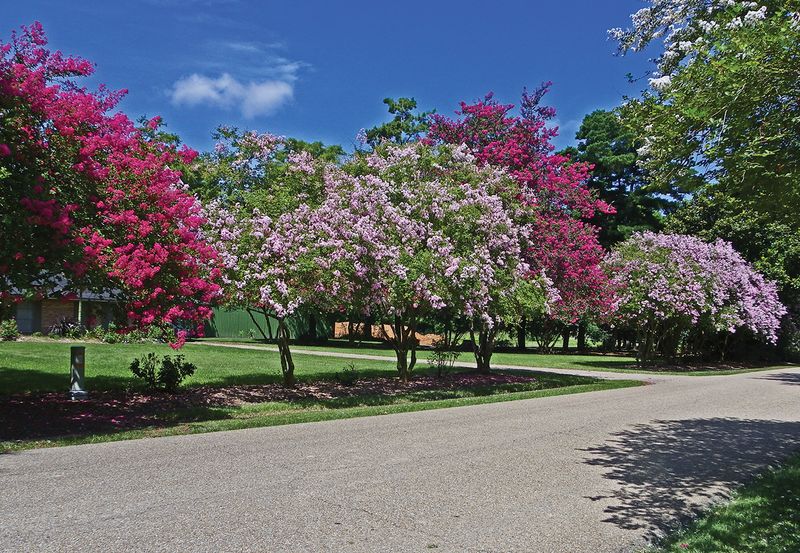
Crape myrtles are one of the most recognizable summer trees across North Carolina yards, and every August someone worries they are running out of time to do something important. The truth is more reassuring than alarming: there is no single task every crape myrtle must receive before a hard August deadline, and missing a calendar date will not automatically ruin next year’s flowers.
What your tree actually needs right now depends on its condition, its location, and what kind of care it has already received this season.
The August deadline is not a universal pruning rule
One plant-database entry from NC State uses the phrase “by late summer” when describing pruning timing, and that wording has been repeated in enough gardening conversations that it started to feel like a firm deadline. Read in context, the phrase refers to pruning that genuinely needs to finish before winter cold arrives, not a universal rule that applies to every established tree in every North Carolina yard.
Newer NC Extension guidance and multiple university sources consistently place normal structural pruning in late winter or early spring, well before new growth begins.
According to NC Cooperative Extension’s crape myrtle pruning guidance, the recommended window for routine pruning is late winter to early spring, before the plant breaks dormancy. That recommendation does not change because August is ending.
If your crape myrtle looks healthy, bloomed well this season, and has no dead or damaged wood, late August calls for a condition check rather than a rushed cut.
What the appropriate action looks like in late August depends on several factors: the tree’s current condition, what pruning objective you actually have, the cultivar and its mature size, the plant’s age, and where in North Carolina it is growing. A large, established tree-form crape myrtle in the Piedmont with no visible problems needs different attention than a young shrub-form plant in the mountains.
Virginia Tech Extension notes that late-summer or fall pruning can encourage new growth that does not have enough time to harden before cold weather, which is a real concern for colder parts of the state. The calendar is a rough guide, not a command.
Check the root zone before the calendar turns

The most practical thing most North Carolina homeowners can do for an established crape myrtle in late August is simple: walk over to the tree, push a finger or a screwdriver several inches into the soil near the root zone, and check whether the ground is dry. That one action tells you more about what the tree needs right now than any calendar date can.
UGA Extension’s crape myrtle culture guide explains that established crape myrtles tolerate drought reasonably well, but their flowering improves when they receive adequate moisture during dry periods. If the root zone is dry and the tree has been without meaningful rainfall for a week or more, a deep watering is the right response.
That means soaking the soil slowly and thoroughly at the root zone so water reaches down several inches, not running a sprinkler briefly over the surface or wetting the foliage.
Light surface watering encourages shallow root development over time and does little to relieve deep soil moisture deficits during a dry stretch. Wetting the leaves can also encourage fungal problems such as powdery mildew, which crape myrtles are already prone to in humid conditions.
Focus the water at the base of the tree and let it soak in slowly.
Newly planted crape myrtles have a different irrigation need than established trees. NC State’s plant database notes that establishment requires consistent moisture, and UGA recommends thorough watering at planting followed by regular watering for the first two months without rainfall.
If your tree went in the ground this spring or early summer, late August watering is not optional during a dry spell – it is part of getting the plant through its first year.
New growth explains the bloom—but not an August command
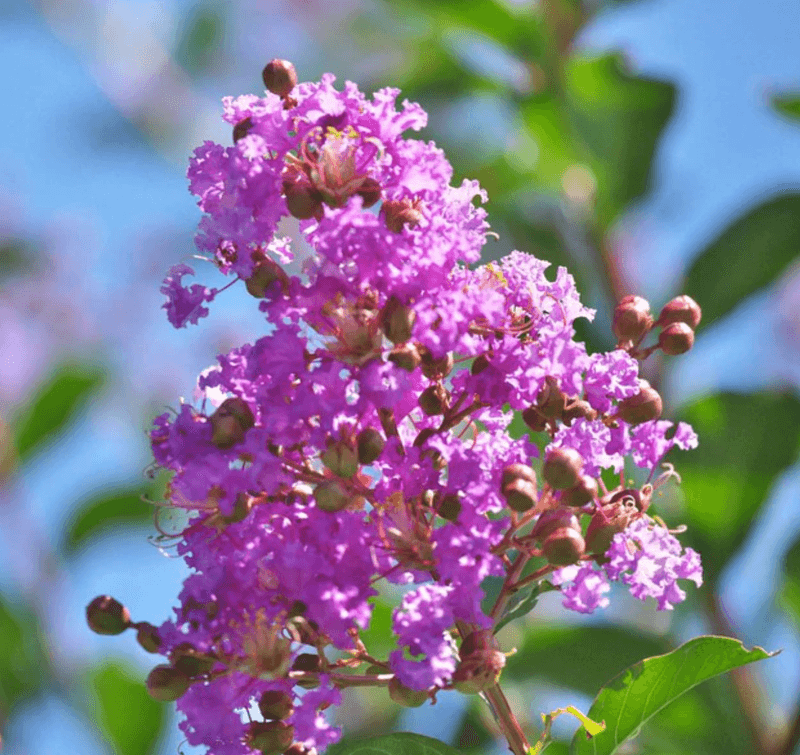
Crape myrtles produce their flowers on growth that forms in the current season. That biological fact is real and worth understanding, because it explains why dormant-season pruning can encourage more flowering growth for the following summer.
What it does not do is create a requirement to prune in late August.
Clemson Extension’s crape myrtle pruning factsheet confirms that flowers form on new growth, and it places the recommended pruning window in late winter or early spring for exactly that reason: pruning before the plant breaks dormancy gives the resulting new growth a full season to develop and bloom. Late August is the opposite end of that window.
By the time August ends in North Carolina, summer growth is winding down and the plant is beginning to prepare for dormancy.
Pruning in late summer can push a crape myrtle to produce a flush of new growth at exactly the wrong time. That tender growth has limited time to harden before temperatures drop, and in colder parts of North Carolina – the foothills and mountains especially – it may be killed back by an early frost.
University of Tennessee Gardens’ crape myrtle care guidance cautions against late-season pruning for this reason.
The fact that flowers form on new growth is useful information for planning your dormant-season pruning schedule. Treat it as a reason to prune thoughtfully in late winter, not as a justification for cutting the tree back in August.
Virginia Tech Extension describes summer tip pruning as producing inconsistent results and notes that it is not necessary to promote flowering the following year.
Pruning belongs in the dormant-season plan
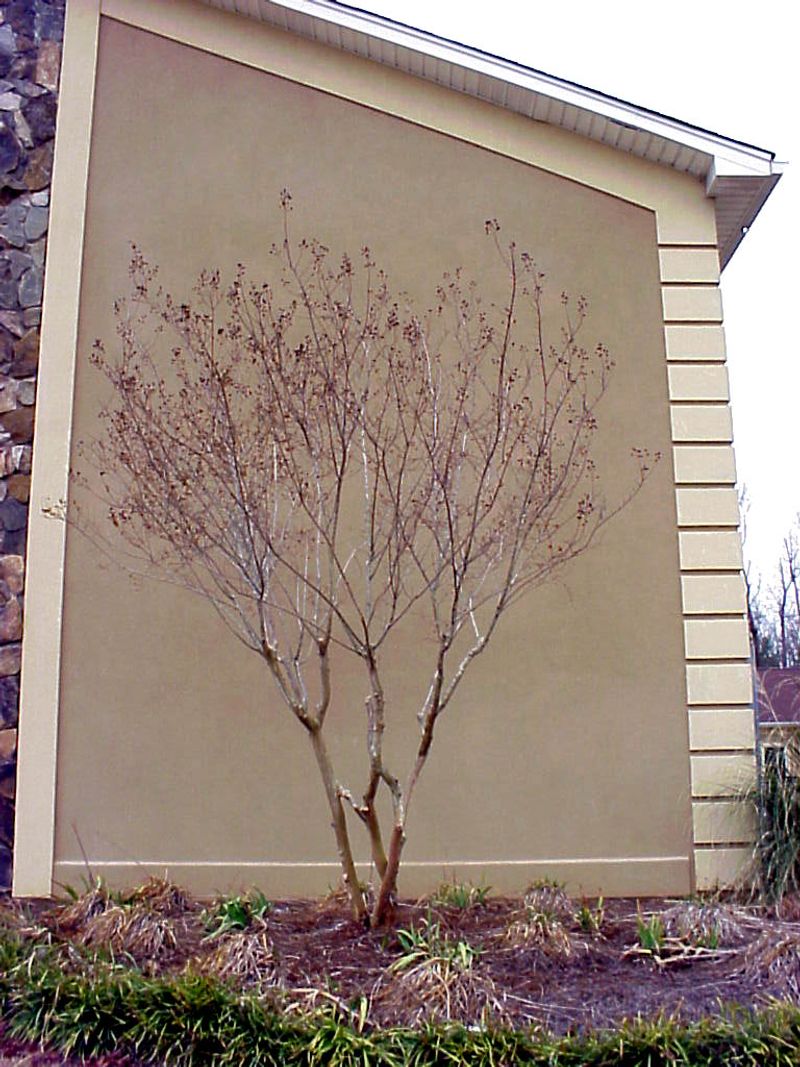
Normal structural pruning for North Carolina crape myrtles belongs in the dormant season, generally from late February into early March before spring growth begins. That window gives you the clearest view of the branch structure, reduces stress on the plant, and allows any resulting new growth to develop through a full growing season rather than running out of time before cold weather arrives.
Wayne County NC Cooperative Extension’s pruning guide recommends focusing on removing dead, diseased, broken, crossing, or rubbing branches and any root suckers that emerge from the base. Those targets are the same regardless of the tree’s size or cultivar.
The goal is to preserve the plant’s natural form and improve air circulation, not to dramatically reduce its height or force a particular shape.
Not all pruning jobs are the same, and timing matters differently depending on what you are trying to accomplish. Safety pruning, which means removing a dead branch that poses a hazard, can be done at any time of year without waiting for dormancy.
University of Florida IFAS guidance on ornamental pruning distinguishes safety removals from structural shaping, size reduction, thinning, and spent-flower removal because those jobs carry different consequences when done at the wrong time.
Large tree-form crape myrtles that were planted in an appropriate location often need very little pruning once established. Virginia Tech Extension points out that dwarf cultivars grown as shrubs or in containers can tolerate more substantial dormant pruning, while a mature tree-form plant in an open, sunny yard may only need the occasional removal of crossing branches or dead wood.
Matching the cultivar to the available space in the first place reduces the need for corrective pruning later. NC State’s crape myrtle plant profile lists cultivars across a wide range of mature sizes to help homeowners make that match from the start.
Topping and late fertilizer create the wrong rescue
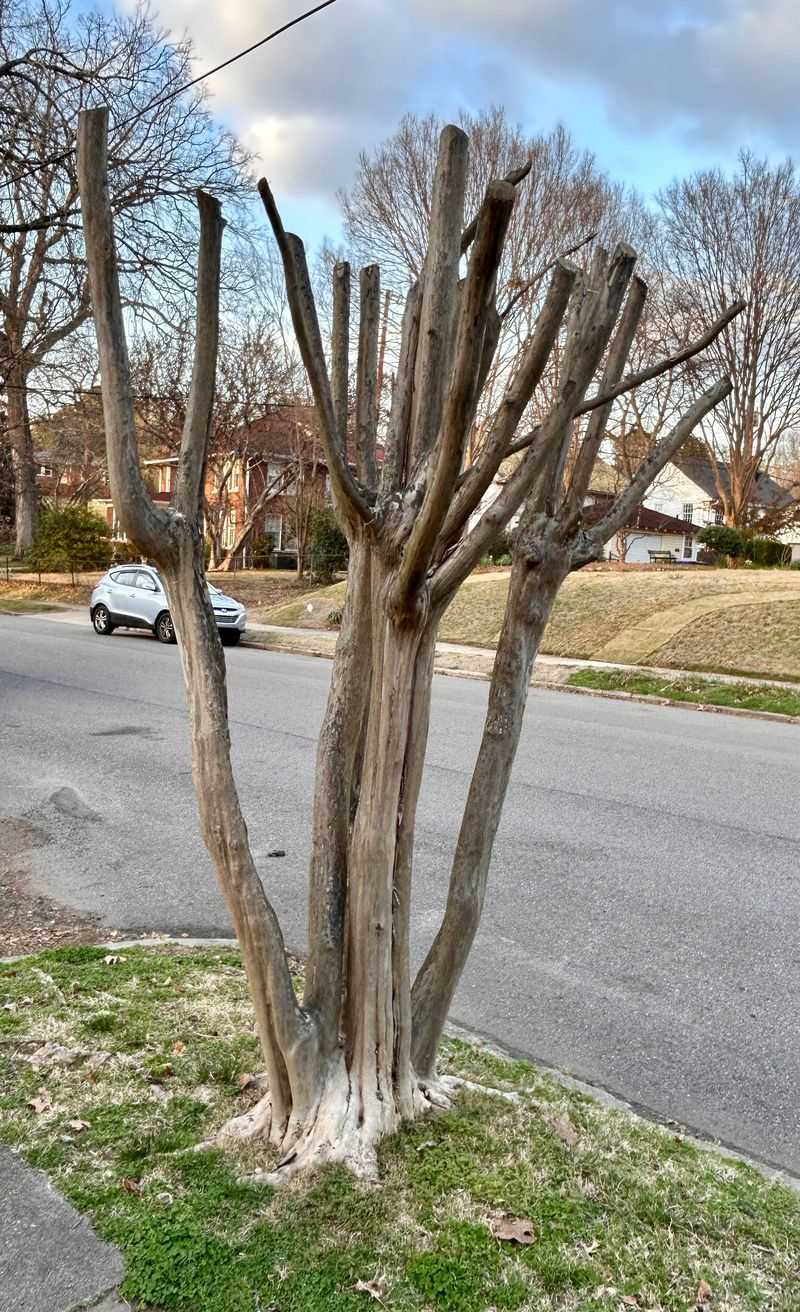
Two interventions tend to look like solutions when a crape myrtle is not performing the way a homeowner hoped: cutting the top off the tree to force new growth, and applying fertilizer to push a late-season bloom. Both approaches are more likely to cause problems than to fix them.
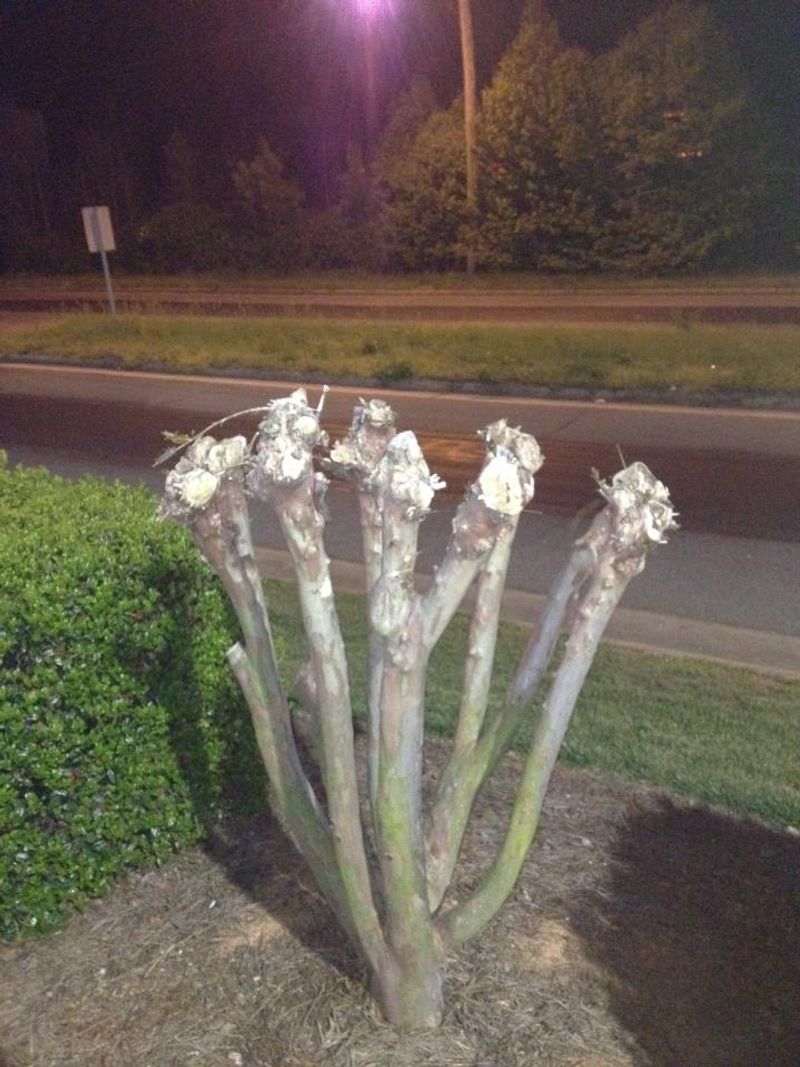
Topping a crape myrtle, which means cutting major limbs back to thick stubs, does not improve flowering in a meaningful way. NC Cooperative Extension’s pruning guidance explains that topping creates dense clusters of weak, fast-growing shoots from the cut points.
Those shoots are poorly attached, prone to breaking under the weight of large flower clusters, and they permanently disfigure the natural form of the tree. Severe pruning may produce a few larger individual flower heads, but it typically reduces the total number of flowering branches across the canopy and causes structural damage that compounds over time.
Late-summer fertilizing is the other tempting shortcut, and NC State’s guide to fertilizing trees and shrubs makes clear that fertilizer is not automatically beneficial for a woody plant. A healthy, established crape myrtle growing acceptably in decent soil may not need fertilizer at all.
Applying nitrogen when the plant is already drought-stressed can injure roots and encourage a flush of water-demanding, soft growth at a time when the plant should be preparing for dormancy.
Excessive nitrogen at any point in the season is a documented cause of reduced flowering. When a plant receives more nitrogen than it needs, it tends to put energy into foliage rather than flower production.
NC State’s fertilizer use guidance and Virginia Tech Extension both note that overfertilization can shift a plant’s energy toward vegetative growth at the expense of blooms. If you are looking for a rescue action in late August, watering a dry root zone is safer and better supported than reaching for the fertilizer bag.
Sun, size, and location change what the tree needs
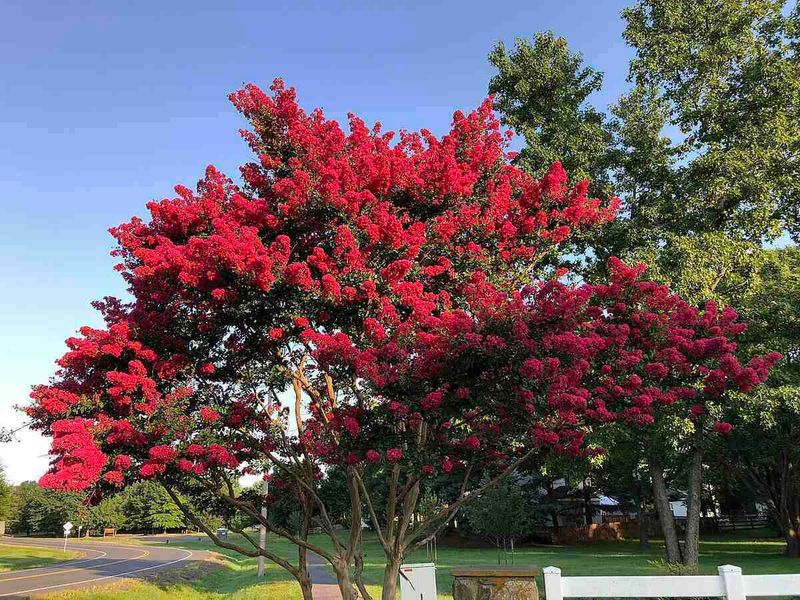
Crape myrtles are sun-dependent plants. NC State’s crape myrtle plant profile defines full sun as at least six hours of direct sunlight daily, and that threshold matters for flowering.
A tree that receives four hours of direct light in the morning but sits in shade by midday will generally produce fewer and smaller flower clusters than one growing in an open, unobstructed spot.
Competition from large trees nearby compounds the sunlight problem. Mature oaks, maples, and pines cast deep shade and their root systems compete with crape myrtles for soil moisture.
A crape myrtle that seems to be failing despite good care may simply be losing both the light and the water it needs to large neighbors. Moving the tree is rarely practical once it is established, but understanding the light situation helps explain poor performance and informs where to plant future trees.
UGA Extension’s crape myrtle culture guide and Virginia Tech Extension both emphasize that the right cultivar for the right space reduces almost every maintenance problem. A dwarf crape myrtle planted under a power line or against a fence stays manageable without annual hard pruning.
A large tree-form cultivar planted in an open lawn with full sun needs very little intervention once it is established.
Regional differences across North Carolina also matter. Coastal Plain sites are warmer and have longer growing seasons, which means late-season growth has more time to harden before cold arrives.
Homeowners in the foothills and mountains face more risk from the same late-season decisions. University of Florida IFAS crape myrtle pruning guidance notes that plant size and cultivar type should shape pruning decisions, reinforcing that no single rule fits every situation.
Poor bloom points to more than pruning
A crape myrtle that blooms poorly despite receiving reasonable care is telling you something, but the message is rarely “you missed an August pruning.” Several different factors can suppress flowering, and identifying the right one matters before you start adjusting your routine.
Start with sunlight. A tree that has gradually been shaded out by neighboring plants as they matured will decline in flower production over time even if nothing else has changed.
Drought is the next check: a plant that went through prolonged dry periods in summer without supplemental watering may have had reduced energy available for flower development. NC State’s plant profile lists sun and adequate moisture as foundational requirements for strong bloom.
Excessive nitrogen is another documented culprit. If the lawn around your crape myrtle receives heavy fertilizer applications and the tree’s root zone overlaps with the lawn, the tree may be picking up more nitrogen than it needs.
That surplus tends to push the plant toward lush foliage at the expense of flowers. UGA Extension notes that overfertilization is a recognized cause of reduced flowering in crape myrtles.
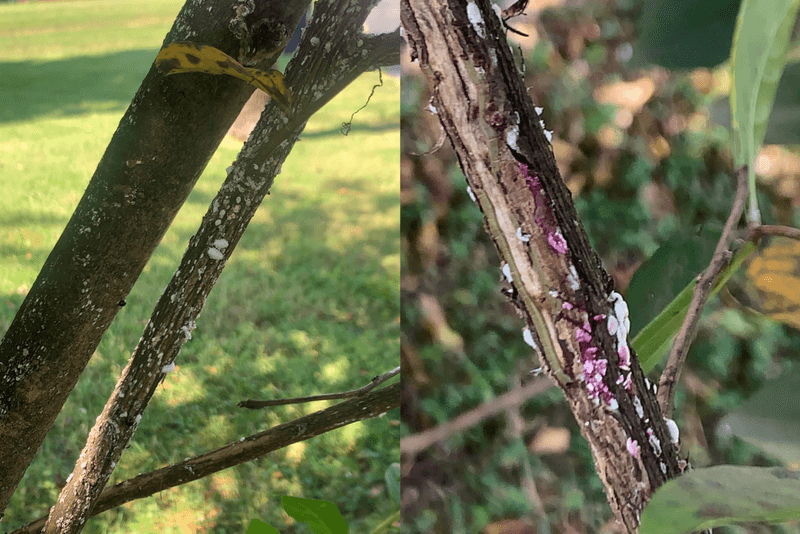
Crape myrtle bark scale deserves a close look on any plant with reduced vigor, delayed leafing in spring, or smaller-than-normal flower clusters. UGA Extension’s bark scale fact sheet describes the pest as an invasive scale insect that coats stems with white waxy material and produces a sticky honeydew that can lead to black sooty mold.
Heavy infestations weaken the plant and reduce its capacity to produce flowers.
Removing faded flower clusters during summer can sometimes encourage a second flush of bloom on early-blooming cultivars, as Clemson Extension notes, but that practice is optional and variable in its results. Seed heads left on the tree through winter are not damaging, and several Extension sources describe them as acceptable or even attractive.
UGA’s guide to pruning ornamental plants and University of Florida IFAS both treat spent-flower removal as situational rather than required for next year’s bloom.
Let late August guide the next right step
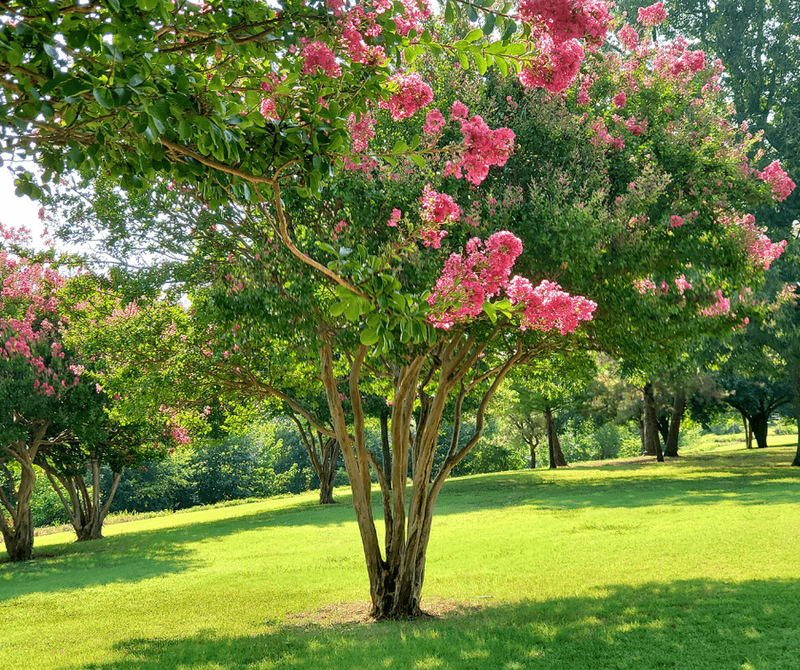
Here is what late August actually calls for with a healthy established crape myrtle: check the root zone, and if the soil is dry after a stretch without rain, water deeply at the base of the tree. That is the action most supported by university Extension guidance for this time of year, and it is far less likely to cause harm than a last-minute pruning session or a fertilizer application.
Leave major structural pruning for the dormant window, generally late February into early March in most of North Carolina. The only exception is a dead or hazardous branch that poses a safety risk, which can be removed whenever it is identified.
NC Cooperative Extension’s pruning guidance is consistent on this point: routine shaping waits for dormancy.
Next year’s bloom depends on the tree’s overall health through the growing season, adequate sunlight, and sound care over time, not on a single action completed before a specific date. NC State’s fertilizer guide reinforces that protecting the tree’s natural structure and avoiding unnecessary interventions is a more reliable path to good flowering than chasing a magic deadline.
The best thing most crape myrtles need right now is a drink of water and a patient gardener who knows when to leave well enough alone.