
If Your Hydrangeas Wilt Fast In The Heat, Here’s The One Watering Habit Quietly Stressing Their Roots
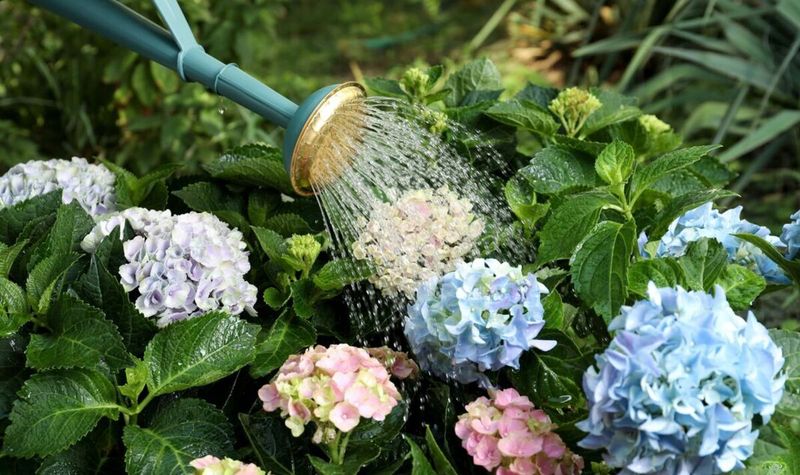
Watching a hydrangea droop in the afternoon heat is enough to make any gardener reach for the hose. But that quick splash of water may actually be part of the problem, not the fix.
One common watering habit, repeated day after day, can quietly stress the roots of an otherwise healthy shrub without the gardener ever realizing it.
Frequent shallow watering may be the hidden stressor
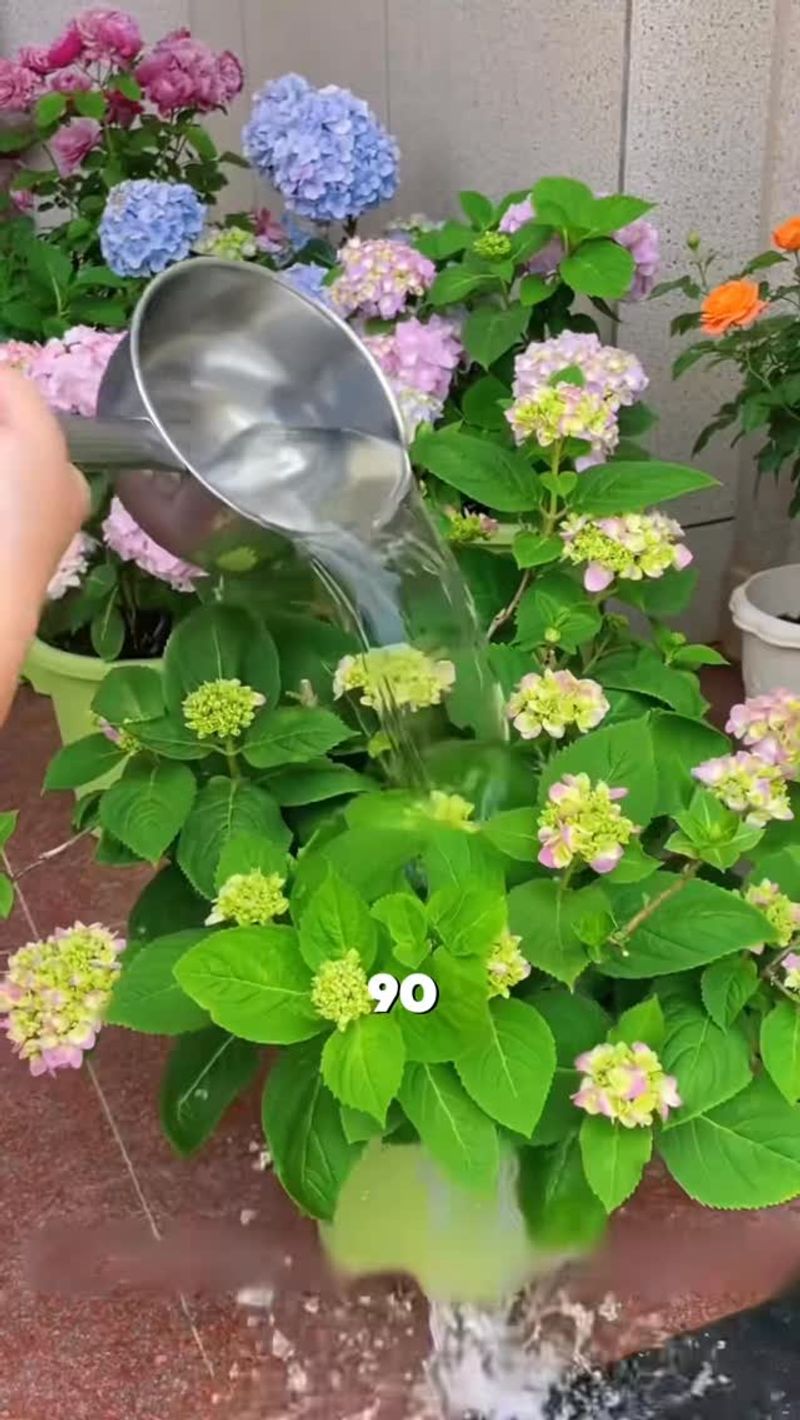
A brief daily sprinkler pass or a quick hose splash might feel like attentive plant care, but for an established hydrangea, that routine can quietly work against the plant. When water only penetrates the top inch or two of soil, the active root zone sitting several inches below stays dry, and the plant ends up repeatedly thirsty despite daily irrigation.
That said, fast afternoon wilting does not automatically point to shallow watering as the cause. Heat stress, poor drainage, transplant shock, and other factors can all produce similar symptoms, so the watering habit is one possible explanation rather than a guaranteed diagnosis.
The problem with frequent, light irrigation is that surface moisture evaporates quickly, especially during summer heat. Roots that have been conditioned to find water near the top of the soil profile become vulnerable the moment that thin wet layer dries out, which can happen within hours on a hot afternoon.
Oregon State University Extension guidance on hydrangeas in heat waves specifically warns that a quick hand-watering on dry soil may wet only the surface, making a slow soak or drip system far more effective at reaching the deeper root zone.
Slow, thorough watering that moistens the soil several inches down gives roots access to a larger reservoir that stays available longer between irrigation cycles. University of Minnesota Extension guidance on established shrubs consistently recommends this approach over light, frequent irrigation for exactly that reason.
Daily watering is not always wrong. A newly planted hydrangea needs frequent moisture while its roots are still spreading, and a container plant can dry out fast enough to need water every day in summer heat.
The concern with frequent shallow watering applies most directly to established landscape shrubs that have had time to develop a broader root zone. For those plants, a brief daily splash often does less good than a less frequent, slower soak that actually reaches the soil depth where the roots are working.
Wilting does not automatically mean thirst
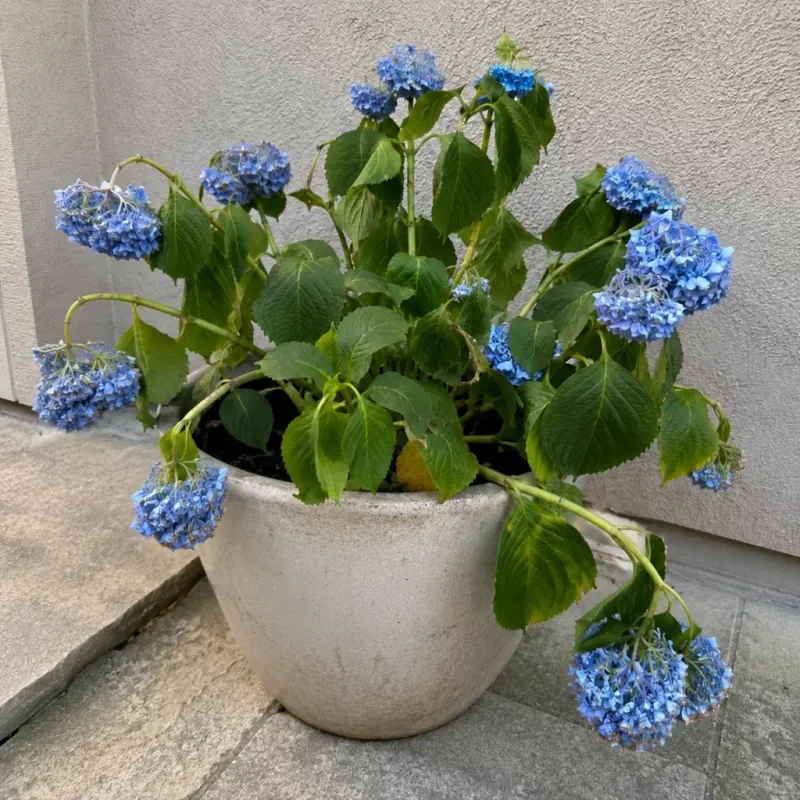
Drooping leaves send a clear distress signal, but they do not tell you why the plant is struggling. Before picking up the hose, treat wilting as an invitation to investigate rather than a command to water.
Bigleaf hydrangeas, the large-leafed varieties with the classic mophead or lacecap blooms, are particularly prone to afternoon wilting during hot weather even when the soil holds adequate moisture. University of Illinois Extension on heat stress explains that plants can wilt temporarily as a protective response to high temperatures, closing their pores to reduce water loss.
Many of these plants recover on their own by the next morning once temperatures drop, and adding more water to already-moist soil only increases the risk of root problems.
University of Missouri Extension guidance on heat-stressed plants reinforces this point directly: overwatering a plant that is already stressed by heat, especially in soil that drains poorly, can cut off oxygen around the roots and make the situation worse. The instinct to water more when a plant looks bad is understandable, but it can backfire.
Wilting that persists into the evening or the following morning, particularly when the soil feels damp or soggy, is a different signal entirely. Possible explanations include root damage from digging or pests, root rot caused by prolonged wet conditions, excessive sun exposure for a shade-preferring variety, transplant shock in a recently moved or newly planted shrub, or a fungal or bacterial disease.
University of Maryland Extension’s hydrangea problem guide lists several of these conditions and notes that persistent wilt in moist soil calls for a closer look at roots, drainage, and plant history rather than another round of irrigation.
Let the soil—not the clock—set the next watering time
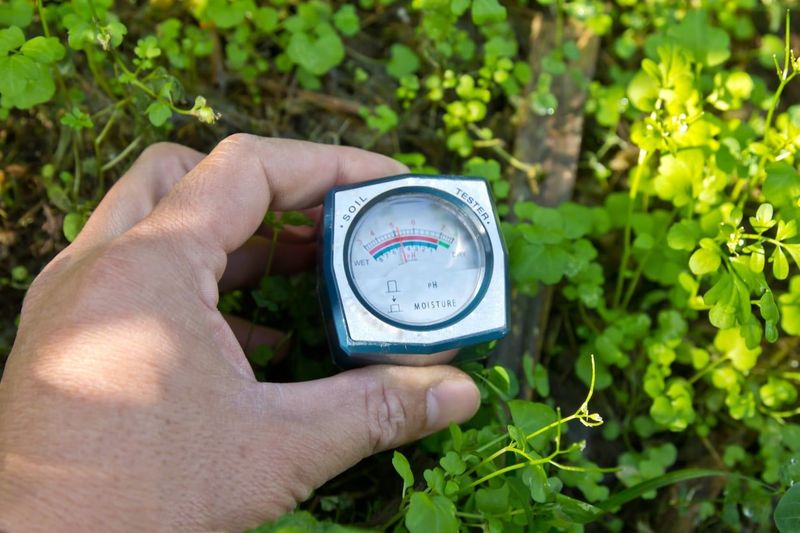
Rather than watering on a fixed daily schedule, use the soil itself as the guide. Push a finger, a wooden dowel, or a trowel blade about 6 inches into the root zone near the plant.
If the soil at that depth feels cool and clearly moist, the plant does not need water yet, regardless of how the leaves look in the afternoon sun.
University of Minnesota Extension’s established-shrub watering guidance recommends targeting moisture through roughly the upper 6 to 9 inches of soil for established shrubs, while University of Georgia Cooperative Extension’s landscape best management practices suggest a similar 8 to 10 inch target. The specific number matters less than actually checking the depth, because soil type, sun exposure, and recent rainfall all change how quickly moisture moves and how long it stays.
The decision from that check is straightforward. Dry soil several inches down means the plant is ready for a slow, thorough soak at the base.
Damp or soggy soil means water is not the answer. If the soil stays wet for days at a time and the plant continues to struggle, the problem is more likely drainage, compaction, or root damage than drought.
Missouri Extension’s overwatering guidance notes that roots deprived of oxygen by waterlogged soil can deteriorate quickly, and adding more water only extends that deprivation. Correcting drainage or investigating root health is the better path forward when the soil is already saturated.
Give a dry hydrangea one slow, thorough soak
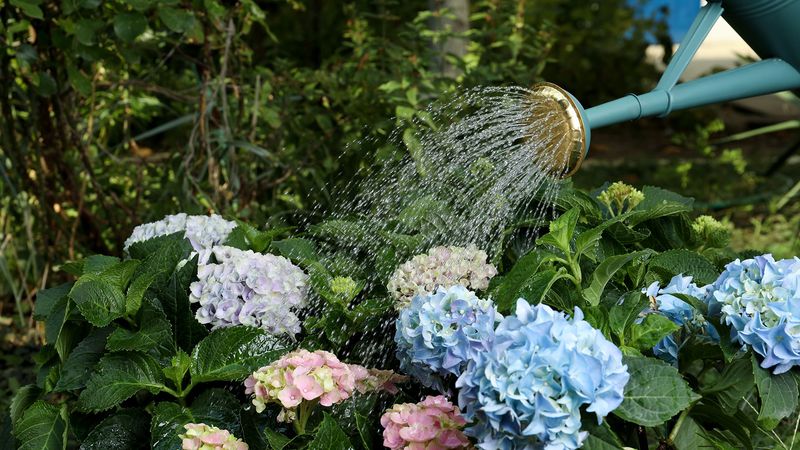
Once a soil check confirms that the root zone is genuinely dry, the corrective action is simple: water slowly at the base and across the root zone, not just at the stem, until the deeper soil becomes moist. How long that takes depends on your soil and your water source, and no fixed number of minutes applies universally.
Sandy soil absorbs water quickly but may need more volume to stay moist. Dense or compacted soil takes water in slowly, and if you apply it too fast, it will run off the surface before penetrating.
The right approach is to apply water at a pace the soil can absorb, pause if you see runoff forming, and then check moisture depth afterward with a trowel or probe to confirm the water actually reached the root zone. UGA Cooperative Extension’s landscape management guidance emphasizes verifying actual moisture depth rather than estimating based on time or volume alone.
Soaker hoses and drip irrigation lines make this easier because they release water slowly at ground level, giving the soil time to absorb it and keeping foliage dry in the process. OSU Extension’s heat-wave guidance for hydrangeas specifically recommends slow application methods for this reason.
A regular garden hose set to a gentle trickle works too, as long as you move it around the root zone rather than leaving it in one spot beside the stem.
After watering, push a finger or trowel blade back into the soil to verify that moisture has moved down several inches. If the surface is wet but the soil 4 or 5 inches down still feels dry, the water has not yet reached the active root zone and the plant will benefit from continued slow application.
University of Minnesota Extension’s shrub watering guidance stresses this verification step as the most reliable way to know whether an irrigation session was actually effective, rather than relying on how long the water ran.
One thorough soak addresses immediate drought stress, but it does not cure root rot, disease, leaf scorch, or other underlying problems. If the plant continues to look stressed after the soil has been properly moistened, the cause lies elsewhere and deserves a closer look.
Keep the root zone moist without making it soggy
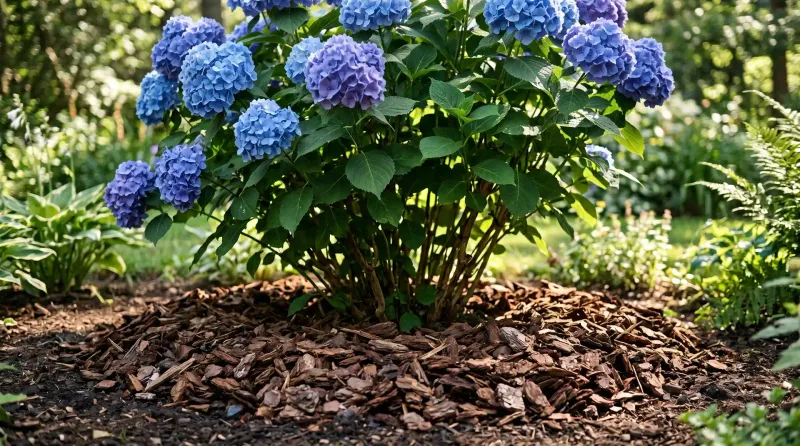
After correcting a dry root zone, the goal shifts to maintaining consistent moisture without tipping into saturation. A few straightforward habits make that easier to sustain through the rest of the season.
Water at the base of the plant rather than overhead. Repeatedly wetting the foliage creates conditions that favor leaf-spot diseases, and overhead watering is less efficient because much of it evaporates before reaching the root zone.
University of Massachusetts Amherst’s hydrangea growing guide recommends drip irrigation or soaker hoses for this reason, noting that keeping leaves as dry as practical reduces disease pressure. Morning is generally the better time to water because evaporation rates are lower and any foliage that does get wet has time to dry before evening.
A 2 to 3 inch layer of organic mulch over the root zone, such as shredded bark, wood chips, or pine needles, can slow evaporation noticeably and help moderate soil temperature during heat waves. University of Minnesota Extension’s newly planted shrub guidance recommends mulching as part of a standard establishment routine, and the same benefit carries over to established plants in summer.
Keep mulch pulled back a few inches from the stems to avoid trapping moisture against the crown, and avoid piling it so deep that it holds too much water or prevents rain from reaching the soil below.
Standing water that lingers after rain or irrigation is a warning sign, not a watering opportunity. Iowa State University Extension’s hydrangea growing guide notes that hydrangeas prefer consistent moisture but cannot tolerate continually saturated soil.
If water pools around the plant regularly, the fix is drainage correction, whether that means amending the soil, adjusting grade, or relocating the plant, not adding more irrigation.
Adjust the routine for new plants, containers, and different soils
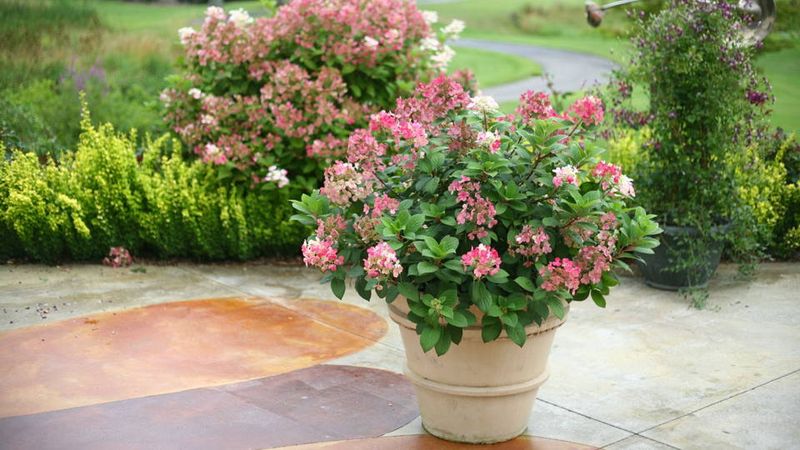
The guidance for established landscape hydrangeas does not transfer automatically to every growing situation. Knowing where the standard advice changes can prevent both underwatering and overwatering in conditions that behave differently.
Newly planted shrubs need more frequent moisture while their roots are still spreading beyond the original root ball. University of Minnesota Extension’s newly planted shrub watering schedule suggests daily watering during the first one to two weeks after planting, then every two to three days through roughly the first three months, followed by weekly watering until the plant is established, assuming no substantial rain has fallen.
Once a shrub has been in the ground for a full growing season or two and has developed a broader root system, daily watering is no longer the default and can actually encourage the surface-oriented root habits that make heat stress worse.
Container hydrangeas operate by entirely different rules. Pots dry out much faster than garden beds because the soil volume is limited, the sides of the container heat up, and drainage is direct.
Virginia Cooperative Extension research on containerized hydrangeas documents how quickly container plants can reach water stress compared with landscape-grown shrubs. During hot weather, a container hydrangea may genuinely need water every day, so daily checking is reasonable, but always verify the soil before adding water rather than watering automatically.
Soil type changes the irrigation math for landscape beds too. Sandy soil drains quickly and may need smaller amounts applied more often to stay moist at root depth.
Heavy clay or compacted soil holds water longer but absorbs it slowly, so applying water faster than the soil can take it in just creates runoff. In poorly draining clay, the priority is often drainage improvement rather than more frequent irrigation.
Hydrangea variety also affects how much summer stress a plant can tolerate. Oregon State University Extension’s hydrangea variety overview notes that bigleaf hydrangeas are the most sensitive to heat and drought, while panicle hydrangeas are among the most adaptable and can handle more sun when soil moisture is maintained.
Oakleaf and smooth hydrangeas fall somewhere in between. Matching the variety to your site conditions reduces how often watering needs to compensate for a poor fit.
Make today’s rescue a soil check, not another quick splash
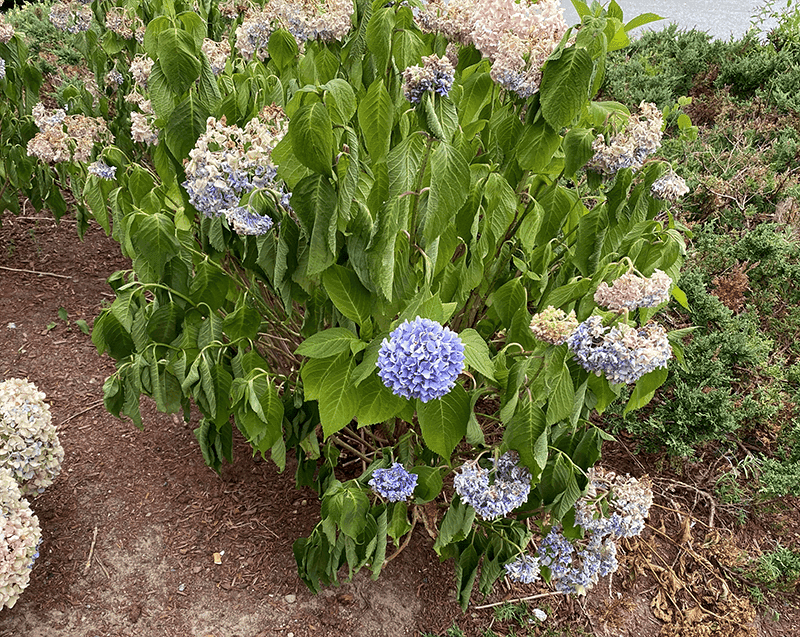
The fastest thing you can do for a wilting hydrangea right now is not to grab the hose. Push a finger or a trowel blade several inches into the soil beside the plant and find out what is actually happening down there.
If the soil is dry at that depth, give the plant one slow, thorough soak at the base, moving the water across the root zone and pausing if runoff starts. Check the depth again afterward to confirm moisture has actually moved down.
OSU Extension’s heat-wave hydrangea guidance and University of Maryland Extension’s hydrangea problem guide both point to this soil-first approach as the reliable way to respond to summer wilt.
If the soil is already damp or soggy, stop. Adding water will not help and may accelerate root damage.
University of Missouri Extension is clear that overwatering a heat-stressed plant in wet soil makes things worse. A plant that keeps wilting in moist soil needs a diagnosis, not more irrigation.
Responding to what the root zone actually tells you, rather than reacting to a drooping leaf on a hot afternoon, is the habit that keeps hydrangeas healthier through the whole summer.