
What To Do In The First Few Seconds When A Black Bear Wanders Into Your North Carolina Yard
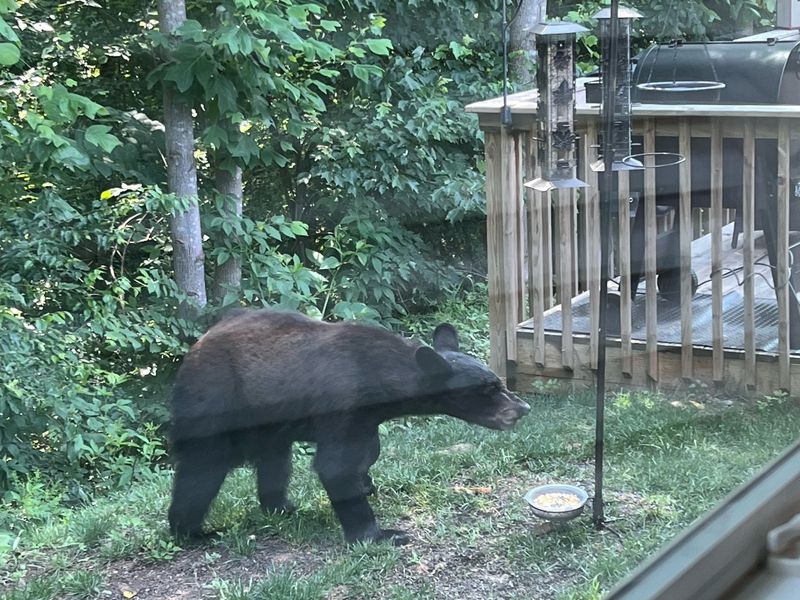
A dark shape moving past the tomato cages can stop your heart for a second. Black bears live in North Carolina, and some will wander through a backyard looking for an easy meal.
What you do in the first few seconds matters for your family, your pets, and the bear. Here is a calm plan you can follow without panic.
In the first seconds, create distance
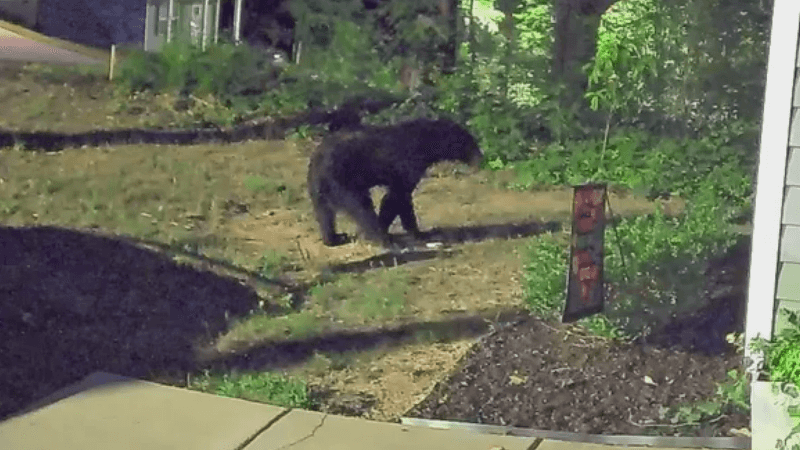
Start with the people. Keep children right beside an adult, and if you are already indoors, stay indoors.
Watching through a window is the safest seat in the house.
If you are outside, walk calmly toward the nearest building or vehicle. Do not run, and do not step toward the bear.
BearWise encounter advice centers on giving the animal space and staying calm, and the same idea applies in a yard.
Resist the urge to go back out for anything. A grill cover, a bag of trash, a bowl of pet food, or a camera is not worth a close meeting.
Do not try to grab a pet that has wandered near the bear either. Get yourself and the kids to a secure spot first.
It also helps to know that a bear simply being in a neighborhood is not, by itself, considered threatening behavior, according to the Wildlife Resources Commission. Most of the time the bear is just passing through or checking for food.
Your job is to be a boring, distant neighbor so it can move along.
Once everyone is secure, you can think about the next step. The NC BearWise flyer lays out the same order: safety first, noise from a distance if needed, then clean up attractants.
Keep children and pets out of the encounter

Kids get curious fast, and a bear can look like a big fuzzy dog from a distance. Call them to you in a steady voice and walk them inside together.
Do not let them approach, surround, or chase the bear, and do not let them snap photos from the lawn.
The Wildlife Resources Commission notes that a bear in a neighborhood with children is not automatically a threat, as explained in its guidance on trapping and relocation. The bear usually wants food, not a fight.
Keeping kids close simply removes any chance of a bad surprise.
Dogs need a plan too. Bring your dog inside only if you can do it safely, meaning the bear is not between you and the dog.
Never let a dog bark at, chase, or harass a bear, even from behind a fence, because that can turn a quiet visit into a standoff.
If a dog is already in an encounter, do not step in at close range. BearWise dog guidance warns against intervening up close because people get hurt that way.
Stay back, keep your voice calm, and call your dog from a safe spot.
Leave the bear an exit, then consider noise
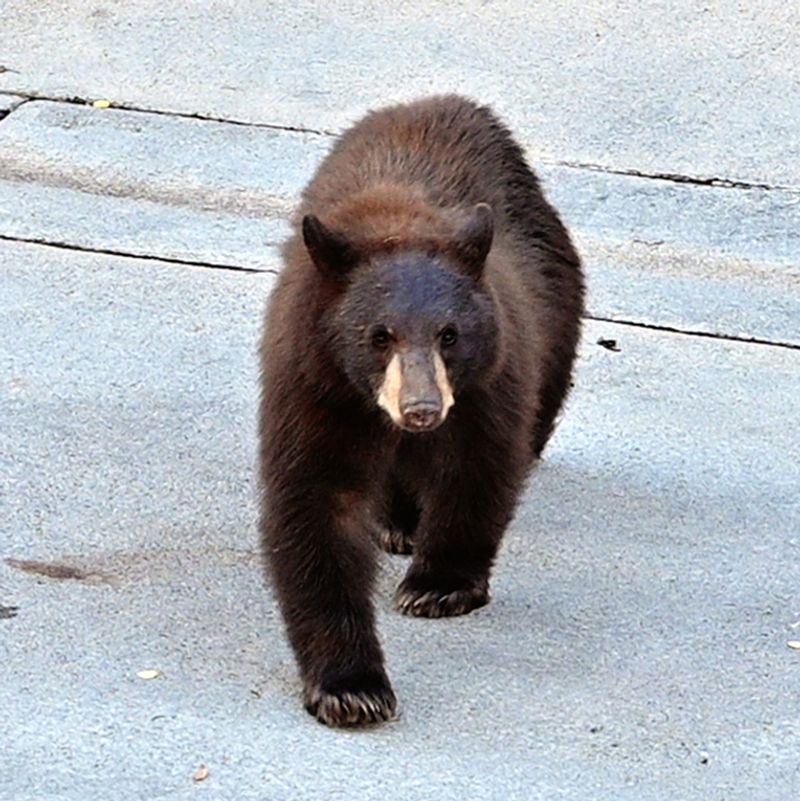
A bear that feels trapped is the one most likely to act defensively. Look at your yard the way the bear sees it and notice where it can leave.
Do not surround it, and do not try to steer it toward one exit with your body or your car.
If the bear is in or near a building such as a garage or shed, back away. BearWise advises leaving doors open where that is appropriate so the bear has a way out, and never locking it inside.
Noise can help, but only from a safe distance. From a door or window, or from a spot well away from the bear, you can call out in a firm voice or bang pots together.
The NC BearWise flyer lists noise as a tool for yards, with the bear’s exit kept clear.
Do not walk toward the bear to make it hear you, and do not keep escalating if it ignores you. The commission says not to taunt a bear that does not respond to scare tactics, as covered on its page about bears in residential areas.
Patience works better than pressure, and many bears leave on their own once they find nothing to eat.
Give cubs and stress signals extra space
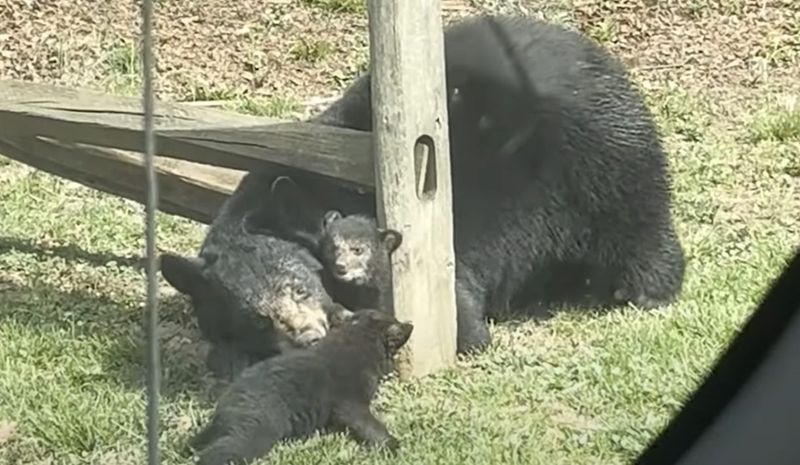
Cubs change the picture. If you see small bears, assume the mother is close, even if she is out of sight.
Do not approach or handle a cub, no matter how lost it looks, and leave the area quietly.
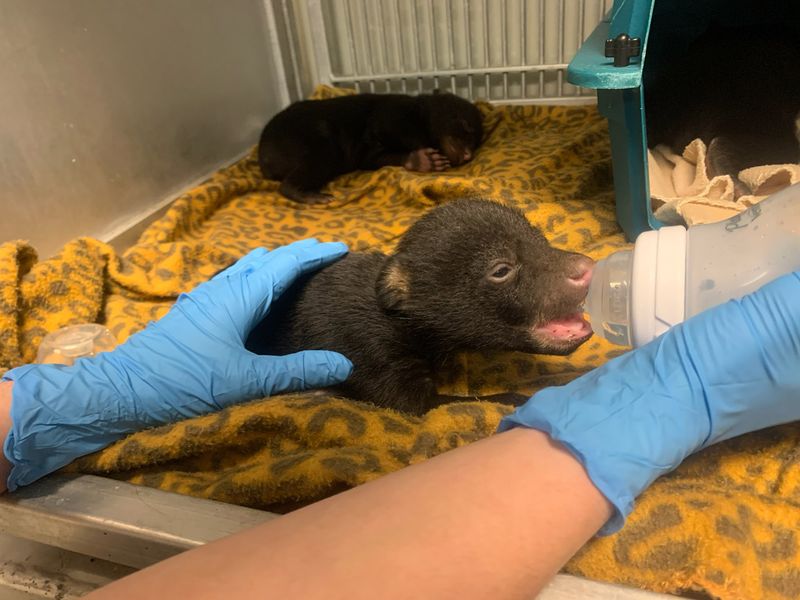
If you believe a cub is truly orphaned, call the Wildlife Resources Commission instead of trying a rescue. Its advice on bear cubs explains that a cub left alone is often just waiting for its mother to return.
Body language can be confusing. A bear standing on its hind legs is not necessarily about to charge.
It is often trying to see or smell what is going on, much like a person craning their neck.
Sounds are better clues. Huffs, snorts, moans, or popping jaws can signal stress and mean you are too close, according to the commission.
You do not need to test the bear or figure out its mood. Just back away slowly, keep your eyes on it, and get to a building.
Secure food attractants after the bear leaves
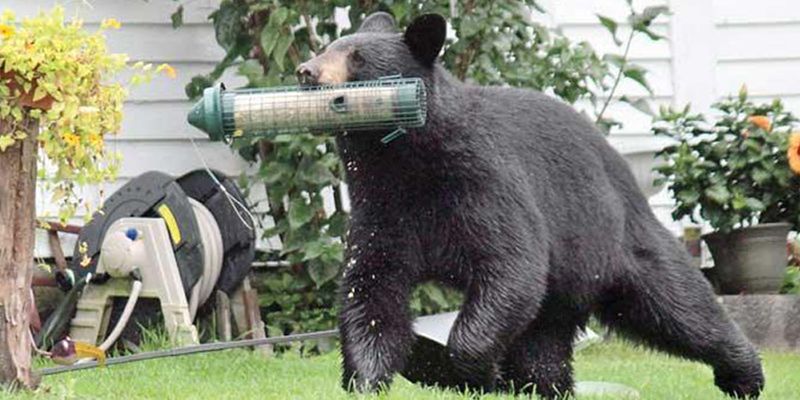
Timing matters here. Wait until the bear is gone before you touch anything outside.
Stepping out to drag in a trash can while the bear is nearby puts you in the exact close-up meeting you are trying to avoid.
Once the yard is clear, work through the list. Secure garbage and recycling, bring in pet food, take down bird feeders, and clean and store grills.
The Wildlife Resources Commission also names compost and feeders as things that can draw bears in.
A bear that finds easy food learns to come back. Removing those rewards gives it fewer reasons to return, which is usually the first response officials recommend.
It will not guarantee you never see a bear again, since a bear can still pass through on its way somewhere else.
Think of it as a yard habit, not a one-time fix. Rinse trash cans, store bins in a garage or shed, and feed pets indoors.
BearWise pairs these steps with staying calm during a visit. Neighbors who do the same make the whole street less tempting.
Put fall sightings in North Carolina context
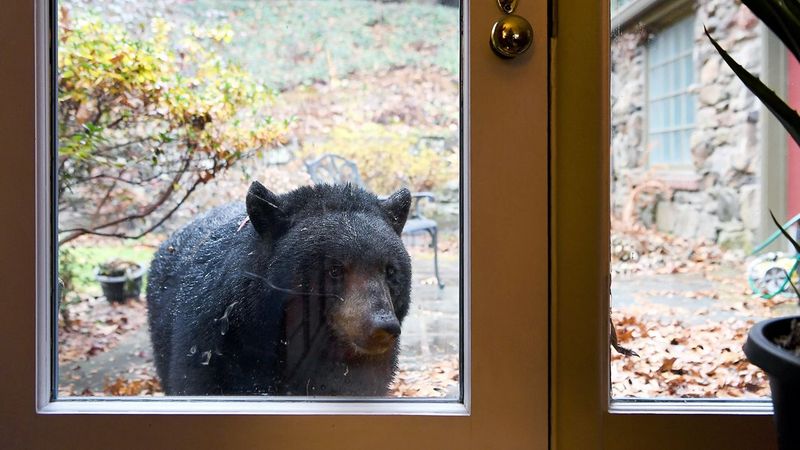
Bears do eat more as summer fades. The commission says their appetites rise in late summer and fall as they build reserves for colder months.
That is a good reason to tidy up attractants, but it does not mean every yard will get a visitor.
Reports tell a more mixed story. The agency’s 2023 annual bear report says reports usually peak from May through August and can drop once acorns become available.
Sightings can also happen in any month, since bears do not follow one tidy schedule.
Where you live matters too. Bears are common in the mountains and Coastal Plain and less common in the Piedmont, though transient bears have turned up in every county.
In spring, young bears may travel through central North Carolina looking for new territory.
Finally, a bear walking through is not proof of bad behavior. The commission treats presence alone as not threatening.
Use the season as a reminder, then get back to the simple steps.
Know when to contact authorities
Most bear visits are quiet and need no phone call. An emergency is different, and in that case call 911.
The commission points people to 911 for emergencies in its wildlife problem FAQs.
For other wildlife concerns, such as a bear that keeps returning or a cub you think is orphaned, use the Wildlife Helpline at 866-318-2401. It operates Monday through Friday, 8 a.m. to 5 p.m.
A separate number appears in a recent notice. The commission’s October 2026 notice lists 800-662-7137 for after-hours reports of concerning or threatening bear behavior.
Treat it as that and nothing broader.
Do not expect a trap to roll up just because a bear showed up on your street. The agency says it typically does not trap or relocate bears for simply being in a neighborhood, and removing attractants is the usual first response.
A call still helps staff track patterns and give you advice.
A bear is a neighbor on the move, and the best host is the one who keeps the porch light on and the trash locked up.