
Why Your Cabbage Grows Big Outer Leaves But Never Forms a Tight Head – What to Check First
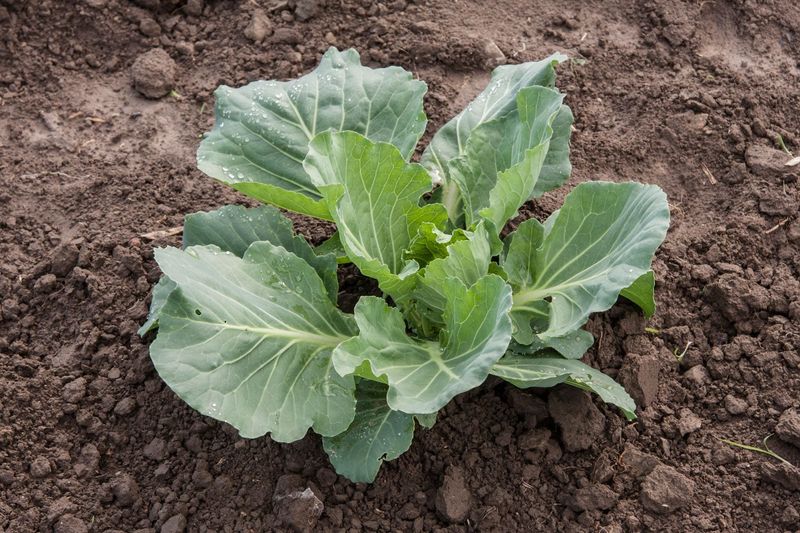
You planted cabbage expecting a firm, round head, and instead you got a plant with enormous floppy leaves that just keeps spreading outward. Before you blame the spacing, there are several more likely explanations worth checking first. Heat, water habits, nitrogen, and damage to the plant’s center are all documented reasons cabbage stays leafy, and sorting out which one applies to your garden can save you a lot of frustration.
Wide spacing usually changes head size, not reliably whether cabbage heads
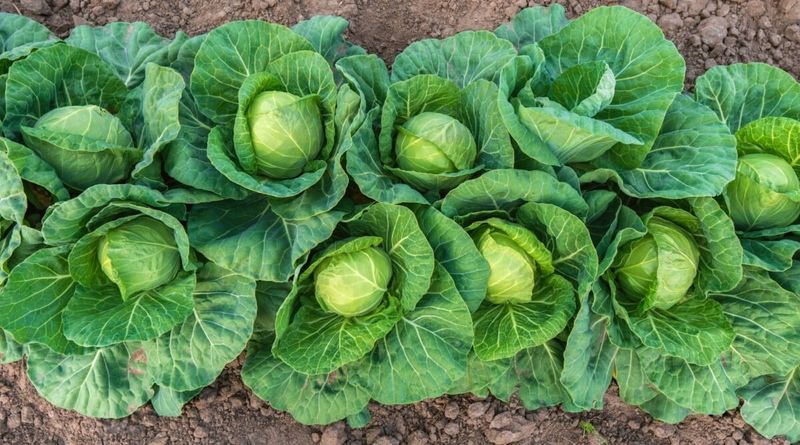
Spacing affects how cabbages compete for water, nutrients, and light, but it does not work as a simple on-off switch for heading. According to University of Illinois Extension guidance on cabbage, closer spacing generally produces smaller, more compact heads, while wider spacing gives individual plants more room and can support larger heads. That relationship runs in the opposite direction from what the title assumes.
University of Maryland Extension similarly frames spacing as a head-size and yield management decision rather than a heading trigger. A plant given extra room typically has fewer competitors, which tends to help it form a larger head, not prevent one from forming at all.
Wide spacing and overcrowding are not the same thing, and mixing them up leads to bad fixes. Overcrowding restricts roots, cuts airflow, and raises disease risk. Wide spacing does none of those things. Recommending tighter planting to “force” a cabbage to wrap is not supported by extension guidance and can create new problems while leaving the original cause untouched.
What this means practically is that if your plant is sitting in open soil with plenty of room and still refuses to form a head, spacing is probably not the culprit. The rest of this article works through the causes that extension sources actually connect to loose or non-heading cabbage: wrong crop identification, immaturity, heat, inconsistent watering, excess nitrogen, bolting, pests, disease, and damage to the center of the plant.
Identify the crop and confirm whether it is mature
Before anything else, make sure you are actually growing standard head cabbage. Both Chinese cabbage and Napa cabbage are commonly called “cabbage,” but as University of Wisconsin Extension’s vegetable growing guide notes, these crops have different growth habits and different spacing requirements. Applying standard head-cabbage logic to a Napa or Chinese variety will lead you to the wrong conclusions.
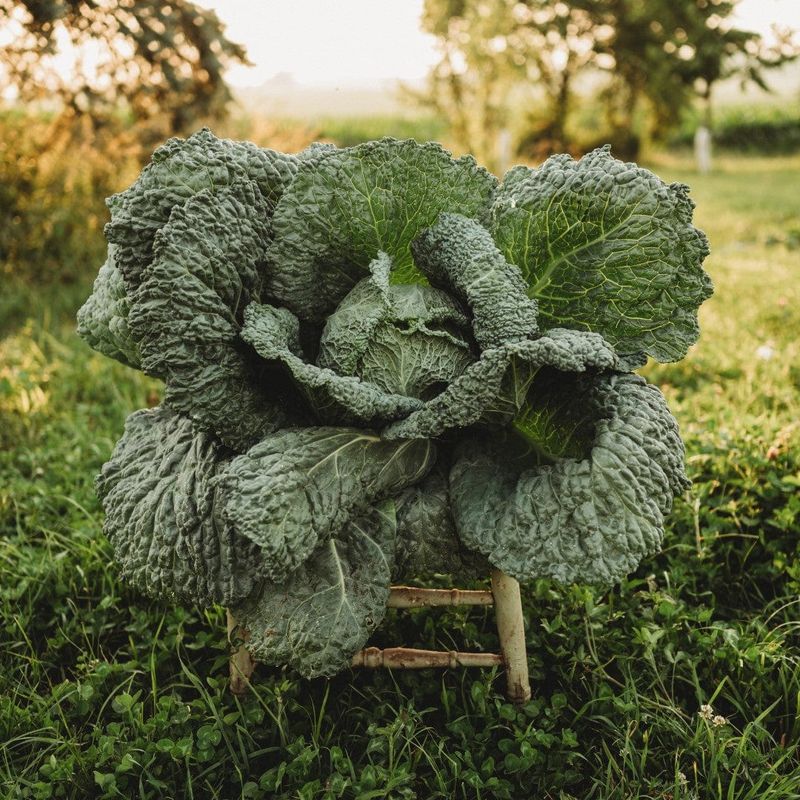
Even within standard head cabbage, variety matters enormously. UC Agriculture and Natural Resources and University of Maryland Extension both describe meaningful differences between early, small-headed types, large late-season varieties, red cabbages, and Savoy types. A Savoy cabbage, for example, has distinctly crinkled, looser leaves by nature. An open, leafy appearance on a Savoy is not a sign of failure; it is just what that plant looks like.
Cabbage also builds leafy biomass before it transitions into head formation. University of Wisconsin Extension’s cabbage activity guide notes that the large outer wrapper leaves you see in a garden are a normal part of the plant’s development; commercial growers strip them before sale, which is why store-bought heads look so neat and tight. A plant that looks “open” may simply be doing exactly what it should at its current age.
Pull out your seed packet and check the days-to-maturity figure. Compare that number against your planting date and the current calendar. University of Minnesota Extension points out that immaturity is one of the most overlooked explanations for a plant that has not yet wrapped. Look at the center of the plant: if new, tightly cupped leaves are still forming there, the plant is likely still on track.
Review heat and bolting before changing the spacing
Cabbage is a cool-season crop, and sustained warm temperatures can disrupt heading long before spacing ever becomes relevant. Utah State University Extension notes that cabbage growth is best when temperatures stay below roughly 80 degrees Fahrenheit, and that temperatures above approximately 85 degrees can significantly slow growth and alter how a head develops. Those are general thresholds, not hard rules for every cultivar or region, but they give you a useful benchmark for reviewing your recent weather history.
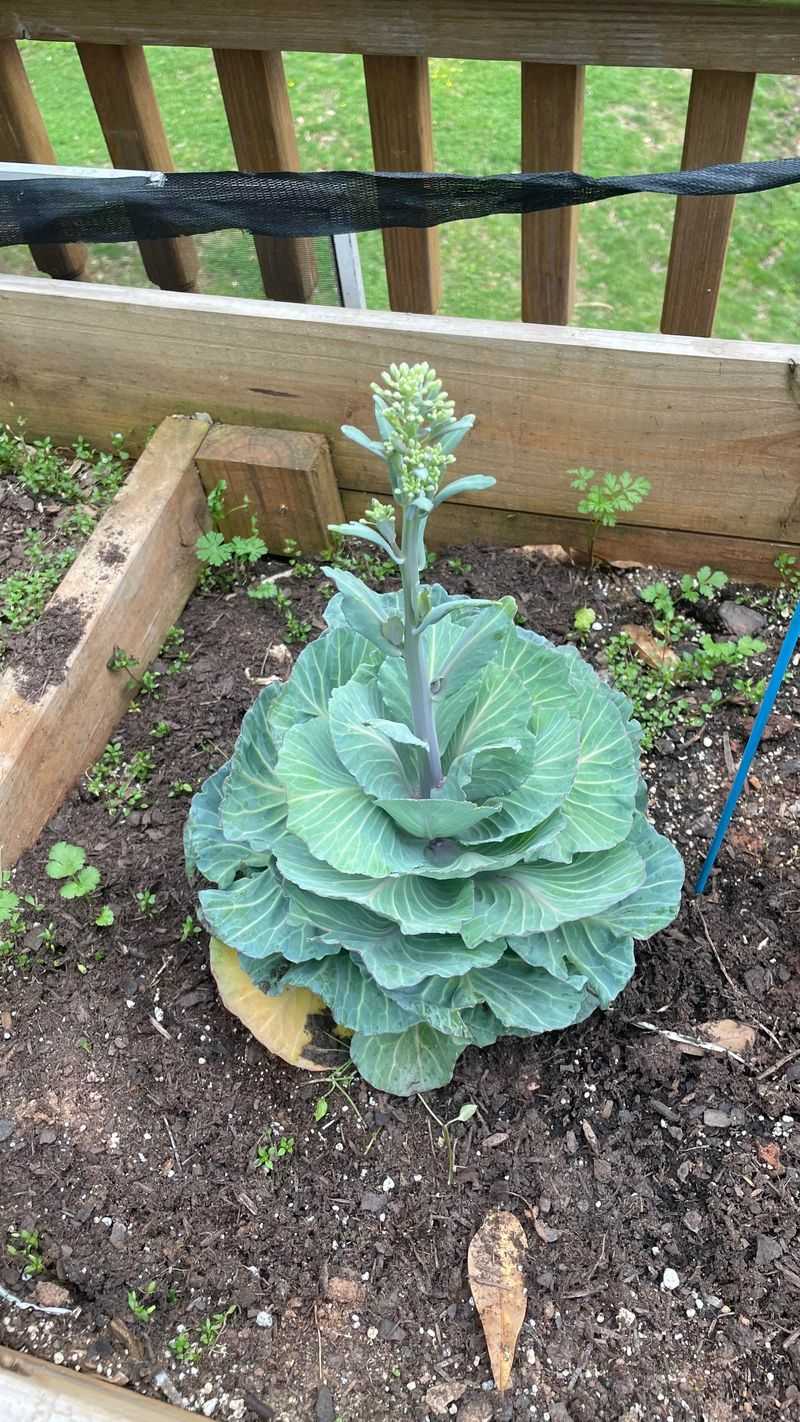
Heat can also push a cabbage into bolting, which means the plant shifts energy toward flowering rather than forming a tight head. Oregon State University Extension documents a case where repeated periods of 80-plus-degree heat contributed to bolting before a usable head developed, and points out that cabbage varieties differ substantially in their sensitivity to this kind of temperature stress. A plant that has already bolted will not reverse course and wrap into a firm head, regardless of how you adjust its spacing.
Look at the center of your plant for a thickening stalk or the beginnings of a flower structure. That is the clearest visual sign of bolting. Also check whether the inner leaves seem to be cupping inward or whether the plant’s center looks stalled and loose.
University of Minnesota Extension recommends timing plantings so that heading occurs during cooler weather. If your spring planting ran into a stretch of summer heat before the head could form, that timing gap is a more credible explanation for loose growth than the distance between your plants. Addressing heat means adjusting your planting calendar for the next crop, not rearranging the current one.
Separate water stress from excess nitrogen
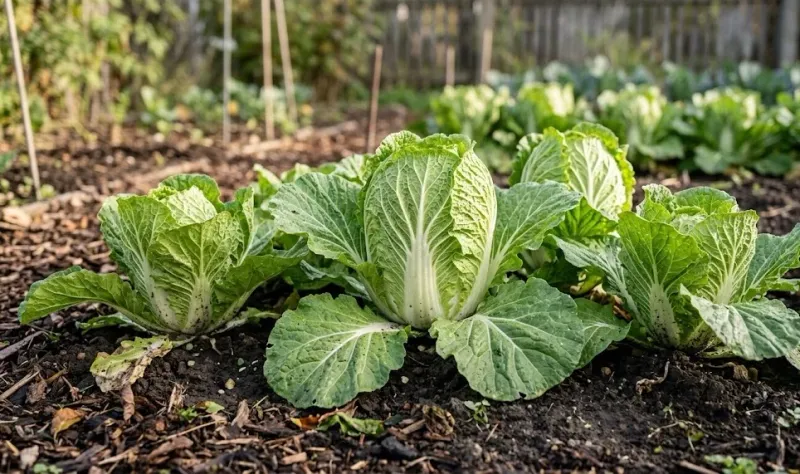
Water consistency and fertilizer choices can both produce a leafy, loose cabbage, but they work through completely different mechanisms. Sorting out which one applies to your situation helps you avoid making it worse with the wrong correction.
Drought and irregular moisture interfere with the cell development that gives a cabbage head its firm, dense texture. Utah State University Extension and Penn State Extension both recommend keeping soil moisture consistent, with roughly 1 to 2 inches of water per week adjusted for rainfall and your soil type. Uneven watering can also cause bitterness in the leaves. One thing to avoid is dumping a large amount of water on a plant after a dry spell: sudden heavy irrigation after drought can split a mature head.
Excess nitrogen pulls the plant in a different direction. University of Minnesota Extension identifies excessive nitrogen as a documented contributor to heading problems, and Utah State Extension warns specifically that high nitrogen after head formation begins can produce excessive leaf growth, loose heads, and splitting. If you have been applying a nitrogen-heavy fertilizer throughout the season without scaling back, that feeding habit is worth reconsidering.
What you should not do is automatically reach for phosphorus, bone meal, or another amendment in hopes of triggering a head. University of Illinois Extension and Utah State Extension both point toward soil testing as the right starting point for any nutrient correction. Adding amendments without knowing your soil’s current levels can create imbalances that cause new problems. A simple soil test tells you what is actually needed rather than what seems logical from the outside.
Inspect the center for pests, disease, or growing-point damage
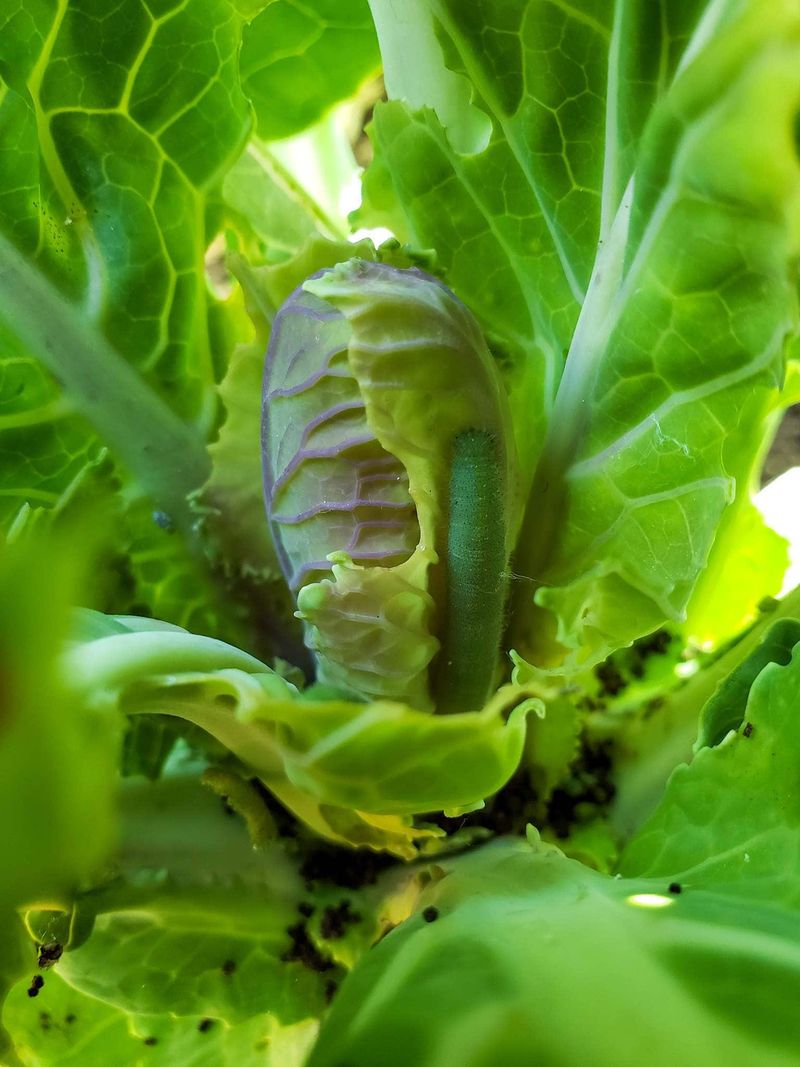
Once you have ruled out immaturity, heat, water issues, and nitrogen, take a close look at the plant’s center. The central growing point is where all new leaf and head tissue originates, and if it has been damaged, a firm head may not form regardless of what else you adjust.
University of Minnesota Extension specifically identifies growing-point damage as a possible reason cabbage stays leafy and open. That damage can come from several sources: rough handling during transplanting, unexpected cold exposure on a young plant, insect feeding in the crown, or disease. Caterpillars and other larvae that work their way into the center of a young cabbage are a particularly common culprit, because the feeding damage happens out of sight while the outer leaves continue to grow normally.
University of Minnesota Extension’s cool-season crop guide also notes that growing-point injury from cold, pests, or mechanical damage can permanently prevent heading. Serious damage to this tissue is not something a spacing adjustment, transplant, or fertilizer application can repair. If the growing point looks brown, mushy, chewed, or absent, the realistic outcome for that plant is that it will not produce a marketable head.
Gently part the outer leaves and look for live insect activity, slime trails, discolored tissue, or a stalled center that is not producing any new growth. Healthy heading cabbage should show tightly cupped new leaves at the center. Disease problems like black rot or clubroot can also compromise the plant’s structure without being immediately obvious from the outside. If you find active pests, address them according to the pest involved.
If the growing point looks physically destroyed, that plant’s heading window has likely closed, and your effort is better spent planning the next crop.
Choose spacing and timing for the next crop
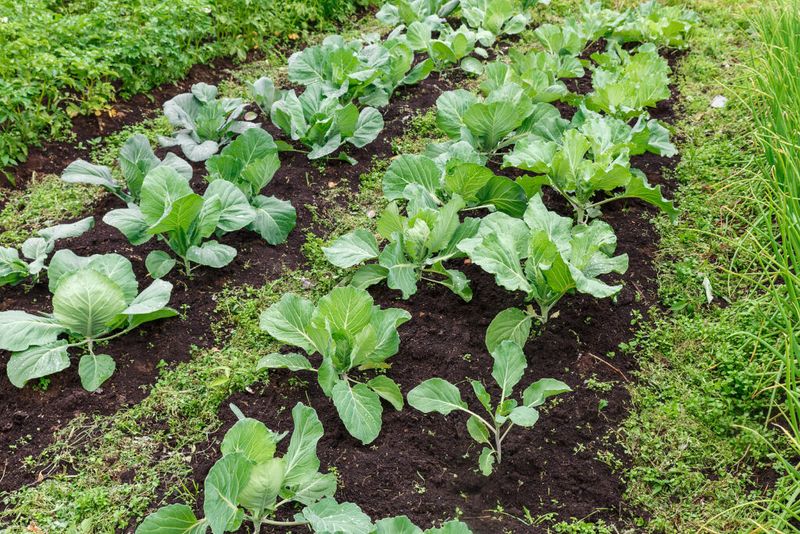
Spacing is most useful as a planning tool, not a late-season rescue option. Moving a large, established cabbage plant to a new location risks damaging its root system and will not repair heat stress, nitrogen imbalance, or growing-point injury. The right time to get spacing right is before the transplants go in the ground.
For standard head cabbage, Utah State University Extension and Penn State Extension recommend planting roughly 12 to 18 inches between plants in the row, with rows spaced approximately 24 to 36 inches apart. Some large late-season cultivars benefit from up to 24 inches between plants. The seed packet for your specific variety is the most reliable guide, because head size, plant spread, and maturity window all vary by cultivar.
University of Illinois Extension notes that tighter spacing tends to produce smaller heads, which can actually be a practical advantage if you want heads that fit more easily in a home kitchen. Wider spacing within the recommended range supports larger individual heads. Neither extreme – planting so close that plants crowd each other or so far that the guidance range is far exceeded – is recommended as a way to influence whether a plant forms a head at all.
Timing matters at least as much as spacing. University of Minnesota Extension and University of Maryland Extension both recommend planning so that heading occurs during cool weather. In regions where spring planting runs into summer heat before the head can form, a fall crop planted in late summer is often the more reliable option. Counting back from your expected first frost date and matching that window to your cultivar’s days-to-maturity is a practical way to set yourself up for success on the next round.
Treat the current plant realistically and use the leaves wisely
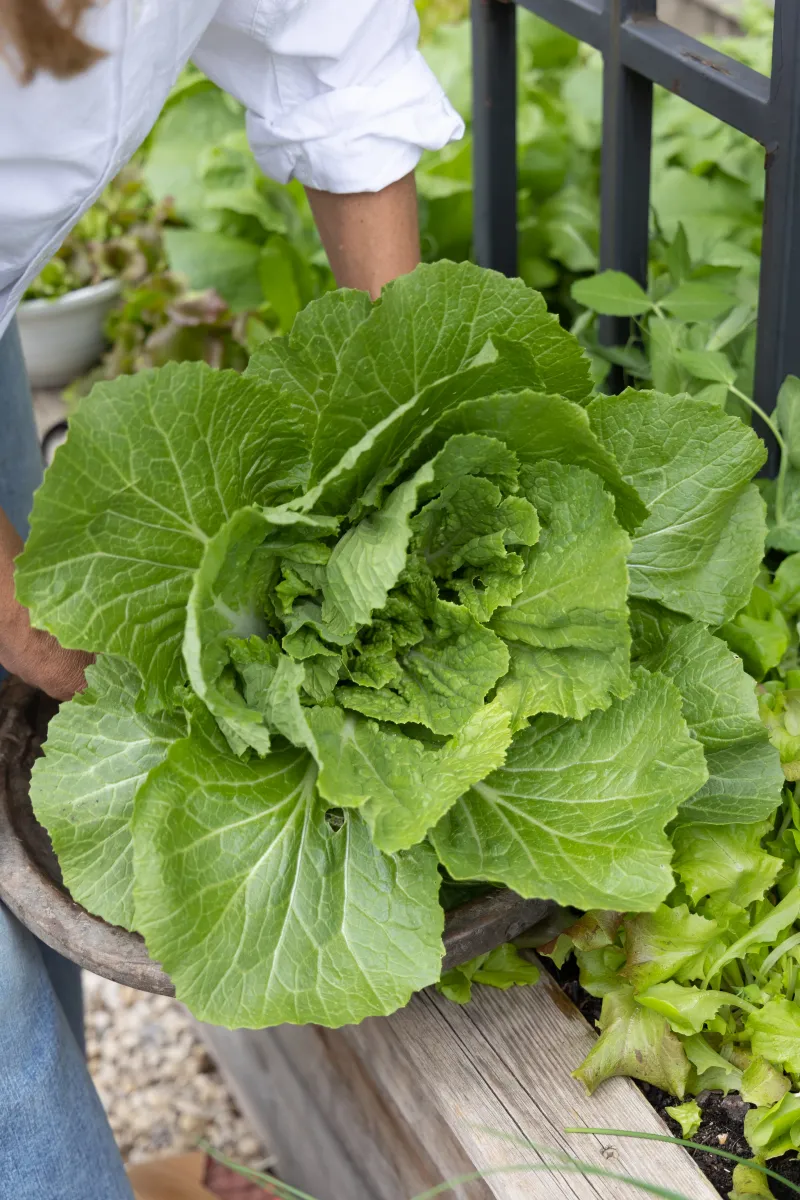
A cabbage that never formed a firm head is not automatically a failed crop. Large outer leaves can reflect normal development, an inherently loose variety, immaturity, heat stress, inconsistent watering, excess nitrogen, bolting, or center damage. Wide spacing alone is not a documented cause of heading failure, and treating it as one can send you chasing the wrong fix.
Avoid the temptation to force a result by crowding plants, dumping water on them, applying unapproved fertilizer, or transplanting the whole thing to a new spot. University of Minnesota Extension and University of Illinois Extension point to diagnosis and corrective planning for the next crop, not last-minute interventions on an established plant.
As for the plant in front of you right now, check the leaves honestly. If they are not bitter, diseased, or badly damaged, they are still usable in the kitchen. Oregon State University Extension notes that bolting can increase bitterness, so taste a leaf before deciding. Loose cabbage leaves work well in soups, stir-fries, and slaws even when they never wrapped into a grocery-store-style head.
The most useful thing a loose, leafy cabbage can do at this point is teach you something. A plant that stayed open all season is telling you to look at your timing, your temperatures, your nitrogen habits, and the condition of that central growing point – and that information is exactly what you need to grow a better head next time.