
Why Your Holiday Cactus May Look Pale During Heating Season, and What to Check
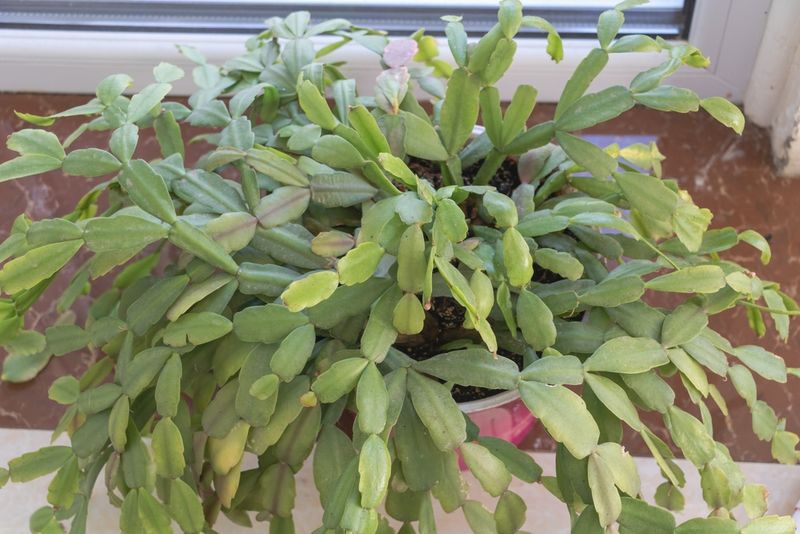
You flip the thermostat up for the first chilly week, and suddenly your Christmas cactus looks faded and a little yellow. It is easy to blame the heater and worry the plant is on its way out.
The timing is worth noticing, but a pale color has several possible explanations, and most can be checked in a few minutes. Here is how to look at your plant calmly before you change anything.
A pale cactus does not point to one cause
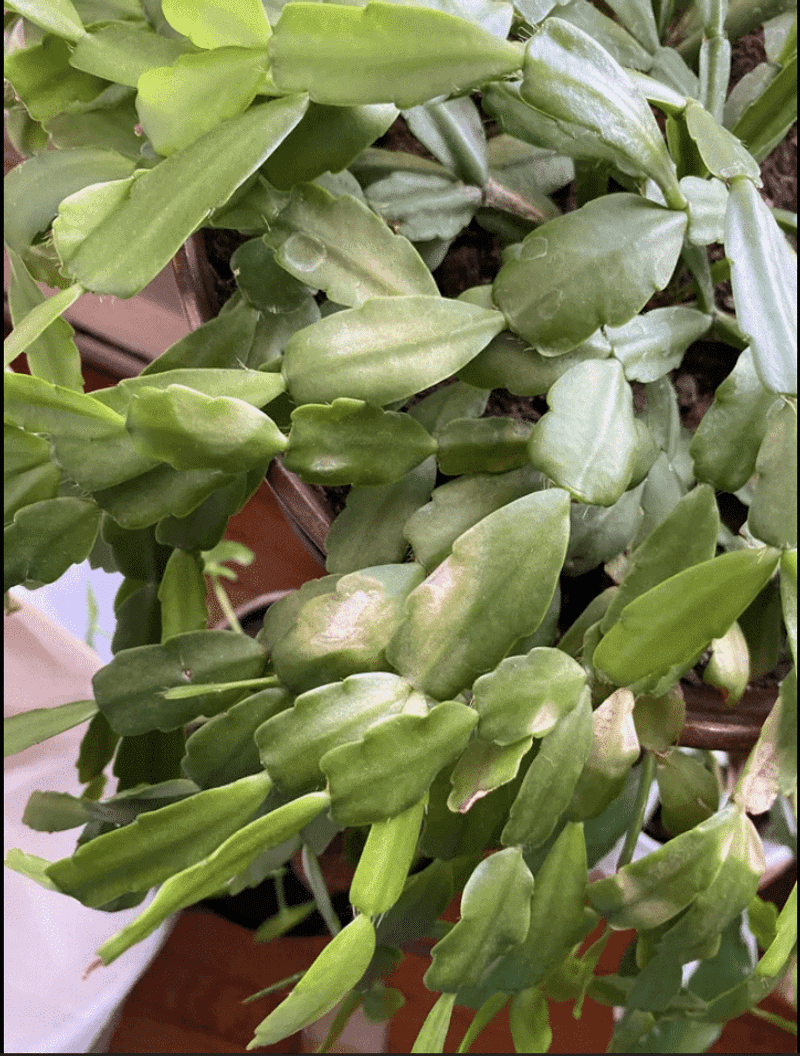
When the furnace kicks on and your cactus fades at about the same time, the heater looks like the obvious suspect. The timing is a good reason to check it, but it does not prove the heat caused the color change.
Pale stems can show up for several different reasons, and the season only tells you when you happened to notice.
First, a quick vocabulary fix. The flattened green pieces on your plant are stem segments, which botanists call phylloclades, and the plant has no true leaves.
Calling them leaves is common shorthand and perfectly fine in conversation, but it helps to remember you are looking at stems when you check for problems.
Also, the plant on your shelf may not be a true Christmas cactus. As Iowa State Extension explains, many plants sold under that name are actually Thanksgiving cactus or hybrids, and bloom timing and some features differ between them.
So two holiday cacti in the same room may not behave in exactly the same way.
The best approach is to treat the pale color as a clue, not a verdict. Extension guidance, including University of Minnesota Extension, points to several possibilities, such as too much direct sun, soil that has gone too dry, and in some cases too much water or root trouble.
Pale color by itself cannot tell you which one you are dealing with.
So the plan is simple. Look at the plant’s surroundings and any other symptoms first, then decide whether any change in care is needed.
The next sections walk through those checks one at a time.
Could direct sunlight be fading the segments?
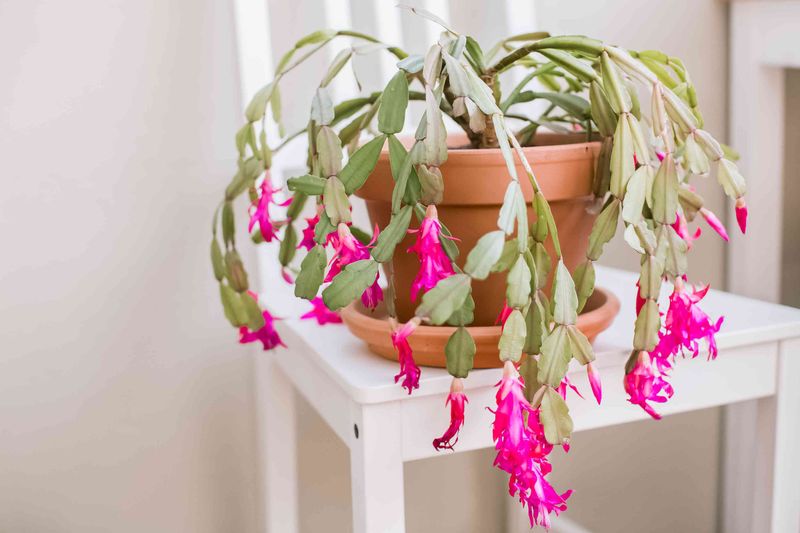
Before you touch the watering can, look at where the plant is sitting. Too much sun is one of the most common reasons holiday cactus stems turn pale green, and University of Minnesota Extension lists excessive sunlight among the causes.
Clemson’s guidance adds that bright summer sun can leave the stems looking pale and yellow.
Indoors, the safer target is bright, indirect light. Think of a spot where the plant gets plenty of daylight but the sun is not beaming straight onto the stems for hours.
A bright room with a sheer curtain, or a few feet back from a sunny window, often fits that description.
Here is a useful twist for this time of year. The sun sits lower in the sky in fall and winter, so it can reach deeper into a room and hit a window spot that was shaded in summer.
A plant that was perfectly happy in July may now be getting a few hours of strong light in the afternoon.
Try a simple location check. Notice when the sun reaches the plant, whether the paler stems are on the side facing the glass, and whether the color is lightest on the parts that get the most direct light.
Uneven fading that follows the sun is a helpful clue.
If light looks like a likely match, you can slide the pot back or filter the sun and then watch how new growth looks over the coming weeks. Make one change at a time so you can tell what helped.
Check the mix before you change the watering
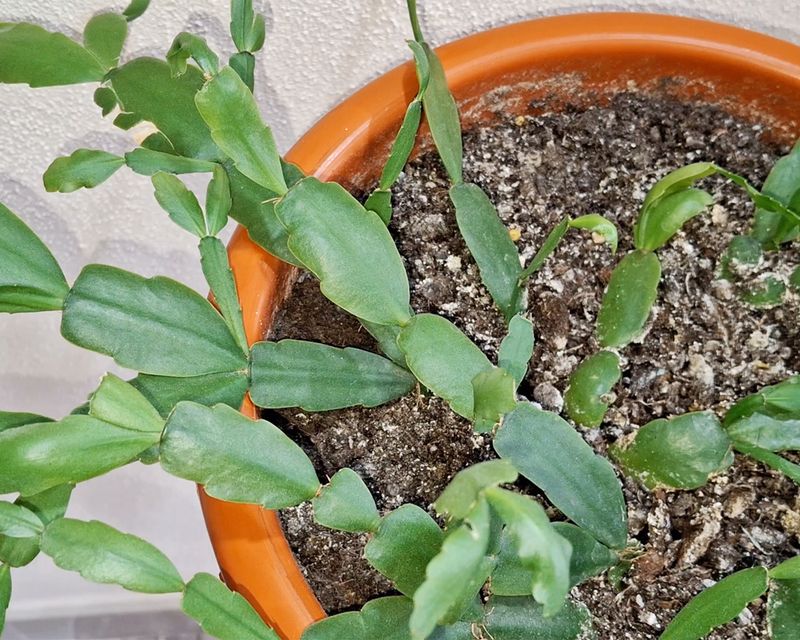
When a plant looks off, the urge is to water it, especially when the furnace is running. Resist that for a moment and check the potting mix instead.
Watering by the calendar, or adding water just because the heat is on, can backfire.
The risk goes in both directions. Soil that has stayed too dry can be linked with pale stems.
On the other hand, Clemson Extension notes that excess water and soggy mix can lead to wilting and root rot.
So feel the mix. Push a finger into the pot and notice whether it is bone dry all the way down, damp, or wet and heavy.
Lift the pot too, since a very light pot often means dry mix and a heavy one suggests it is holding water.
Then look at drainage. Holiday cacti need a mix that drains well, as Iowa State Extension describes, and the pot should have holes that let extra water escape.
Never leave the pot standing in a saucer of water.
How much and how often to water depends on what your plant is doing. Growing plants and budding plants may want different amounts, and Iowa State advises keeping the mix evenly moist during budding and flowering because too much drying can cause buds or flowers to drop.
There is no single schedule that fits every home.
The takeaway is to let the mix guide you. If it is dry, water thoroughly and let the excess drain away.
If it is wet, hold off and look for what is keeping it that way.
What the furnace can affect—and what it cannot prove
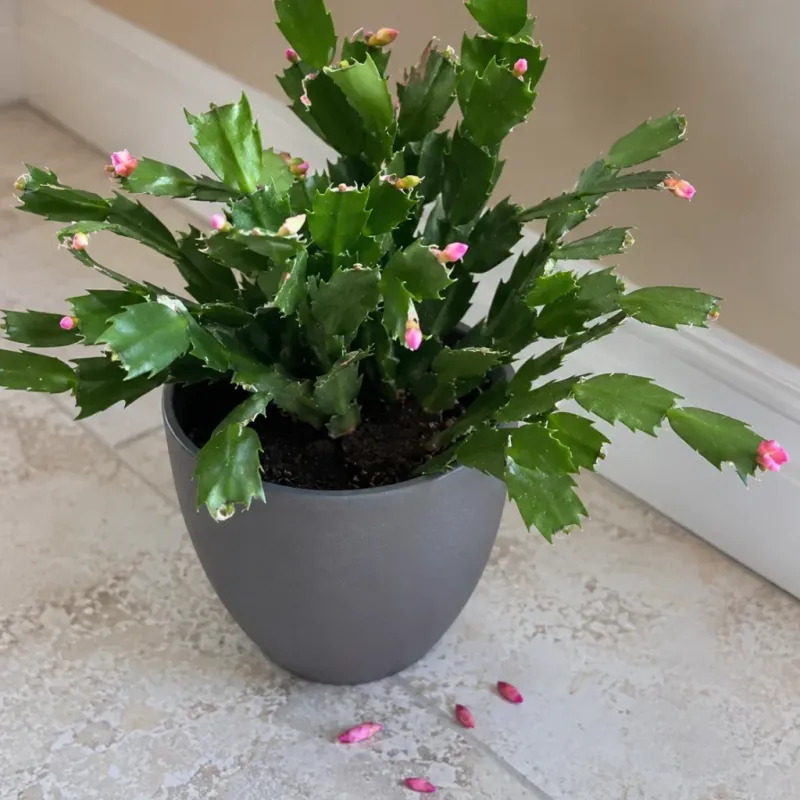
Heat does matter for houseplants, just not always in the way people assume. Direct blasts from a heating vent or radiator can stress plants, and University of Illinois Extension advises keeping houseplants away from them and avoiding abrupt changes in temperature or light.
If your cactus lives right above a register, a move is an easy and low-cost step.
Holiday cacti also dislike sudden shifts. According to Clemson Extension, drafts, high temperatures, and sudden changes in the environment can cause buds to drop.
That is a bud problem, which is different from stem color.
Now for humidity. Winter indoor air can be dry, and Penn State Extension says indoor humidity can fall below 30 percent in winter.
That sounds alarming, but low humidity has not been shown to be a routine cause of pale stems.
What it is more directly tied to is flower bud drop, which UConn Extension lists among possible causes, and in some cases browning at the tips or edges of the segments. If you see those signs, dry air is worth considering.
So keep it in proportion. Moving the plant out of a direct vent stream is sensible, and steady conditions help.
But do not expect a humidity fix to turn pale stems green, and check light and the mix as well.
When should root trouble move higher on your list?
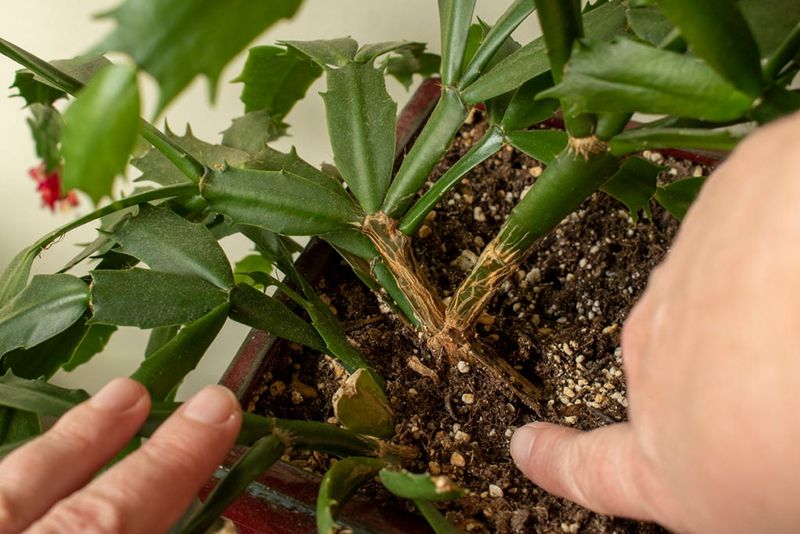
Pale color alone is not a reason to panic about the roots. A faded or gray-green look can come from light or dry soil, so it does not by itself mean root rot or disease.
What raises concern is the company the color keeps.
Watch for signs that show up alongside it. Wilting, soil that stays wet for a long time, stems that turn soft or start to rot, and roots that are mushy or dark are all more worrying.
University of Minnesota Extension connects overwatering with root problems in holiday cacti.
If several of those signs line up, circle back to the soil and drainage checks from the previous section. Ask whether the mix is staying soggy, whether the pot drains freely, and whether water is collecting underneath.
Those answers tell you more than the stem color does.
For more on how rot problems look and how they spread, Penn State Extension’s guide to Christmas cactus diseases is a helpful reference. It can help you compare what you see with common trouble.
A plant that is only pale, with firm stems and mix that is not waterlogged, does not need to be pulled from its pot. Hold off on repotting or treatment until something beyond color points that way.
Looking first keeps you from stirring up a plant that may only need less sun.
Pale stems do not decide whether it will bloom
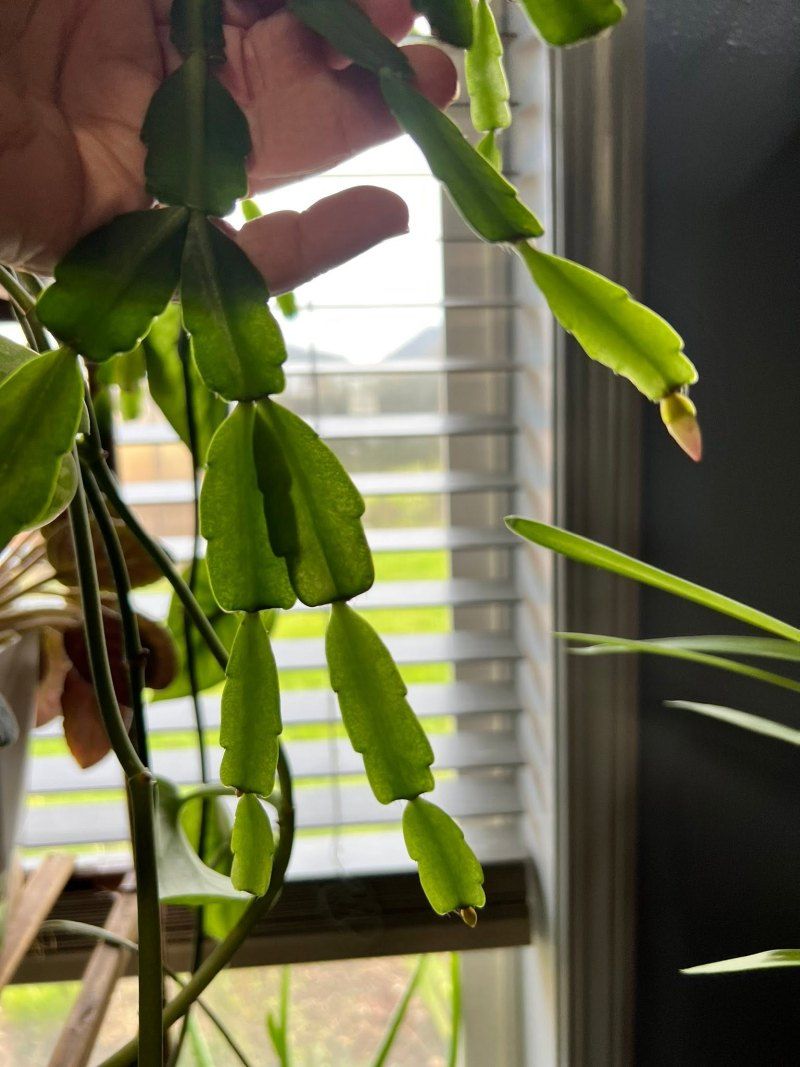
Stem color and flowering are two separate stories. A pale plant can still set buds, and a deep green one can still skip them.
Pale stems alone do not show that your cactus has lost its chance to bloom.
Buds are guided mostly by day length and temperature. University of Minnesota Extension notes that short days and cool nights help start them, while a warm room can interfere.
Sudden changes or drying can also make buds fall, and Clemson Extension says much the same.
Here is a simple order for checking your plant. First, look at the light and see whether direct sun is hitting the stems.
Second, feel the mix and check drainage. Third, think about vent exposure, then look for other symptoms such as wilting or soft stems before you change anything.
Remember that advice shifts with the plant’s stage, so what suits a growing plant may not suit one with buds. No one can promise flowers, but steady, sensible care gives your plant its best shot.
A pale stem is a message, not a sentence, and often the answer is as simple as a new spot on the shelf.