
Wooly Bear Caterpillars Crossing Your North Carolina Driveway This Fall Are Hunting For A Leaf Pile To Freeze Solid In
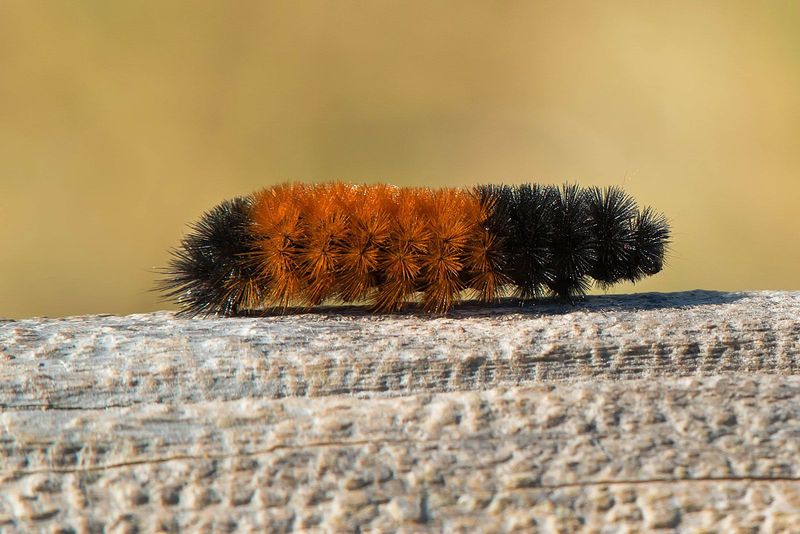
You are backing out of the driveway on a cool October morning when a rusty-and-black fuzzball inches across the pavement. That little traveler is a banded woolly bear, and North Carolina yards see plenty of them this time of year.
Its trip can tell us something about how wildlife gets ready for winter, but not everything. Here is what the sighting means, what it does not, and how to give overwintering wildlife a little help without wrecking your lawn.
Fall wandering brings woolly bears into view
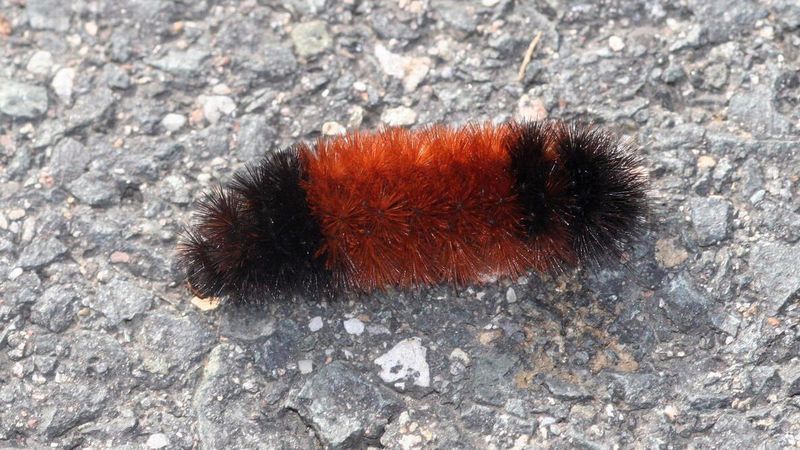
Cooler weather puts the banded woolly bear on the move. This is the larval stage of the Isabella tiger moth, Pyrrharctia isabella, and it lives all across North Carolina.
The state moth database notes that the larvae wander away from their host plants and become especially conspicuous when they look for places to pupate or overwinter.
That explains why you spot them on pavement. Driveways, sidewalks, and roads are open, bare stretches, so a dark caterpillar stands out far more than it does in a thicket of grass or fallen leaves.
In summer the same animals are there, just hidden in the vegetation.
NC State Extension describes the fall search as a hunt for shelter, such as under bark, in leaf litter, or beneath a log. A driveway crossing fits that picture of fall wandering.
It cannot tell you where the caterpillar is going, whether it has picked a spot yet, or whether it will make it through winter.
Not every fuzzy caterpillar you see is a banded woolly bear, either. Several hairy species turn up in fall, and some have hairs that can irritate skin.
If you are unsure what you are looking at, watch it from a distance and skip the handling.
Leaf litter is one shelter among several
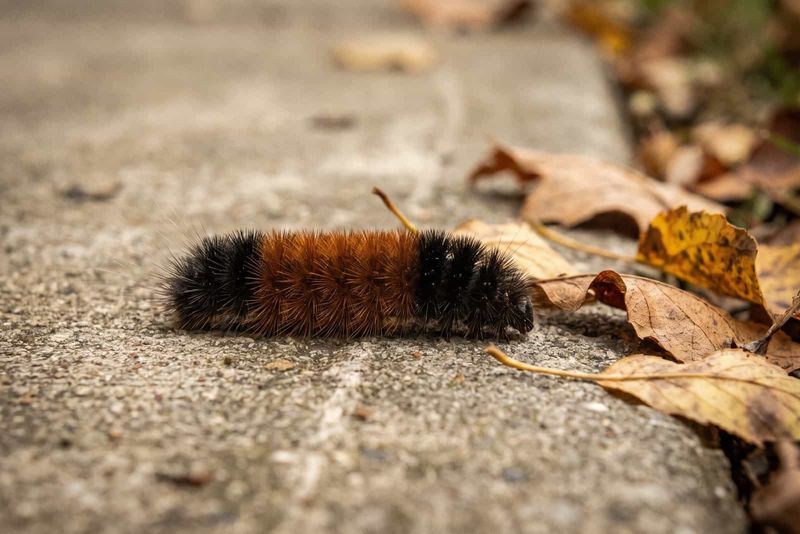
Picture what a small caterpillar needs when frost starts showing up: something tucked away, damp enough not to dry out, and covered enough to blunt the wind. Leaf litter can offer all of that.
So can loose bark and the underside of a log.
Extension materials from NC State list bark, leaf litter, and logs as places the caterpillar may settle for the cold months. Leaves are one choice on the menu, not the only one and not a guaranteed destination.
That matters when you think about your own yard. The woolly bear crossing your driveway may be headed toward a leafy fence line, a woodpile, a neighbor’s hedge, or somewhere you will never see.
Your sighting simply shows an animal in motion.
What you can control is whether your property offers options. A leaf-covered strip along the back fence, a bed under a dogwood, or an old log left at the woods’ edge gives shelter-seeking insects and other small creatures a place to wait out winter.
Many of them, such as beetles, spiders, and other moth larvae, use the same kinds of hideouts.
Think of it as keeping a few quiet doors open. No one can promise a particular caterpillar will walk through, but a yard with several kinds of cover tends to serve more wildlife than a bare, tidy one.
What freeze tolerance does—and does not—mean
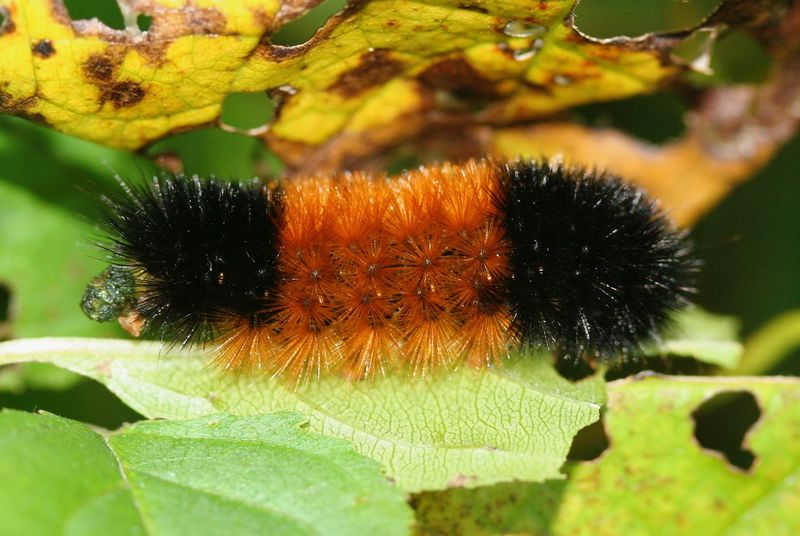
Few insects are as famous for handling cold as the woolly bear, and lab work backs up part of the story. In a study on freeze temperature and long-term survival, researchers documented ice forming in the caterpillars’ bodies, and some survived certain freezing treatments but not all of the ones tested.
Another group looked at how preparation matters. A study in the Journal of Experimental Biology found that caterpillars given time to acclimate to the cold could survive particular experimental freezes.
A caterpillar that has had a gradual chill is in a different position from one caught off guard.
So what should you take from this? Woolly bears are freeze-tolerant, which means they can handle some ice in their tissues under the right conditions.
That is not the same as saying every caterpillar freezes completely solid, or that all of them come through every hard freeze.
You may also see a dramatic cold-survival number repeated online. Because it has not been confirmed as a general survival threshold by the research, it is safer to leave it out of the conversation.
For a North Carolina yard, the practical lesson is modest. Shelter that stays damp and cushioned from the harshest swings may help, but nobody can guarantee the outcome for any one caterpillar.
Retained leaves can support overwintering wildlife
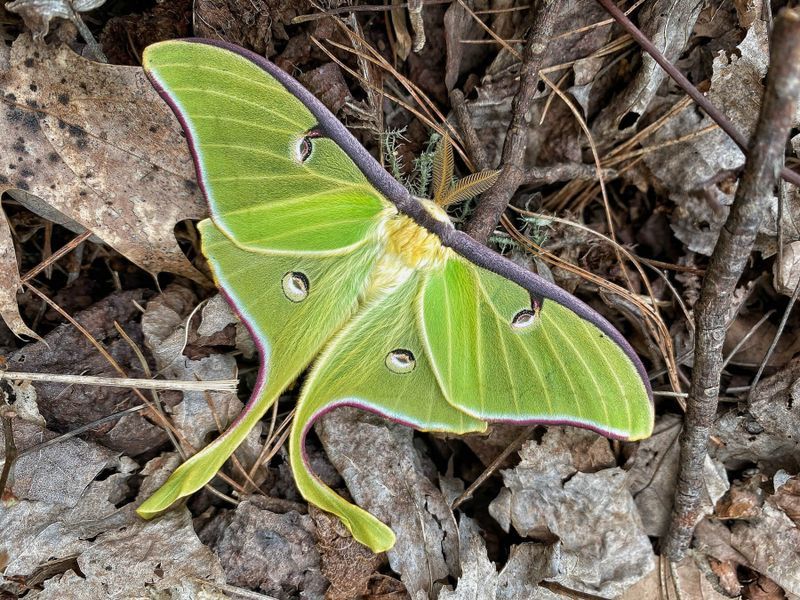
Raking every last leaf to the curb removes a lot more than yard debris. Moths, beetles, and other small animals spend winter tucked in that layer, and a bare yard offers them little.
Burke County’s N.C. Cooperative Extension center makes the case in its Leave the Leaves guidance, recommending that homeowners keep leaf litter as habitat for overwintering moths and other wildlife.
You do not need a big property to try this. Pick one calm spot, such as a bed beneath a tree, a strip along the back fence, or a corner behind the shed, and let the leaves stay there.
Shredding some with a mower first makes a looser layer that breaks down into soil-building mulch.
Be honest with yourself about what this does. A leaf bed is a shelter option, not a guarantee that a particular banded woolly bear will crawl in.
What it does is add useful cover to a landscape where cover is often scarce.
If you have a Piedmont yard full of oaks and sweetgums, you will have plenty of material. Coastal Plain and mountain yards can do the same with whatever the local trees drop.
Wait until spring, once nights are reliably warm, before tidying that patch. Cleaning up too early can disturb the animals still resting there.
Keep leaf habitat away from high-use spaces
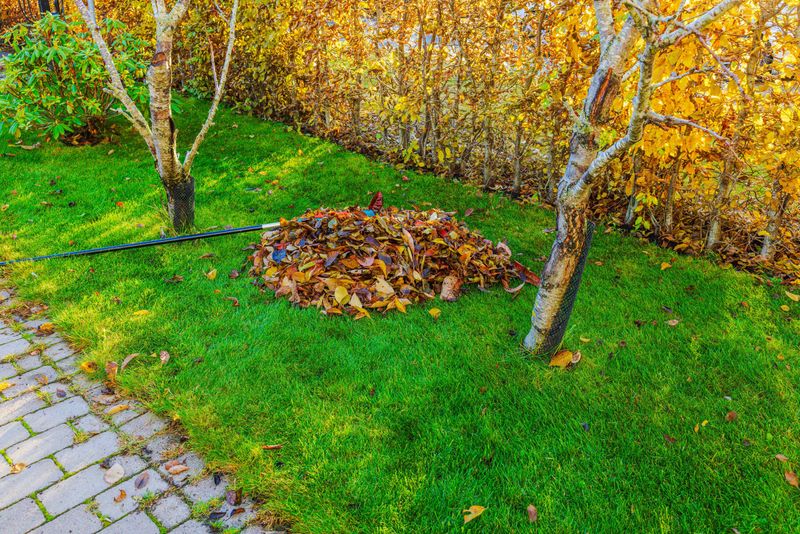
A good plan sorts your yard into zones. Start by moving leaves off the grass and walkways.
The City of Raleigh suggests raking them into garden beds, beneath trees, or into a designated corner, while warning that thick layers smother turf.
Next, think about ticks. CDC guidance advises reducing leaf litter and brush around homes and recreational areas.
In practice, that means the zone where kids play, dogs run, and family members walk should stay clear.
Here is a simple way to lay it out. Keep the lawn, patio edges, play set, and paths tidy.
Put the leaf habitat toward the back boundary, under shrubs or trees, well away from where people spend time.
You do not have to clear every corner of the yard to be tick-conscious. The goal is separation, with people-friendly space on one side and wildlife-friendly space on the other.
A few finishing touches help. Keep any pile or bed to a modest depth so it does not blow back onto the lawn, and trim stray brush where it meets a play area.
If a section of grass has a heavy mat of leaves, rake or mulch-mow it before it starts to yellow.
That balance lets you offer shelter for woolly bears and their neighbors while still protecting your turf and your family.
Woolly bear bands do not forecast the winter
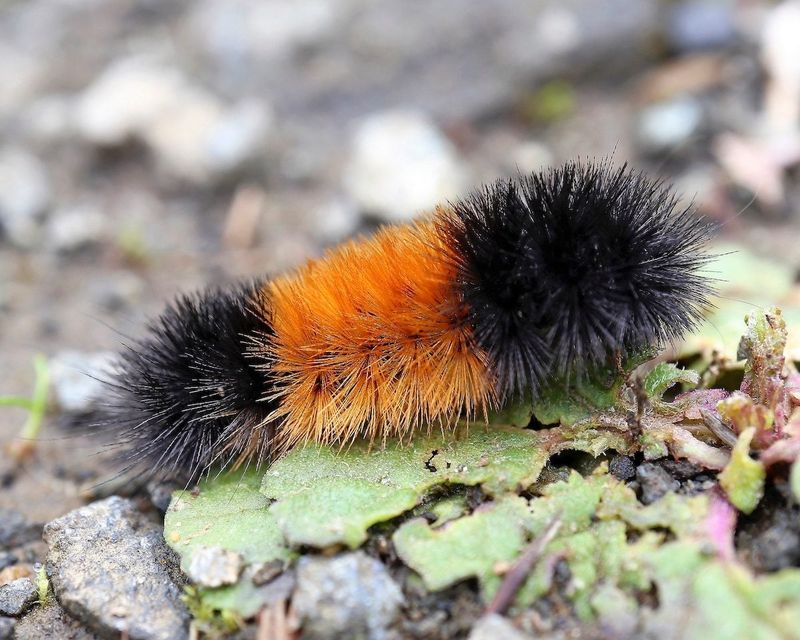
You have probably heard that a wide rusty band means a mild winter and a narrow one means a harsh one. It makes a fun story, but the markings do not predict what is coming.
Cornell’s Northeast Regional Climate Center says the banding does not indicate the upcoming winter.
So what does the band tell you? Illinois Extension explains that the pattern can reflect the caterpillar’s age and how much it has grown recently, not the weather ahead.
Enjoy the folklore as a fall tradition if you like, but do not plan your firewood or your plants around it. A better use of that curiosity is to give the caterpillars, and the many other creatures that share their needs, a leafy corner to settle into.