
Your Geraniums Don’t Have To Die With The Frost – Here’s How To Carry Them Indoors Until Spring
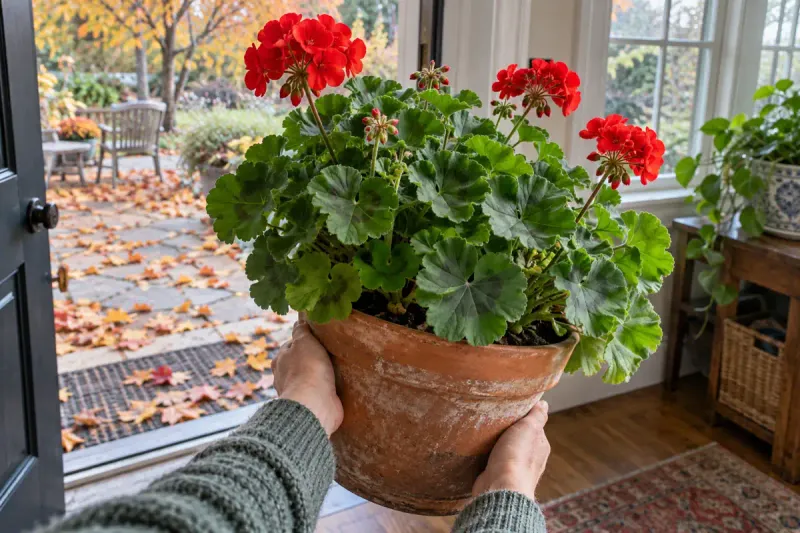
That pot of red geraniums by your porch does not have to end its life when the first cold night arrives. Many gardeners toss these plants every fall without knowing they can often be saved.
With a little planning before frost, you can carry your geraniums through winter and give them a shot at another season. Here is how to do it, and what to expect along the way.
The geranium you can save is usually a Pelargonium
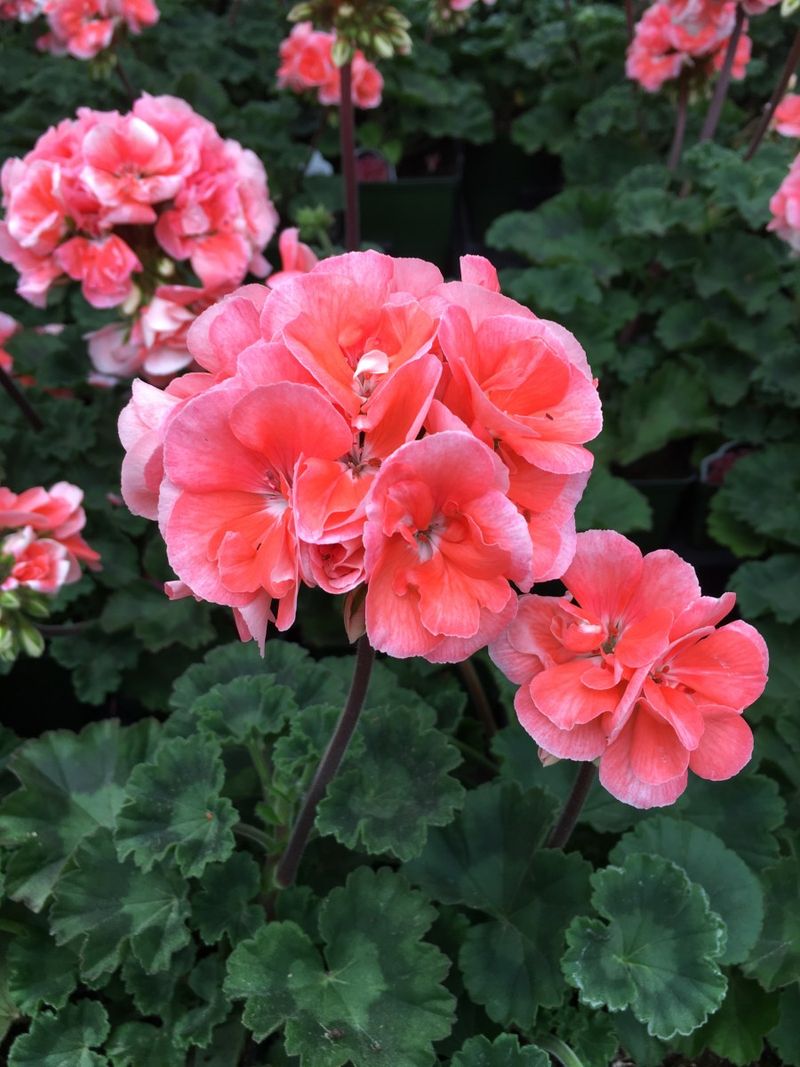
Most of the bright, ball-shaped flowers you buy as bedding “geraniums” are really Pelargonium plants. University of Minnesota Extension explains that these are tender plants, often grown as annuals in colder parts of the country.
That is why a frost can finish them off outdoors.
This advice covers the common garden types: zonal geraniums with the rounded, sometimes banded leaves, ivy-leaf geraniums with trailing stems, and scented geraniums grown for their fragrant foliage. It does not cover hardy perennial Geranium species, the kind often called cranesbill.
Those are built to handle winter in the ground and need no indoor rescue.
If you are not sure which one you have, look at the plant’s tag or the NC State Extension Plant Toolbox entry for Pelargonium to compare leaves and flowers. A potted plant that was sold as an annual is very likely a Pelargonium.
So can you save it? Often, yes.
Bringing a Pelargonium indoors before frost gives it a real chance to make it to spring. It is not a sure thing, though, and the sections ahead will help you stack the odds in your favor.
Bring the whole plant indoors before frost
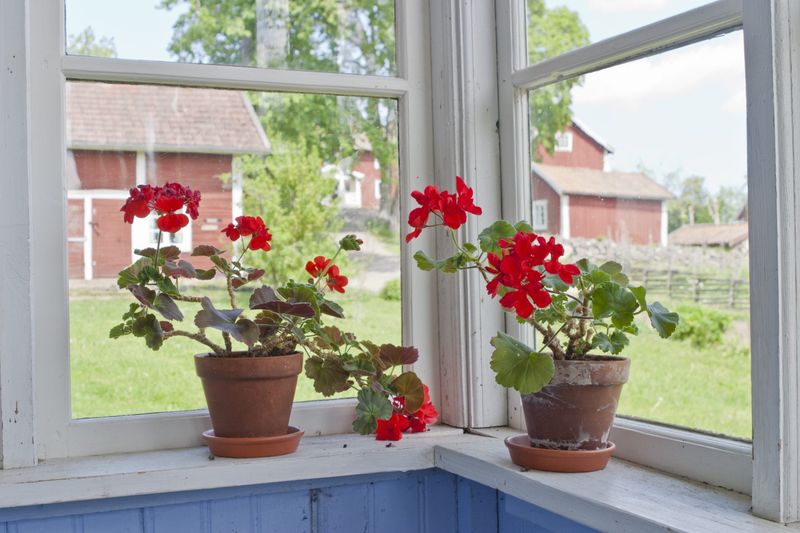
Timing is the first job. Move your geraniums before the first frost, not after.
University of Illinois Extension says garden geraniums must be brought indoors before the first frost to overwinter them, so watch your local forecast and do not wait to see what the cold does.
If your geranium already lives in a pot, you can carry it in once you have checked it over for pests and disease, which the next section covers. Containers are the easy route since the roots stay undisturbed.
For a plant growing in the ground, dig it up carefully and take as much of the root ball as you can. Set it into a container with drainage holes filled with suitable potting mix.
Clemson Extension offers guidance on growing geraniums indoors, and the Minnesota guide also covers bringing them in.
Choose a pot only a bit larger than the roots so the mix does not stay soggy. Drainage matters more than size here.
Inspect for pests and disease before bringing it inside
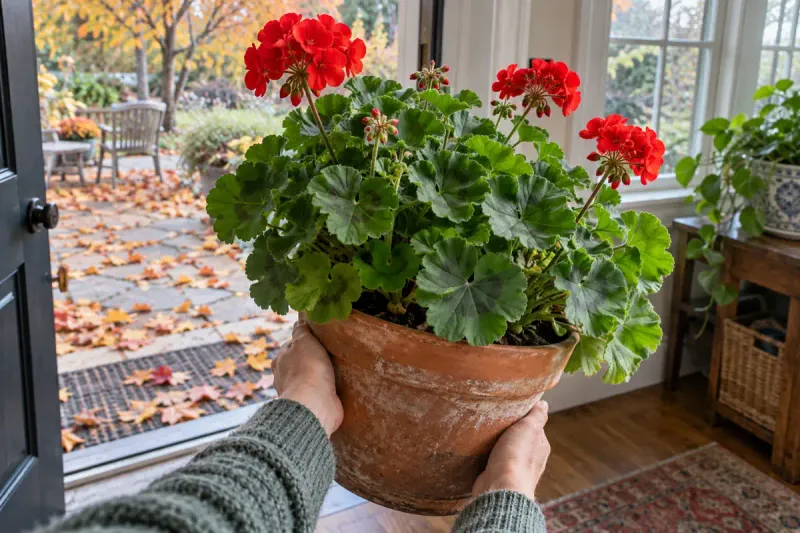
Anything hiding on your geranium will happily follow it indoors and spread to your houseplants. Before the move, look closely at the leaves (including the undersides), the stems, and the soil surface.
You are searching for insects, webbing, sticky residue, spots, or rot.
If a plant is badly infested or diseased, it is better to discard it than risk your other plants. That can feel hard, but one lost geranium costs less than a houseplant collection full of pests.
For plants that pass inspection, Penn State Extension recommends keeping incoming plants away from your other indoor plants for three to four weeks. Watch them during that time for anything you missed.
If you decide to use a pesticide, choose a product whose label covers both the plant and the pest you are dealing with, and follow the label directions exactly. Illinois Extension also stresses checking plants before the move.
Choose active growth or dormant storage
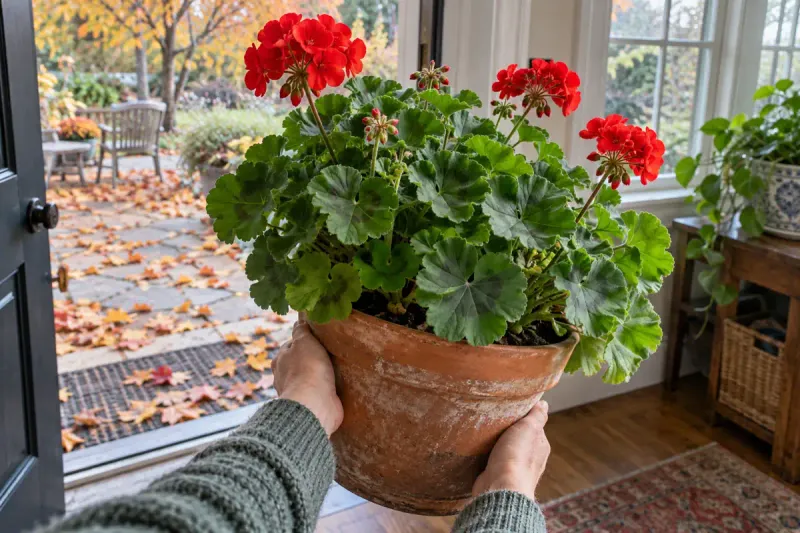
“Carrying geraniums indoors” can mean two very different things. One option is to keep the plant growing all winter in bright light.
The other is to store it dormant in a cool, dark place. University of Minnesota Extension describes both approaches.
The catch is that they have different needs for light and water. A plant that is actively growing needs bright light.
A dormant plant is stored in the dark. Mixing the two, such as putting a leafy plant in a dark room, sets it up to struggle.
Pick one method and follow only that method’s instructions. If you have a sunny window or a grow light and want green leaves through winter, go with active growth, which the next section explains.
If you plan the dormant route, follow your extension office’s guidance for it rather than borrowing steps from the growing method.
Neither route guarantees survival, so choose the one that fits your space and your willingness to check on the plant.
Give actively growing geraniums bright light and restrained care
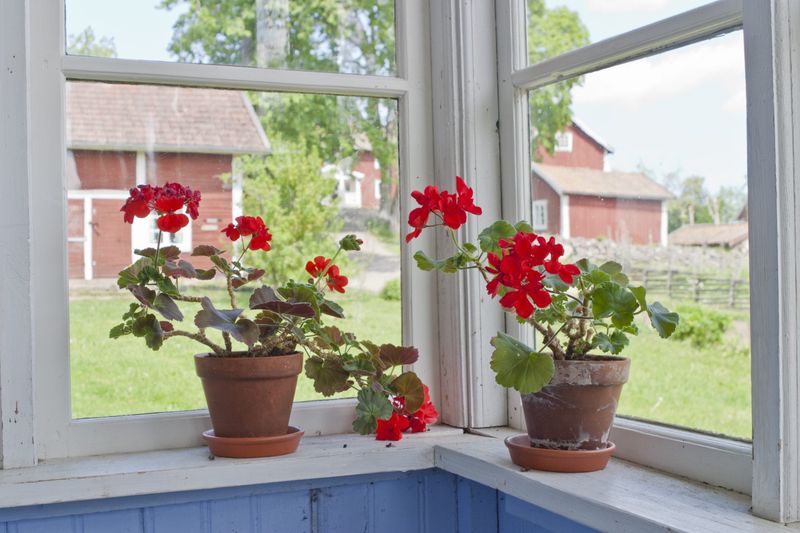
A geranium that keeps growing indoors wants a sunny window or a supplemental grow light. Extension guidance suggests cool-to-moderate rooms.
Minnesota gives about 60 to 65°F, while Illinois suggests about 65°F by day and slightly cooler at night. Treat those numbers as guidance, not a strict rule.
Light and warmth work together. Warm rooms with weak light can lead to lanky, stretched growth and poor flowering, so if your plant is getting tall and thin, it likely needs more light or cooler air.
For watering, skip the calendar. Check the growing medium and water once it has dried, then let the extra water drain out of the pot.
Soggy mix is a bigger worry than a slightly dry one.
Feed only while the plant is actively growing. If it has slowed down, hold back on fertilizer.
Do not panic if leaves yellow or drop after the move. That can be a sign the plant is adjusting to indoor life, not proof it is dead.
Keep caring for it and watch for new growth, though recovery cannot be promised.
Use a stem cutting when you cannot keep the whole plant
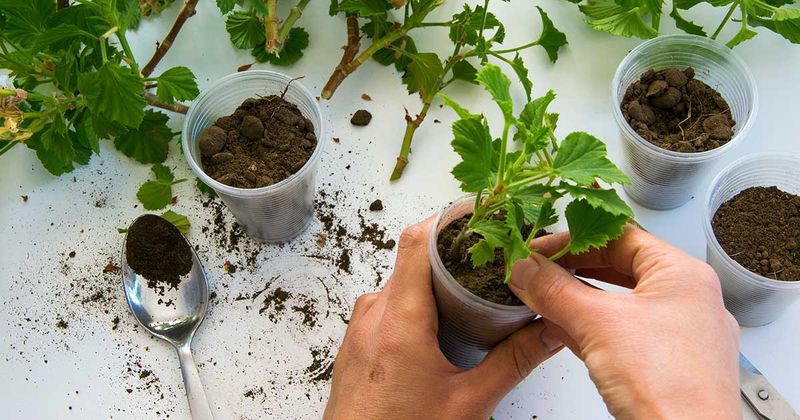
Short on space? A cutting lets you keep the plant’s genes without hauling a big pot indoors.
University of Illinois Extension describes taking cuttings about 3 to 4 inches long from healthy stems.
The same source estimates that roots may take four to eight weeks to form. Think of that as a rough timeline, not a promise, since some cuttings root faster, some slower, and some fail.
Pick stems from a plant that looks healthy and free of pests, and do it before frost arrives. Plan on several cuttings rather than just one, which gives you backup if a few do not take.
Once a cutting has rooted, it becomes a small plant of its own that fits on a windowsill. A tray of little starts uses far less room than a row of mature pots, which makes this a handy option for apartment dwellers and small sunrooms.
Return the plant outdoors after frost danger passes
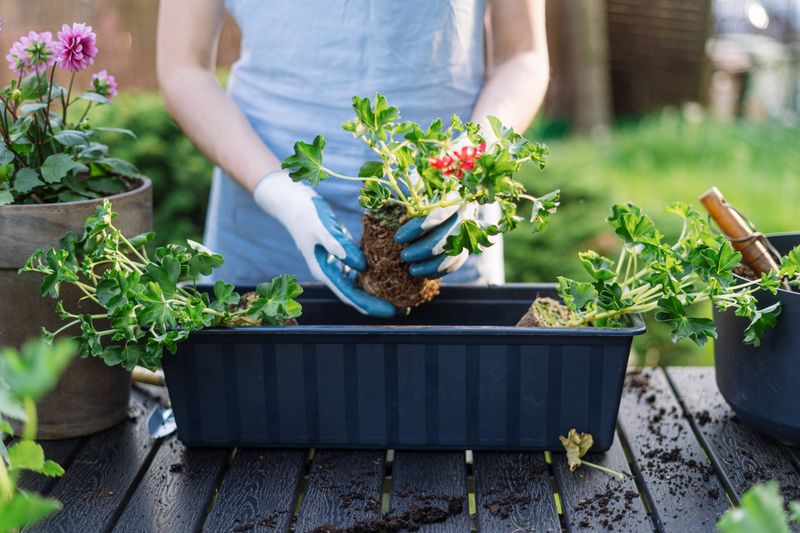
Spring fever is real, but patience pays off here. Wait until the danger of frost has passed in your area before your geranium goes outside, since a late cold night can undo a whole winter of effort.
Iowa State Extension covers this timing in its overwintering advice.
Indoor-grown plants are used to gentler light, steady temperatures, and still air. Moving one straight into the garden can be a shock.
University of Alaska Fairbanks Extension notes the importance of gradual acclimation to outdoor conditions.
A practical way to do this is to set the pot outside for a short stretch in a sheltered spot, then lengthen the time over several days. Bring it back in on any night that threatens a chill.
After it has adjusted, plant it out or place the container where you want it. Do not expect instant growth or flowers, since many plants need a little time to settle in.
A saved geranium may need time—and may not bloom
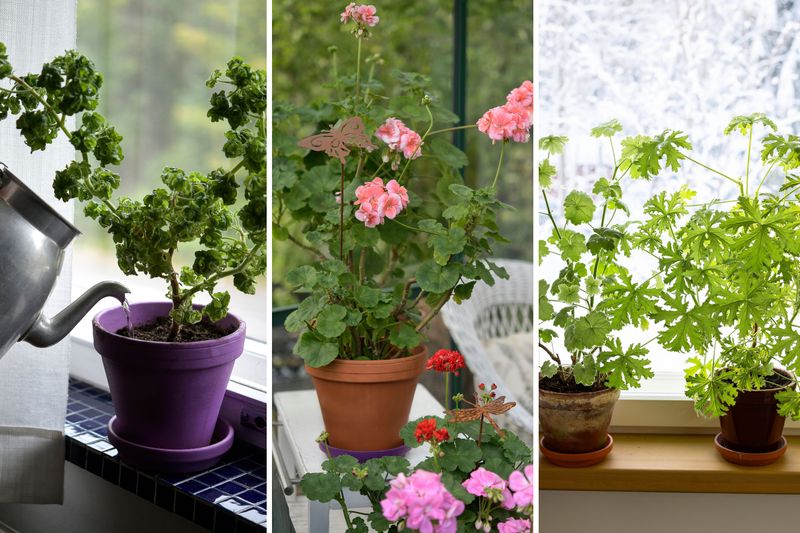
Getting a geranium through winter is a win, even if it looks a bit scruffy in March. Survival does not always mean flowers right away.
Minnesota Extension notes that plants may drop many leaves indoors and leaf out again later.
Indoor conditions play a big part. Illinois Extension warns that warm, low-light spots can cause lanky growth, which can hurt blooming later.
Type matters too. Clemson Extension describes Martha Washington (Regal) geraniums as less heat tolerant than common garden geraniums, and an Illinois Extension answer says they can be harder to get to rebloom.
So give your rescued plant some grace. Some bloom again and some mostly grow leaves, and either way you tried something many gardeners never do.