
Your Hydrangea Leaves Turning Purple And Red This Fall Doesn’t Mean It’s Dying: Here Are the Clues to Check
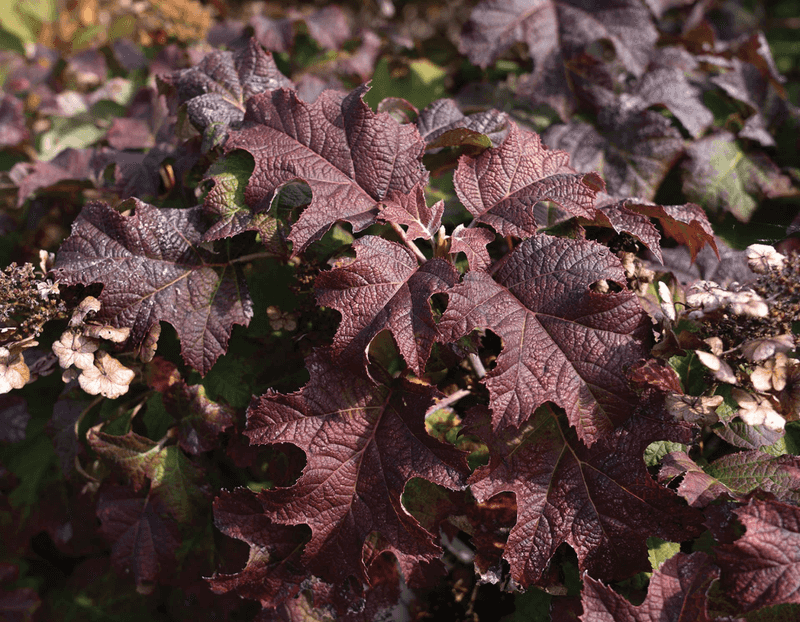
You walk out to your yard and spot red and purple leaves on your hydrangea. Your stomach drops, because it looks like something has gone wrong.
Sometimes that color is just the shrub doing what many plants do in autumn. Other times, the pattern on the leaves gives you a hint that something needs a closer look before winter.
Fall color can be part of a hydrangea’s normal cycle
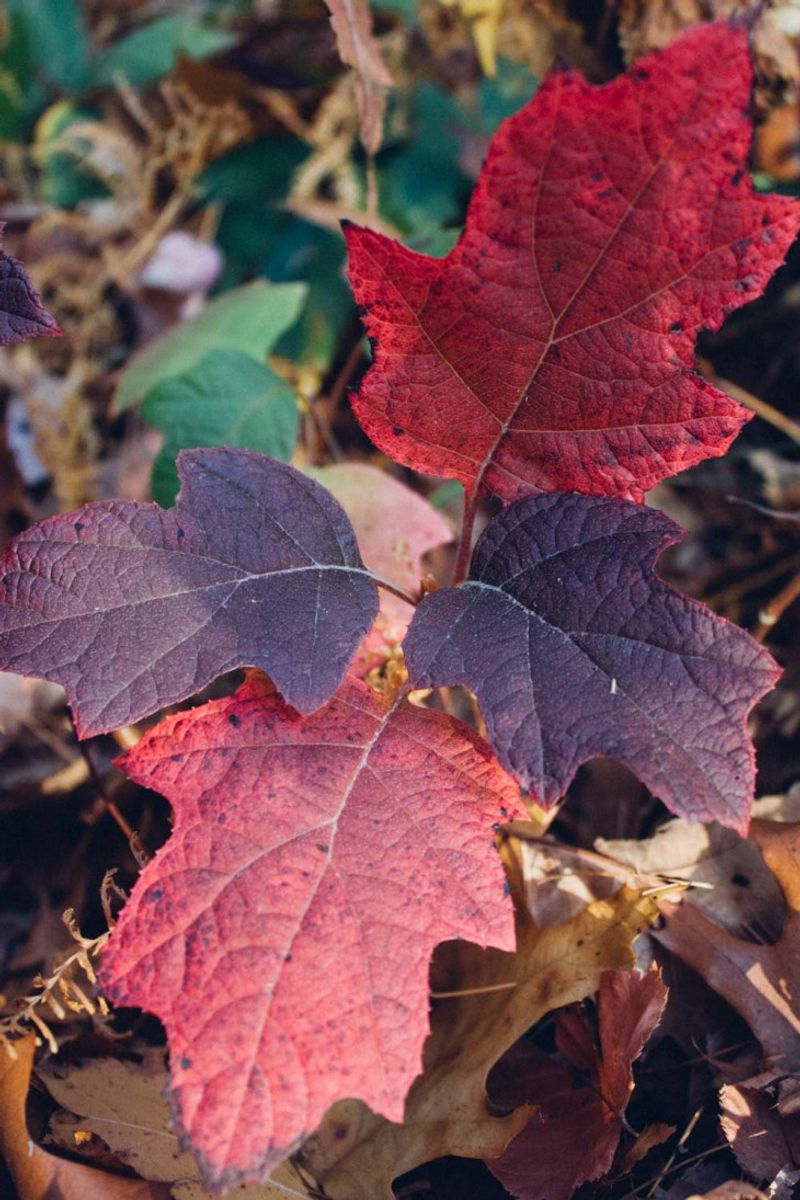
Hydrangeas are deciduous, which means they drop their leaves for winter. As temperatures cool, some of them change color first.
Red, burgundy, or purple foliage can simply be part of that seasonal handoff.
Oakleaf hydrangeas are the best-known example. University of Vermont Extension describes red-to-purple fall color on oakleaf hydrangeas, with the shade varying by variety.
Rutgers also documents cultivar-specific fall colors, so what your neighbor’s shrub does may not match yours.
Not every hydrangea turns red or purple in fall. Some bigleaf and panicle types fade to yellow or tan, or just drop green leaves after a frost.
If your plant has never colored up before, that does not automatically signal trouble, and a first-time color show does not automatically mean it is fine either.
Color by itself also cannot prove a plant is heading into dormancy. A Maryland Extension response points out that redness can also show up with stress, and some cultivars have reddish leaves outside of fall altogether.
So think of autumn color as one possibility. If the change is gradual, spread across much of the plant, and arrives as nights get cooler, seasonal color is a reasonable guess.
The next sections show what else to look for.
Use the leaf pattern as a clue, not a diagnosis
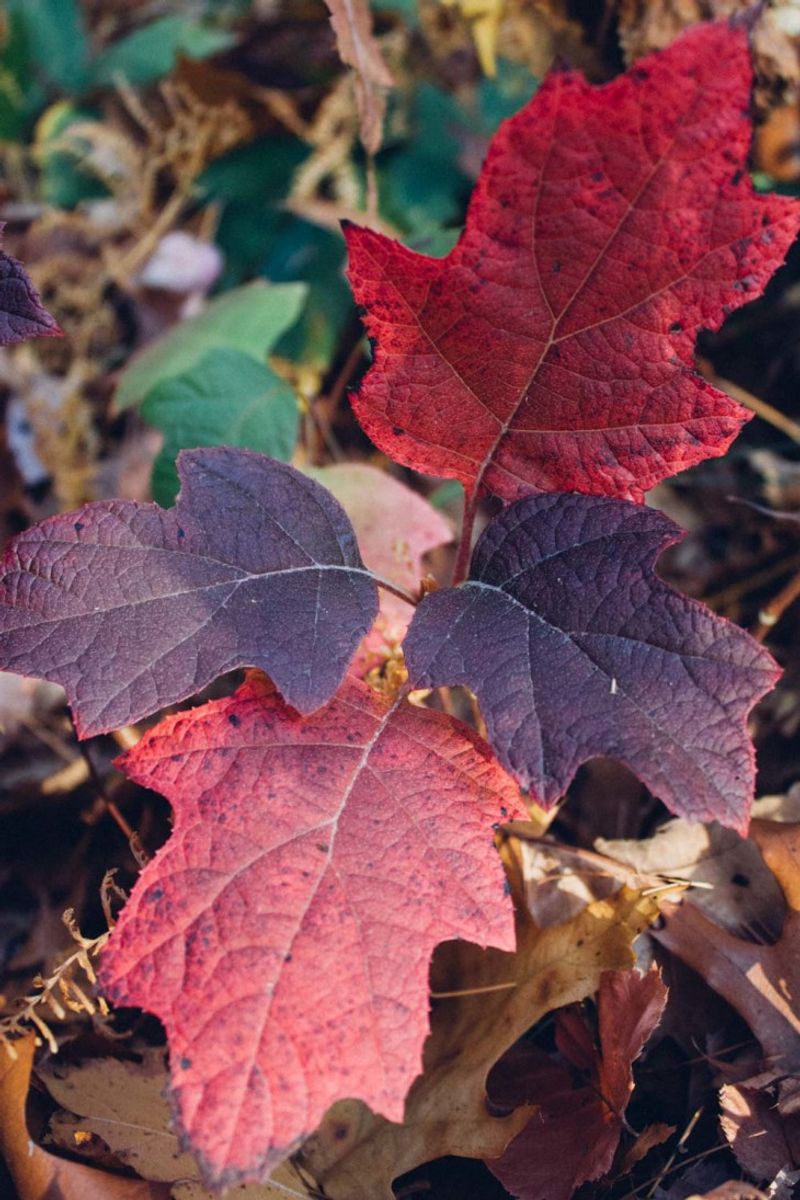
Before you do anything, spend five minutes just looking. A broad, fairly even color shift across many leaves as autumn cools looks different from distinct spots or redness that creeps in from the edges.
University of Maryland Extension’s hydrangea problem guide treats those patterns as different clues.
Ask yourself a few simple questions. Is the color all over, or only on certain leaves?
Are the lower leaves affected first, or the ones in the sunniest spot? Is it late summer or deep into fall?
Is the change getting worse week to week, or holding steady?
Jot down notes or snap a photo every few days. A pattern that spreads is more useful to know about than a single snapshot.
Keep in mind that these observations only point you toward what to inspect next. Maryland’s Ask Extension answer considered the plant’s cultivar and sun exposure, not just the color.
Your hydrangea type and the conditions where it grows matter just as much.
Spots with halos or upward spread deserve a closer look
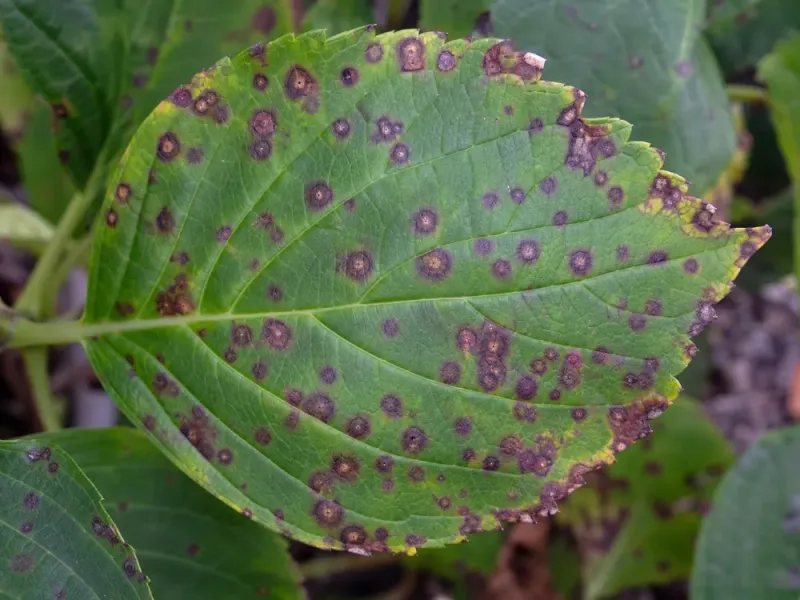
Distinct spots are a different story from overall color. Small tan-to-gray lesions ringed by a dark purple halo are consistent with Cercospora leaf spot, according to University of Maryland Extension.
It often shows up in late summer or fall.
That sounds scary, but the same source describes the damage as unsightly rather than fatal, and it rarely calls for treatment. Purple spots are not a sign your hydrangea is dying.
On oakleaf hydrangeas, watch for reddish-brown or purple spots that start on the lower leaves and move upward. That pattern can indicate bacterial leaf spot, which spreads through splashing water.
It is a possibility to check, not a final answer.
Water is the practical clue here. Try watering at the base of the plant in the morning, and avoid wetting the leaves with a sprinkler.
Pick off and throw away the worst affected leaves, and rake up fallen ones so they are not sitting under the shrub.
These steps may help limit the look of the problem, but they will not promise a cure. If the spots look different from what is described here, or the plant seems to be declining in other ways, a local extension office can help narrow it down.
Red leaf edges can point to sun or moisture stress
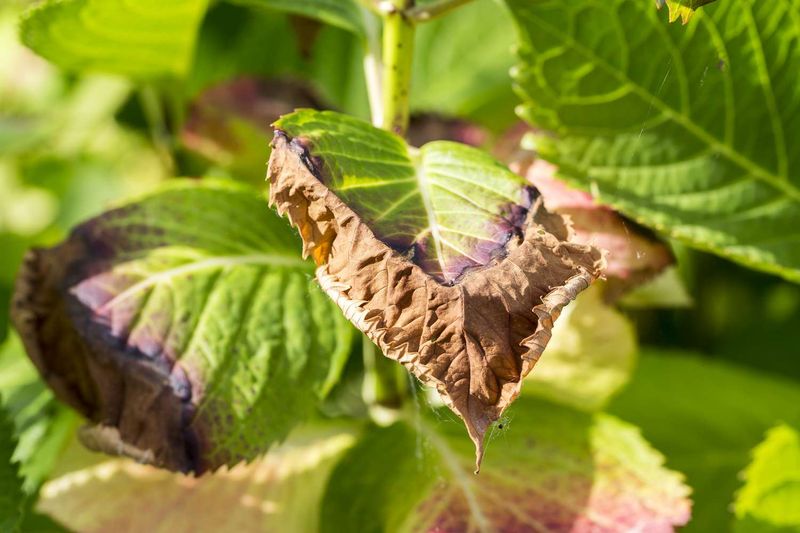
Here is a pattern that looks different from fall color: redness that begins at the leaf margins and works its way inward. If you also see yellowing, or the shrub sits in a sunny, dry spot, it may be worth looking at stress.
Maryland Extension linked reddening in one case more plausibly to sun exposure and cultivar than to a nutrient problem.
Start with the ground. Push a finger or small trowel a few inches into the soil near the roots.
If it is dry well below the surface, even though the top looks fine, the plant may be thirsty.
Next, think about light. Does the shrub get hot afternoon sun?
Some hydrangeas tolerate more sun than others, and a spot that worked in cooler years can feel harsh in a hot, dry one. The Maryland hydrangea guide is a useful place to compare symptoms.
These clues may suggest stress, but they do not prove what caused it. A mulch layer and a deep drink during dry spells before the ground freezes are low-risk steps that rarely hurt.
Purple foliage is not a reason to amend the soil
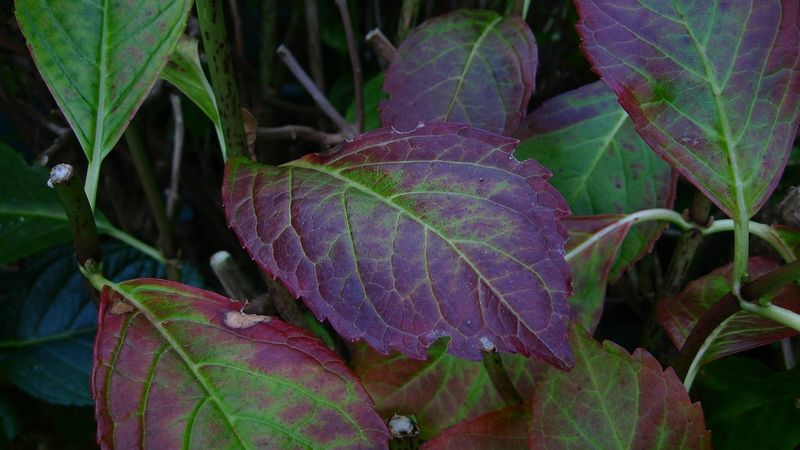
It is tempting to grab a bag of fertilizer when leaves turn purple. Many gardeners have heard that purple means missing phosphorus.
That is misleading, and in the Maryland case, the reddening pointed more toward sun exposure and cultivar. The Extension reply advised holding fertilizer until a soil test shows a need.
Foliage color and flower color are also two separate things. Soil pH can influence flower color on many bigleaf hydrangeas, but that does not mean it explains purple leaves in fall.
Skip the soil acidifier and aluminum sulfate unless a test shows a reason.
University of Minnesota Extension explains that soil tests guide nutrient applications and help avoid excess phosphorus. Most state extension offices offer testing at a modest cost.
Purple leaf tips can also come from stress, as an Oregon State Ask Extension response discusses. And since leaf spots have their own causes, color alone is a poor reason to add anything to the soil.
A test first, an amendment only if it shows a need.
Match your response to the symptom before winter
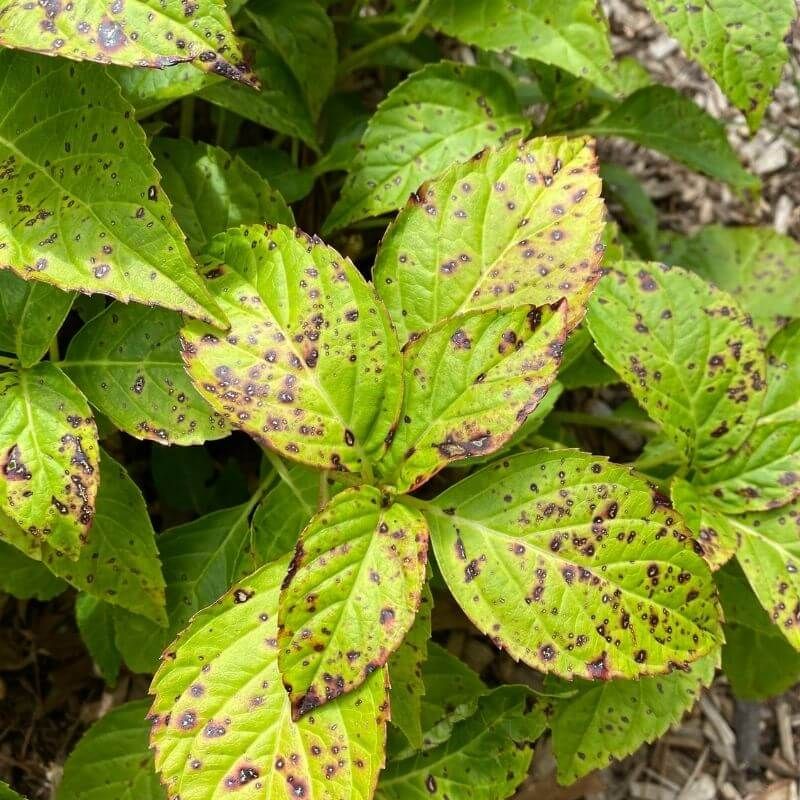
Here is a quick way to sort what you see. Broad color and gradual leaf drop as nights cool can be normal, as University of Vermont Extension notes for oakleaf types.
In that case, you can simply enjoy the show.
If spots appear, remove the worst affected leaves and keep water off the foliage, as Maryland Extension’s guide suggests. If the edges redden first, check root-zone moisture and sun exposure, as its Ask Extension answer describes.
Skip the fertilizer and fungicide when color is your only reason. A single red leaf is just a clue, and the pattern around it is what tells you where to look.