
Your Snake Plant Needs Different Care Starting Now – 7 Fall Changes That Carry It Safely Through Winter
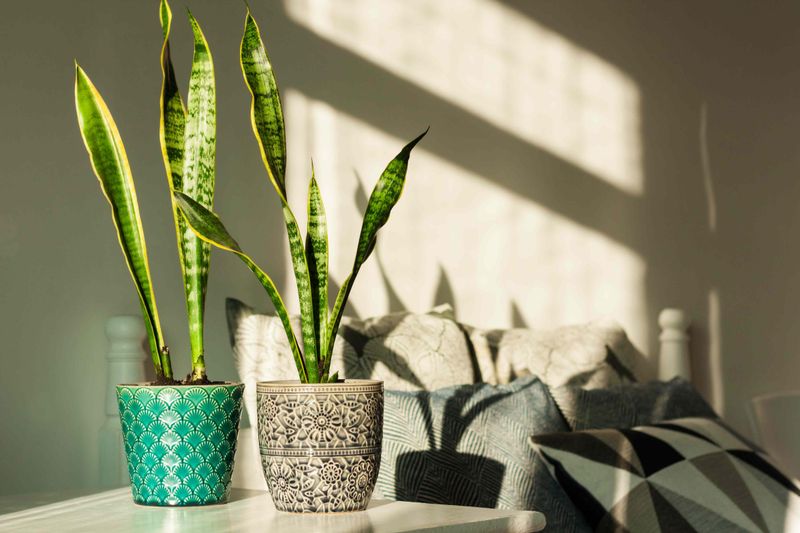
Your snake plant looks tough, but fall is when many of them quietly start to fail. As days get shorter and cooler, the plant slows way down, and the summer routine you trusted can turn into a slow path to root rot.
The good news is that a few simple changes, most of which cost nothing, can keep it firm, green, and healthy until spring. Here are the seven adjustments to make right now.
1. Cut Way Back on Watering
Most snake plants that die in winter are not neglected. They are loved too much, usually with a watering can.
As fall arrives, the plant’s growth slows to a crawl, and wet soil just sits there around the roots.
Start stretching the time between waterings now. By December and January, many snake plants only need a drink every 4 to 8 weeks, depending on how warm and bright your home is.
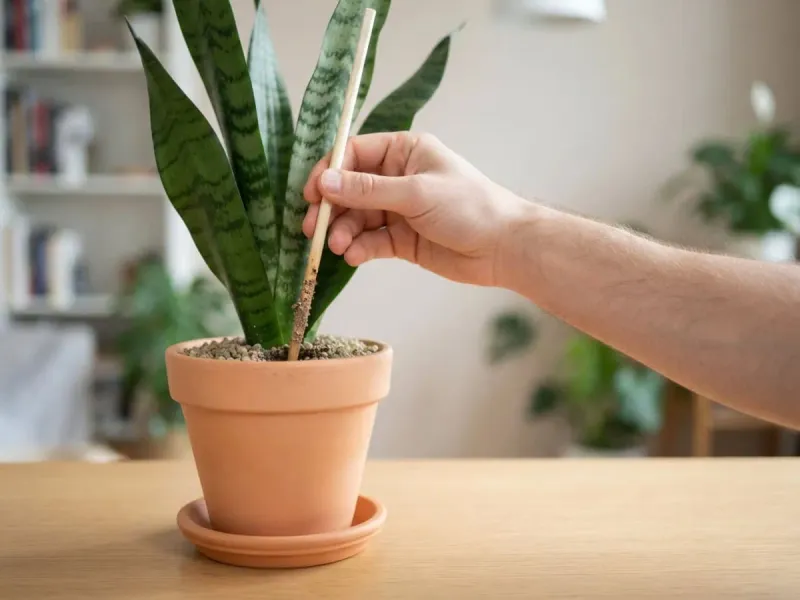
Before you water, push a finger at least two inches into the soil. If you feel any moisture at all, walk away.
When the soil is truly dry, use the soak-and-dry method. Water deeply until it runs out the drainage hole, then empty the saucer so the pot never sits in a puddle.
A good rule to remember is simple: an underwatered snake plant forgives you, but an overwatered one often does not.
2. Move It Closer to Brighter Light
Picture your snake plant in July, soaking up long, bright days. Now picture it in November, getting maybe half that light.
Even a plant famous for handling dim corners feels the difference.
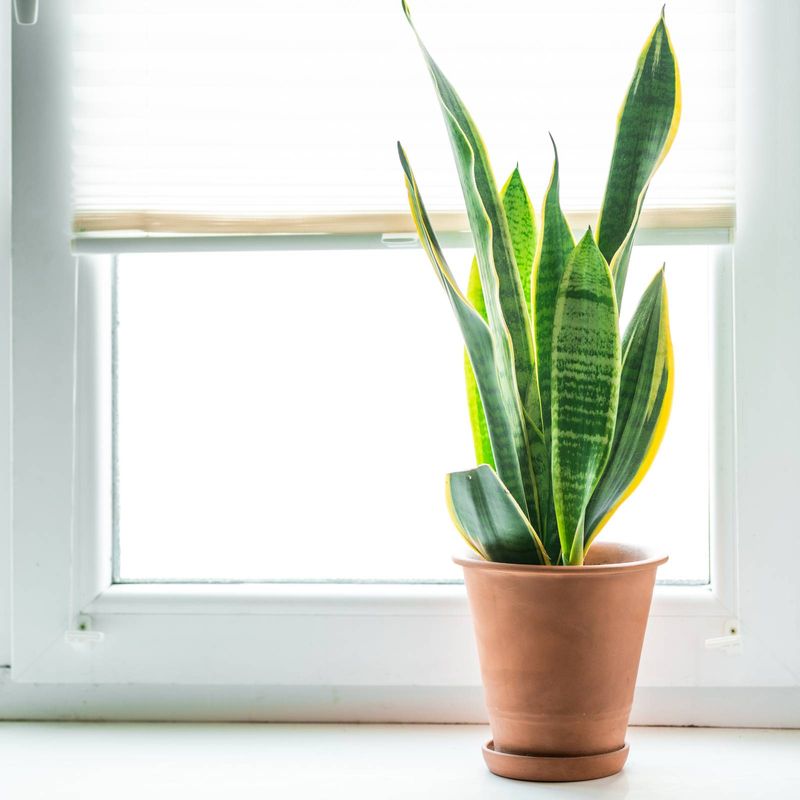
Shift it closer to a bright window with indirect light, like an east-facing spot or a few feet back from a south-facing one. Aim for about 5 to 8 hours of decent light each day.
Give the pot a quarter turn every few weeks so all sides get their share and the leaves stay upright instead of leaning.
Got a dark apartment? A small LED grow light can fill the gap without much cost.
Just keep the plant out of harsh afternoon sun pressed right against the glass, since that can leave pale, scorched patches on the leaves.
3. Protect It From Cold Drafts and Heat Blasts
Here is a fun bit of history: snake plants come from tropical West Africa, where cold snaps are not part of life. That explains why they sulk when temperatures dip.
Keep yours somewhere between 60 and 85°F. Below 50°F, the leaves can get damaged, sometimes turning soft or developing dark, mushy spots.
If your plant spent summer on the porch, bring it inside before nights start regularly dropping under that mark.
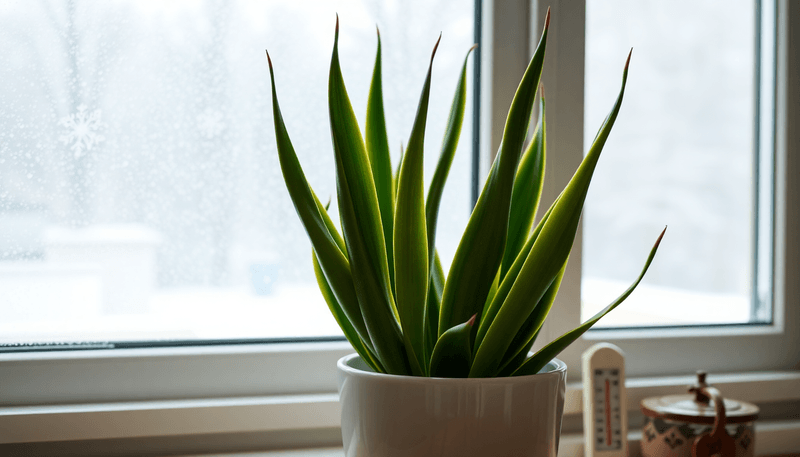
Indoors, watch out for sneaky trouble spots. A cold windowpane touching the leaves, a front door that opens to winter wind, or a heating vent blowing hot, dry air can all stress the plant.
A spot in the middle of a warm room is often the safest bet.
4. Put the Fertilizer Away Until Spring
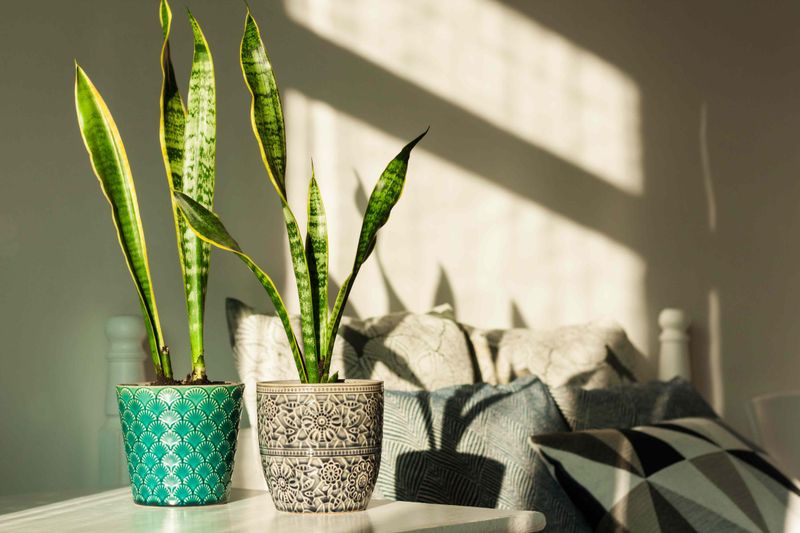
Feeding a resting plant is a bit like serving a big dinner to someone who is fast asleep. Nothing good comes of it.
From about October through March, stop fertilizing completely. Your snake plant is barely growing, so it cannot use extra nutrients.
Instead, unused fertilizer salts can build up in the soil and burn the roots, which may show up as brown leaf tips.
When you spot fresh new leaves pushing up in spring, that is your signal to start again with a diluted feed. Until then, the best thing in that fertilizer bottle is the cap.
5. Balance Dry Indoor Air
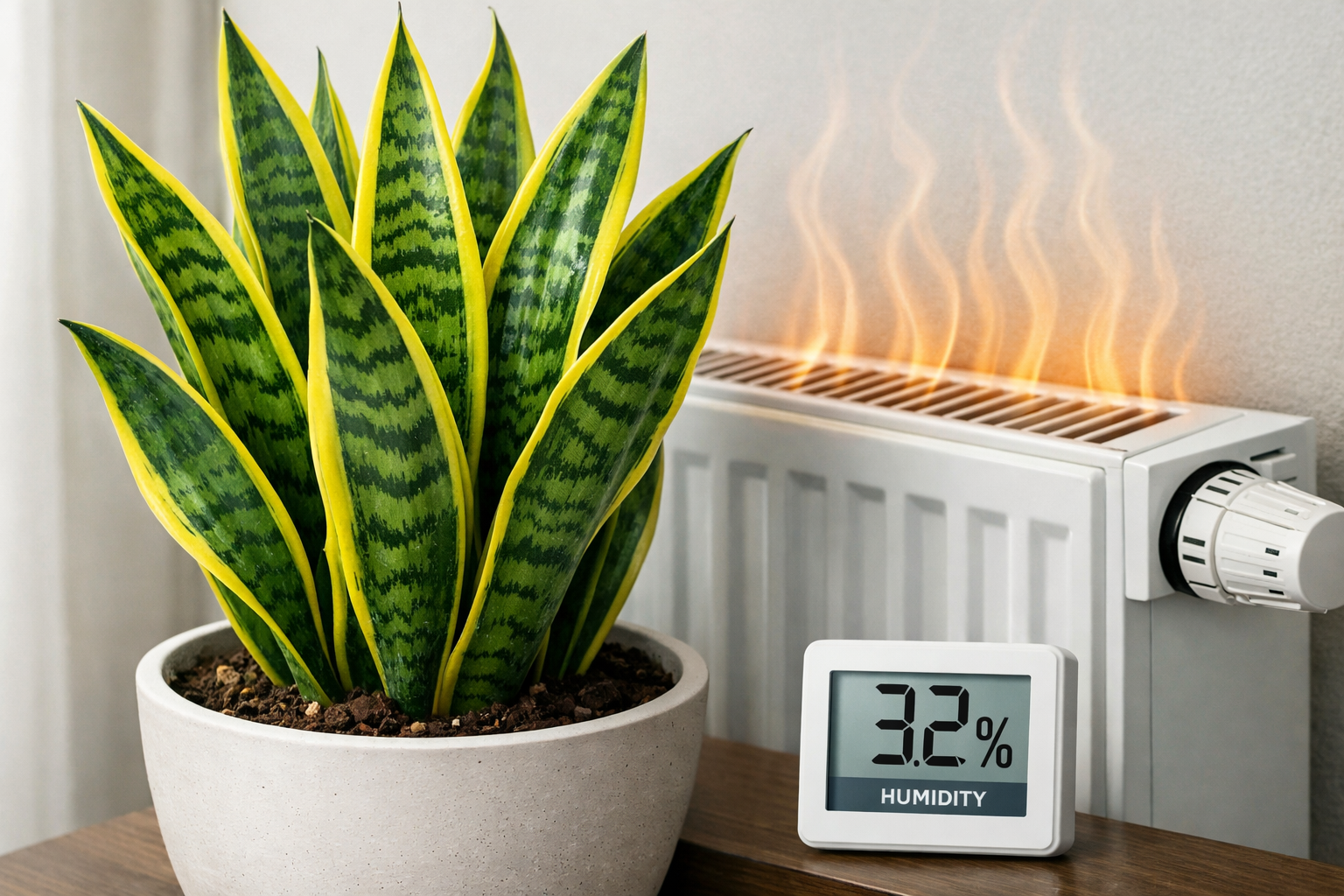
Turn on the furnace, and indoor air can get as dry as a desert. Snake plants handle dry air better than most houseplants, yet weeks of heated air can still cause curling leaves and attract pests.
Shoot for moderate humidity, around 40 to 50 percent. A pebble tray filled with water under the pot or a small humidifier nearby can raise moisture without wetting the soil.
Air movement matters too. Leave a little space around the plant instead of crowding it into a packed corner.
While you are at it, wipe the leaves with a damp cloth every few weeks, because dust blocks light and gives pests a place to hide.
6. Skip Repotting and Big Pruning
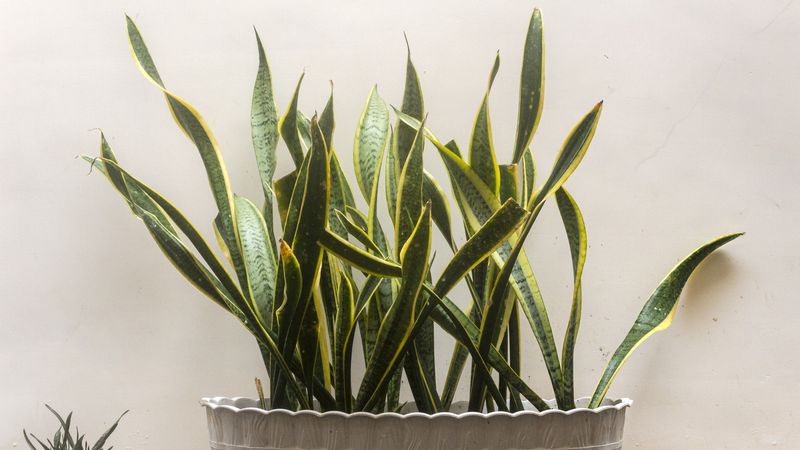
That crowded pot might be tempting you, but hold off. Repotting in fall or winter disturbs roots at the exact moment the plant has the least energy to heal.
Fresh, wet soil around sleepy roots raises the risk of rot. Dividing or heavy trimming adds even more stress.
Save all of those projects for spring or early summer, when your snake plant is actively growing and bounces back fast.
Light tidying is still fine. Snip off any fully dead, yellow, or damaged leaves at the base with clean scissors.
That small cleanup keeps the plant looking neat without asking it to work hard.
7. Learn the Winter Warning Signs
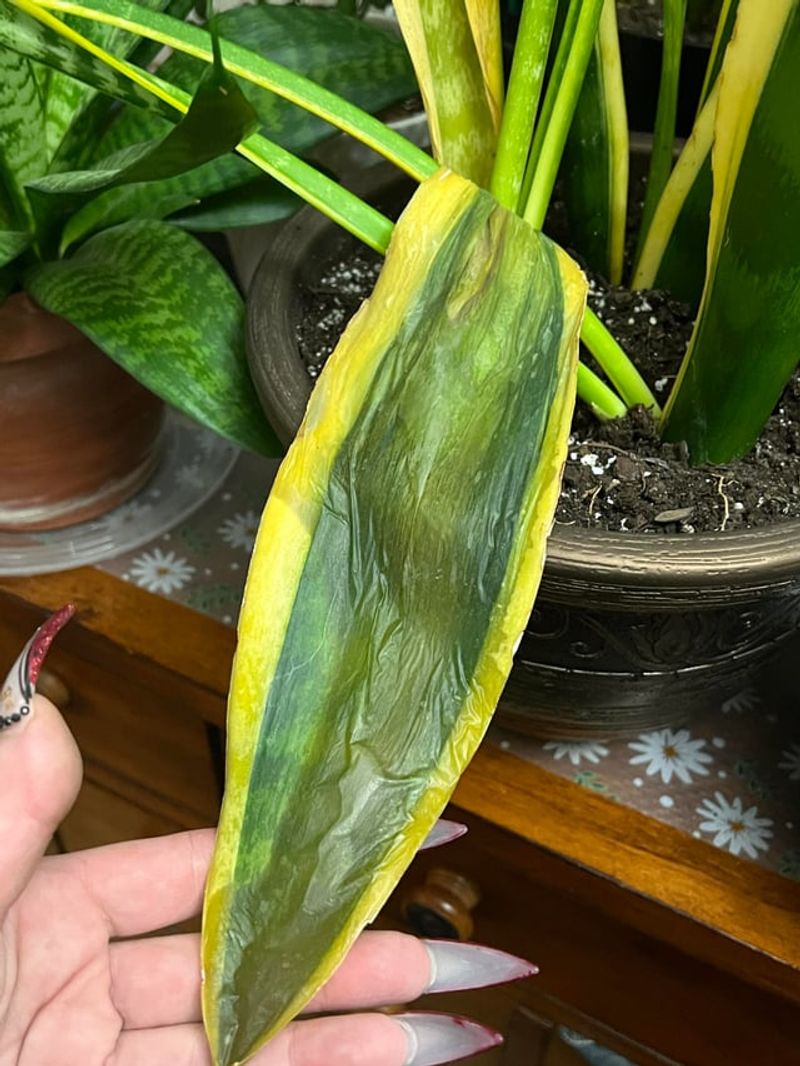
A mushy leaf is your snake plant waving a red flag. Catch it early, and you can usually save the plant.
Soft, yellow, or drooping leaves almost always point to overwatering and root rot. Stop watering, let the soil dry fully, and if the rot is severe, unpot it, trim away brown, mushy roots, and replant in fresh, dry, well-draining mix.
Other clues are easier to fix. Thin, stretched leaves mean the plant wants more light.
Wrinkled leaves can signal it has stayed dry too long or got chilled, so check both water and temperature.
Tiny flies buzzing around the pot are usually fungus gnats, a sign the soil stays too damp. Letting it dry out between waterings often clears them up.
Pale scorched patches mean too much direct sun, so slide the pot back a bit.