
Your Sunny Patio Is All The Herb Garden You Need – 15 Herbs That Thrive In Pots
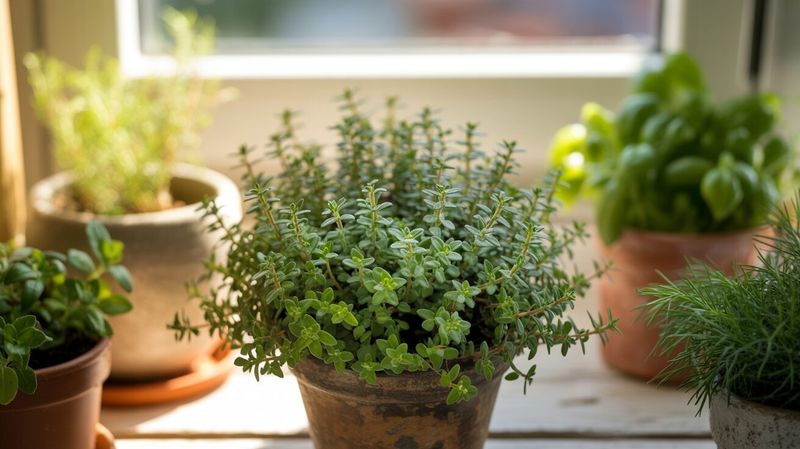
You do not need a big backyard to grow fresh herbs. A sunny patio and a few pots can give you more basil, mint, and rosemary than you can use.
Pots also make it easier to fix common problems like soggy roots, spreading plants, and herbs that wilt in summer heat. Here are 15 herbs that truly love container life, plus simple tips to keep each one happy.
1. Basil
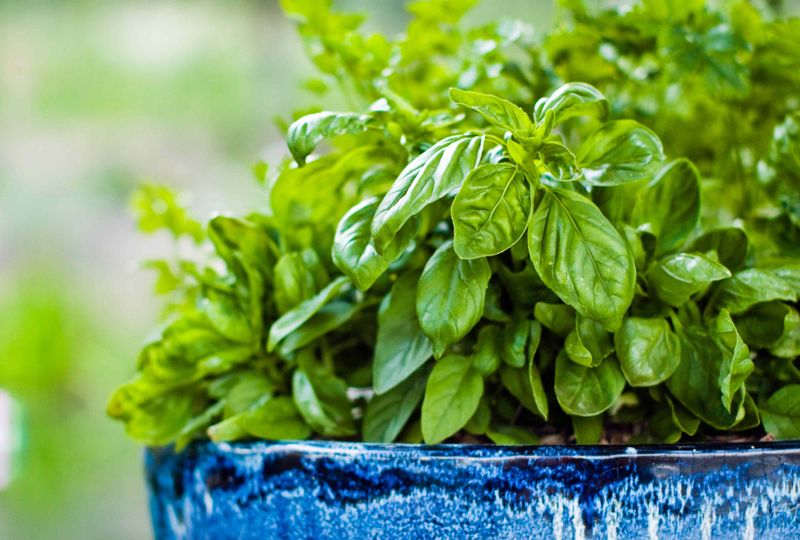
Nothing says summer like snipping basil five minutes before dinner. Basil loves heat and full sun, which makes a bright patio its happy place.
The catch is that it drinks a lot of water.
Small pots dry out fast in July, and a thirsty basil plant droops dramatically by late afternoon. Choose a container at least 10 to 12 inches wide so the soil holds moisture longer.
Water in the morning, not at night, so leaves dry before dark.
If your basil starts getting tall and leggy, pinch off the top set of leaves just above a pair of side shoots. That simple pinch pushes the plant to grow bushy instead of tall.
Pinch off flower buds too, because once basil blooms, the leaves can turn bitter.
In very hot regions, a little afternoon shade may help keep leaves from scorching.
2. Rosemary
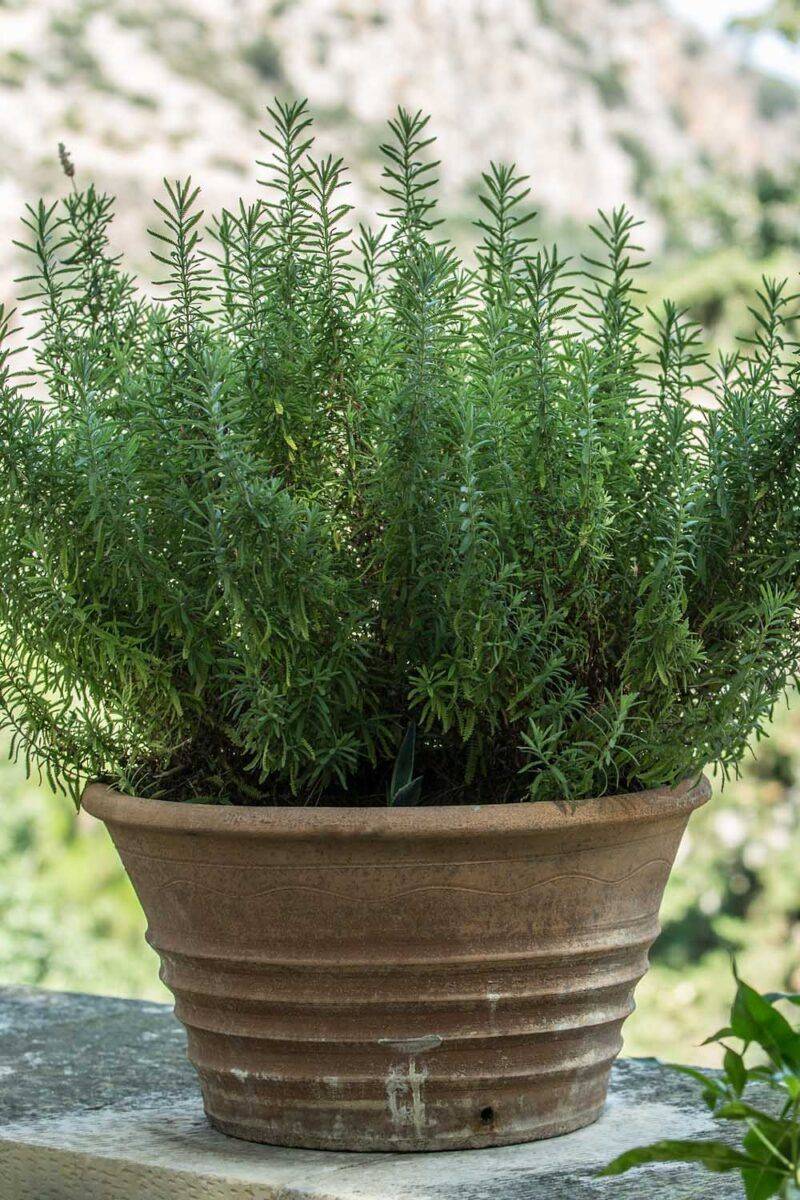
Think of rosemary as the tough, quiet neighbor who never asks for anything. Native to rocky Mediterranean hillsides, it would much rather be ignored than smothered with care.
The number one way people lose rosemary is overwatering. Soggy roots rot quickly, and the needles turn brown from the base up.
Plant it in a terracotta pot with gritty, fast-draining soil, and let the top inch or two dry out before watering again.
Give it the sunniest corner you have, at least six hours of direct light. Snip sprigs often for roasted potatoes or chicken, which also keeps the plant tidy.
In colder parts of the US, rosemary may not survive winter outdoors. Bring the pot inside to a bright window before hard frost, and water even less during the cold months.
3. Thyme
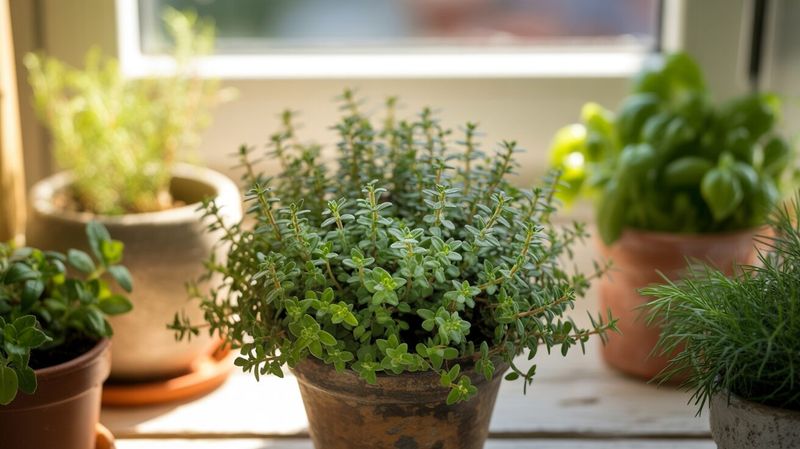
Small leaves, big flavor. Thyme packs a punch far beyond its size, and it asks for very little in return.
Bright sun and sharp drainage are all it really wants. A shallow pot works fine because thyme roots stay fairly near the surface.
Mix some sand or perlite into your potting soil if it feels heavy.
Thyme also plays nicely with others. It can share a wide pot with oregano or sage since all three like the same dry, sunny conditions.
Fun fact: ancient Romans tucked thyme into baths and believed it gave them courage. Today its tiny summer flowers bring in bees, so your patio gets a little pollinator buzz too.
Trim stems lightly after flowering to keep the plant from turning woody in the center.
4. Oregano
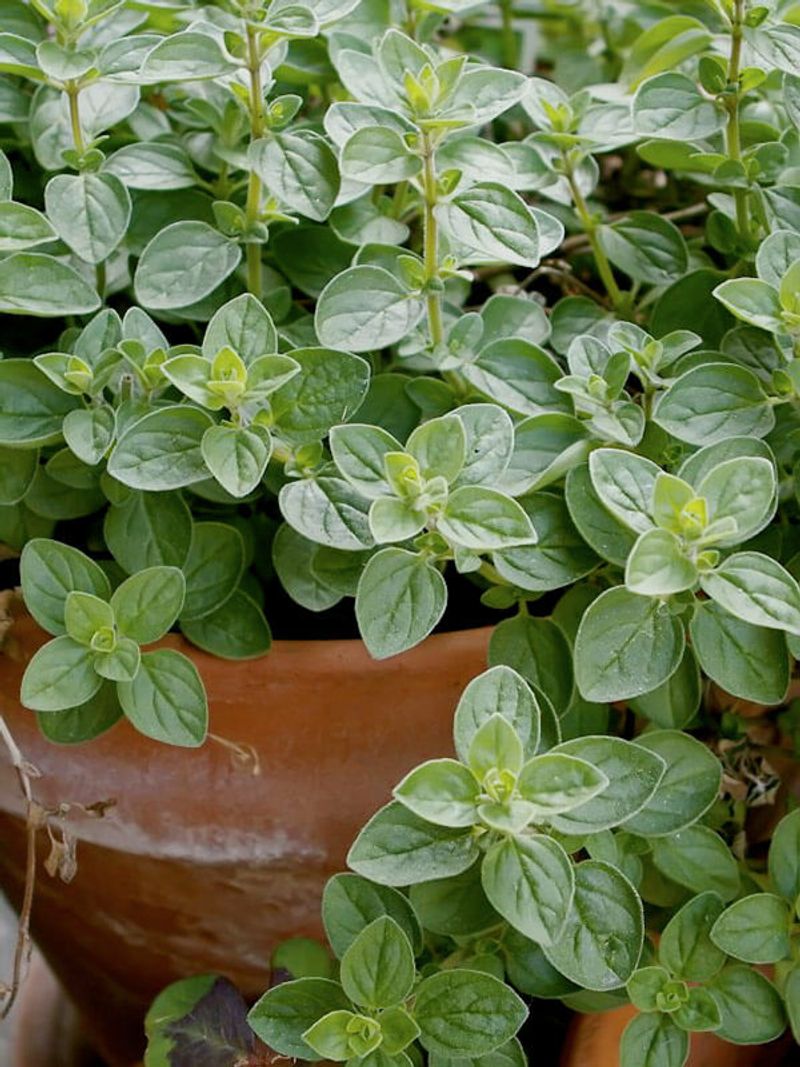
Pizza night just got an upgrade. Fresh oregano tastes brighter and more peppery than the dried stuff in your spice rack.
Oregano is a perennial that thrives on neglect. It handles drought well once rooted and needs about six hours of direct sun daily for the best flavor.
Shady oregano grows floppy and mild.
Here is a simple trick: harvest just before the plant flowers in early summer, when the oils in the leaves are strongest. Cut stems back by about a third, and new growth will fill in fast.
If the leaves turn yellow, check your watering first. Too much water is usually the problem, not too little.
5. Sage
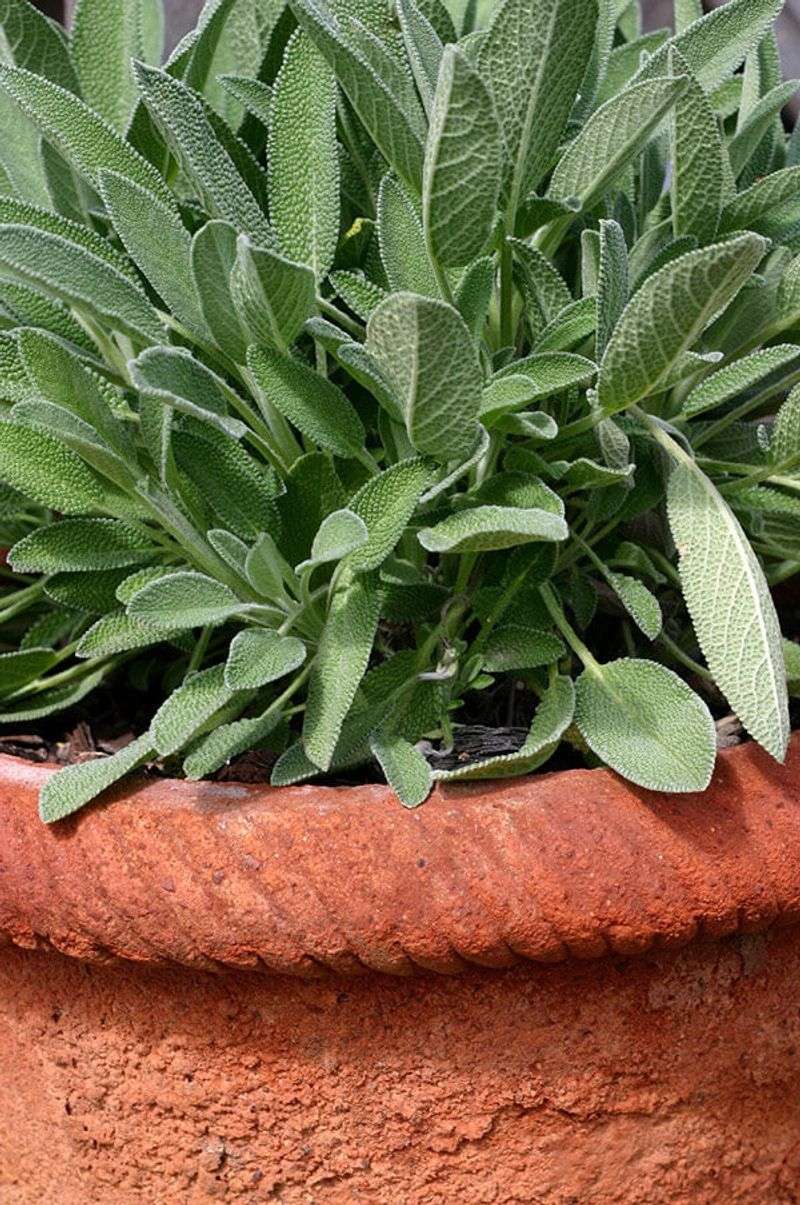
Soft, fuzzy, silvery leaves make sage one of the prettiest herbs on any patio. It grows into a small bush that looks good even when you are not cooking with it.
Full sun keeps sage strong, though in the hottest stretch of summer a bit of afternoon shade may prevent stress. Once established, it only needs occasional watering.
Wet feet are its enemy.
Many gardeners notice their sage turning woody and sparse after a couple of years. A light trim in spring, cutting back about a third of the growth, encourages fresh leafy stems.
Fry a few leaves in butter for pasta, and you will understand why people keep a pot by the kitchen door.
6. Lavender
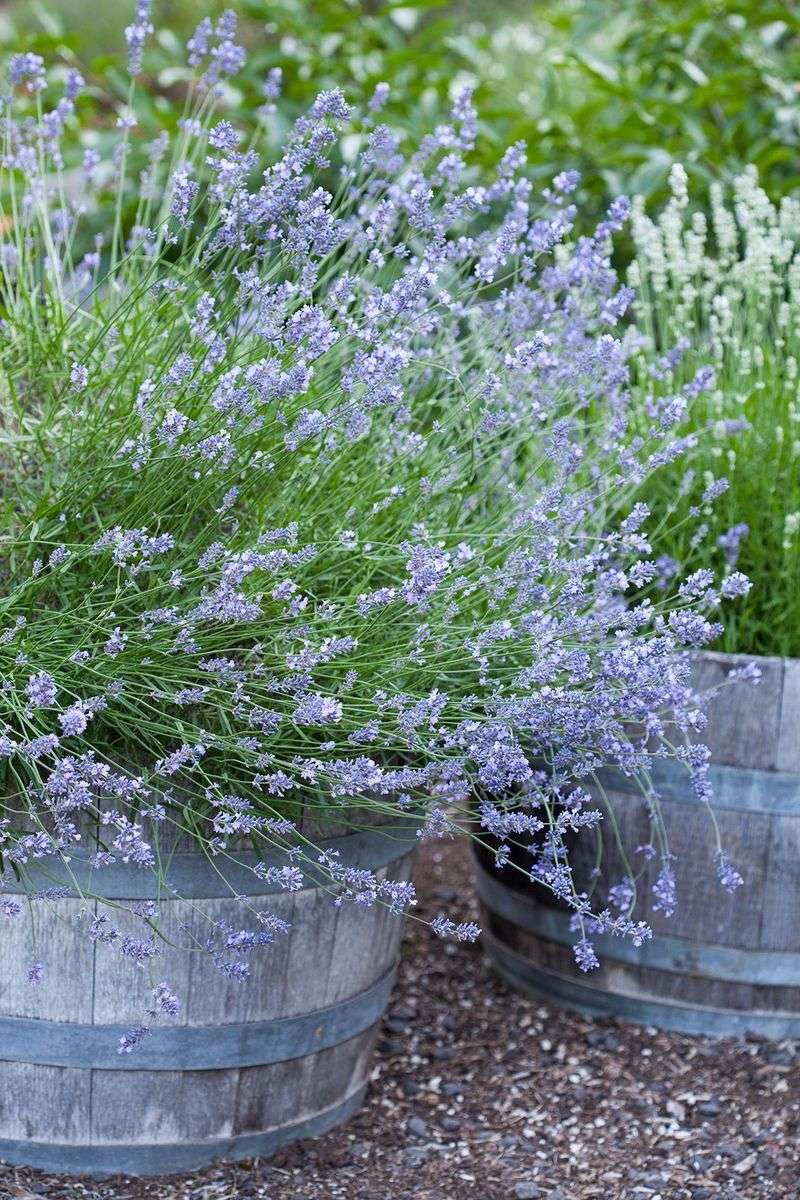
Brush past a pot of lavender on a warm evening and the whole patio smells like a spa. Few herbs pull double duty as beautifully as this one.
Lavender loves dry, sunny spots and soil that drains fast. English lavender is a solid choice for pots and handles cold better than many types.
Use a container with plenty of drainage holes, and skip the saucer full of water.
Not blooming much? Too much fertilizer or too little sun is often to blame.
Lavender actually flowers best in lean soil, so go easy on plant food.
Bees and butterflies adore it, and you can dry the flower spikes for sachets or baking.
7. Chives
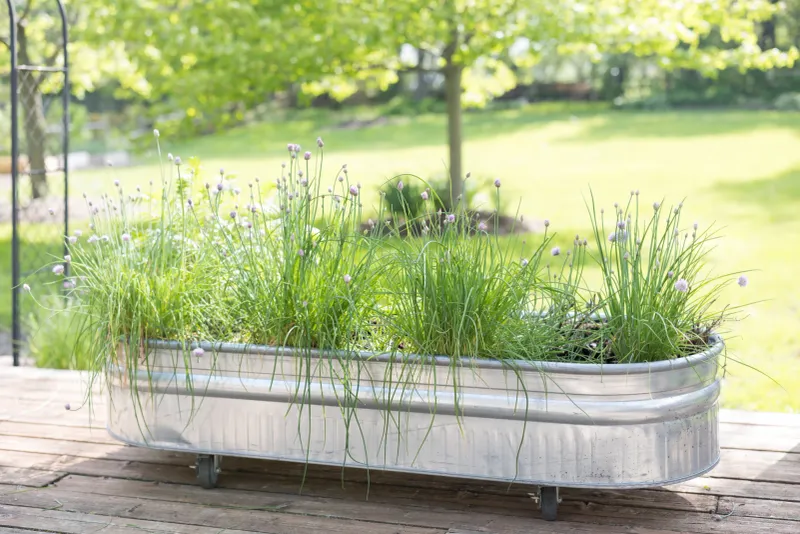
Got a tiny pot and a sunny ledge? Chives will happily move in.
They stay compact and keep producing for years.
Snip leaves about an inch above the soil, and they regrow quickly. You can harvest from spring through fall, sometimes even longer in mild areas.
Full sun is best, but chives forgive a little shade.
The pretty purple flowers are edible too. Toss them on salads for a mild onion kick.
Every few years, divide a crowded clump into two pots. It refreshes the plant and gives you a spare to share with a friend.
8. Dill
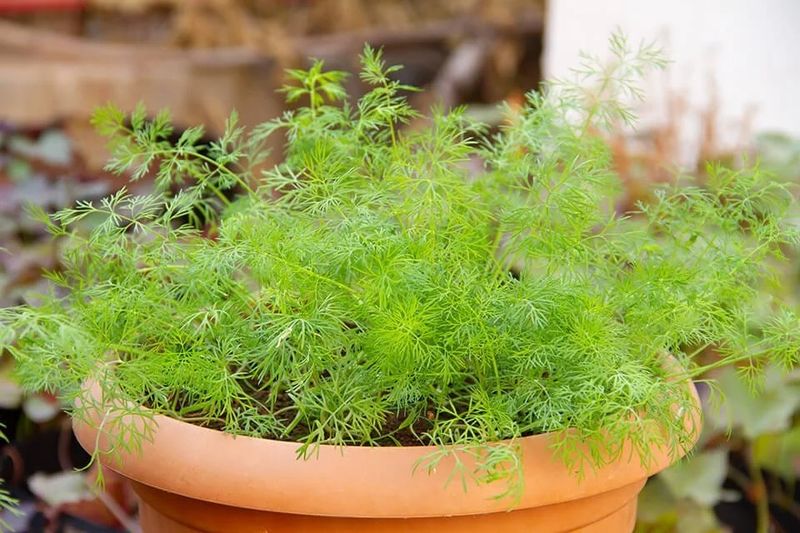
Feathery and airy, dill adds a soft, wild look to a row of pots. It is also the secret ingredient in homemade pickles.
Dill grows a long taproot, so pick a deep container, at least 12 inches. It does not like being moved once it sprouts, so sow seeds right where it will grow.
Watch for striped caterpillars munching on your dill. Those are often swallowtail butterfly babies.
Many gardeners plant an extra pot just for them.
For a steady supply, sow a few seeds every three weeks in spring and early summer. Hot weather makes dill flower quickly, so succession planting keeps fresh leaves coming.
9. Mint
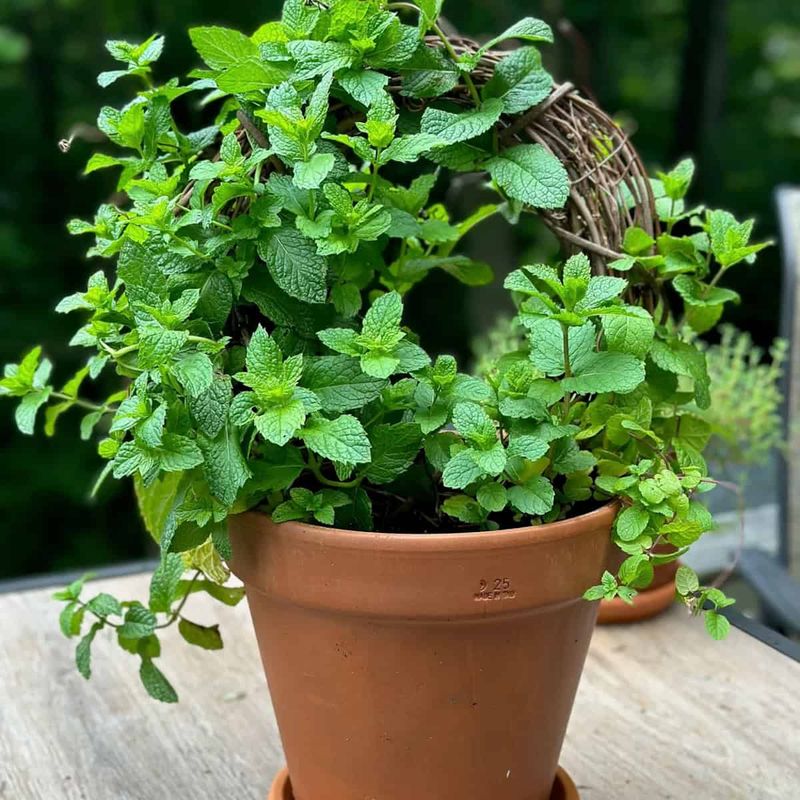
Plant mint in the ground once, and you may spend years pulling it out. Its runners spread underground fast and take over garden beds.
A pot solves that problem completely. Mint stays contained, and you still get endless leaves for iced tea, lemonade, and mojitos.
Unlike rosemary and thyme, mint likes its soil evenly moist. On a hot patio, check it daily in summer, since wilting is a sign it needs a drink.
A spot with morning sun and light afternoon shade keeps it lush.
Keep the pot off bare soil, or roots can sneak out the drainage holes and escape anyway.
10. Lemon Balm
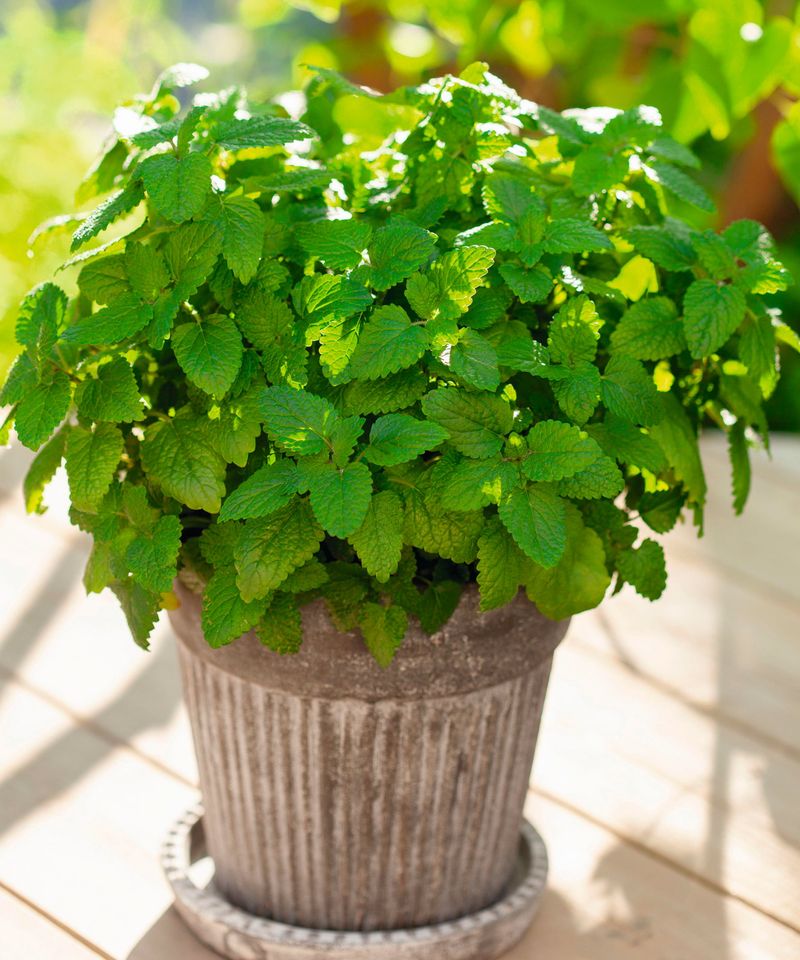
Crush a leaf and smell your fingers. That bright lemon scent is lemon balm saying hello.
As a cousin of mint, it shares the same habit of wandering. It also drops seeds freely, so a pot keeps it under control.
Trim off flowers before they set seed if you want to avoid surprise seedlings nearby.
Lemon balm handles full sun but appreciates a break from harsh midday heat. Keep the soil lightly moist.
Steep a handful of fresh leaves in hot water for a calming evening tea. People have enjoyed it this way for centuries.
11. Parsley
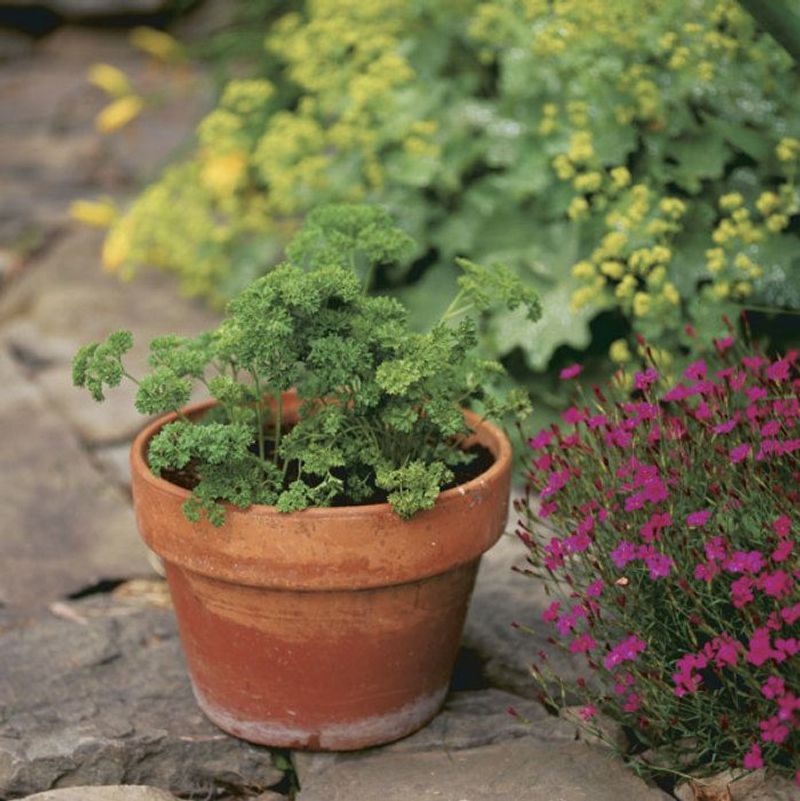
Parsley is far more than a plate garnish. Fresh from the pot, it tastes green, clean, and bright.
Flat-leaf Italian parsley has the strongest flavor for cooking, while curly parsley looks lovely in mixed planters. Both grow well in full sun or light shade, making them flexible on a patio.
Harvest from the outer stems first and let the center keep growing. That way one plant feeds you for months.
Parsley is a biennial, which means it flowers and fades in its second year. Most gardeners simply plant a fresh pot each spring.
12. Cilantro
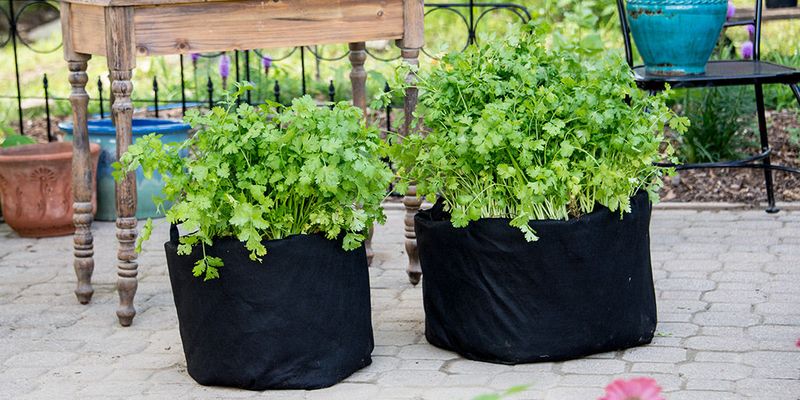
If your cilantro suddenly shot up tall and started flowering, you are not alone. Hot weather makes it bolt, or go to seed, almost overnight.
The fix is all about timing. Plant cilantro in early spring and again in late summer for fall, when temperatures are cooler.
A little afternoon shade during warm spells may also buy you extra weeks.
Sow seeds every couple of weeks for a steady harvest. Choose slow-bolt varieties when you shop.
Bolted plants are not a total loss. The seeds are coriander, a spice you can dry and grind.
13. Marjoram
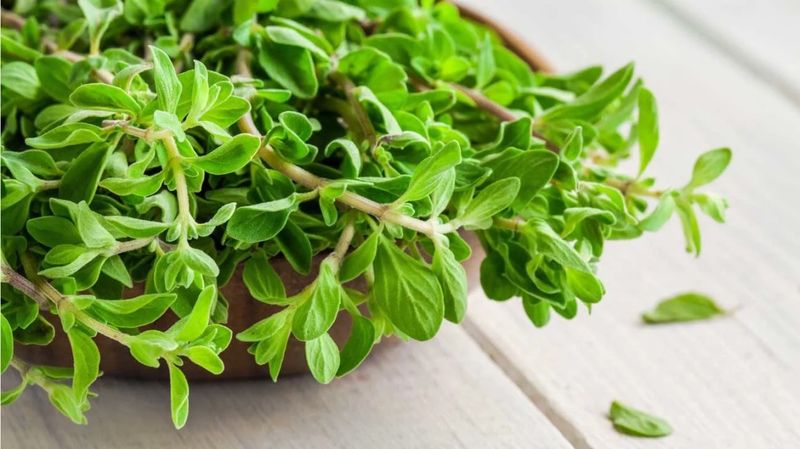
Picture oregano with a softer, sweeter personality. That is marjoram.
It loves full sun and well-drained soil, just like its cousin. In most of the US it is treated as an annual since it does not like freezing winters.
Marjoram stays small and tidy, so it fits nicely in a compact pot or the edge of a mixed planter. Water when the top of the soil feels dry.
Add it at the end of cooking to keep its gentle flavor. It shines in soups, eggs, and tomato sauces.
14. Lemongrass
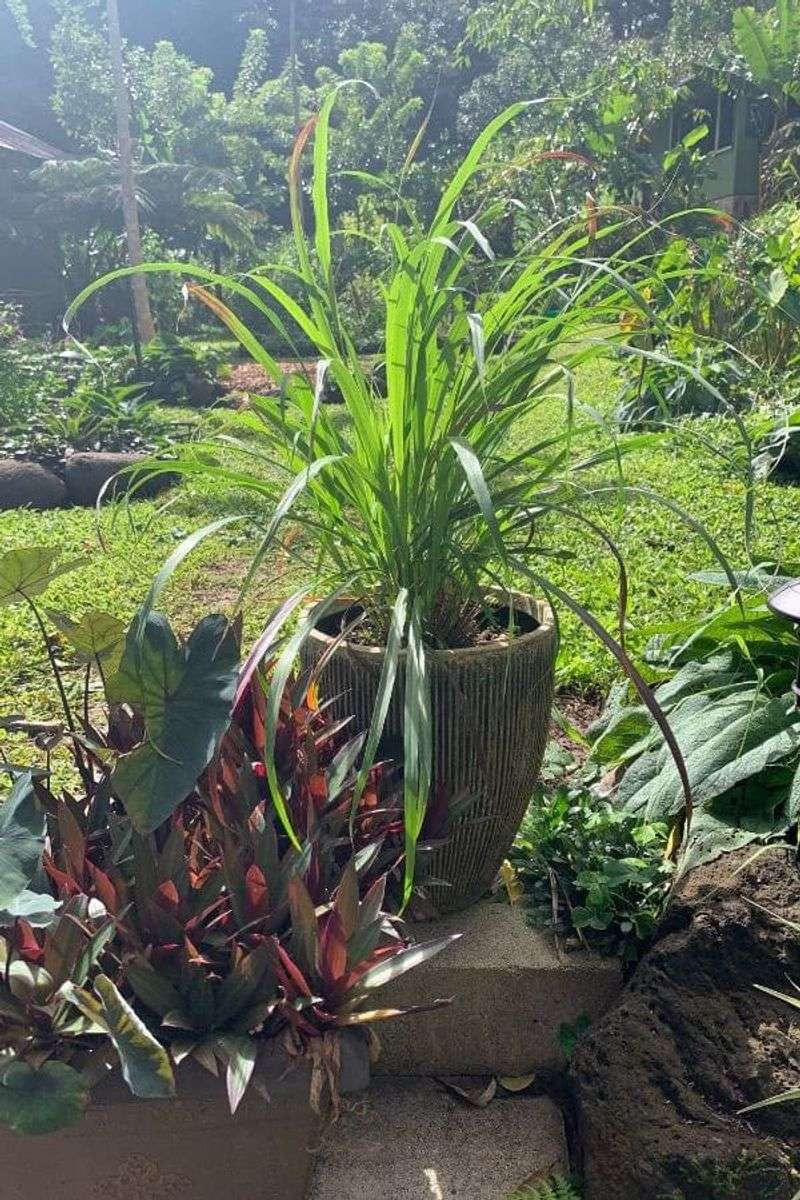
Want a herb that doubles as a patio statement plant? Lemongrass grows into a tall, graceful fountain of leaves that sways in the breeze.
As a tropical plant, it thrives in heat and full sun. Give it a large pot and regular water during summer, because it grows fast.
Harvest by cutting thick stalks at the base. Use the pale lower part in curries, soups, and teas.
Lemongrass will not survive frost. Before cold weather, cut it back and bring the pot indoors, or start fresh next year from grocery store stalks rooted in water.
15. Pineapple Sage
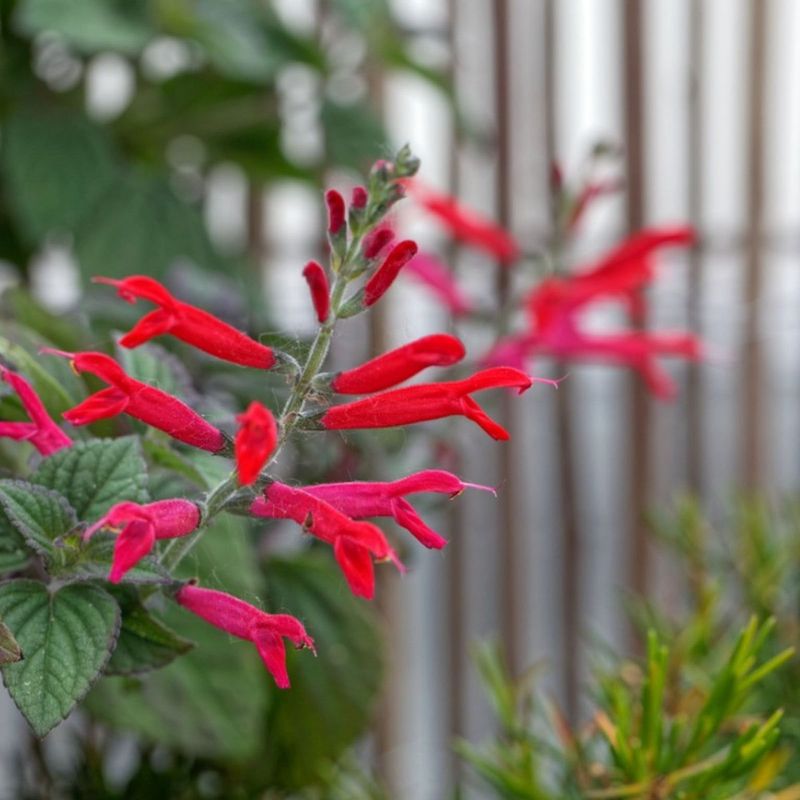
Rub a leaf and you will swear someone just cut a ripe pineapple. Pineapple sage is fun, fragrant, and full of surprises.
Late summer and fall bring bright red tubular flowers that hummingbirds cannot resist. It grows fast, so start with a roomy pot.
Sun or partial shade both work. Keep the soil evenly moist, since this sage is thirstier than common sage.
Toss leaves into fruit salads or iced drinks. It is a cheerful way to end the season on your herb patio.