
Cut Back Your Delphiniums Right After Flowering And Unlock A Second Bloom Show

Perennial delphiniums put on one of the most dramatic flower shows in any backyard garden, sending up tall spikes packed with deep blue, purple, or white blooms. Once those spikes fade, many gardeners wonder whether the display is done for the year. Cutting back spent flower stalks at the right time can encourage a second, usually lighter flush of blooms later in the season. Whether that second round actually appears depends on the plant, the climate, and how the rest of the summer unfolds.
Identify the delphinium before you prune
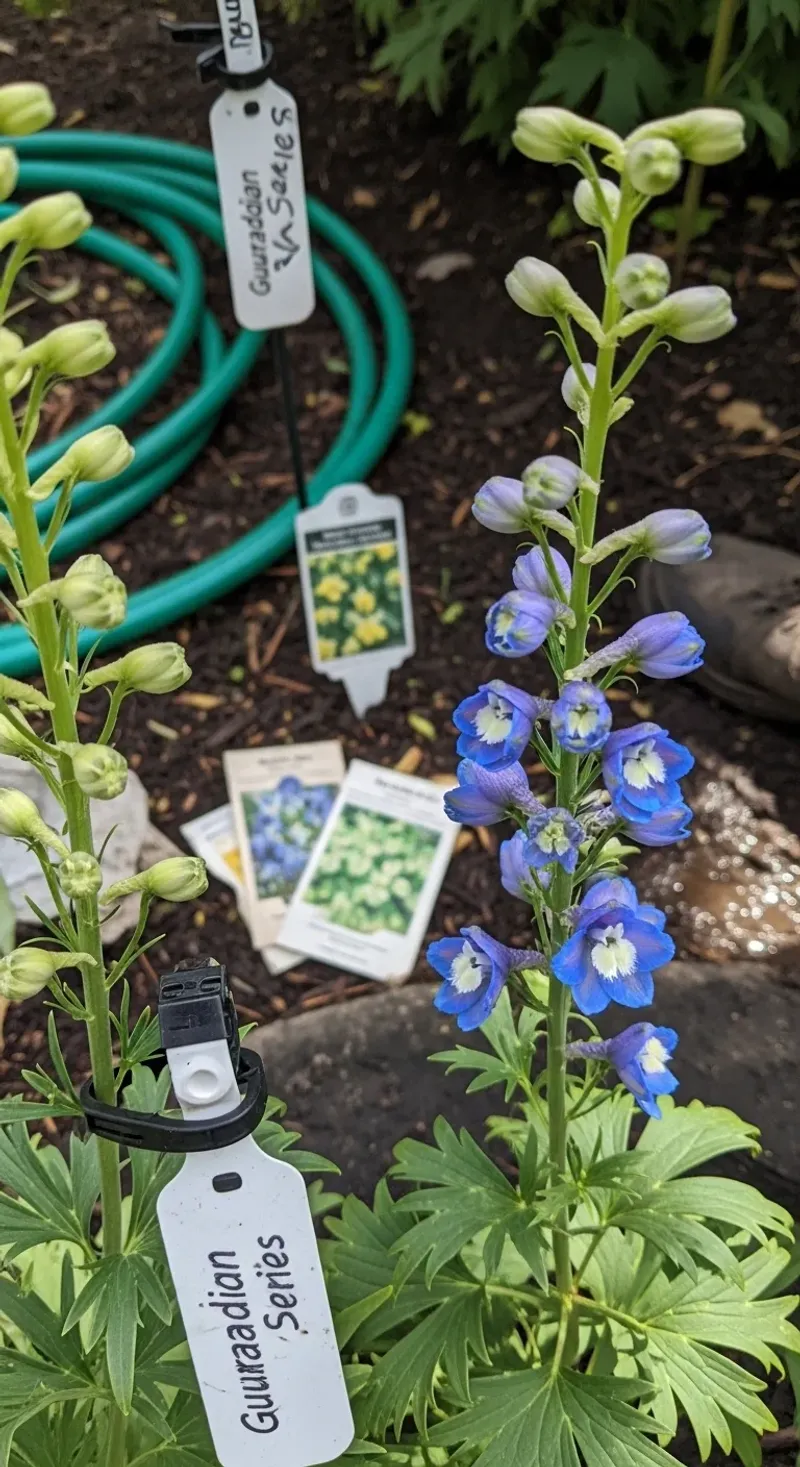
Perennial delphiniums are the plants this guide is written for. Most are cultivated hybrids of Delphinium elatum or related species, and they reliably return from the same root crown each year. The post-bloom cutback technique covered here applies to these perennial types, not to every plant sold under the delphinium name.
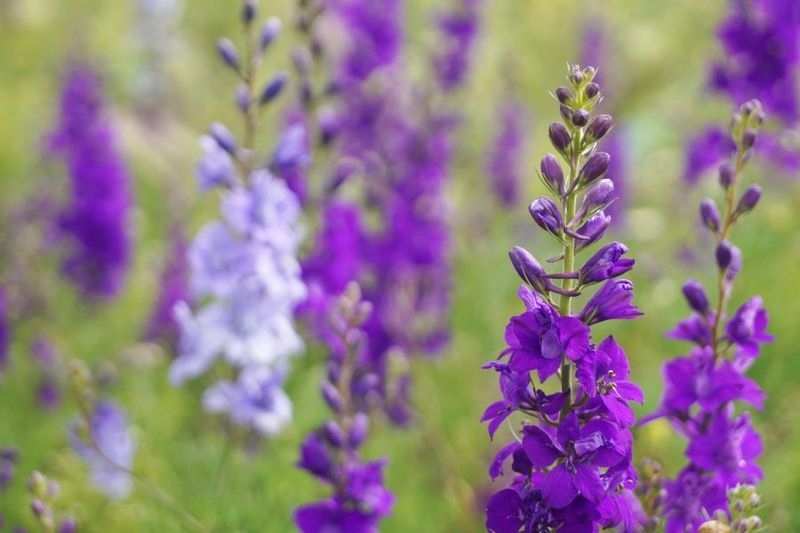
The distinction matters because the genus includes annuals, biennials, and perennials with quite different habits. Annual delphiniums and larkspur (including Consolida species often sold as annual larkspur) may flower longer when stems are regularly picked, but their growth cycle is fundamentally different from a perennial crown that can regenerate new spikes from established roots. Treating them as interchangeable will lead to mismatched expectations.
Among perennial types, there is also real variety. Missouri Botanical Garden notes that Pacific Hybrid delphiniums, among the most popular perennial types in U.S. gardens, can struggle in hot, humid summer climates and may be short-lived even under good conditions. Shorter hybrid groups like the Belladonna types and compact bee delphiniums tend to be somewhat more adaptable. Knowing which type you have helps set realistic expectations before you make any cuts.
North Carolina Extension describes perennial delphiniums as clump-forming plants with tall, upright flower spikes rising from a rosette of deeply lobed leaves at the base. That basal rosette is the plant’s engine, and protecting it through pruning is the central rule of post-bloom care. The goal of cutting back a finished spike is to encourage a later flush, not to make every delphinium flower continuously through the season.
Wait until most of the spike has faded
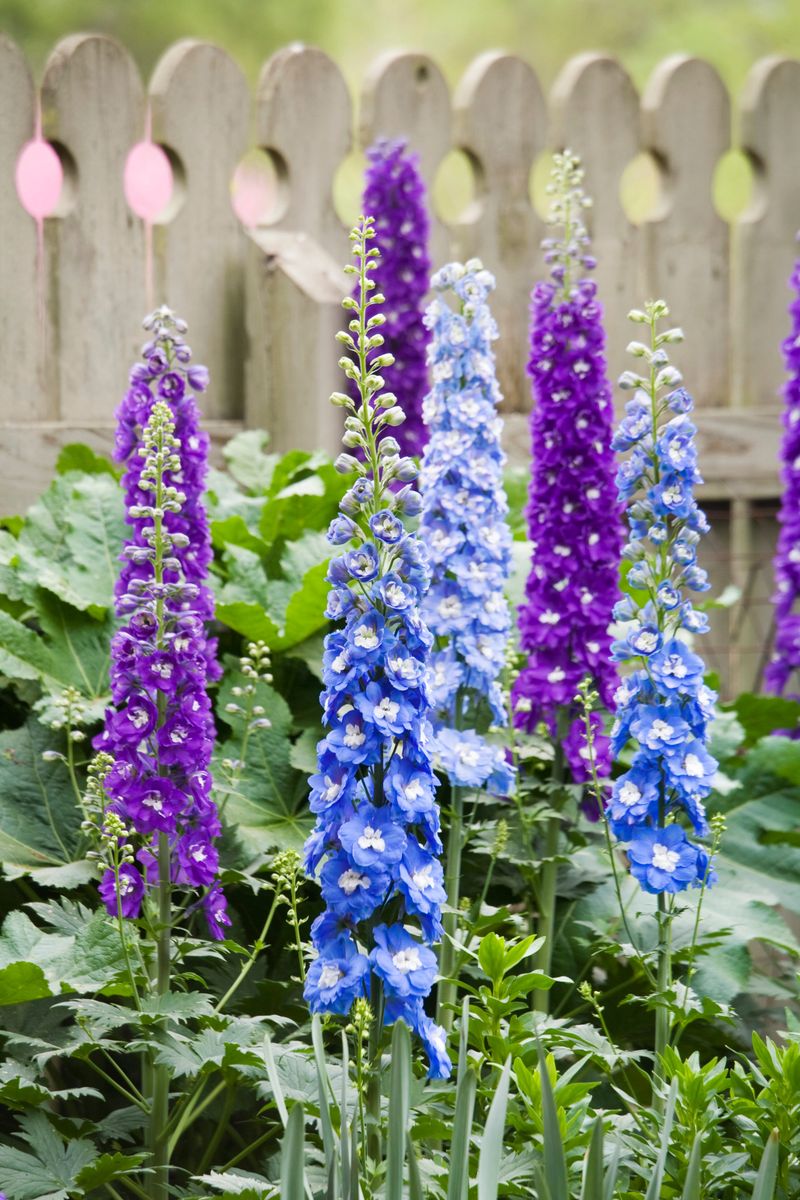
Timing the cut correctly is one of the most practical decisions in the whole process. The right moment is when most or all of the flowers on a given spike have faded and the spike looks spent rather than actively blooming. Acting promptly after that point, rather than leaving the stalk to stand and set seed, is the approach recommended by multiple extension sources.
Iowa State Extension recommends cutting faded spikes back promptly as the method for encouraging later bloom. The key word is “faded” – a spike that still carries open flowers or tightly closed buds toward its base is not yet finished, and cutting it at that stage removes flowers that would otherwise open on their own.
A spike with healthy lower side shoots or unopened buds calls for a lighter touch first. RHS deadheading guidance recommends cutting a multi-flowered stem above a strong lower bud, leaf, or side shoot when that growth is still useful, rather than removing the entire stalk immediately. You can deadhead the finished upper portion while allowing the remaining section to complete its bloom. Once the whole spike is done, the stronger cutback to basal foliage is appropriate.
Some gardeners assume that removing spent flowers forces the plant to redirect energy from seed production into new flower growth. That is a reasonable working explanation, but Penn State Extension cautions that only certain perennials rebloom after deadheading, and later flowers may still be fewer or smaller. Prompt removal is the recommended practice for attempting a later flush, but it is the timing that matters most, not a guaranteed mechanism. Think of it as giving the plant the best chance, not flipping a switch.
As a practical test: run your eye from the bottom to the top of the spike. If the majority of flowers are papery, colorless, or dropping petals, and no significant section of unopened buds remains, the spike is ready to cut.
Cut the finished stalk to the basal foliage
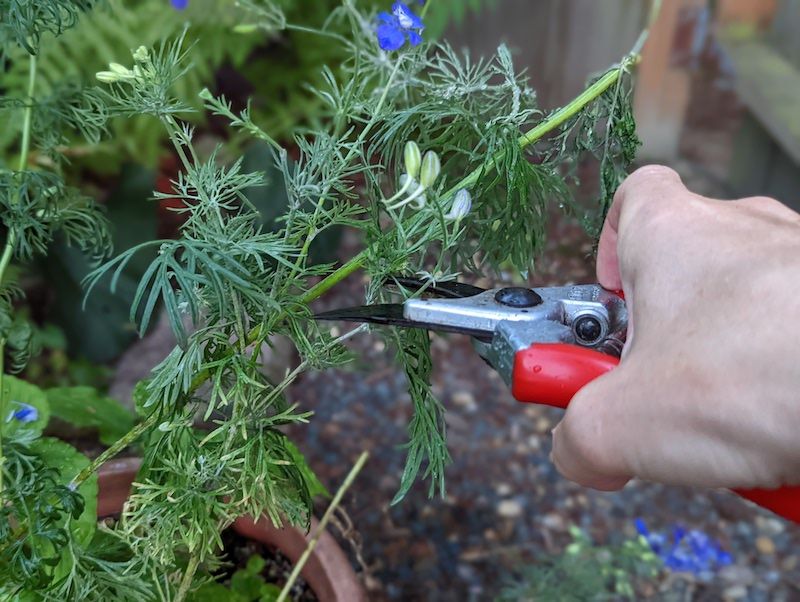
Once a spike is clearly finished, the cut itself is straightforward. Gather a pair of clean, sharp secateurs before you start. Dirty or blunt blades can crush stem tissue and introduce disease, so wipe the blades with a clean cloth and sharpen them if needed. Put on gloves before you handle any part of the plant, because delphinium foliage can irritate skin on contact.
RHS growing guidance for perennial delphiniums specifically advises wearing gloves when pruning or handling these plants.
For a fully finished flower stalk, cut it down to the basal foliage – the cluster of leaves sitting close to the ground at the plant’s base. You are removing the tall spent stem, not the plant itself. The basal leaves are the plant’s living crown, and they need to stay in place. Aim your cut just above the point where the stalk meets or approaches that leafy base.
If the plant has several stalks and only one is finished, cut that one and leave the others alone until they reach the same stage.
The exception applies when a stem is only partially finished and still carries a strong lower side shoot, leaf node, or developing lateral bud. In that case, RHS deadheading advice supports cutting above that lower growth point rather than all the way to the base. This preserves the side shoot’s potential to flower. Once even that growth finishes, bring the remaining stalk down to the basal foliage.
Iowa State Extension makes an important distinction that is easy to overlook: cutting off the old flower stalk is not the same as cutting down the entire plant. The foliage at the base should remain standing and healthy after you remove the spent stem. That leafy rosette is doing real work – it is gathering sunlight and keeping the root crown active while the plant prepares for any later growth.
Dispose of the cut stalks away from the bed. Penn State Extension pruning guidance recommends removing plant debris to reduce the chance of disease carrying over in the garden. Drop the cuttings into a waste bin rather than the compost pile if the plant showed any signs of disease during the season.
Preserve foliage and provide normal aftercare
After the spent stalks come off, the basal foliage stays. RHS perennial delphinium growing guidance recommends leaving old leaves until they die down naturally, or until after the first frosts arrive. Pulling or cutting healthy green leaves before that point removes photosynthetic capacity the plant needs to build strength for later growth and for next year’s display. Only remove foliage that has already yellowed, collapsed, or shows clear signs of disease.
Watering after the cutback follows the same principles as before: keep the soil evenly moist but never waterlogged. Delphiniums need consistent moisture to support any new shoot development, but sitting in wet soil damages their crowns and roots. Good drainage is not optional – it is one of the most reliable ways to keep established plants healthy through the rest of the growing season.
Penn State Extension’s delphinium disease resource identifies crown rot, stem rot, and bud rots as problems associated with wet conditions, and notes that overhead irrigation can contribute to disease pressure on susceptible plants. Where disease has been a concern in your garden, watering at soil level – using a drip line, soaker hose, or careful hand watering at the base – is a sensible approach. This is not a universal rule for every garden, but a practical precaution when conditions favor fungal problems.
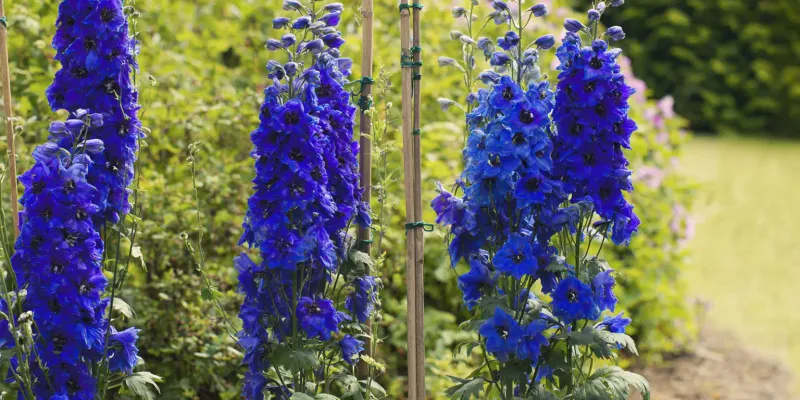
Tall delphinium varieties may push up new spikes that need support just as much as the original ones did. Iowa State Extension notes that delphinium stems are hollow and brittle, making them vulnerable to wind and rain damage. Check your existing stakes and ties after pruning, and add new supports early if you see new shoots developing. A broken stem late in the season, when a second flush might be forming, is a frustrating and avoidable loss.
No special fertilizer regime is required after the cutback. Ordinary care with well-balanced soil is sufficient. If your soil is genuinely poor, a light application of a balanced fertilizer is reasonable, but feeding alone does not trigger or guarantee a second bloom, and heavy nitrogen applications are more likely to push leafy growth than flowers.
Expect a possible but lighter second flush
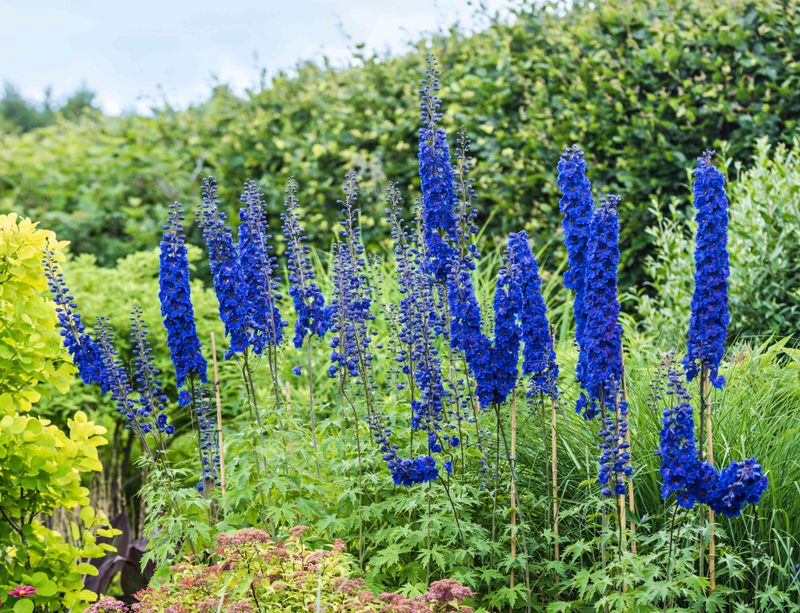
Gardeners who cut back their delphiniums promptly and provide consistent care may see new flower spikes emerge in late summer or early fall. Iowa State Extension states directly that a second flower display is generally smaller and less full than the first. That is the realistic baseline: a later, lighter flush rather than a repeat of the main show, and only when conditions cooperate.
Several factors shape whether any second growth appears at all. Cultivar matters considerably. Some perennial hybrid groups are bred for stronger rebloom potential, while others put most of their energy into a single main display. Plant vigor is equally important – a well-established, healthy crown in its second or third year is more likely to produce a second flush than a young or stressed plant.
Climate is one of the biggest variables. Delphiniums perform best in cool summer conditions. North Carolina Extension notes that delphiniums can be difficult to grow in humid climates south of USDA Zone 7, and NC Extension’s Delphinium elatum profile confirms that heat and humidity stress these plants significantly. In regions with long, hot summers, a second flush may simply not develop even after a well-timed cutback.
Missouri Botanical Garden similarly notes that Pacific Hybrid delphiniums often struggle in hot, humid summer climates. Gardeners in the Pacific Northwest, upper Midwest, and cooler parts of the Northeast stand the best chance of seeing a meaningful second bloom, while those in the South or in regions with persistently high summer heat may find that the plant simply rests rather than reflowers.
Timing of the first bloom also determines how much growing season remains. Penn State plant material notes that continued flowering depends on the growing season being long enough. A plant that finishes its first flush in early June has a much longer runway for regrowth than one that finishes in late August with frost approaching. If the season is short, the second flush, if it comes at all, may be only a few partial spikes.
Avoid common pruning and care mistakes
A few common errors can undercut the chances of a later flush or harm the plant outright. Cutting too early is one of the most frequent. Removing a spike while it still carries open flowers or developing buds wastes blooms that would have opened naturally. The RHS deadheading guidance is clear that a stem with viable lower growth should be cut above that growth, not taken to the ground prematurely.
Removing the basal foliage along with the spent stalks is another error that sets plants back significantly. RHS perennial delphinium care guidance specifies that old leaves should be cut back only after they die down naturally or after the first frosts – not immediately after the flowers finish. Stripping green leaves from the crown after bloom removes the plant’s ability to gather energy for recovery and next season’s growth.
Wet conditions and disease pressure are a separate threat. Penn State’s delphinium disease resource lists powdery mildew, crown rot, and stem rot among the problems that affect these plants, and notes that poor drainage and persistently wet foliage contribute to disease development. Avoid piling mulch against the crown, leaving water pooling around the base, or watering in ways that keep foliage wet for extended periods when disease has been present.
On fertilizer: Penn State seasonal garden tips mention that a complete fertilizer may help encourage a second bloom, but this is not a guarantee. Excessive nitrogen feeding is more likely to produce lush foliage than flowers. If you choose to fertilize after the cutback, use a balanced product at a moderate rate rather than heavy doses of a high-nitrogen formula.
Heat and a short remaining season can also prevent regrowth regardless of how well the pruning was done. If summer temperatures are consistently high and fall frost arrives early in your area, a second flush simply may not have the conditions it needs to develop.
Finally, handle delphiniums with care throughout. ASPCA lists larkspur and Delphinium species as toxic to dogs, cats, and horses. All parts of the plant are considered toxic if eaten, and the sap can irritate skin. Wear gloves whenever you are pruning or handling the plant, keep cut stems and leaves away from children and pets, and dispose of cuttings where animals cannot reach them.
Use the cutback as an opportunity, not a promise
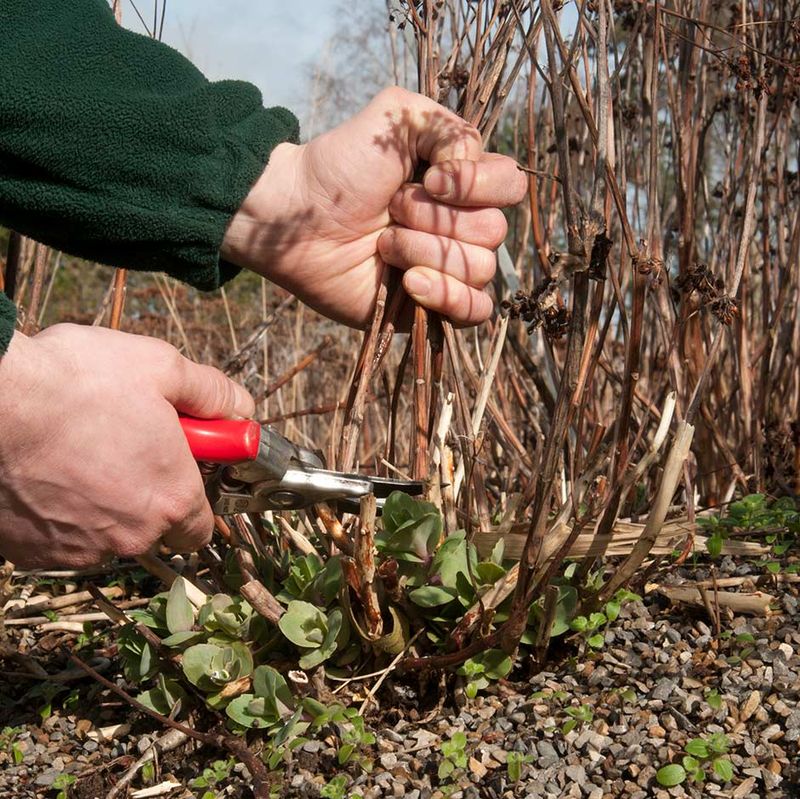
The practical routine is simple enough to follow every season. Confirm you are working with a perennial delphinium rather than an annual type. Watch the spike until most or all of its flowers have faded. Cut the spent stalk to the basal foliage with clean, sharp secateurs while wearing gloves, or cut above a strong lower side shoot if that growth is still developing.
Leave the healthy basal leaves standing and keep the soil evenly moist and well drained through the rest of the season.
Iowa State Extension and RHS perennial delphinium guidance both support this approach as a way to encourage later flowering – not as a guaranteed result. North Carolina Extension uses similarly qualified language, noting that cutback may give a second bloom depending on conditions. The plant, cultivar, climate, and remaining growing season all influence whether a lighter second flush actually appears.
Treating the cutback as an opportunity rather than a certainty keeps expectations grounded and the garden work worthwhile. A well-timed cut gives a healthy perennial delphinium its best realistic chance at another round of color – and that chance alone is reason enough to reach for the secateurs.