
If Your Petunias Suddenly Quit Blooming In Late Summer, Here Are 13 Silent Culprits (And The Fix For Each)
Nothing is more frustrating than watching your once-colorful petunias fizzle out just as summer hits its peak. The good news is that most late-season bloom slumps come from a handful of easy-to-miss problems, not a plant that is dying.
Below are 13 quiet troublemakers that could be stealing your flowers right now. Each one comes with a simple fix you can try today without spending much money.
1. Natural Aging and Exhaustion
Your petunias have been working overtime since spring, pumping out flower after flower for months. At some point they simply run out of steam and start pouring their energy into making seeds instead of new blossoms.
You will usually spot this when the stems turn woody and bare, with just a scattering of blooms clinging to the ends. It is not a disease, just a plant that has hit its natural wall.
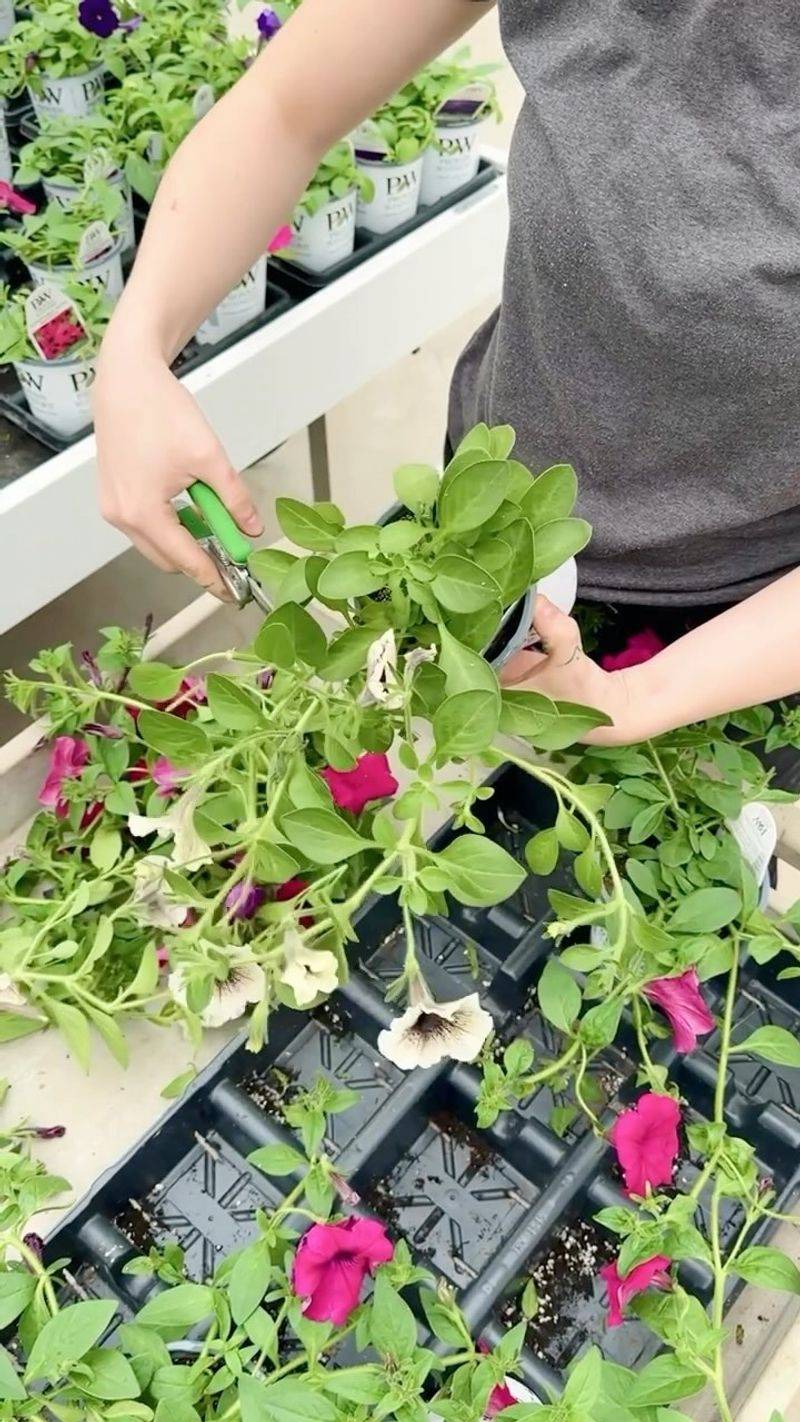
The fix is bolder than most folks expect. Give your petunia a midsummer chop by cutting the stems back by one-half to two-thirds.
That drastic trim resets the plant and tells it to grow fresh, flower-filled shoots. Keep watering and feeding after the cut, and you will likely see new buds within a couple of weeks.
2. Insufficient Deadheading
Ever notice how a petunia covered in shriveled, faded blooms seems to slow way down? Those spent flowers are quietly sending a message to the plant that its job is done and it is time to make seeds.
Once seed production kicks in, fresh flowering drops off fast. The plant figures its mission is complete.
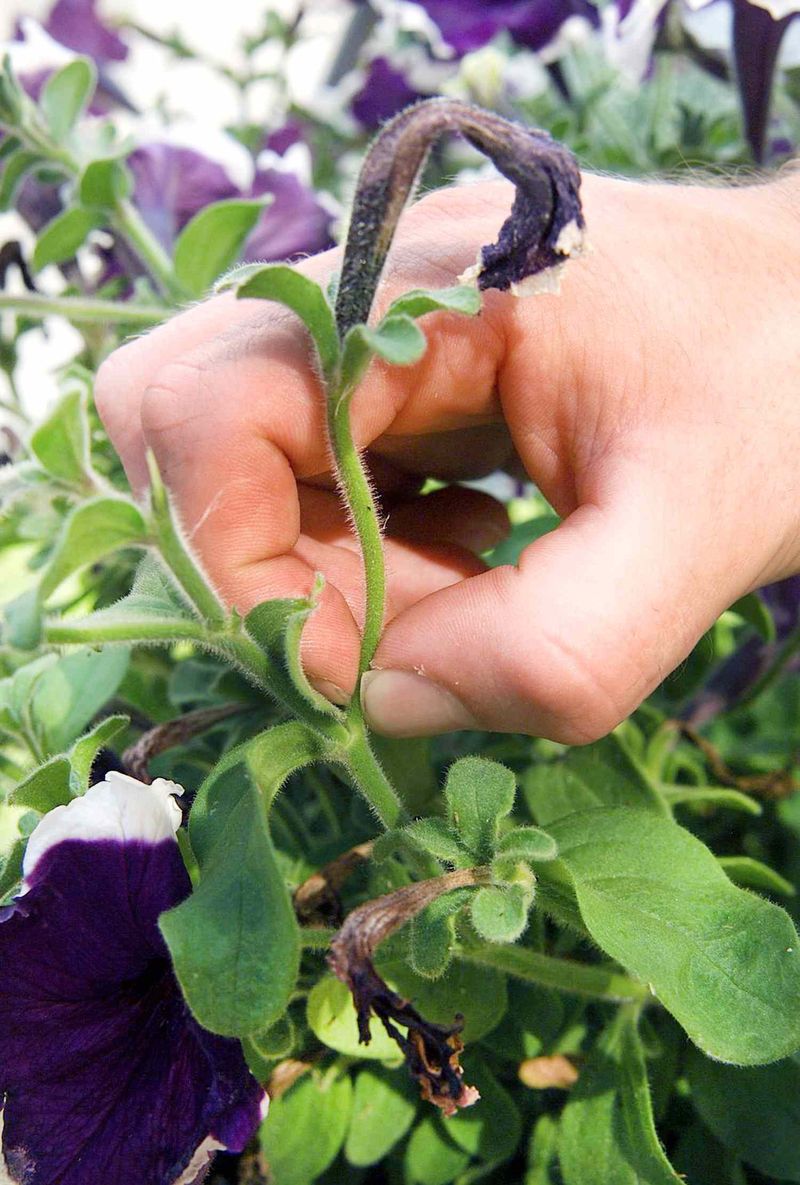
To keep the show going, pinch off the entire faded flower, not just the petals. Grab the small stalk and swollen ovary behind the bloom too, since that is where seeds form.
Do a quick pass every few days and you will trick your petunia into blooming again to try one more time.
3. Lack of Regular Pruning (Legginess)
Petunias have a sneaky habit of stretching out as the season rolls on. Before long the stems get long, thin, and naked in the middle, with a lonely flower or two hanging on at the tips.
That stretched look tells you the plant is spending energy growing longer rather than fuller. Flowers get pushed farther and farther away from the center.
Reach for your scissors and trim leggy stems back by a third to a half. For really overgrown plants, go as deep as two-thirds.
Always snip just above a leaf node, because that is where new bushy branches will burst out. Within days those cuts wake up dormant buds and give you a rounder, flowerier plant.
4. Inadequate Sunlight
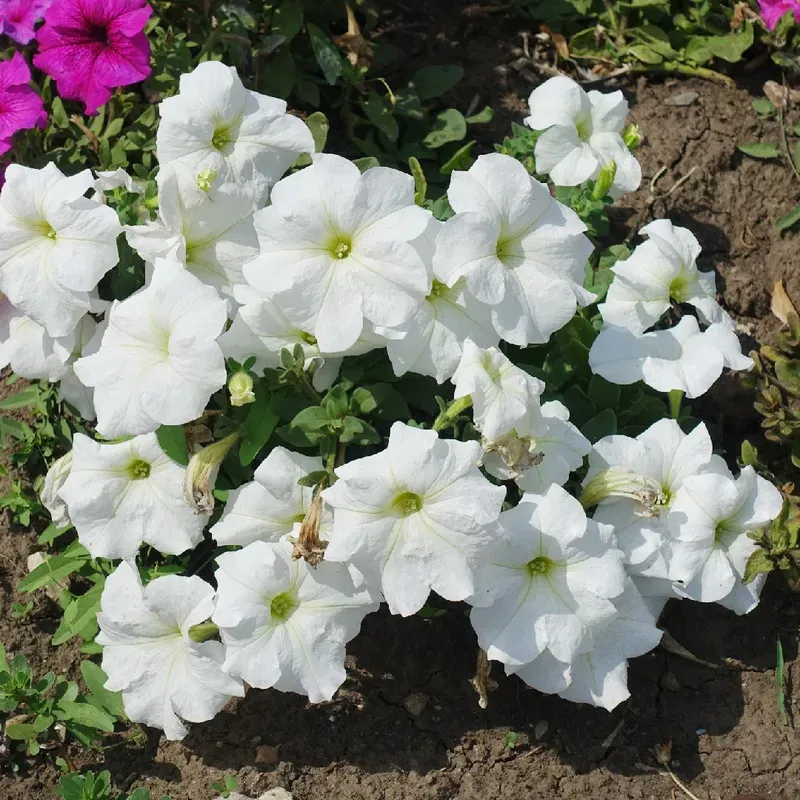
Petunias are sun worshippers through and through. They need at least six to eight hours of direct sunlight every day to keep the flowers coming.
When they do not get enough, the stems stretch out pale and skinny in a process called etiolation, and blooming grinds nearly to a halt. A shady spot that seemed fine in spring can turn gloomy as nearby trees and plants grow taller through summer.
Move potted petunias to the brightest corner you have. For plants stuck in a garden bed, trim back any tall neighbors or overhanging branches that are throwing shade their way.
More light almost always means more color.
5. Heat Stress
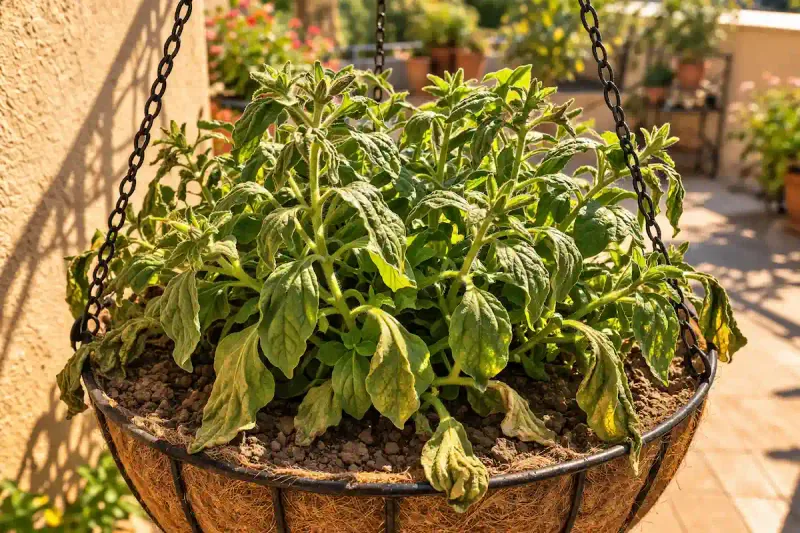
Even sun-loving petunias can throw in the towel when the thermometer climbs too high. Once temperatures push past 80 degrees Fahrenheit for days on end, the plants slip into survival mode.
You will see droopy, wilted foliage and a pause in blooming while they conserve energy. It is their way of riding out the worst of the heat.
Offer some relief with afternoon shade during the hottest stretch, using a shade cloth or by scooting potted plants into a cooler spot. Keep the soil evenly moist and make sure air can move freely around the plants.
Once the heat backs off, they usually bounce right back into bloom.
6. Nutrient Depletion or Under-fertilization
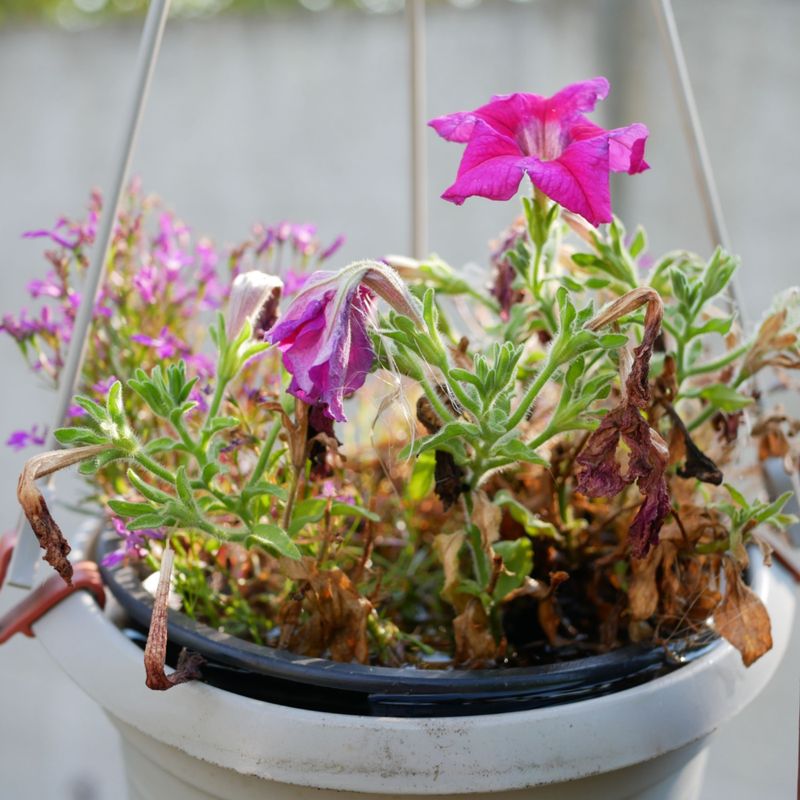
Here is something a lot of gardeners forget: petunias are hungry plants. All that nonstop blooming burns through nutrients fast, and container soil runs dry of food surprisingly quickly.
When the pantry is empty, flowering slows and the whole plant loses its pep. Blooms shrink, colors fade, and growth stalls.
Feed them regularly with a water-soluble, bloom-focused fertilizer, one with higher phosphorus and potassium numbers. Container petunias appreciate a dose every one to two weeks, while in-ground plants can go every two to three weeks.
Steady feeding keeps the flower factory humming right through late summer.
7. Inconsistent or Insufficient Watering (Underwatering)
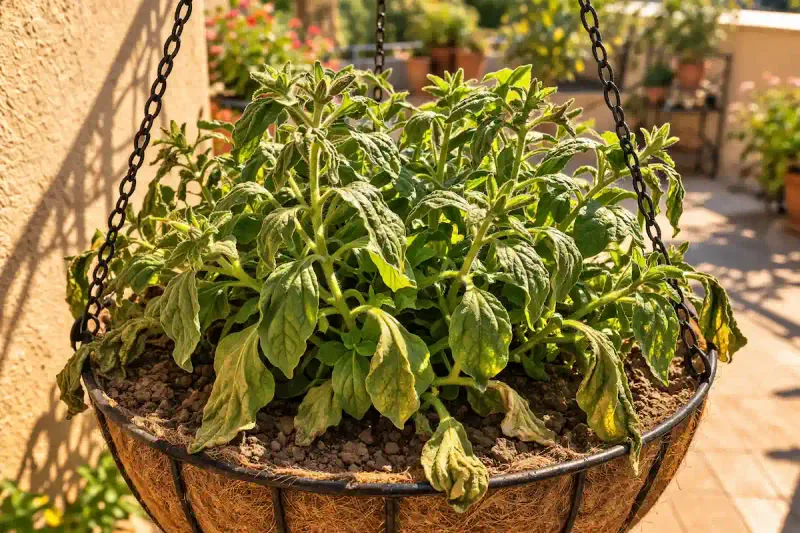
Letting the soil bake bone-dry between drinks is one of the fastest ways to shut down blooming. Thirsty petunias cannot pull nutrients from parched soil, so they get spindly and start to droop.
Containers dry out especially fast, sometimes within a single hot day. A plant that keeps wilting by afternoon is practically begging for water.
Water deeply and on a consistent schedule. Poke your finger about an inch into the soil each day, and if it feels dry, water thoroughly until it drains out the bottom of the pot.
During heat waves, container petunias may need a drink every single day to stay happy and flowering.
8. Overwatering or Poor Drainage
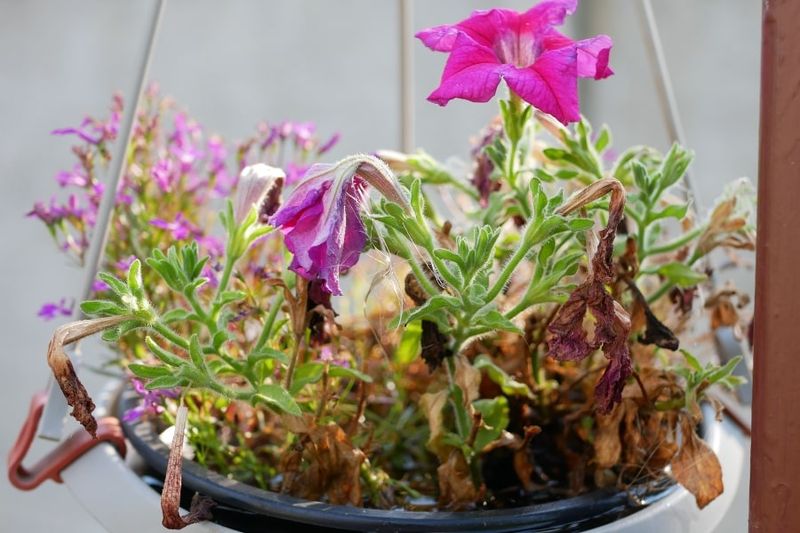
Believe it or not, too much love with the watering can hurt just as much as too little. Soil that stays soggy chokes off oxygen to the roots and opens the door to root rot.
The tricky part is that an overwatered petunia wilts and yellows too, so it looks just like a thirsty one. Many people water more, which only makes things worse.
Check that every container has open drainage holes and that garden soil drains freely. Let the top inch of soil dry out a little before the next watering, and never let water pool around the base.
Giving the roots room to breathe often revives the plant and restarts blooming.
9. Overcrowding
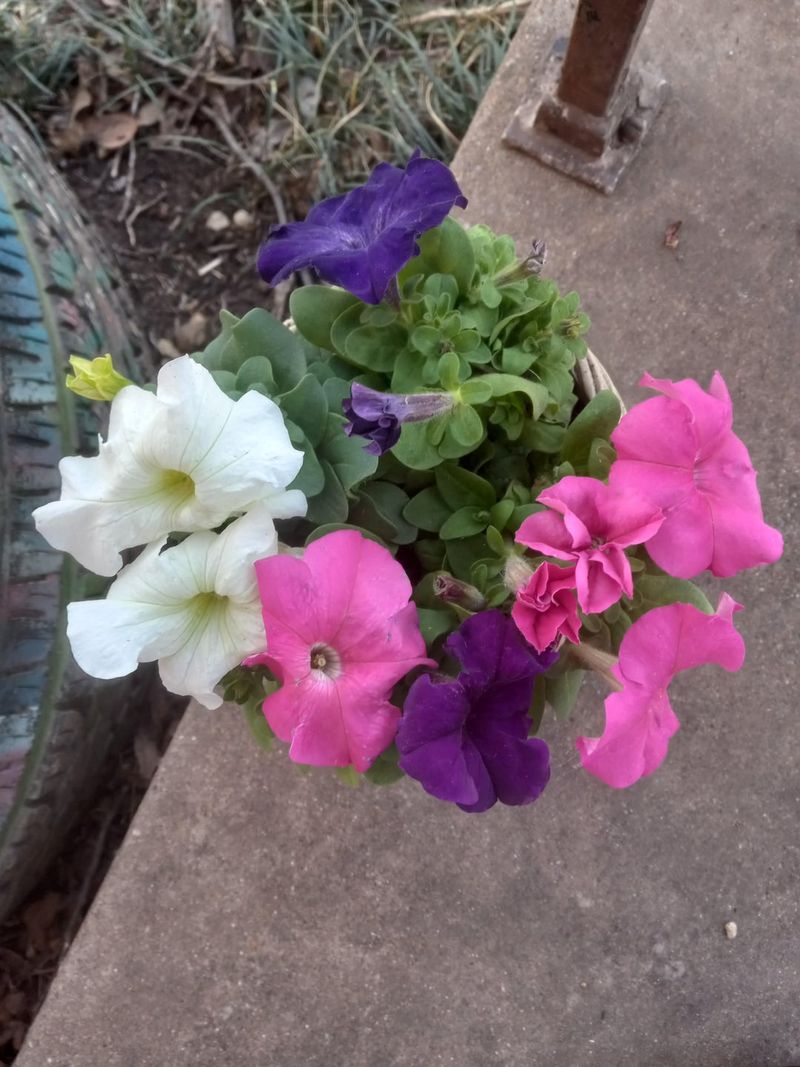
That lush, packed pot you planted in spring can turn into a battlefield by late summer. When too many petunias share one container, they fight each other for light, water, and food.
The result is a tangle of weak, stretched stems and far fewer flowers than you hoped for. Nobody wins when everyone is starving.
Space plants according to their mature size rather than how tiny they look at planting time. If seedlings are jammed together, thin a few out so the survivors can breathe and drink freely.
Better air flow and less competition usually bring the blooms back in force.
10. Excess Nitrogen Fertilizer
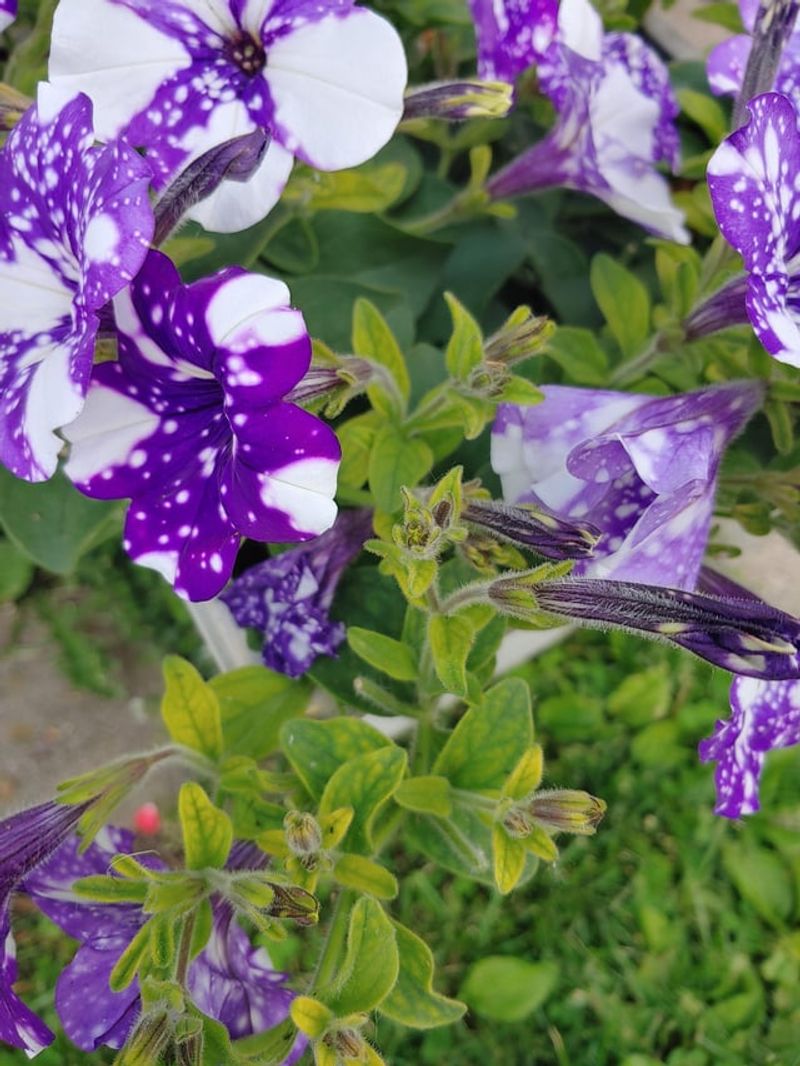
Sometimes a petunia looks fantastic yet refuses to bloom, and it leaves gardeners scratching their heads. The culprit is often a fertilizer loaded with nitrogen, the kind hiding in many lawn foods.
All that nitrogen tells the plant to grow leaves, leaves, and more leaves, while flowers take a back seat. You end up with a gorgeous green bush and almost no color.
Swap over to a balanced blend like 10-10-10, or better yet one with a higher middle and last number for phosphorus and potassium. Those two nutrients are what fuel flower production.
Make the switch and your leafy giant should finally get down to blooming.
11. Pest Infestations
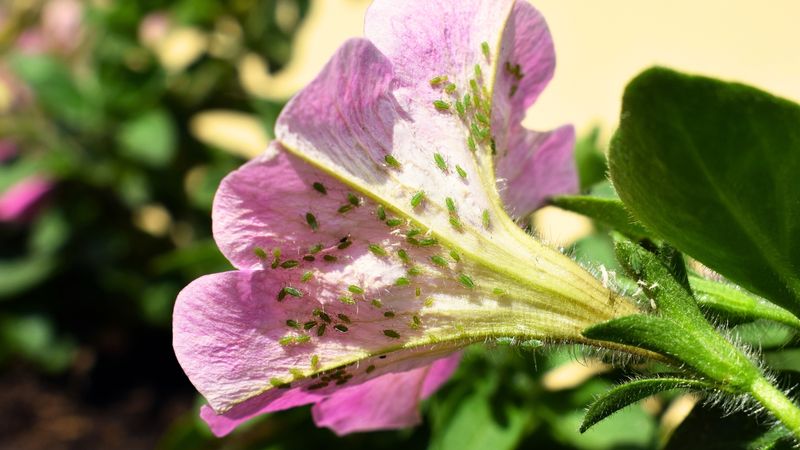
Tiny troublemakers can drain the life out of your petunias while you barely notice. Aphids, spider mites, thrips, and sneaky tobacco budworms all feed on the plant and sap its strength.
Watch for stunted growth, chewed-up leaves, and a sudden drop in flowers. Budworms are especially crafty, boring into buds before they ever open.
Flip the leaves and inspect the undersides regularly, since that is where many pests hide. Treat sap-suckers with insecticidal soap or neem oil, and handle budworms and caterpillars by handpicking or applying Bacillus thuringiensis, better known as B.T.
Snip away any badly chewed parts to help the plant recover faster.
12. Fungal Diseases
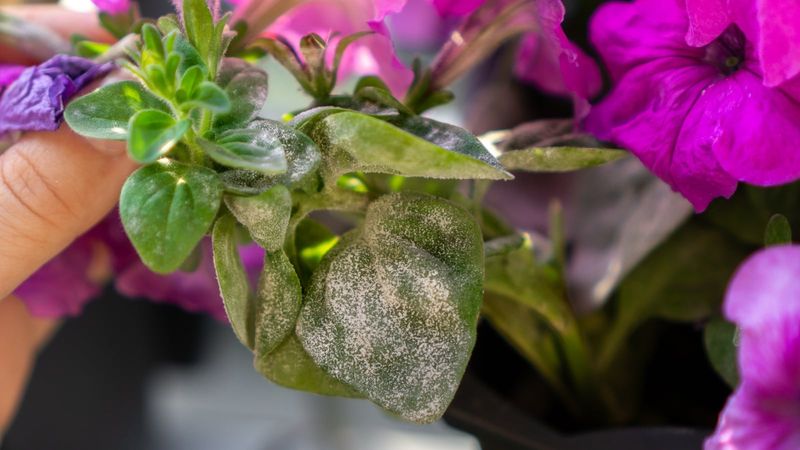
Damp, humid weather sets the stage for a host of fungal problems that quietly sabotage blooming. Powdery mildew, botrytis blight, and root or crown rot all love stagnant, wet conditions.
Look for a white film on the leaves, fuzzy gray spots, sudden wilting, or yellowing foliage. Poor air flow and overhead watering usually make these troubles worse.
Open things up by spacing plants properly and pulling off infected leaves and stems right away. Water at the base so the foliage stays dry, and make sure the soil drains well.
In stubborn, severe cases a fungicide can help, but good airflow and dry leaves prevent most fungal headaches in the first place.
13. Root-Bound Containers
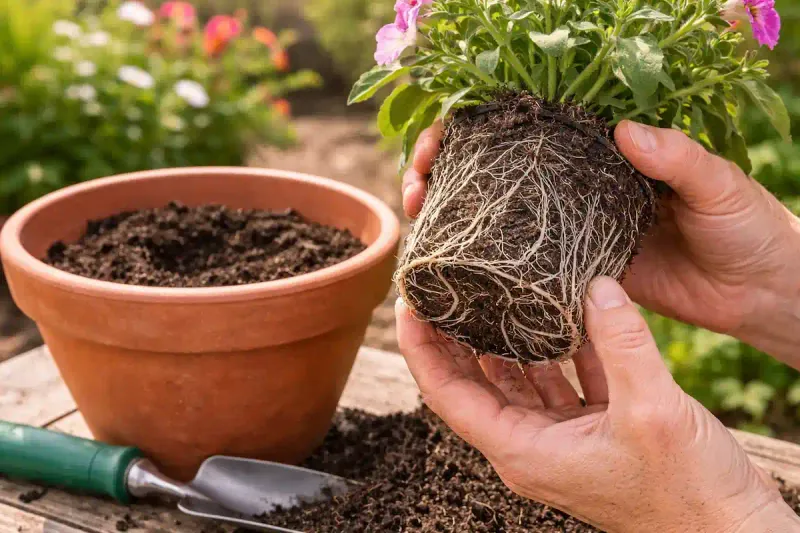
Petunias grow fast, and in a pot their roots can outgrow their home before you realize it. When roots wind around in a tight, packed ball, they can no longer soak up enough water or nutrients.
A root-bound plant slowly declines even when you water and feed it faithfully. Flowering trails off as the roots run out of room.
Gently slide the plant out of its pot and take a peek at the root ball. If you see roots circling densely against the sides, move the petunia into a larger container to give those roots space to spread.
With room to grow again, the plant can drink deeply and get back to putting on a flower show.