
When North Carolina Fig Growers Should Protect Plants From Severe Winter Cold
A fig tree can look so tough in August that winter feels like an afterthought. Then a hard freeze hits, and a backyard favorite may lose its top growth.
The good news is that the risk comes from severe cold, not from one early frost. Here is how to read the weather, protect your tree, and know what to expect in spring.
A first frost is not the same as ground-killing cold
Many gardeners hear the words first frost and assume the fig is doomed. That is not how it works.
A light frost on an October morning is a very different event from a hard freeze that stays cold for hours.
The number to watch comes from NC State Extension’s fig guide, which says severe lows of about 20°F or below may freeze figs to the ground. Think of that figure as a warning level, not a prediction.
Plenty of trees come through a cold snap with little harm, while others lose stems.
Several things shape the outcome. Cultivar matters, and so does the age of the plant, how fully it has gone dormant, how exposed the spot is to wind, and how long the cold lasts.
A fig on a sheltered south wall in the Coastal Plain faces a different winter than one on an open mountain slope.
Young plants and tender new growth are the most vulnerable. Soft shoots that are still growing in late fall can be damaged by cold that a dormant, mature fig would shrug off, a point also made in UC’s cultural tips for growing fig.
So skip the panic over a single frost date. Watch your forecast for the hard lows instead, and match your effort to your tree’s age and location.
Older wood matters for breba fruit, not every fig crop
Losing older stems hurts, but it does not erase every fig you might have picked next year. The reason is that figs can bear two kinds of crops, and only one rides on old wood.
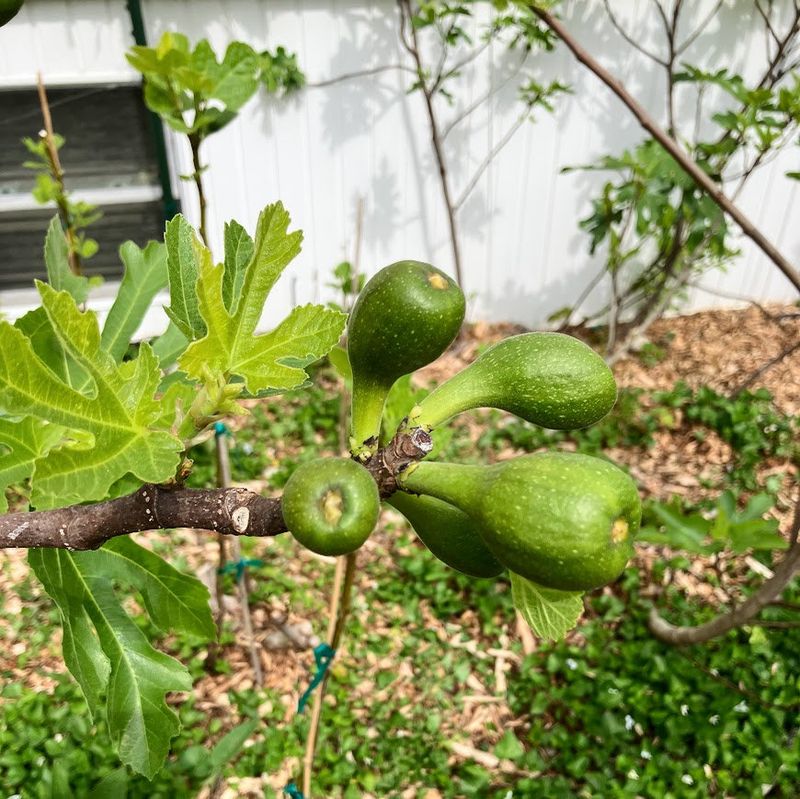
According to University of Maryland Extension, most figs set their main crop on the current season’s growth. Some cultivars also produce an earlier breba crop on last year’s wood.
Brebas ripen first, often in early summer, and tend to be fewer.
If cold kills last year’s stems, you may lose that breba crop. The main crop is a different story.
As long as the plant regrows from live wood or from the roots, new shoots can still carry main-crop fruit.
Here is a simple check. If your cultivar never makes early figs in June, it likely depends on the main crop already, so older stems matter less to your harvest.
If you do get early figs, those branches are worth protecting.
Timing and yield vary by cultivar and growing conditions, so your own tree’s history is the best guide. Jot down when figs ripen each year, and you will know what a cold injury could actually cost you.
Use predicted severe weather to guide protection
Your forecast is a better cue than the calendar. When the first frost arrives, a quick look at the extended outlook tells you whether a real hard freeze is coming or just a chilly night.
NC State’s guidance says to cover plants when severe weather is predicted. That means watching for lows near 20°F or below, especially several nights in a row.
Piedmont and mountain yards will hit those numbers more often than coastal ones, so your location changes how closely you need to watch.
Young trees get extra attention. NC State recommends protecting the trunks of young figs in late fall, since they are more susceptible to cold than established plants.
That does not mean every fig needs the same treatment. A large, well-established tree in a sheltered spot may need little, while a one-year-old tree in an open yard deserves a bit more care.
Match the effort to the plant.
A practical routine helps. Keep covering material like straw or a tarp stored where you can grab it fast.
When a cold forecast appears, you can act in an afternoon rather than scrambling after dark.
Protect young in-ground figs and remove seasonal mounds in spring
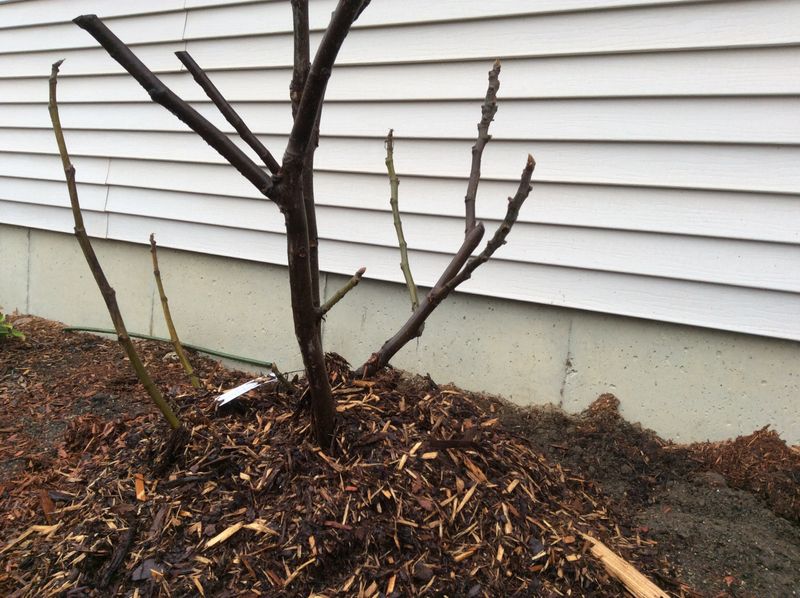
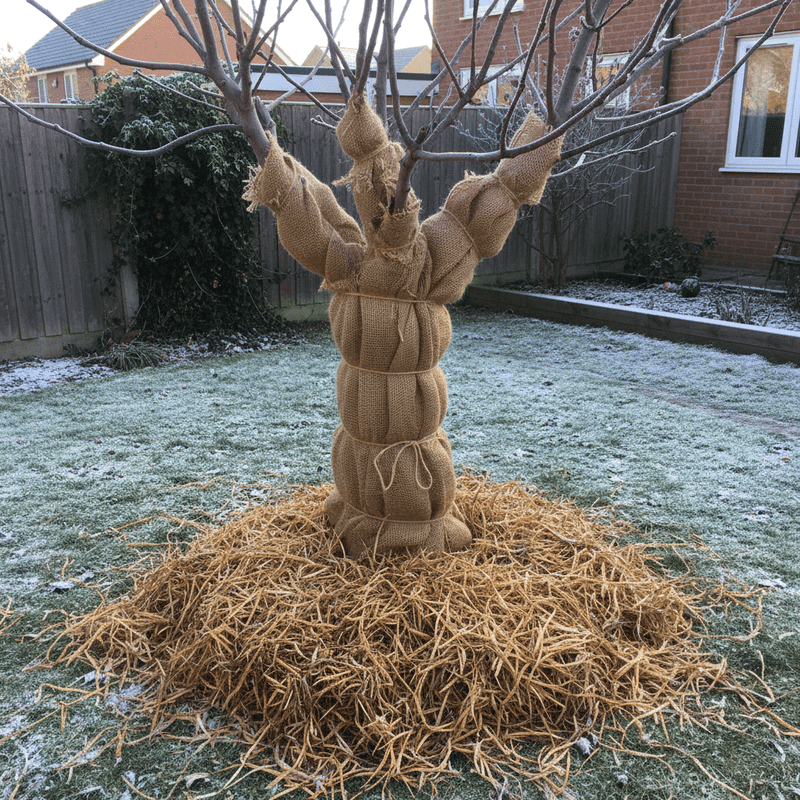
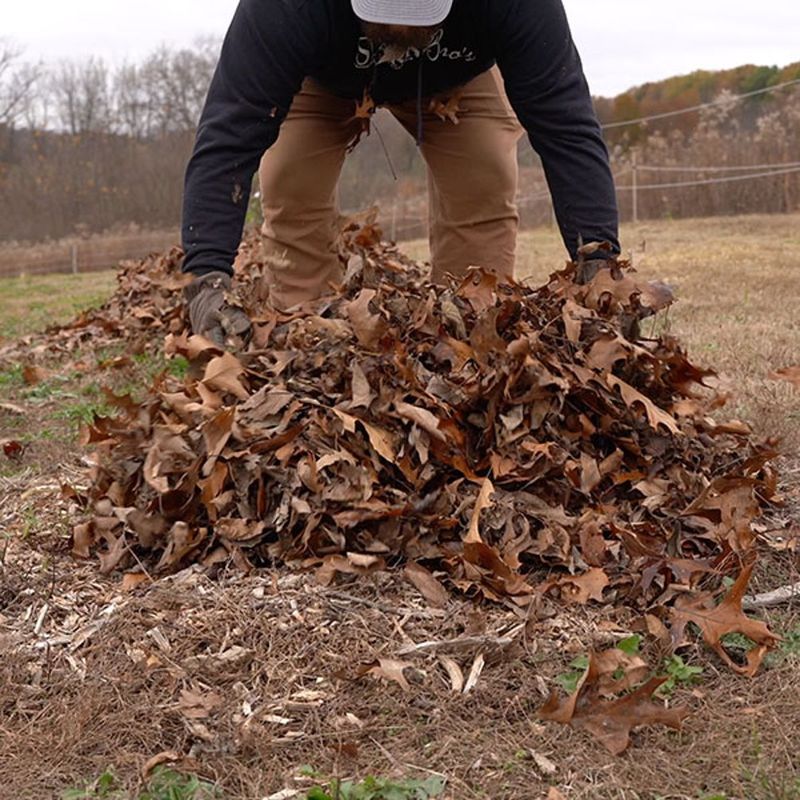
For young in-ground figs, NC State offers two simple options. In late fall, pile loose soil or mulch 1 to 2 feet up around the trunk.
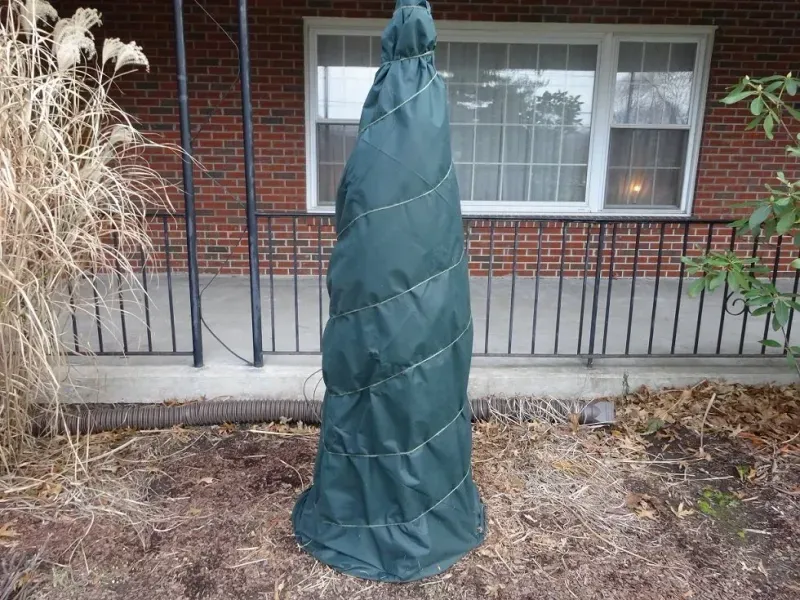
Or, when severe weather is predicted, cover the plant with straw, a tarpaulin, cornstalks, or similar material.
The mound protects the base of the trunk, which is where a young tree’s best chance of regrowth lives. The cover helps shield the whole plant during a hard freeze.
You can find both steps in NC State’s fig culture guide. They are options for tender young trees, not chores every established fig must have.
Do not leave the wrapping on forever. Pull the mound away in spring once frost is no longer a hazard.
Leaving it can trap moisture and hide the trunk from view.
There is another reason to be tidy. University of Maryland Extension notes that insulating material can shelter voles, which may feed on bark.
Those small rodents can gnaw a young trunk over winter.
To reduce that risk, keep piles loose and no larger than needed, and check the base in late winter. Remove the material promptly in spring, and your fig gets protection without becoming a vole hotel.
Container figs need a separate cold-weather plan
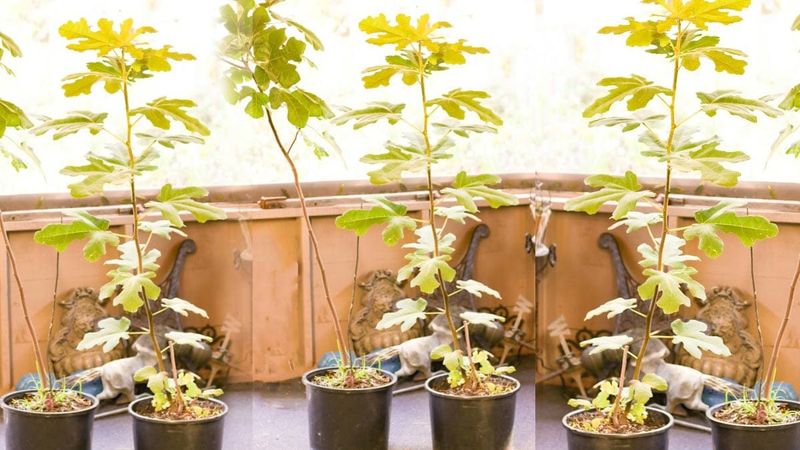
A fig in a pot lives by different rules. In the ground, soil buffers the roots from swings in air temperature.
In a container, the roots sit exposed on every side, so they are more vulnerable to cold.
That is why a freeze that a planted fig handles fine can hurt a potted one. University of Maryland Extension advises moving containers to a protected area after the leaves drop and insulating around them.
An unheated garage, shed, or covered porch can work well. Wait until the plant has dropped its leaves, since that signals it has gone dormant.
Then set the pot against a wall, and wrap or surround it with insulating material such as blankets or bags of leaves.
Keep a few cautions in mind. That advice comes from Maryland, and winters in the mountains, Piedmont, and coast differ a lot.
Treat it as a solid starting point, not a promise that your tree will be safe in every North Carolina location.
Check the pot now and then over winter. The soil should not be soaking wet, nor bone dry.
A light drink on a mild day is usually enough, and spring sunshine will tell you when it is time to bring the tree back out.
A frozen top may resprout, but fruiting can take longer
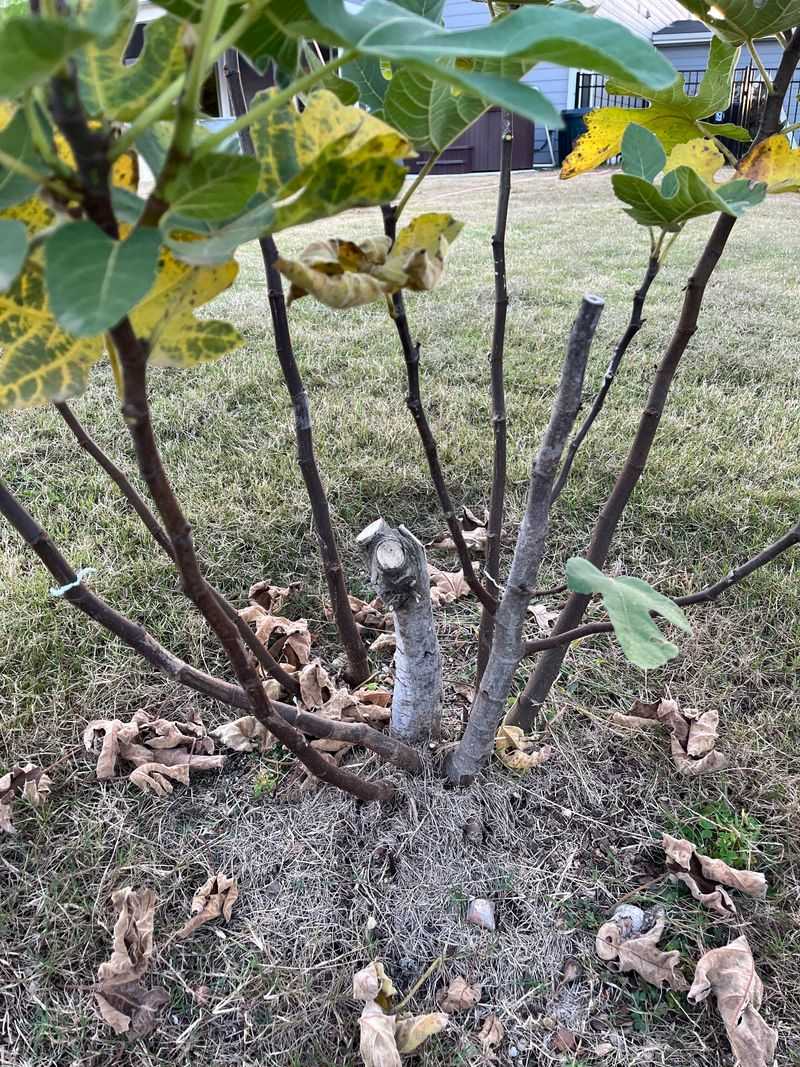
Seeing blackened, brittle stems in spring is discouraging, yet it does not always mean the plant is gone. Cold can kill aboveground growth while the roots stay alive.
NC State says plants can recover from aboveground injury, though fruiting may be delayed. Wait until warm weather settles before judging.
Scratch a stem with a fingernail, and green tissue underneath means that wood is alive. New shoots from the base are a good sign.
Recovery, though, has no fixed schedule. University of Maryland Extension says shoots from the roots after winter injury rarely mature fruit that same season.
Severe damage may take two growing seasons for the tree to return to normal production.
This ties back to the two crops. Any breba fruit that would have formed on old stems is likely gone for that year.
The main crop grows on new wood, so strong regrowth keeps next year’s picture brighter, but a late start can still leave the figs unripe before fall.
Meanwhile, give the plant steady care. Water during dry spells, prune off dead wood once you can see the live line, and be patient.
A fig that comes back slowly is still a fig worth keeping.
Cold takes a season sometimes, but a rooted fig often takes it back.