
Before You Prune Your Fig Tree This Winter, Avoid These 17 Cuts That Cost You Next Year’s Figs
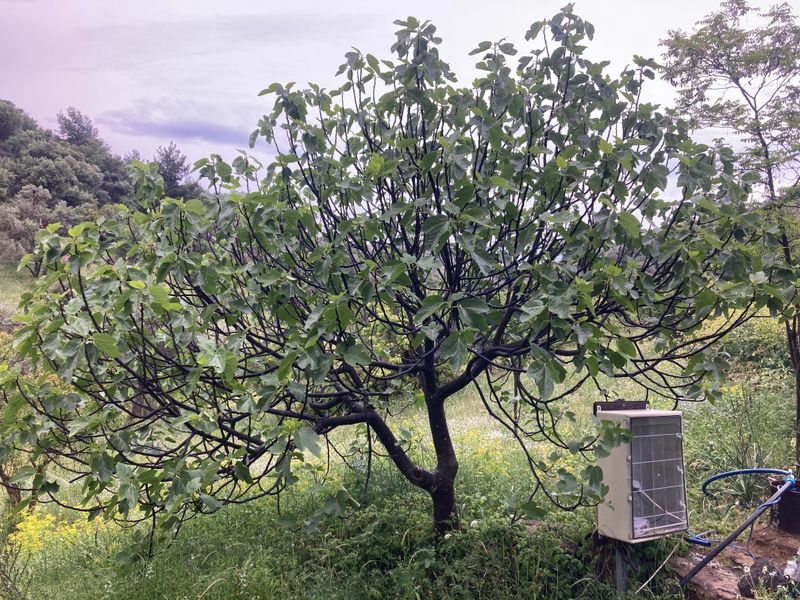
A fig tree can look like a tangled mess in winter, and grabbing the pruners feels like the right move. But one wrong snip can quietly wipe out the figs you were hoping to pick next summer.
Fig trees grow fruit on both old and new wood, so they play by different rules than apples or peaches. Here are the cuts to skip, plus the easy fixes that keep your harvest safe.
1. Cutting Off All the Old Wood
Picture a gardener proudly stacking a pile of trimmed fig branches, only to discover in June that the early crop never showed up. That heartbreak usually comes from one habit: removing every branch that grew last season.
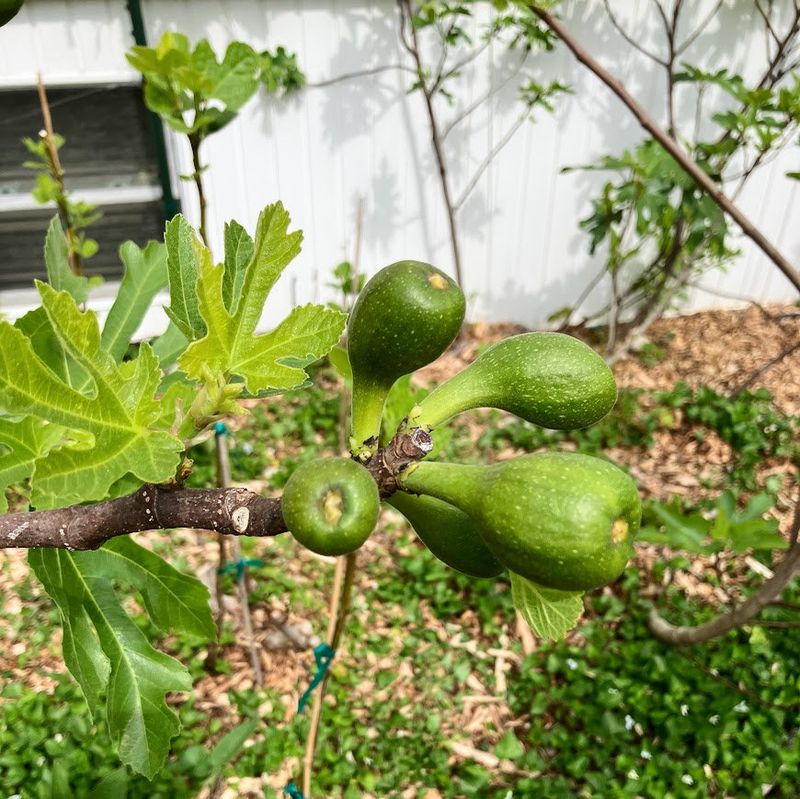
Last year’s wood is where the breba crop forms. Brebas are the first figs of the year, and they ripen in early summer on those older stems.
Cut them all away, and that whole harvest disappears before it starts.
The fix is simple. Keep a good share of last season’s healthy branches, especially ones that are well placed and easy to reach.
Thin a few if the tree is crowded, but never strip it down to bare stubs.
2. Flush Cuts Against the Trunk
Neat and tidy is not always kind to a tree. Slicing a branch perfectly flat against the trunk looks clean, yet it removes the branch collar, that slightly swollen ring where branch meets trunk.
Inside the collar are special cells that help seal the wound. Without them, healing slows down and decay can creep in.
Over time, rot inside the trunk weakens the tree and steals energy that should go into fruit.
Instead, look for the bump at the base of the branch and cut just outside it. Angle the blade slightly away from the trunk.
The little ridge you leave behind is the tree’s own bandage, so let it do its job.
3. Removing More Than One-Third of the Canopy
Ever had a haircut that went way too short? Fig trees feel that way too, and they react by panicking.
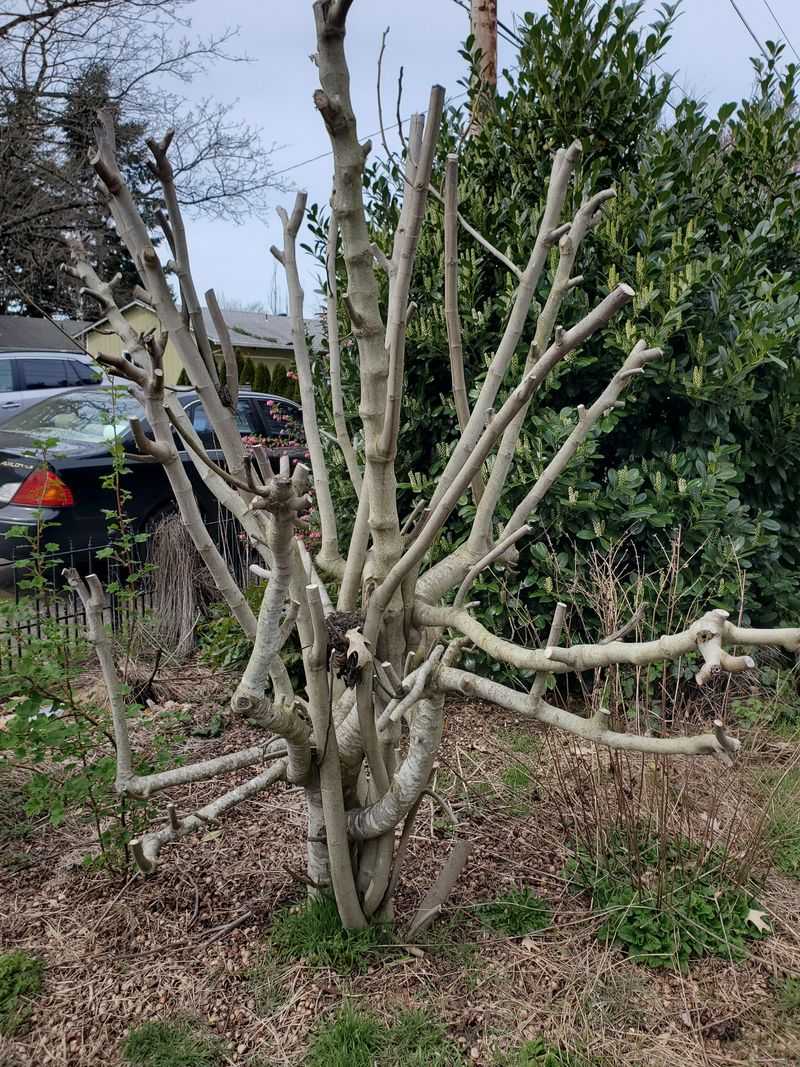
When more than about a third of the canopy comes off in one winter, the tree pours its energy into growing new leaves and shoots. Fruit takes a back seat.
The main summer crop may be thin, and new growth can show up late.
If your fig is badly overgrown, spread the work across two or three winters. Take the worst branches this year, a few more next year, and so on.
Patience here can mean a basket full of figs instead of a bush full of leaves.
4. Heavy Pruning in Fall Before Dormancy
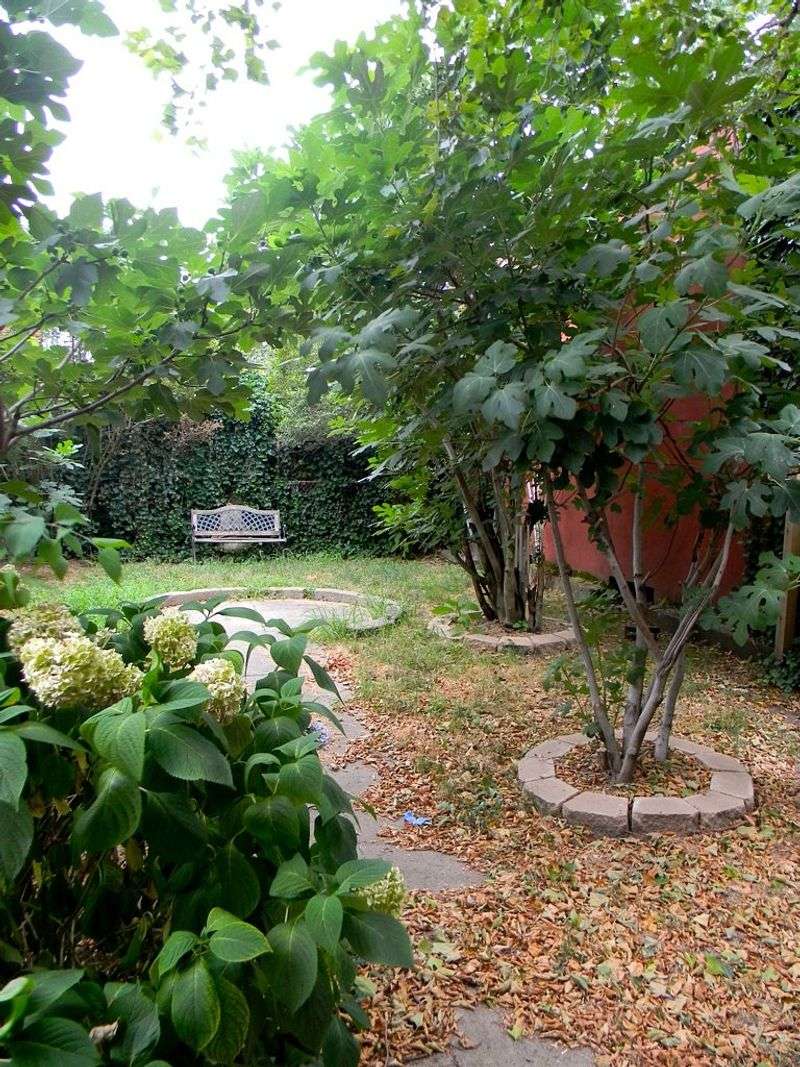
Autumn cleanup fever hits plenty of gardeners. The leaves are dropping, the beds are getting tidied, and the fig tree seems like the next obvious job.
Hold off. Before full dormancy, a fig is still moving sugars from its branches down to the roots for winter storage.
Heavy cuts at this stage throw away that stored energy, which the tree needs for strong spring growth and fruit.
Wait until the leaves have fully dropped and the tree is truly asleep. Light removal of a broken branch is fine anytime, but save the real pruning for later in the season.
5. Pruning Before the Coldest Weather Passes
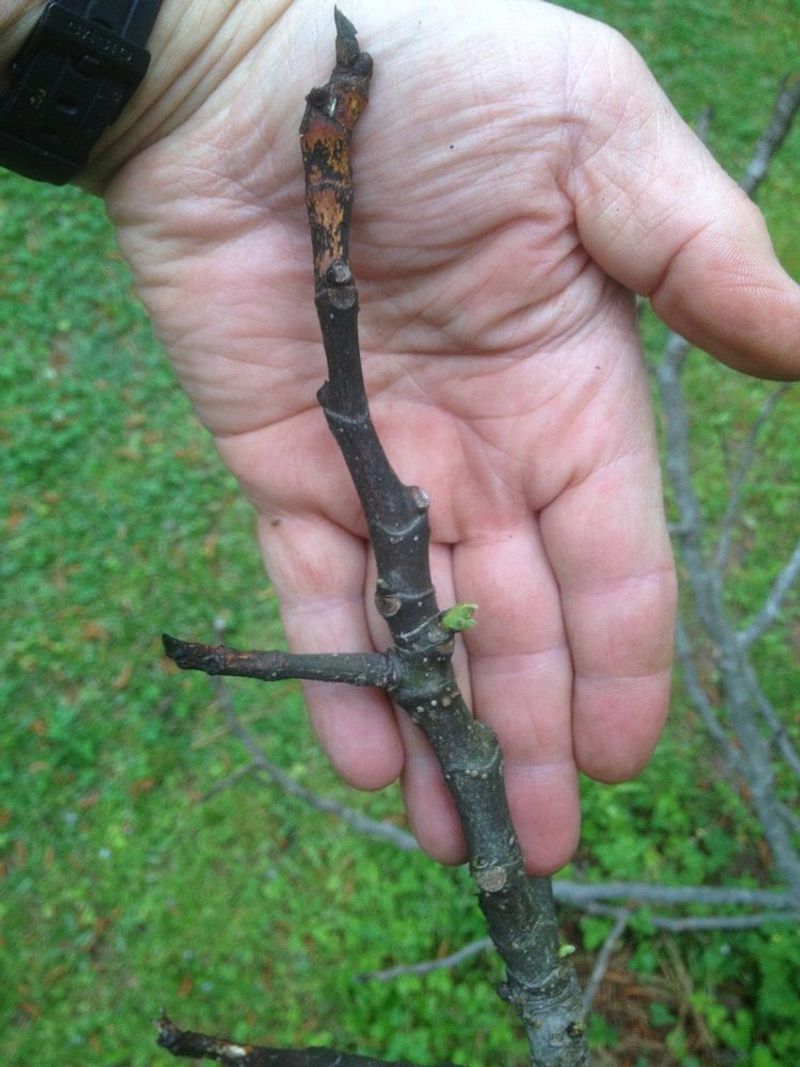
Gardeners in colder states know the drill: a mild January can be followed by a brutal February. Fig branches sometimes die back after a hard freeze, and that damage is not always obvious right away.
Prune too early, and you might remove healthy wood, then watch other branches turn brown a few weeks later. Now the tree has lost twice as much as it needed to.
Wait until late winter, after your worst cold has passed. Scratch a branch lightly with your thumbnail.
Green underneath means alive, brown and dry means dead, and you can cut cleanly back to living wood with confidence.
6. Waiting Until Buds Swell in Spring
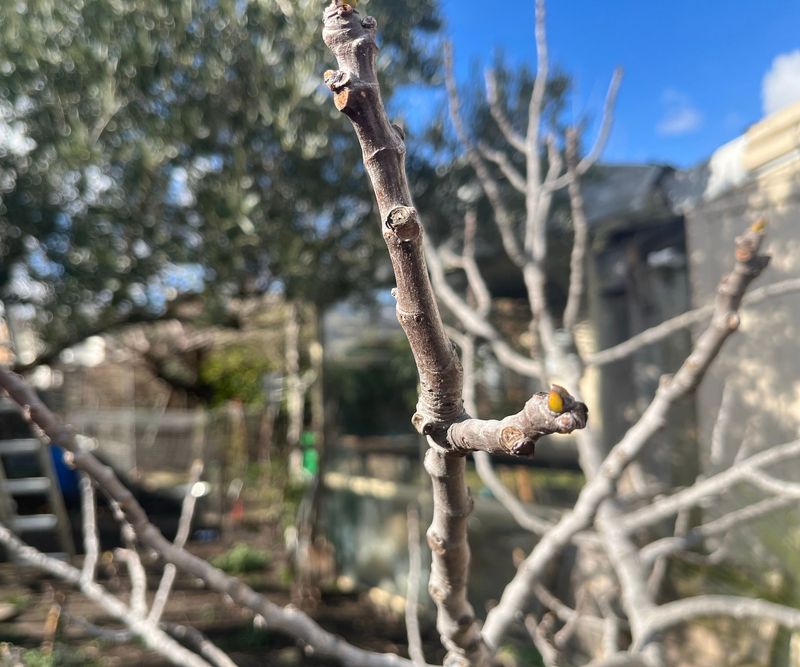
Here is a fun fact: figs are related to mulberries and rubber plants, which explains the sticky white sap that oozes from a cut. In spring, that ooze becomes a flood.
Once buds swell and the tree wakes up, fresh cuts bleed heavily. That latex loss stresses the tree, and open wounds can draw sap-sucking insects and disease.
The sap can also irritate your skin, so gloves are smart.
Aim for the sweet spot between the last hard freeze and bud break. If you missed it, keep spring cuts light and limited to dead or broken wood.
7. Heading Cuts on Main Branches
Chopping every branch to the same height feels like an easy way to shrink a big fig. Sadly, the tree responds like a hydra.
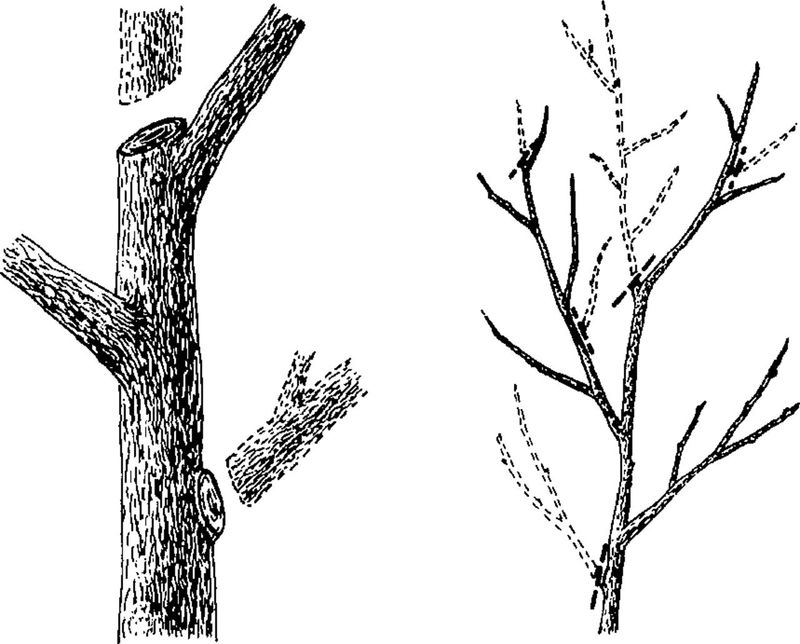
Heading cuts, which lop a branch partway along its length, trigger a burst of fast vertical shoots just below the cut. Those shoots crowd the canopy, shade out fruit, and need even more pruning next year.
A better plan is a thinning cut. Follow the branch back to a side branch pointing in a good direction, or remove it entirely at its base.
The tree stays smaller and calmer, and your figs get the sunlight they crave.
8. Tipping Branches Without Checking for Fruitlets
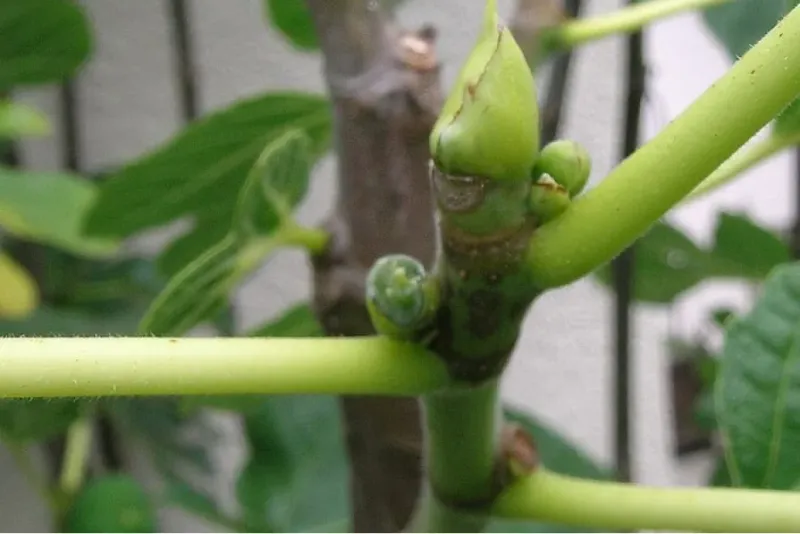
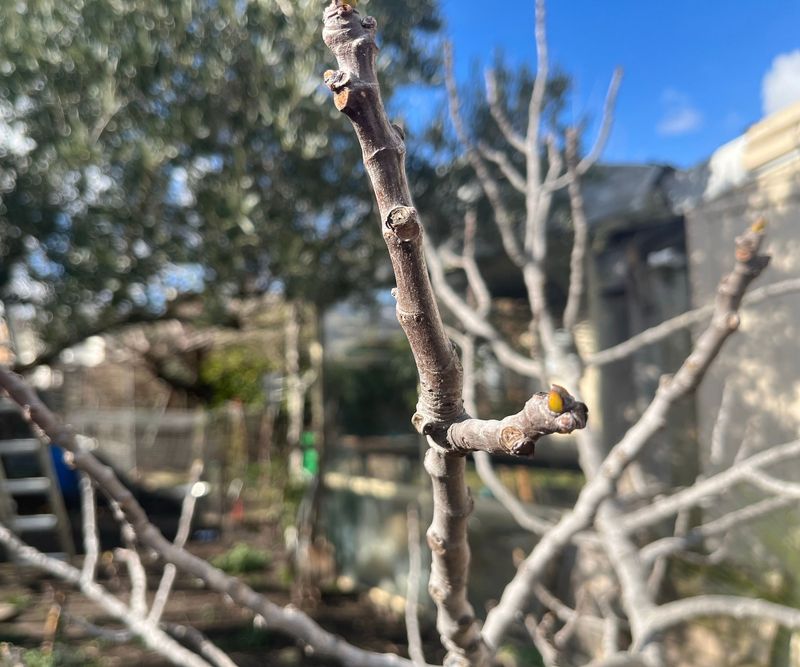
Lean in close before you snip. At the tips of last year’s branches, you may spot tiny bumps about the size of a pea.
Those are baby brebas, already formed and waiting for warm weather. Clip the tips and you clip the fruit.
It takes two seconds to check and saves a whole early crop.
If you see those little fruitlets, leave that tip alone and choose a different branch to shorten. A quick look can be the difference between June figs and none at all.
9. Ignoring Suckers at the Base
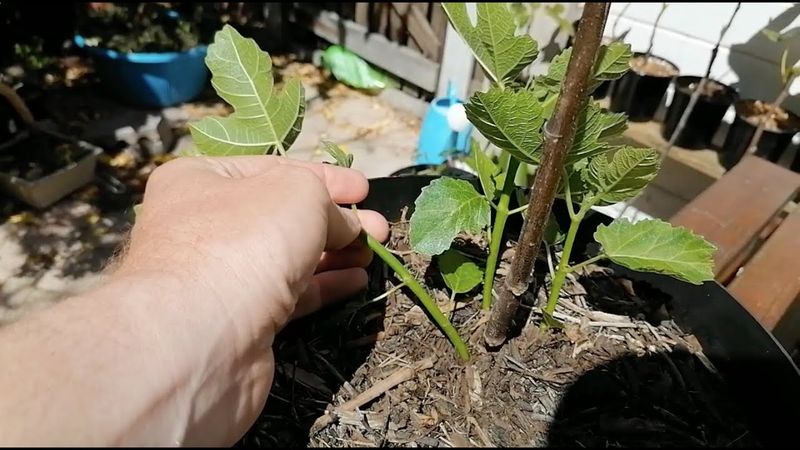
Suckers are sneaky. They pop up from the roots or the base of the trunk, grow fast, and quietly drain your fig’s energy.
These shoots rarely give you much fruit in the short term. Every bit of water and food they use is a bit taken from the branches that actually produce.
Left alone, they turn a tidy tree into a crowded thicket.
Cut them off at ground level each winter, and again in summer if they return. The only exception is if you grow your fig as a multi-stem bush and want one to replace an old trunk.
10. Leaving Water Sprouts Unchecked
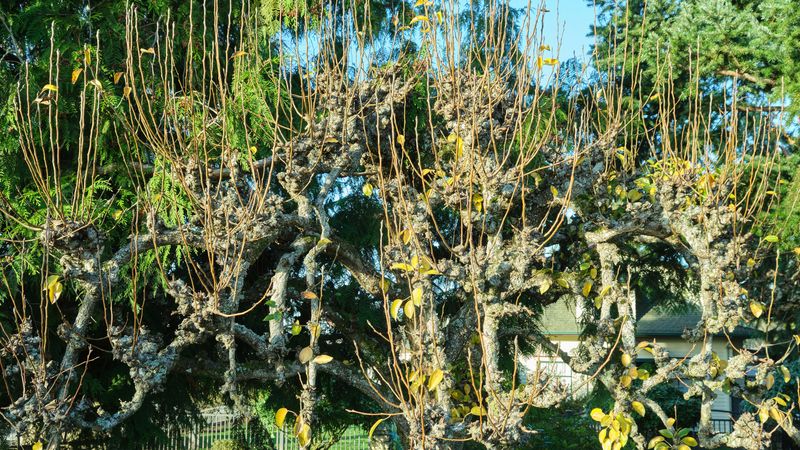
Think of water sprouts as the teenagers of the fig world: tall, fast, and hungry. They shoot straight up from branches, often after heavy pruning the year before.
Because they grow so quickly, they hog nutrients and sunlight. They also clutter the canopy, making it harder for air and light to reach the figs below.
Remove most of them at their base. Keep one only if it sits in a useful spot and you want to train it into a new branch.
Otherwise, out it goes.
11. Keeping Weak, Narrow-Angled or Rubbing Branches
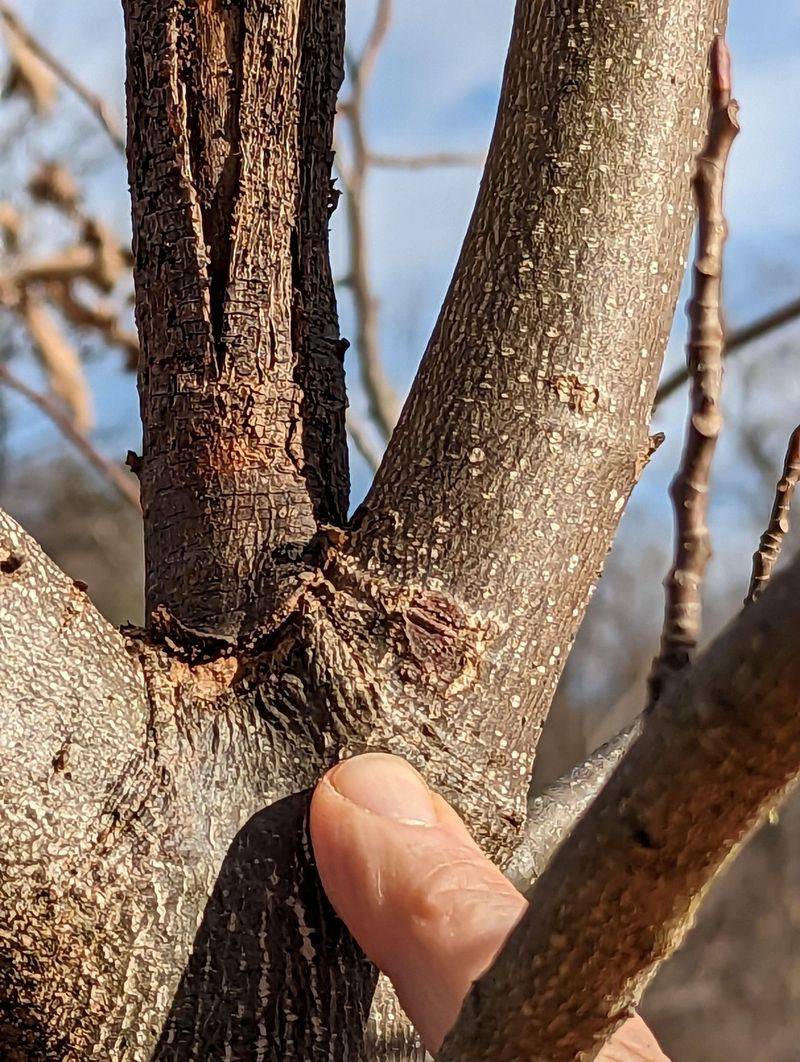
A branch that hugs the trunk at a tight V angle might look fine now. Load it with ripe figs in August, though, and it can split right off.
Narrow crotches under 45 degrees tend to be weak. Branches that cross and rub create open wounds where disease can enter.
Both problems get worse every year they are ignored.
Pick the stronger, wider-angled branch and remove its rival. When two limbs rub, keep the better placed one.
Your tree ends up sturdier and better able to carry a heavy crop.
12. Hacking Into the Permanent Framework
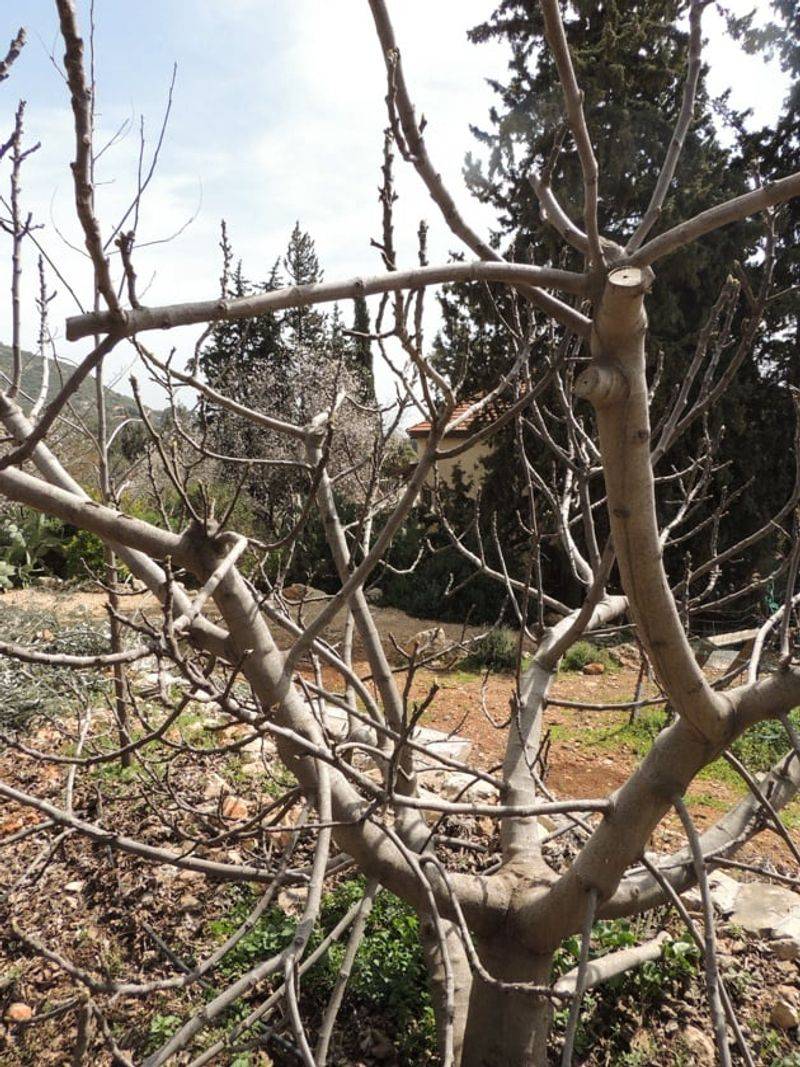
Years of work go into building a fig’s main limbs. Those scaffold branches are the skeleton holding up every future harvest.
Random or heavy cuts into that framework can leave big wounds, unbalance the tree, and set your fruit production back for seasons. Once a main limb is gone, it takes years to replace.
Treat the framework as permanent. Do most of your pruning on smaller side branches and new growth.
Only remove a main limb if it is dead, diseased, or clearly broken.
13. Skipping the Dead, Diseased and Damaged Wood
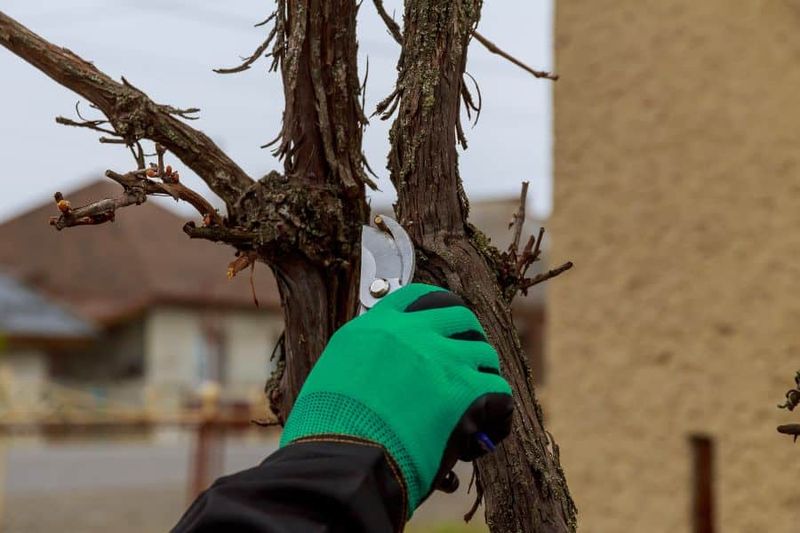
Every good pruning session starts with the three Ds: dead, diseased, and damaged. Skip this step and you are working blind.
Dead branches can hide pests and fungi that spread to healthy wood. Cracked or broken limbs invite rot.
Leaving them weakens the whole tree and can shrink your harvest.
Walk around your fig first and remove the obvious problems. Once that is done, the tree’s true shape is easier to see, and your remaining cuts will make more sense.
14. Making Unnecessarily Large Cuts
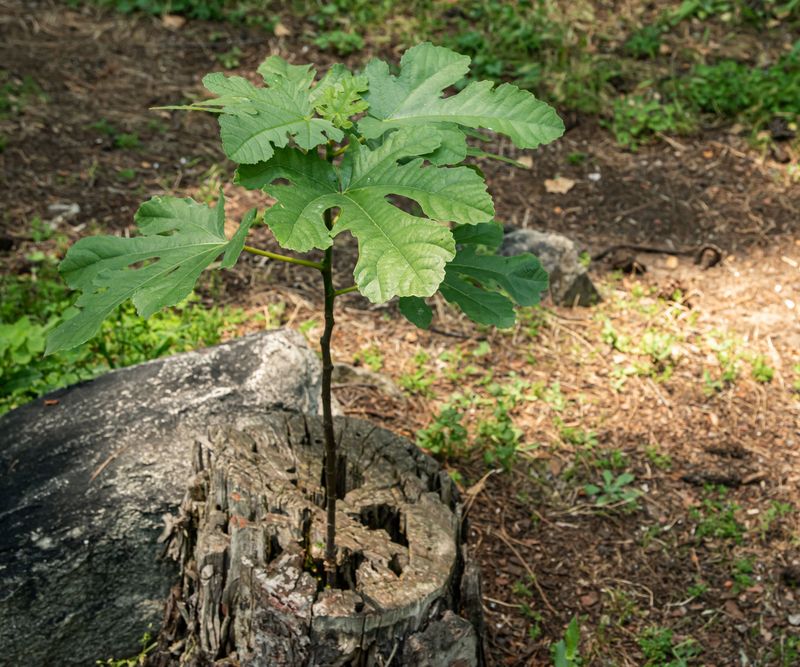
Crack open a fig branch and you will notice something odd. The center is soft and spongy, almost like foam.
That pithy core heals slowly. Big cuts stay open longer, collect water, and can start rotting from the inside, sometimes spreading into healthy wood.
A single oversized wound can weaken a major limb.
Favor smaller cuts made every year over one huge chop. Angle cuts so rain runs off.
If a big limb must go, remove it in stages to avoid tearing bark.
15. Pruning Without a Plan for Shape and Size
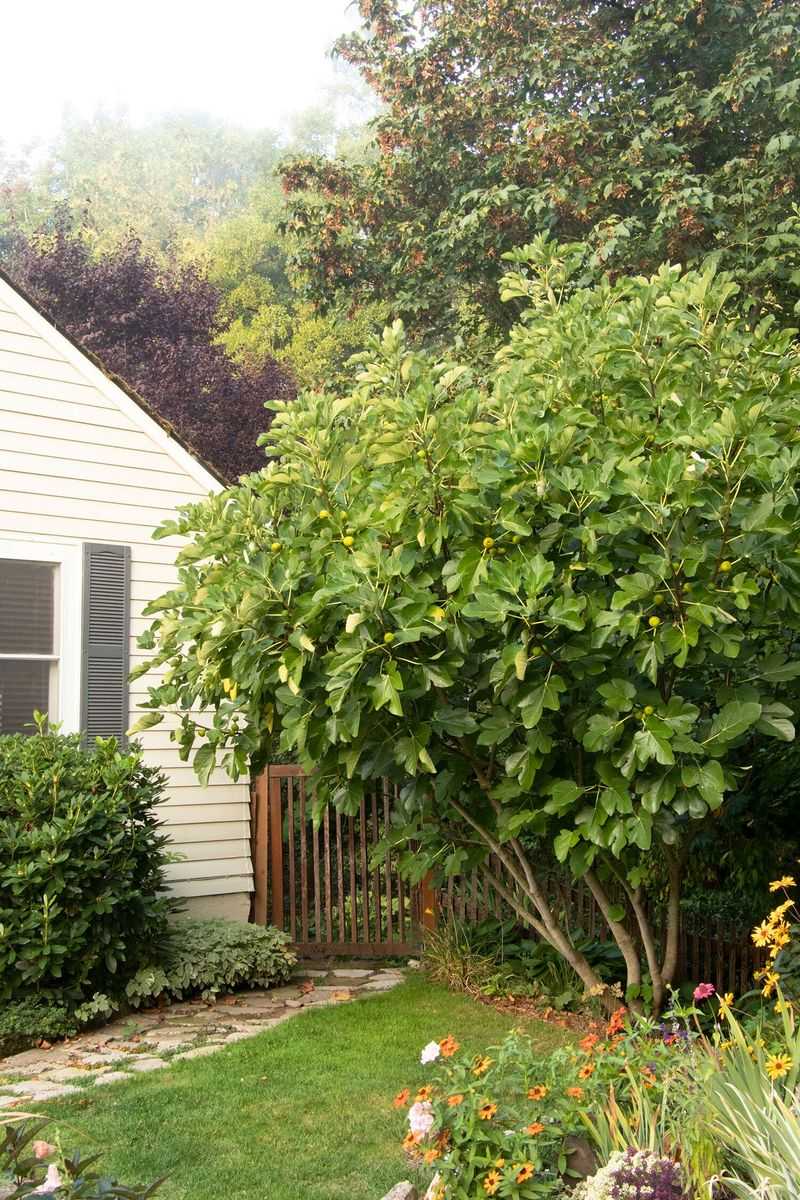
Snip here, snip there, and suddenly the tree looks lopsided. Sound familiar?
Pruning without a goal leads to a fig that grows in every direction, with fruit perched where no one can reach. Birds get the harvest while you get a ladder workout.
Decide what you want first, a bush, a small tree, or a compact container fig. Then step back often while you work. Every cut should move the tree closer to that picture.
16. Undermining an Open Center
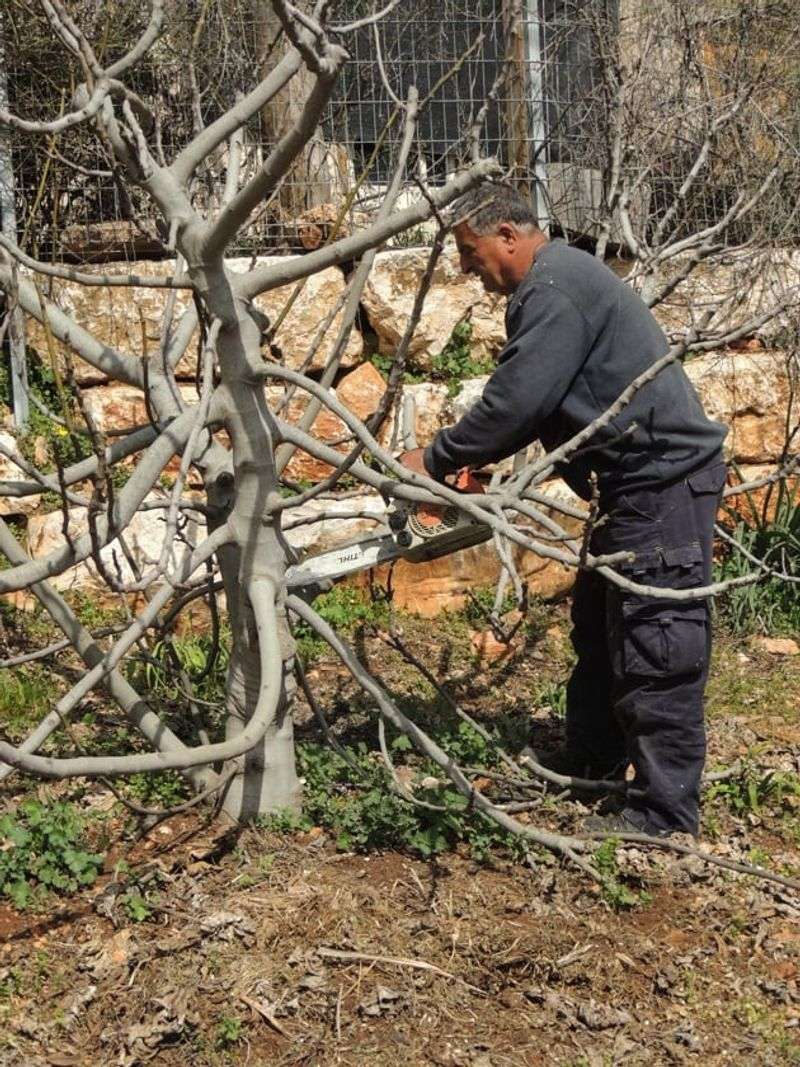
Sunlight is the secret ingredient in sweet figs. An open center, shaped like a vase, lets light and air reach deep inside the canopy.
Cutting the wrong outer branches, or letting the middle fill in, can block that light. Figs ripen unevenly, flavor suffers, and damp air inside can encourage disease.
If you grow your fig in an open shape, protect the main outward limbs and thin anything crowding the middle. A peek through the center should show some sky.
17. Never Pruning at All
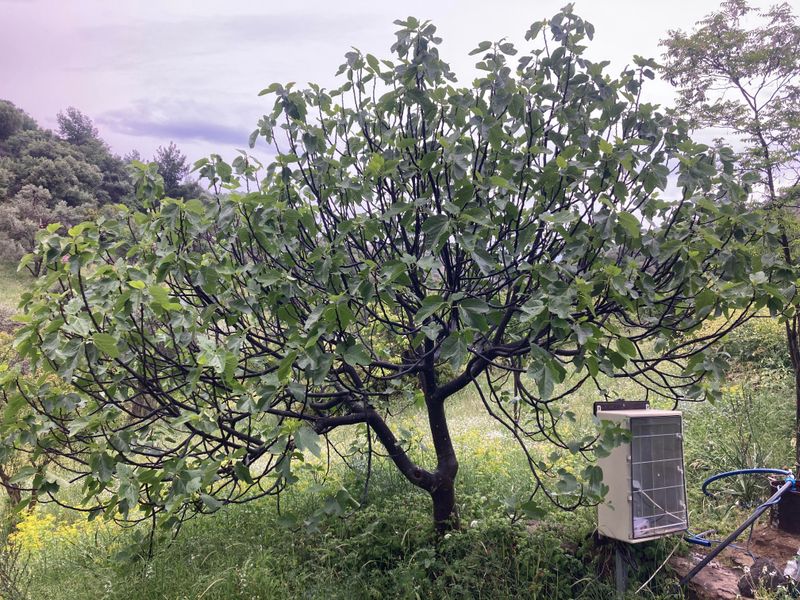
After reading all these warnings, putting the pruners away forever might sound tempting. That has its own cost.
An unpruned fig can grow 15 to 30 feet tall in warm areas. Most of the fruit ends up high in the canopy, out of reach and feeding squirrels instead of you.
A little yearly trimming keeps the tree a friendly height. Light, thoughtful cuts each winter give you healthy branches, easy picking, and baskets of figs you can actually reach.