
What Really Happens To Your North Carolina Lawn When You Mow The Leaves Instead Of Raking Them
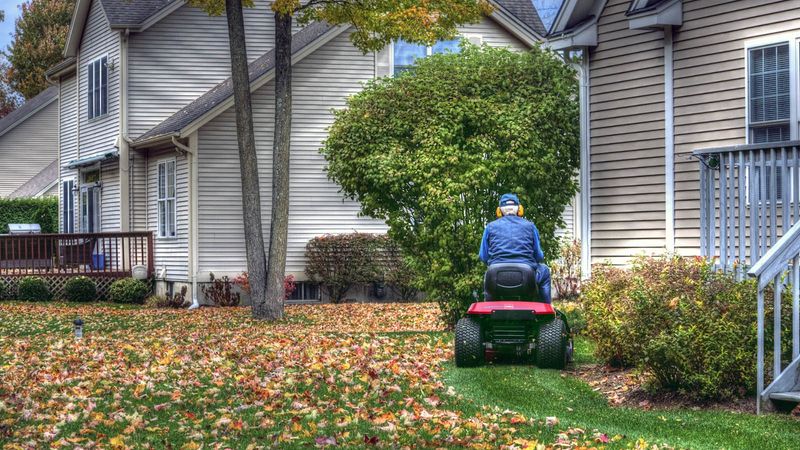
Every fall, North Carolina yards disappear under oak, maple, and sweetgum leaves, and the rake comes out with a groan. There is another option that uses the mower you already own.
Chopping leaves in place can feed the soil, but it only works under the right conditions. Here is what happens to the turf, where the limits are, and how to leave room for fireflies too.
What changes when leaves are mulched?
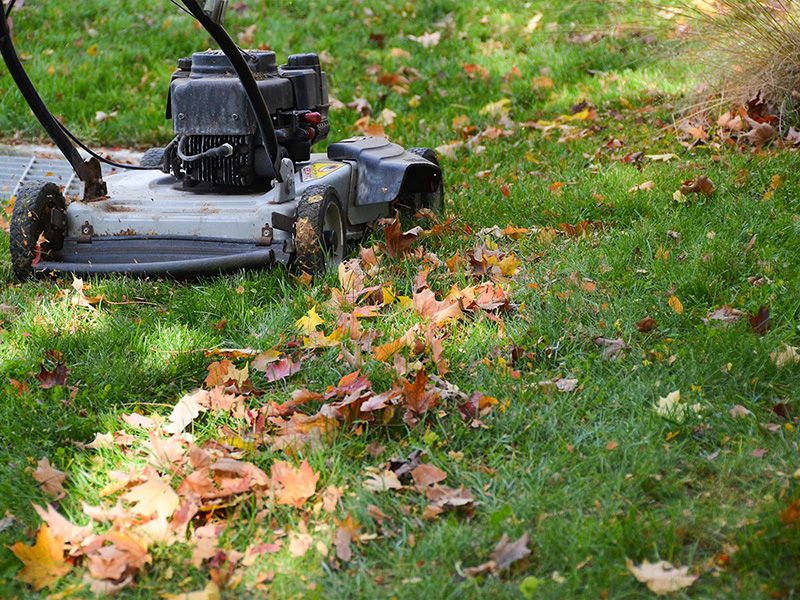
A mower blade turns a whole leaf into dozens of tiny pieces. Those fragments drop down between the grass blades, touch the soil, and start to break down.
As they decompose, they add organic matter and some nutrients to the ground under your turf.
The best evidence comes from a Michigan State turfgrass research report. In that trial, repeated leaf mulching increased soil organic matter.
The researchers worked with oak and maple leaves on Kentucky bluegrass, which is a cool-season grass.
That context matters for a North Carolina yard. The trial was not a statewide study, and it does not promise the same result for every lawn, leaf load, mower, or grass type.
Many Piedmont and Coastal Plain lawns are tall fescue, Bermuda, or zoysia, so results can differ from yard to yard.
One detail surprises many people. The trial found no measured difference in soil pH from the oak or maple leaf treatments.
So the old worry that oak leaves will sour your lawn did not show up there, though that finding applies to the conditions tested and not to every soil.
Think of mulched leaves as a modest soil boost, not a magic trick. The payoff is slow, quiet, and happens below the grass where you cannot see it.
Your lawn will not turn deep green overnight, but the soil gets a little richer each fall you do it well.
Established turf is the starting point
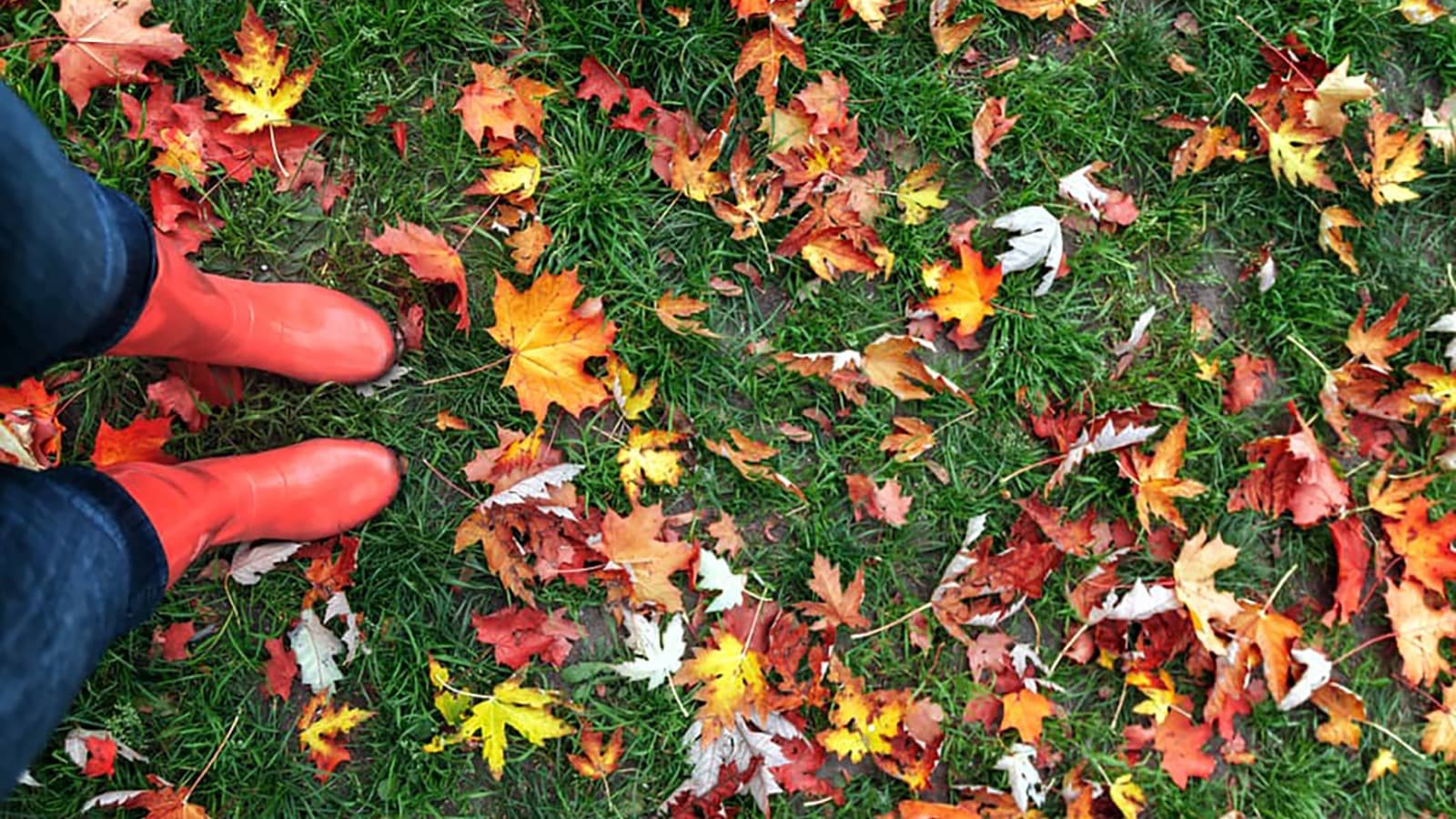
Mulching leaves works best on a lawn that has already settled in. Grass with a full root system and a dense canopy can handle a light blanket of chopped fragments.
A lawn that is still getting started is a different story.
If you seeded or sodded recently, take the leaves off. NC State Extension advises removing leaves from new lawns until the grass is established.
A leaf mat can block light, air, and water, and young seedlings have little strength to push through it.
Weak or thin turf deserves caution too. Shady spots under big hardwoods often collect the most leaves and have the least vigorous grass.
Those are the places where a mat is most likely to form.
Heavy cover is another warning sign, even on a healthy lawn. If the leaves lie so deep that you cannot see the grass, do not try to mulch the whole load in one go.
Rake or blow some of them off first and mulch what remains.
So ask two quick questions before you start. Is this lawn established?
Can I still see grass through the leaves? If either answer is no, collect some or all of them.
Not every leaf-covered lawn is a good candidate, and that is fine.
Dry leaves make the cleanest cut

Wait for a dry afternoon. Damp leaves clump, stick to the deck, and clog the mower, while dry ones shatter into fine pieces.
Dry grass cuts more cleanly too, as UConn Extension’s leaf mulching guidance recommends.
Keep up with the leaves as they fall. Mowing weekly during peak leaf drop is far easier than facing one giant pile in late November.
Small, regular passes give you smaller fragments and less to sift into the turf.
A mulching mower with a closed deck and special blade does the job best. A regular mower can work if you make multiple passes, sometimes crossing the lawn in a different direction each time.
Each pass chops the pieces a bit finer.
You may need to raise the deck a notch when leaves are thick, so the mower can move through without bogging down. Still, keep the grass at its recommended mowing height for your species.
NC State’s lawn guidance says not to remove more than one-third of a grass blade at a time.
That one-third rule is easy to forget when you are focused on leaves. If the grass has grown tall, raise the deck first and lower it in steps on later mowings.
Pay attention to how the mower sounds, because a straining engine usually means too much material at once.
The lawn itself sets the limit
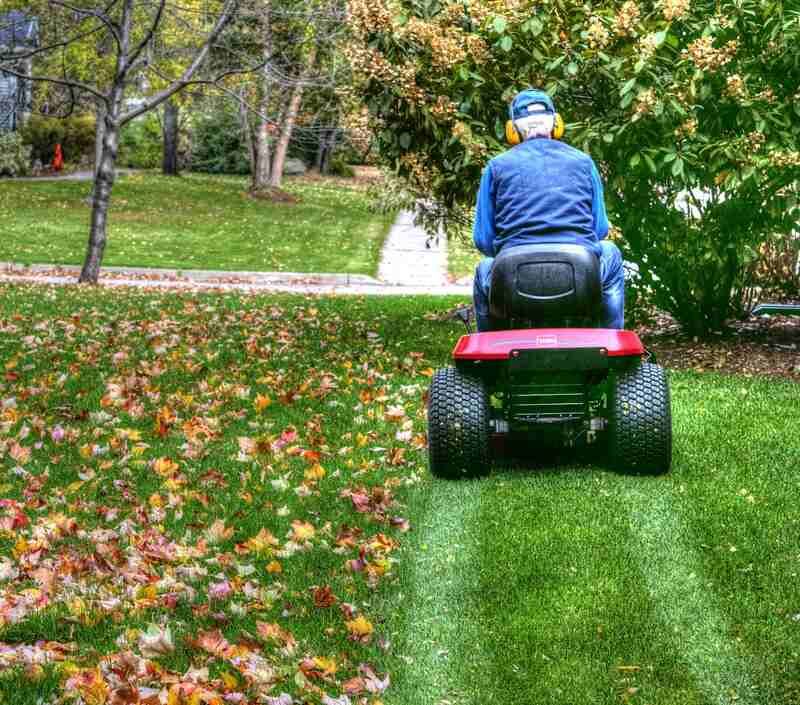
Forget measuring leaf depth with a ruler. The better test is what the lawn looks like when you finish.
Chopped pieces should sift down into the grass, and you should see green blades poking through.
Clumps and thick mats are the red flags. If the leaves lie in layers that block the view of the soil, the grass underneath may struggle for light, air, and water.
Coarse, half-chewed leaves that sit on top of the turf are another sign the job is not done.
UConn Extension offers a conservative guide of no more than 20 percent of the lawn covered by leaves after a mulching event. Treat that as a cautious reference point and not a universal rule.
Your lawn’s condition matters more than any single number.
If you still see coarse pieces or too much cover, you have two easy choices. Make another pass in a few days once the leaves have dried again.
Or collect some leaves and use them elsewhere, such as in a compost pile or a garden bed.
A quick walk across the lawn after mowing tells you a lot. If your shoes stay clean and the grass springs back, you are in good shape.
If leaves cling to your soles in clumps, there is still too much on top.
Leaf nutrients are not a fertilizer plan
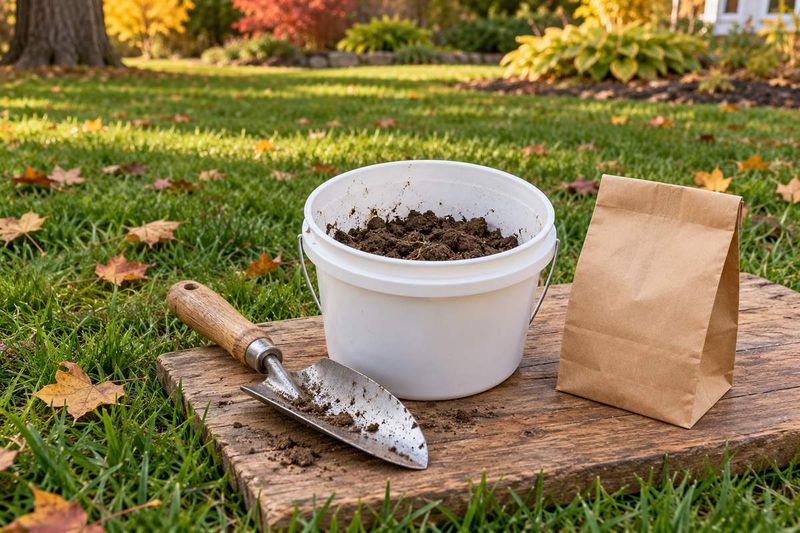
As mulched leaves decompose, they return organic matter and some nutrients to the soil. That is a real benefit, and it can reduce the need for some inputs on a suitable lawn.
But it is not a complete fertilizer program.
Leaves do not guarantee the right balance of nutrients for your grass. A lawn on red Piedmont clay and one on Coastal Plain sand have very different needs.
UConn’s leaf mulching guidance describes the nutrient contribution but does not claim leaves meet every lawn’s needs.
The smart move is to test your soil. Results show what your lawn actually lacks, and the right choice also depends on your grass type, since fescue and Bermuda are fed on different schedules.
Skip the guesswork and let the test guide any purchase.
There is an environmental reason to be careful as well. NC State Extension recommends applying only the nutrients your lawn needs, and warns that excess fertilizer can harm water quality.
Runoff from lawns can reach creeks and ponds.
So enjoy the leaf benefit without counting on it to do everything. Mulching can be one helpful piece of a lawn plan, with the soil test as the final word.
Fireflies need an undisturbed leaf-litter refuge
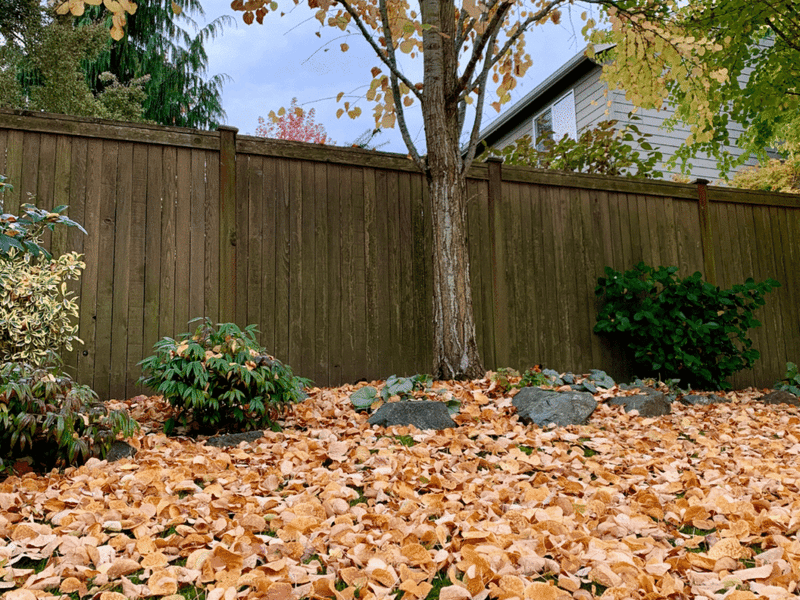
Lawn care and firefly care are two separate jobs. Mowing leaves helps your turf, but it does not attract or protect fireflies.
In fact, mowing and other ground disturbance can harm them.
Oklahoma State University Extension explains that firefly eggs and larvae use varied habitats, including soil and leaf litter. Mower blades and trampling can hurt them.
The Xerces Society’s firefly guidelines likewise point toward protecting leaf litter and vegetation.
That is why a split approach makes sense. Mulch dry leaves on established turf where it suits the lawn.
Collect any excess that would leave a mat, and spread it somewhere other than your firefly patch.
Then choose a spot to leave alone. Under shrubs or along a yard edge works well, with leaves and low vegetation left in place through winter and into the following summer.
Skip the mower, rake, and blower there.
Your lawn gets its fall chore done, and the corner of the yard stays quiet. Come June, that unmown corner is where the evening light show may begin.