
Why Your Hydrangeas Grew Huge Leaves But Barely Any Flowers This Year (And What To Do This Fall)
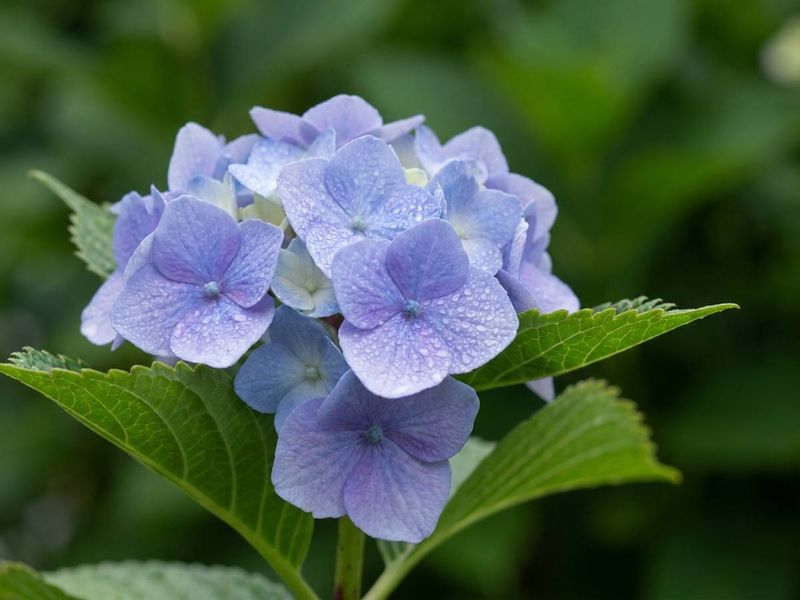
Your hydrangea looks healthy, with big green leaves everywhere, but the flowers just never showed up. That can feel like a sign you did something wrong.
Often the cause is less clear than that, and the fall steps you take can still help your plant get through winter with less stress. Here is how to sort out the likely suspects and what is safe to do now.
Leafy growth does not reveal one cause
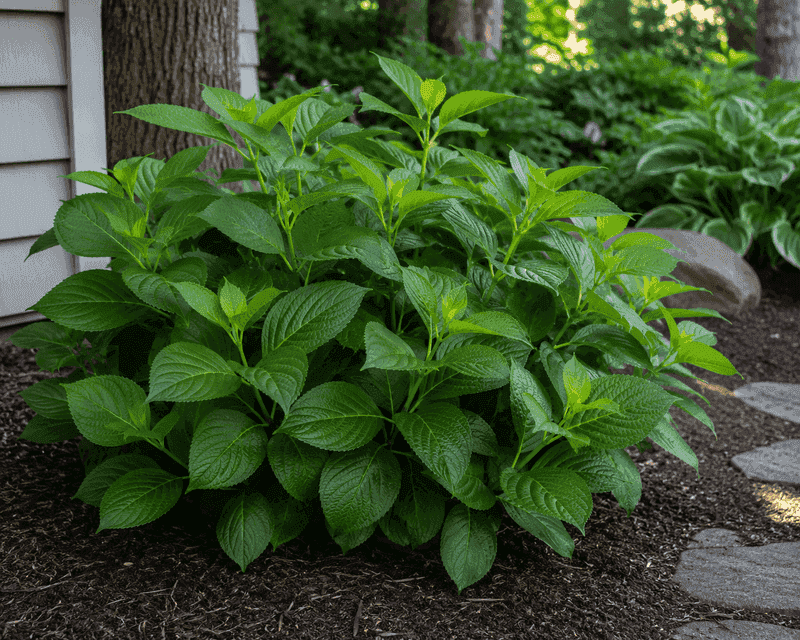
Picture it: you walk out to the yard, and your hydrangea is a wall of rich green leaves with hardly a bloom in sight. It is easy to assume you fed it wrong or pruned at the wrong time.
Take a breath, because a leafy plant with few flowers is a clue, not a verdict.
Several things can produce this exact look. Washington State University Extension notes that cold can kill developing flower buds while the plant itself survives.
That means a shrub can leaf out beautifully after a hard winter or a late spring frost and still skip its flowers.
Other possibilities are on the list too. Maryland Extension lists weather damage, shade, pruning, and too much nitrogen among the common reasons hydrangeas fail to bloom.
Any one of them, or a mix, could be behind your quiet season.
So think of the next few sections as a way to weigh the possibilities rather than a way to pin blame on yourself. We will look at pruning, feeding, and weather one at a time.
Then we will build a careful fall plan.
One honest note before we start. Nothing you do this fall can bring back buds that are already gone.
What you can do is avoid making next year’s chances worse.
Pruning can remove next year’s flowers
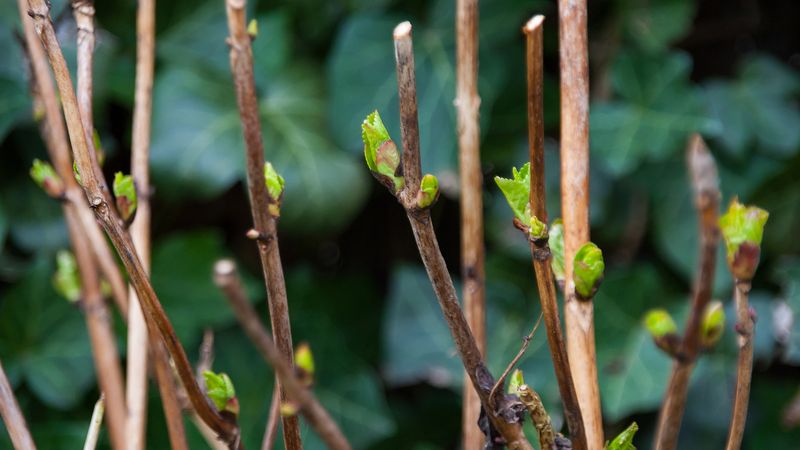
Pruning advice for hydrangeas depends on which kind you own, and that is where many gardeners get tripped up. Bigleaf hydrangeas (Hydrangea macrophylla) and oakleaf hydrangeas generally flower on old wood.
That means the stems that grew last year carry the buds for the coming summer.
Smooth hydrangeas (H. arborescens) and panicle hydrangeas (H. paniculata) work the other way. They flower on new wood, so they can be pruned while dormant, though pruning is not always needed.
University of Minnesota Extension explains that cutting old-wood types in fall or winter can remove next season’s flower buds.
Here is a twist. Some bigleaf cultivars rebloom, meaning they flower on both old and new wood.
That is a cultivar trait, and you cannot read it from the leaves. Check the plant tag, your purchase receipt, or the cultivar name before you decide how to prune.
Winter risk also differs by type. Penn State Extension’s guide to pruning by species shows why advice that suits a hardy panicle hydrangea can be wrong for a bigleaf shrub.
If you cut your shrub back last fall or very early in spring, that may be part of the story. If you did not, pruning is simply one possibility to rule out.
Either way, the rule going forward is plain: do not prune until you know the type and its flowering habit.
Excess nitrogen can favor leaves over flowers
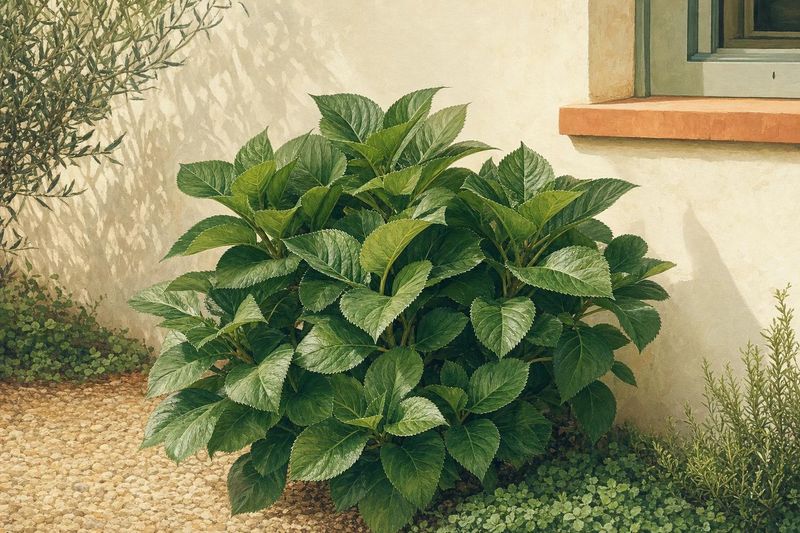
Nitrogen is the nutrient that pushes leafy growth. When a shrub gets more than it needs, it may put energy into foliage at the expense of flowers.
That is why feeding gets blamed so often, and it is a real possibility, as UGA Cooperative Extension’s bigleaf hydrangea guide points out.
Still, big leaves alone do not prove a fertilizer problem. A hydrangea whose buds froze last winter will look just as green.
If you did feed heavily, nitrogen may be a piece of the puzzle, but it is hard to say it is the whole thing.
For an established plant, skip fertilizer that is meant only to force blooms. A soil test is a better guide, because it shows what your soil actually has or lacks.
What about a high-phosphorus bloom booster? It is not a safe cure-all.
NDSU Extension reports that high-phosphorus fertilizers do not generally increase flower numbers, and extra phosphorus may be unneeded or even harmful.
Timing matters as well. Feeding late in the season may spur tender new growth right before cold weather, and Maryland Extension’s winter damage guidance advises against it.
If a test does not call for fertilizer, the kindest choice is to leave the bag in the shed.
Weather and growing conditions can also suppress blooms

Sometimes the weather is the real culprit. Old-wood hydrangeas form their flower buds before winter, so a harsh cold snap or a late spring frost can wipe them out.
According to Penn State Extension, cold, late frosts, or pruning can eliminate those buds even when the leaves grow normally.
That explains the odd look of a shrub that seems perfectly healthy yet has no flowers. The leaves grew from new buds on the stems, while the flower buds were lost earlier.
Bigleaf types can be especially vulnerable in some climates, as Maryland Extension describes.
Light can play a role, too. UMass Extension’s fact sheet includes shade among the reasons bigleaf hydrangeas may not flower.
Even so, light needs vary by hydrangea type and by climate, so there is no single right exposure to aim for.
Other stress, such as drought or a rough season, may also cut down flowering. Iowa State Extension’s answer to this common question covers several of these possibilities in plain terms.
Here is a useful clue to look for. Check old stems for dead or blackened tips, and think back to any warm spell followed by a hard freeze.
Foliage alone cannot tell weather damage from a feeding or pruning problem, so use what you remember about the year.
Moving the plant is not a universal rescue, either, so hold off on digging this fall.
This fall, protect what the plant still has
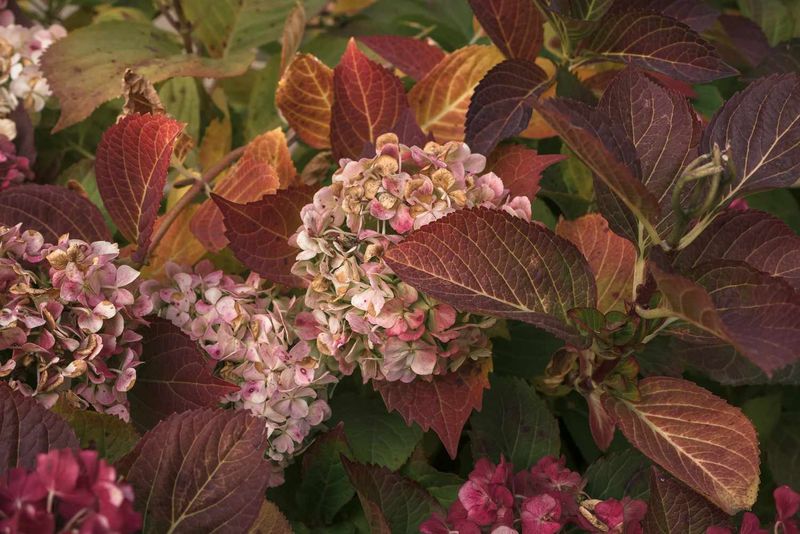
Fall care is mostly about restraint and steady habits. Start by figuring out what you are growing.
Look up the tag or cultivar name, and if you cannot tell, treat it as an old-wood type and leave the stems alone.
That rule comes straight from the pruning guidance. University of Minnesota Extension notes that old-wood types may already carry next summer’s buds by late summer or early fall.
Avoiding more pruning mainly preserves what remains.
Next, hold off on fertilizer unless a soil test says your plant needs something. A late meal can push soft growth that cold weather may damage.
Water matters too. In dry fall weather, soak the root zone deeply, then let the soil dry out between waterings.
Maryland Extension advises continuing as conditions require until the ground freezes.
Finally, add mulch. University of Minnesota Extension’s winter protection guide explains that mulch can conserve moisture and moderate swings in soil temperature.
Keep it a bit back from the stems so they stay dry.
Think of these steps as stress reducers, not repairs. They can help the shrub head into winter in better shape and may help protect buds that survived.
They cannot reverse damage already done, and they do not guarantee blooms.
Fall care cannot promise next summer’s flowers
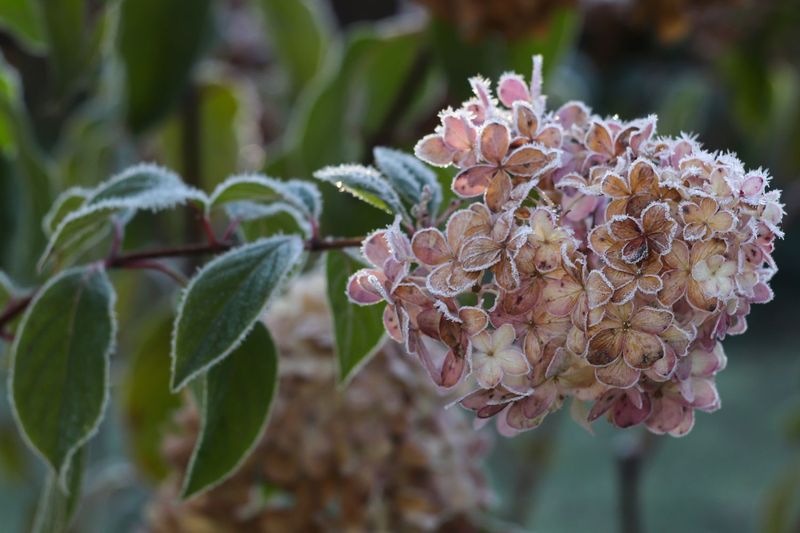
Smart fall care keeps you from adding avoidable stress, but it cannot replace buds that were cut off or killed by frost. Your hydrangea’s type and your local winters will shape what happens next.
Before you prune or feed anything, identify the plant first, and keep winter stress low.
A shrub with no flowers this year is not a failed plant. It is a shrub with a story you are now better equipped to read.
Sometimes the best gardening move in fall is simply a steady hand that stays out of the way.