
When North Carolina Fig Trees Need Winter Protection
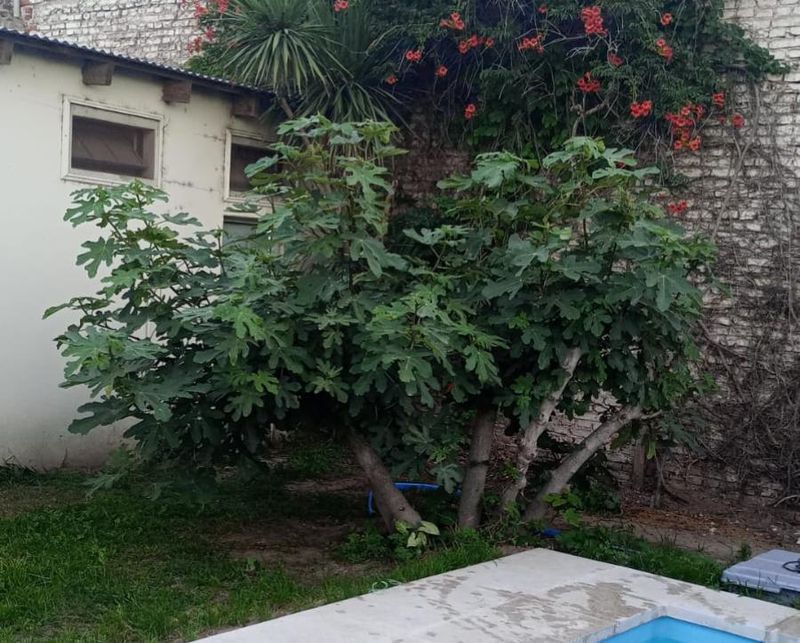
A fig tree that looked full and healthy in September can come out of winter with dead branches and no leaves. Whether that happens in your yard depends on where you live, which fig you grow, and how cold the forecast turns.
Wrapping can help, but it is a choice, not a rule for every tree. Here is how to decide what your own tree needs.
How much winter risk does your part of North Carolina face?
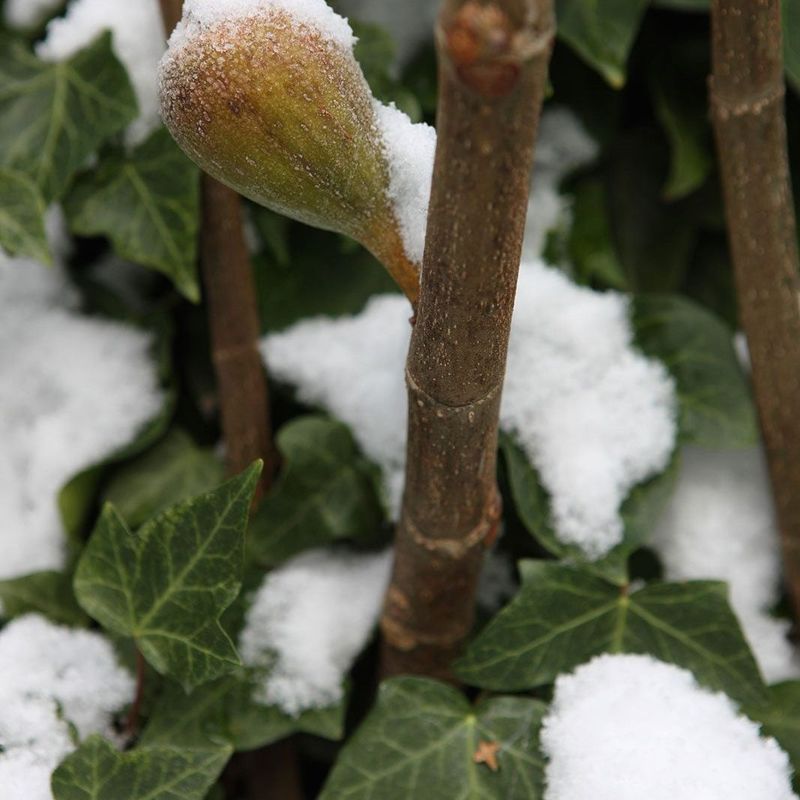
North Carolina is not one fig-growing climate. NC State Extension describes figs as grown across much of eastern North Carolina and west into the Piedmont.
Its production guide points to eastern North Carolina and the southern Piedmont as the main suitable region.
Cold injury is a bigger limit farther inland. Another NC State publication on fig diseases names it as a particular problem in the Piedmont and mountains.
A gardener near the coast may rarely need to do more than watch the forecast, while a mountain gardener may need to plan every winter.
You will see two temperature figures in NC State materials. One says figs may freeze back to the ground at 20°F or lower.
The other lists figs as cold-sensitive at 12 to 15°F. They come from different contexts, so treat them as rough guides, not exact kill points.
How long the cold lasts matters too.
Variety and site also change the picture. NC State calls Celeste fairly hardy, and it suggests planting a fig where winter sun and cold winds are less of a problem.
A tree on the south side of a brick wall faces a different winter than one in an open, windy yard. Warm spells can also push out new growth that a sudden freeze then catches.
Because of all this, no single wrapping rule fits every yard. Start with your region, your variety, and the spot where your tree stands.
The wood you save can shape next year’s crop
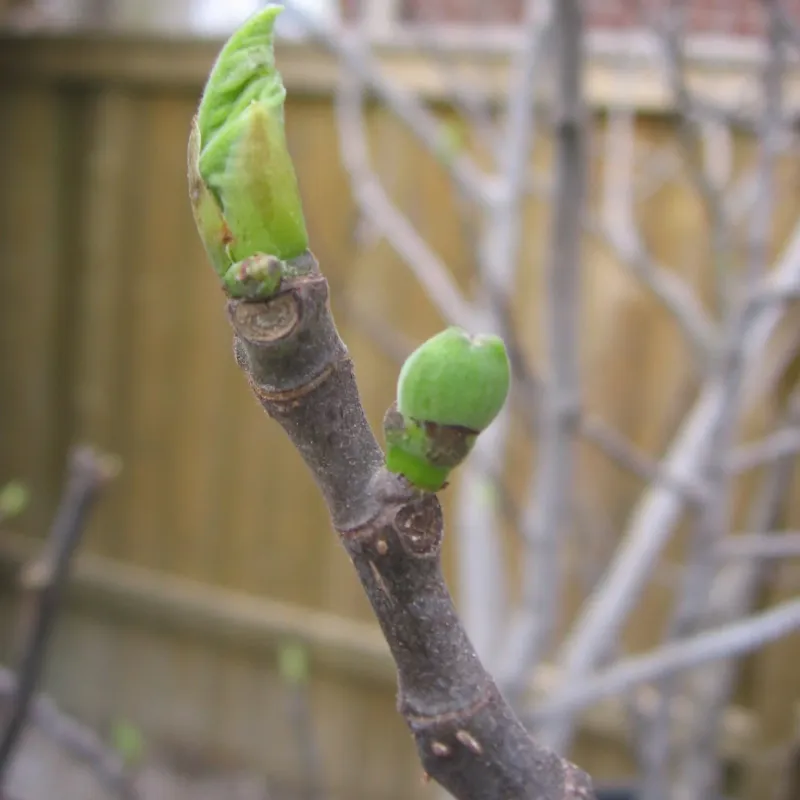
Cold can kill or weaken fig branches, and it can harm buds along them. According to NC State’s fig disease guidance, injured buds may shrivel and fail to leaf out.
That is why protecting wood matters before the worst weather arrives.
Some figs set an early, or breba, crop. University of Maryland Extension explains that breba figs form on last year’s wood, while the main crop forms on the current year’s growth.
If cold kills that older wood, the breba crop goes with it.
Not every fig has a meaningful breba crop, though. Breba production depends on the cultivar, how you prune, and growing conditions.
For many home trees the main crop is the one that counts, so check how yours has behaved in past summers.
Injury is also not the same as losing everything. NC State says a fig can recover after aboveground injury, though fruiting is delayed until new growth emerges.
Some varieties can even produce crops on suckers after cold injury.
Think of protection as a way to keep more of your tree’s framework alive. A tree that keeps its branches usually has a head start in spring.
A tree cut back by cold may still bounce back, just later.
Use the forecast, not the first hard freeze, as your decision point
Many gardeners circle a date on the calendar for the first hard freeze and wrap everything that week. NC State takes a different approach.
In its fig culture guide, it recommends protecting figs when severe weather is predicted.
That shifts your attention from a date to a forecast. A mild frost in October may do little to a dormant fig, and wrapping early can be wasted effort.
A hard, prolonged cold snap in January is the kind of event worth preparing for.
Your own yard sets how seriously to take a forecast. A young tree in an open yard in the Piedmont or mountains has more at stake than an established tree tucked against a warm wall near the coast.
Variety counts as well, since a fairly hardy fig like Celeste may handle more than a tender one.
A simple routine helps. Watch the extended forecast through late fall and winter, and keep your materials ready before you need them.
When a severe cold stretch shows up, you can protect the tree in an afternoon rather than scrambling in the dark.
Keep expectations realistic. Protection is a precaution that may reduce risk, not a guarantee against winter injury.
Even a well-covered tree can lose some wood in a harsh winter.
Choose a protection method that fits the tree
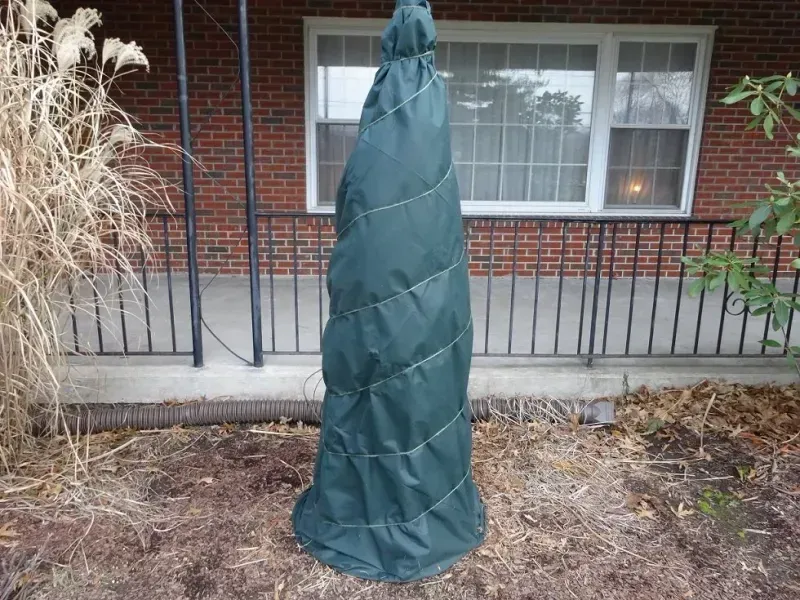
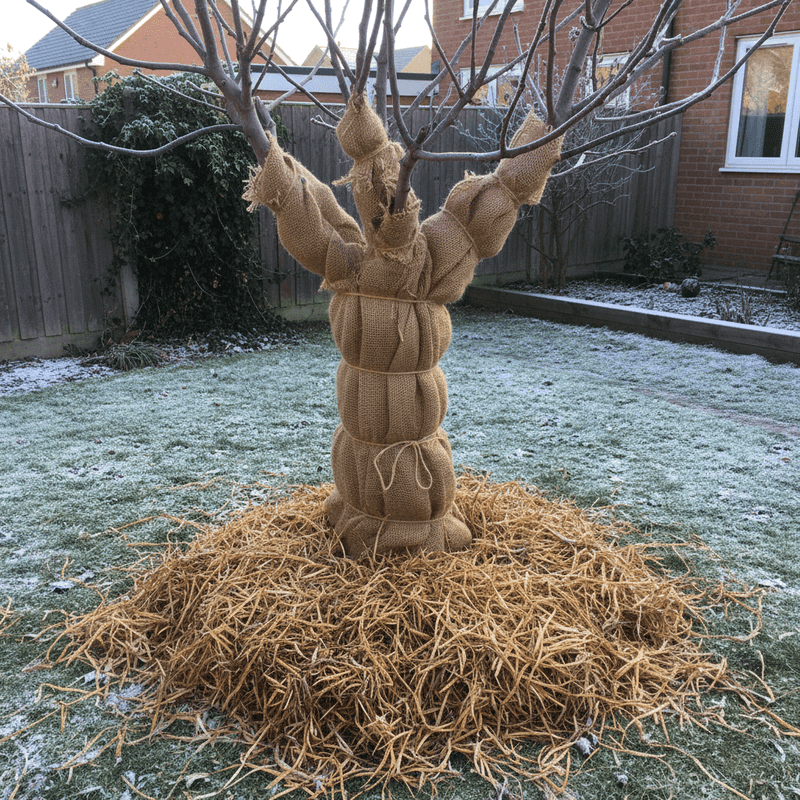
NC State lists several ways to cover a fig when severe weather is on the way. Its guidance mentions straw, a tarpaulin, cornstalks, or another suitable material.
Pick whatever you can get easily and arrange it so the branches are fully covered.
Straw and cornstalks are handy if you live near farms or garden stores in the fall. A tarpaulin is quick to throw over a smaller tree, though it works best when it does not sit tight against the stems.
For a larger tree, you may need to gather the branches first so the cover can reach the whole plant.
Mounding is a separate practice. In late fall, NC State suggests piling loose soil or mulch 1 to 2 feet around the trunks of young trees or bushes.
This protects the base, where new growth can restart if the upper branches are lost.
Whatever you add must come off again. Remove mounded soil or mulch in spring once frost is no longer a hazard.
Leaving it on can hold moisture against the trunks and slow the tree’s wake-up.
No one method suits every tree. A small young fig may do well with a soil mound alone, while a taller tree in a cold exposed spot may need a full cover during a hard freeze.
Match the effort to the tree you have.
Insulate the tree without trapping moisture or pests
If you want a more involved setup, University of Maryland Extension describes two options. One is to pin pliable branches down and cover them.
The other is to enclose the stems with wire fencing and fill it with leaves or straw.
These methods suit trees with flexible branches or gardeners willing to spend a weekend on the job. They are options, not instructions for every yard.
A large, stiff tree may not bend safely, and a tree in a mild spot may not need this much work.
The material you choose matters. Leaves and straw insulate, but rain can soak them.
Maryland’s guidance includes a plastic tarp over the enclosure to shed precipitation, which keeps the insulating layer drier.
Plastic used as the wrap itself is another matter. Rutgers Master Gardener guidance in its fig winter protection sheet cautions against it because it can trap moisture against the stems.
So the useful line is between a breathable insulating layer and a waterproof outer cover, not between plastic and no plastic.
Watch out for visitors, too. Insulating material can shelter voles, and they may feed on tender bark.
Keep the enclosure snug, check it occasionally, and remove it in spring so small animals do not settle in for the season.
Assess and prune winter-injured wood in spring
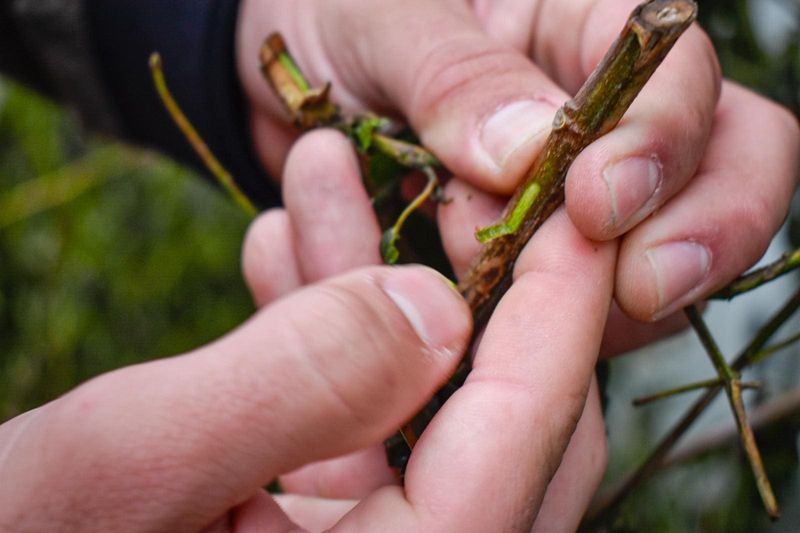
Spring tells you how the winter went. Buds that shrivel or never leaf out are a sign of possible injury, according to NC State’s fig disease guidance.
Not all damage is hidden until then, but by now it is easier to read.
To check a doubtful branch, lightly shave the bark on several stems. University of Maryland Extension says green tissue underneath means the wood is alive.
Branches without green tissue can be pruned out. Treat this as a useful check, not a promise that the stem will survive or that you will get figs this year.
Prune killed or injured branches in early spring. Waiting a little lets new growth show you where the live wood ends, and it keeps you from cutting good stems too soon.
Clean, sharp shears make tidy cuts.
Do not be discouraged if a lot of wood comes out. NC State notes that a fig can recover after aboveground injury, though fruiting is delayed until new growth emerges.
Maryland’s guidance adds that shoots arising from roots after stem injury rarely produce mature fruit the same season.
Use what you learn to plan next winter. If your tree came through fine, you may be in a lower-risk spot.
If it lost a lot, plan protection around your forecast, your variety, and your site. A fig that is protected only when the cold is truly coming gets the right care at the right time.