
Big Green Hydrangeas With Zero Flowers? 13 Real Reasons Your Shrub Skips Blooming (And What To Fix Before Spring)
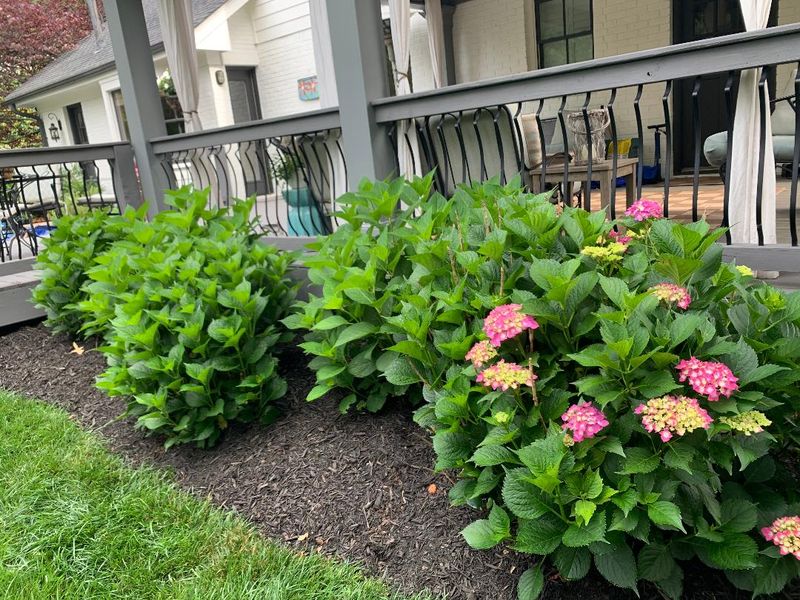
Your hydrangea looks great, with thick green leaves and strong stems, but there is not a single flower head. That mix can feel like a mystery, and it makes many gardeners worry they did something wrong.
The good news is that a few clues can point you toward the cause. Here is how to sort the likely explanations from the rare ones before spring arrives.
Green leaves and green flowers are different problems
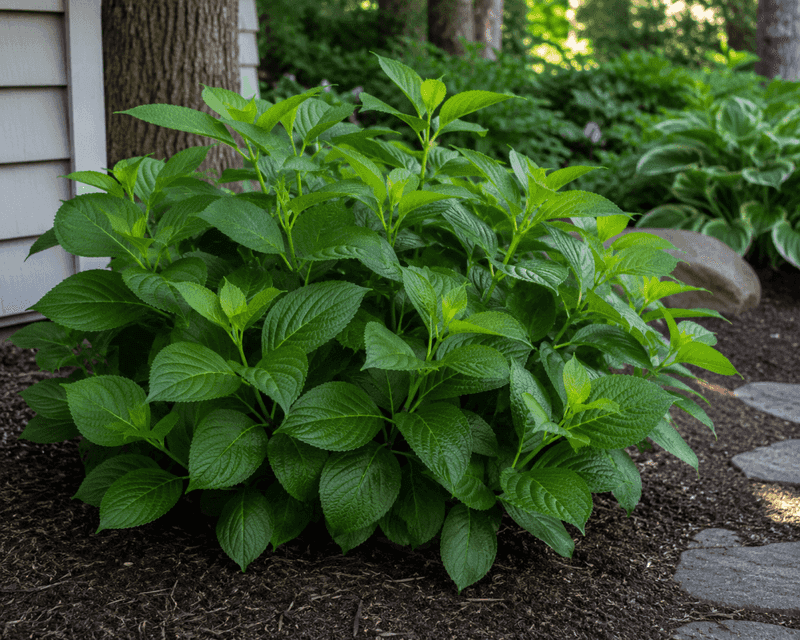
Some gardeners say their hydrangea is green when they mean the flowers have a green tint. This guide is about something else: a shrub with healthy green foliage and no flower heads at all.
If your blooms showed up but looked lime or pale green, that is a separate question.
Here is the tricky part. Leaves tell you the plant is alive and growing, but they do not tell you whether flower buds formed, or whether those buds survived winter.
A shrub can look fantastic while the buds inside the stems were lost months ago.
So the best approach is a short diagnostic sequence. First, figure out which kind of hydrangea you have.
Next, think back on when and how it was pruned. Then look at the growing conditions, such as light, soil moisture, and drainage.
University of Maryland Extension lists mistimed pruning as the most common cause of bloom failure, which is why that check comes first.
Hold off on fertilizer and big watering changes until you have worked through those steps. Guessing at a fix can add a new problem without touching the real one.
Some causes are also hard to change this season, so the goal is to learn what happened and plan sensible steps for the months ahead.
The hydrangea’s type determines when pruning can cost flowers
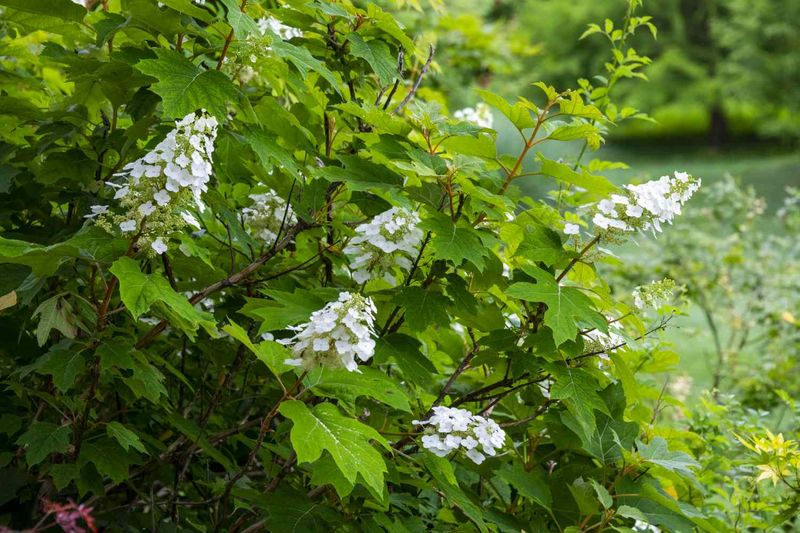
Not every hydrangea sets buds the same way. Bigleaf (Hydrangea macrophylla), oakleaf (H. quercifolia), and climbing hydrangeas bloom on old wood, meaning the flower buds form on stems grown the previous year.
Panicle (H. paniculata) and smooth (H. arborescens) hydrangeas bloom on new wood, which grows in the current season. University of Minnesota Extension explains this split and why it matters before you pick up pruners.
On an old-wood type, a hard cut in fall, winter, or even early spring can remove buds that are already formed. The shrub will grow back leafy and healthy, but with few or no flowers.
That is a classic cause of the leafy-but-bare puzzle.
Panicle and smooth types are different. Late winter or early spring pruning is generally appropriate for them, since the flowers come from growth that has not happened yet.
University of Illinois Extension stresses that timing depends on the plant, so no single pruning calendar fits every hydrangea.
For old-wood types, be patient in spring. Wait until leaves emerge so you can see which stems are truly dead, then remove only those.
If healthy stems need trimming, Illinois Extension advises doing it soon after flowering.
Reblooming bigleaf cultivars can flower on both old and new wood, which gives them a second chance. Even so, rebloom is not guaranteed after a hard winter or heavy pruning.
If you are unsure what you own, Maryland’s pruning guide is a handy reference.
Winter and late frost can damage buds beneath healthy foliage
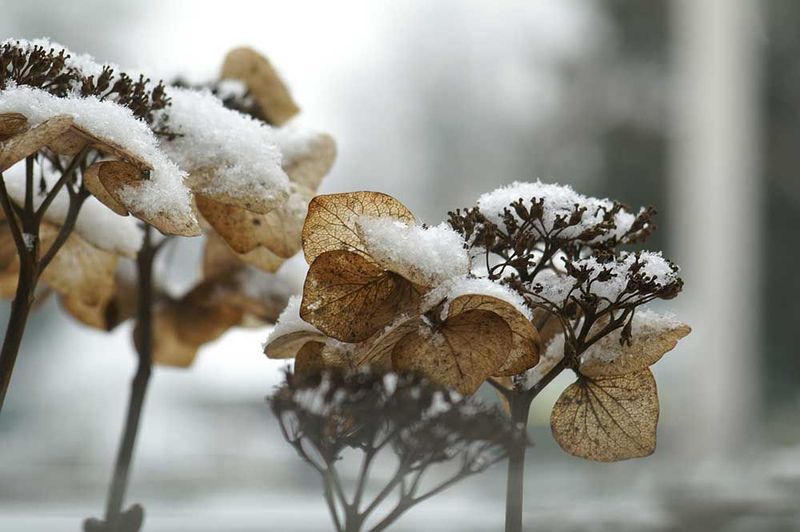
Cold can hurt flowers without hurting leaves. In a harsh winter, a sudden temperature swing, or a late spring frost, the flower buds on old-wood hydrangeas can be injured or killed.
The plant then pushes out fresh green growth from lower on the stems, so it looks vigorous even though the flower buds are gone.
These are separate events with the same result. Deep winter cold can kill buds outright.
Warm spells followed by a sharp freeze can confuse the plant. A frost after buds have started to swell can finish off tender growth.
UMass Extension names winter and frost damage as a major reason bigleaf hydrangeas fail to flower.
One clue is stem condition. If last year’s stems have living buds along them but some tips are dead, cold may have played a part.
Wait for spring growth before cutting so you can tell what survived.
For some bigleaf hydrangeas, a wire cage filled loosely with leaves or straw may help shield stems in winter. Maryland Extension also discusses winter injury as a cause of lost blooms.
Treat protection as a way to lower future risk, not a promise of flowers.
If frost already took this year’s buds, there is little to do but care for the plant well and plan ahead for next winter.
Too much shade, heat, or moisture stress can limit flowering
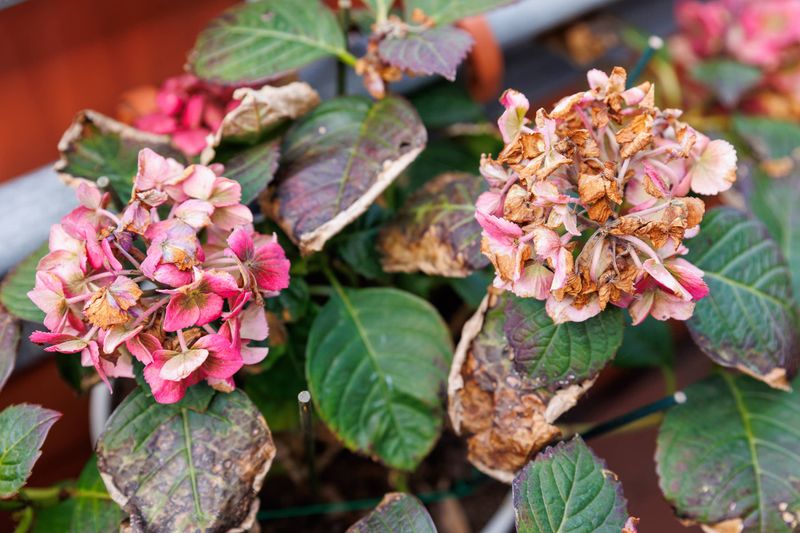
Light is the next thing to check. A hydrangea tucked into deep shade may grow big, leafy, and handsome while producing few flowers.
Many bigleaf hydrangeas do well with morning sun and afternoon shade, or with dappled light, according to UMass Extension. That is a common pattern, not a rule for every hydrangea.
Needs shift with species, cultivar, and your local climate, so there is no magic number of sun hours.
Notice what has changed. A nearby tree that filled in over the years or a new fence can slowly steal light.
On the other hand, hot, dry exposure can stress the plant too.
Moisture works both ways. Drought can hurt flowering, and so can soggy, poorly drained soil.
Iowa State Extension recommends consistently moist, well-drained soil.
Before you change your watering, push a finger a few inches into the soil. If it is damp, extra water is not the answer.
Dig a small test hole, fill it with water, and see whether it drains in a reasonable time.
Also remember that a hydrangea may wilt in the afternoon heat and perk up by evening. Maryland Extension notes that heat stress and dry soil can look alike, so check the soil first instead of watering every time the leaves droop.
Extra nitrogen can produce leaves without solving the bloom problem
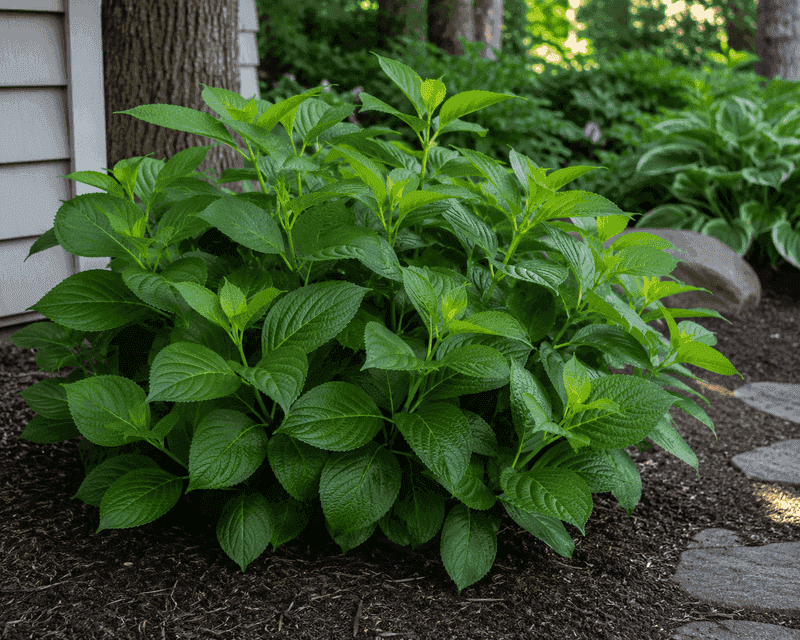
Plants that get a lot of nitrogen tend to pour their energy into leaves and stems. If your lawn fertilizer washes into the hydrangea bed, or you feed the shrub heavily every spring, you may be growing a lush green plant with few flowers.
UMass Extension lists excess nitrogen among the reasons for leafy growth without blooms.
That does not mean more or different fertilizer will rescue a bare shrub. A bloom booster or extra phosphorus is not a universal fix, and adding a nutrient the soil already has will not help.
The smarter step is a soil test, which tells you whether the plant needs anything. Maryland Extension recommends using soil test results to guide fertilizer decisions.
Soil pH deserves a quick mention because it gets mixed up with blooming. In certain bigleaf cultivars, pH influences whether flowers come out blue or pink.
White-flowered cultivars and many other species do not follow that color response.
So pH controls color, not whether a shrub flowers. Changing it is not a general treatment for a hydrangea with no blooms.
Maryland Extension also warns that casual use of aluminum sulfate can damage roots, so leave it alone unless you are deliberately adjusting color on a suitable bigleaf.
A new planting, browsing, or visible disease calls for a different check
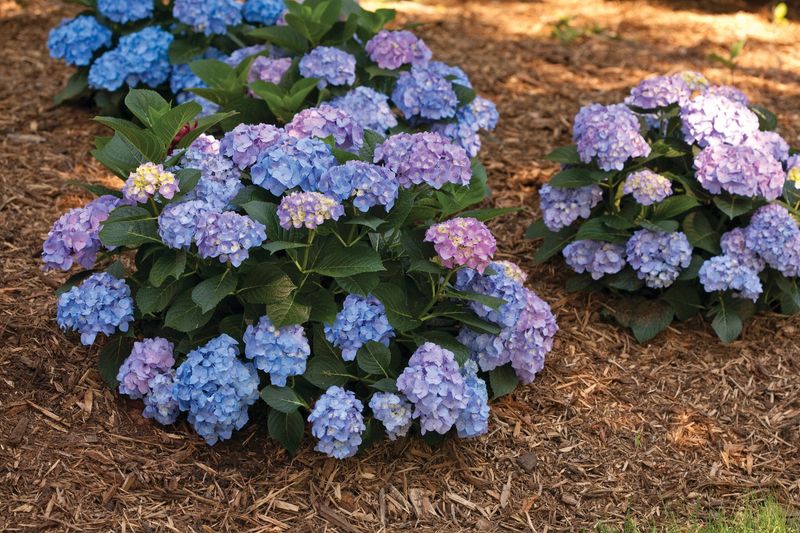
Some causes apply only in certain situations. A hydrangea planted or moved recently may skip flowers while it builds roots and stems.
If yours went in this year or last, give it steady care and time before deciding it is failing. UMass Extension notes that young plants often bloom less at first, and Iowa State Extension offers care tips for getting them established.
Deer can nibble buds and leaves, but look for proof before blaming them. Ragged, torn stem tips, missing growth at deer height, and hoofprints or droppings nearby are real clues.
If you see them, a physical barrier such as fencing or netting is a reasonable step, as Maryland Extension describes.
Disease belongs far down the list for a shrub with healthy leaves. Missing flowers alone do not point to an infection.
Tie any concern to what you can see, such as leaf spots, a powdery coating, or blotchy flowers. Penn State Extension shows how hydrangea diseases usually appear, and most leave visible marks.
If none of these clues fit, return to pruning history and winter damage, which remain the stronger suspects.
A spring checkup can prevent another avoidable lost bloom
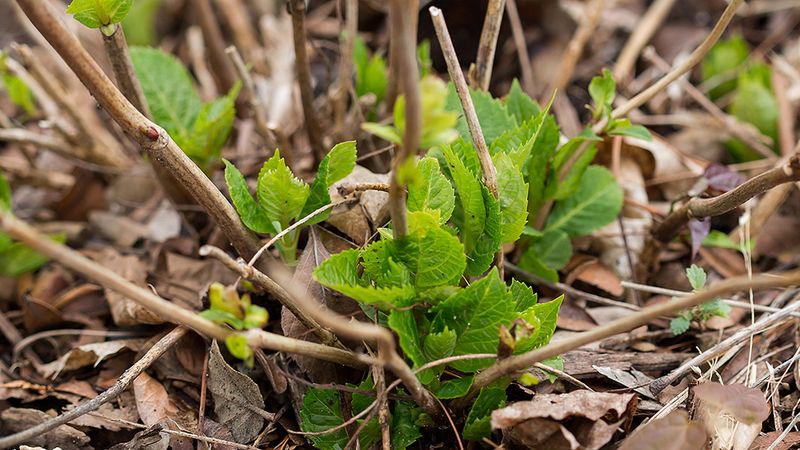
Start with a plain checklist. Name your hydrangea type, then recall when and how it was last pruned.
If it blooms on old wood, wait for leaves to emerge before cutting anything, so you can remove only stems that are truly dead. The University of Minnesota’s guide and Maryland’s pruning page are good references for matching timing to type.
Next, look at the site. Notice how much light the shrub gets, and check soil moisture and drainage with your finger or a small test hole.
Take a soil sample before adding any fertilizer, and let the results, as Maryland Extension suggests, decide whether feeding is needed.
Jot a few notes on what you find. Next fall, they will help you resist the urge to tidy up a plant that is quietly holding next summer’s buds.
A leafy hydrangea is rarely a lost cause, only a plant asking you to read the clues.