
Does It Matter When You Water a Christmas Cactus? What Actually Triggers Blooms
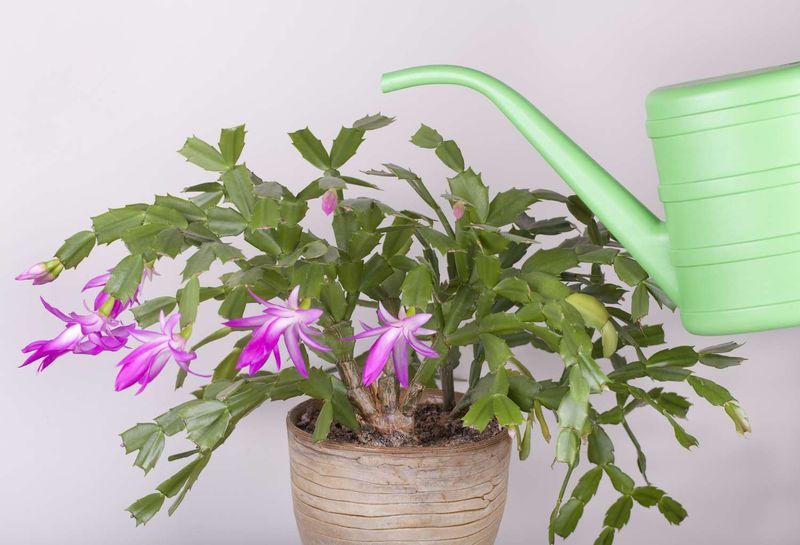
You may have heard that watering your Christmas cactus at the right hour makes it bloom. Growing guidance from universities tells a different story, and that is good news if you feel like you have been doing it wrong.
Flowers depend on a few clear cues, and watering still plays a supporting role. Here is what really matters as the holiday season gets closer.
The hour you water does not set the bloom
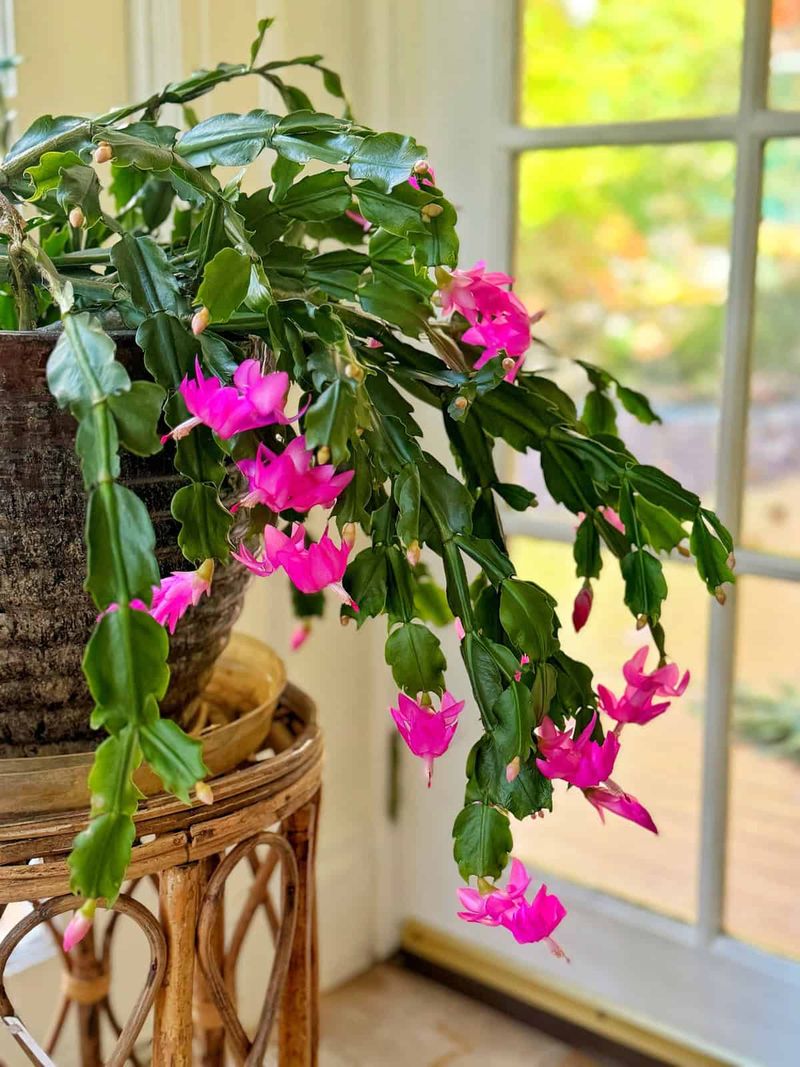
Good news first: you did not miss a secret watering hour. The growing guidance reviewed for this article never names morning or evening watering as a trigger for Christmas cactus flowers.
If your plant has stalled, the clock on your kitchen wall is not the likely culprit.
What the experts do point to is Iowa State guidance on poor blooming, which centers on light and temperature. Day length and cool nights are the main cues that tell the plant it is time to set buds.
Watering time simply does not show up on that list.
That said, watering is not irrelevant. Soggy mix can cause root problems, and severe dryness can stress the plant.
UMass Extension notes that water stress during bud induction can reduce bud set, and that research does not support withholding water to force flowers.
So the useful question is not what hour to water, but whether the mix actually needs water right now. Pick a time that fits your routine, whether that is breakfast or after dinner, and spend your attention on the soil instead.
Long nights and cool conditions cue flowering
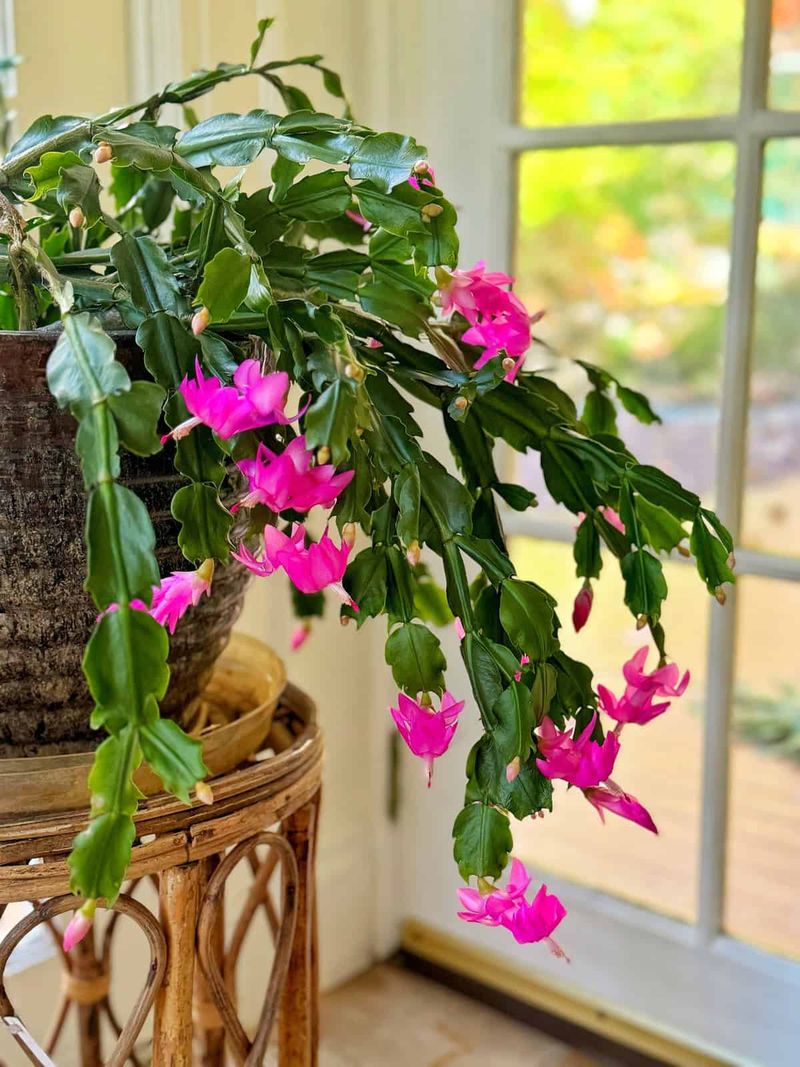
Picture your cactus reading the seasons. As days get shorter and nights get longer and uninterrupted, it gets the signal to start making buds.
Cool temperatures help send that message.
Iowa State gives a clear example. In its guidance, temperatures above 70 degrees F can prevent flowering, while nights around 60 to 65 degrees F with slightly warmer days are favorable.
Treat those numbers as a helpful example, not a guarantee that your plant will bloom.
Light matters at night too. A lamp that comes on in the evening in the same room can break up the long dark stretch the plant wants.
Many growers pick a spot that stays dark at night, such as a spare room or a window away from porch and street lights.
The University of Florida describes a structured approach in which plants get a stretch of short days and long nights, and you can read the details in UF/IFAS Christmas cactus preparation tips. It takes weeks, not days, for those conditions to work.
Notice that none of this has to do with when you pick up the watering can. Light and temperature set the stage, and watering simply keeps the plant healthy while it does its work.
Changing conditions now may help, but it cannot promise flowers by a certain date.
Check the mix instead of following a watering clock
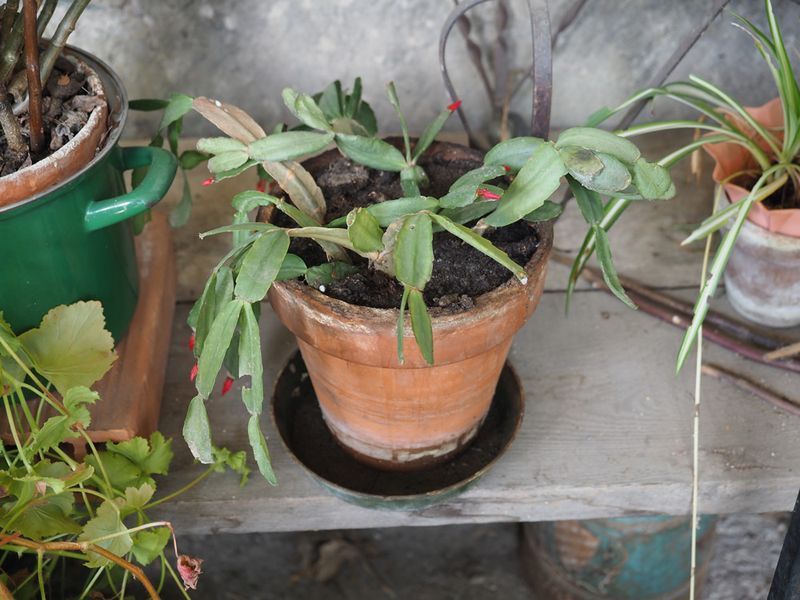
Your finger is the best tool you own. Push it into the potting mix up to the first knuckle, and you will know more than any calendar could tell you.
UF/IFAS suggests watering when the top inch of soil feels dry. When it is time, water thoroughly and empty the saucer so the pot is not left sitting in water.
A well-drained mix does a lot of the work for you.
University of New Hampshire Extension gives similar advice: water when the mix feels dry to the touch, and let the extra water drain away.
Why skip a fixed schedule? A plant in a bright, warm room dries out faster than one in a cool corner.
A small pot dries faster than a large one. Even the same plant will drink differently in October than in July.
So one week you might water twice, and another week maybe once or not at all. If the mix still feels damp, wait and check again in a day or two.
If it is dry well below the surface and the pot feels light, it is time.
Tip the pot gently after watering to see that water runs out the bottom. Checking takes ten seconds, and it protects the roots from the two big problems: staying too wet and getting too dry.
Both soggy roots and severe dryness can put buds at risk
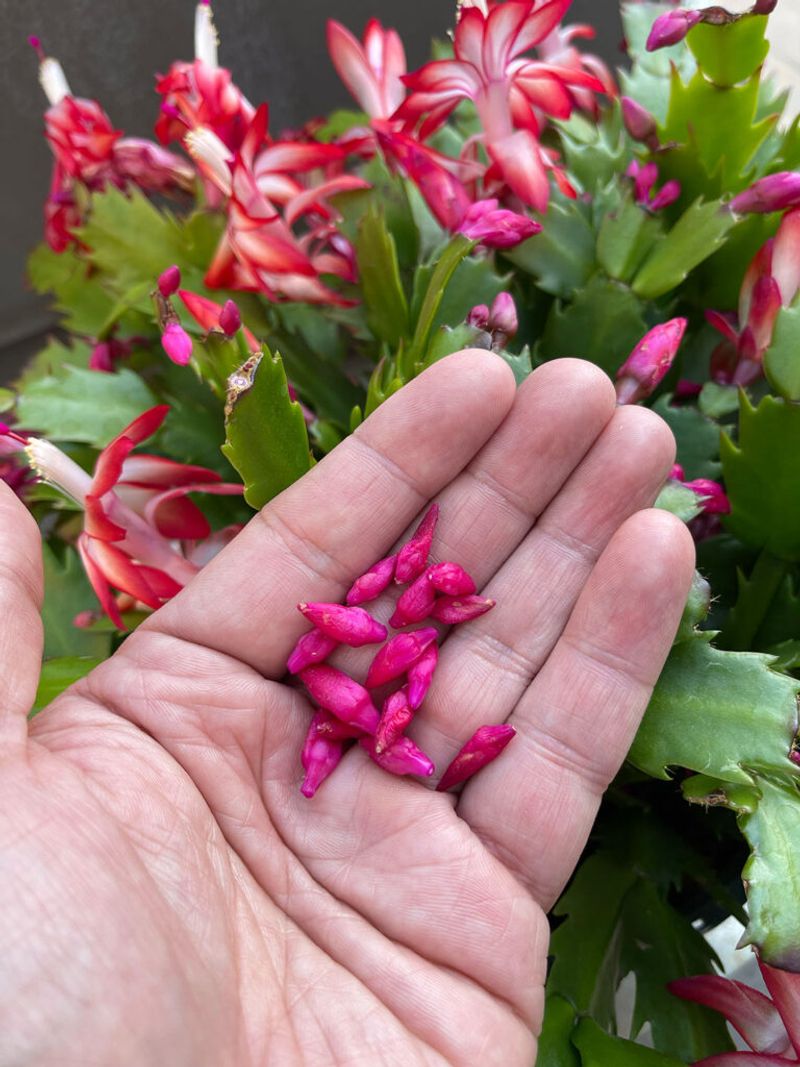
Dropped buds make any gardener nervous. The frustrating part is that more than one watering problem can be behind them.
Waterlogged mix can lead to root damage, and damaged roots cannot support the plant. On the other side, Iowa State warns that dryness can cause buds or flowers to drop.
There is also a trap in between. UConn describes how a plant that goes too dry and then gets a deluge can end up waterlogged and lose roots.
A bone-dry pot followed by a flood is not a fix.
You will also notice that advice on moisture during budding is not identical. Iowa State recommends evenly moist soil while the plant is budding and flowering.
UF/IFAS says to water when the top inch is dry. UConn describes holiday cacti as preferring the dry side during bud formation and bloom.
Where do those overlap? Nobody recommends standing water, and nobody recommends letting the plant stay severely dry for long.
UMass adds that withholding water to induce buds is not supported by research.
In practice, that means checking the mix, watering when it is dry, and letting it drain. If you forgot for a while, water normally rather than drenching the pot to make up for lost time.
A new routine may not bring Christmas blooms this year
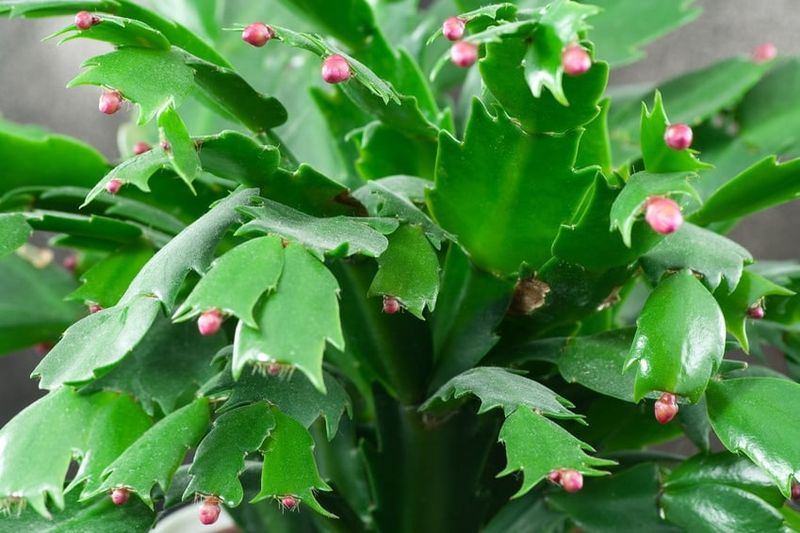
Let’s be candid about the calendar. If you are changing your routine in late October 2026, it may be too late for a guaranteed Christmas show.
UF/IFAS describes a short-day treatment lasting six weeks, with plants blooming in about ten weeks. Its example is a start on October 14 for a December 23 bloom.
Using that UF/IFAS schedule, an October 30 start points to roughly January 8, 2027. That is our own inference from the example, not a forecast for every plant.
There is a bright side. A plant that has already started forming buds may flower sooner.
Look at the stem tips for tiny bumps or buds, which tell you the process may already be underway.
Identity matters too. Many plants sold as Christmas cactus are actually Thanksgiving cactus.
UMass Extension reports that Thanksgiving cactus generally flowers four to six weeks earlier than true Christmas cactus, and hybrids and cultivars can vary.
So if yours opened in November, it was not early because of how you watered. It may simply be a different type.
If it has not bloomed yet, the plant may still surprise you, but a date is not something anyone can promise. Keep up sensible care and treat any holiday flowers as a bonus.
Keep developing buds away from sudden changes
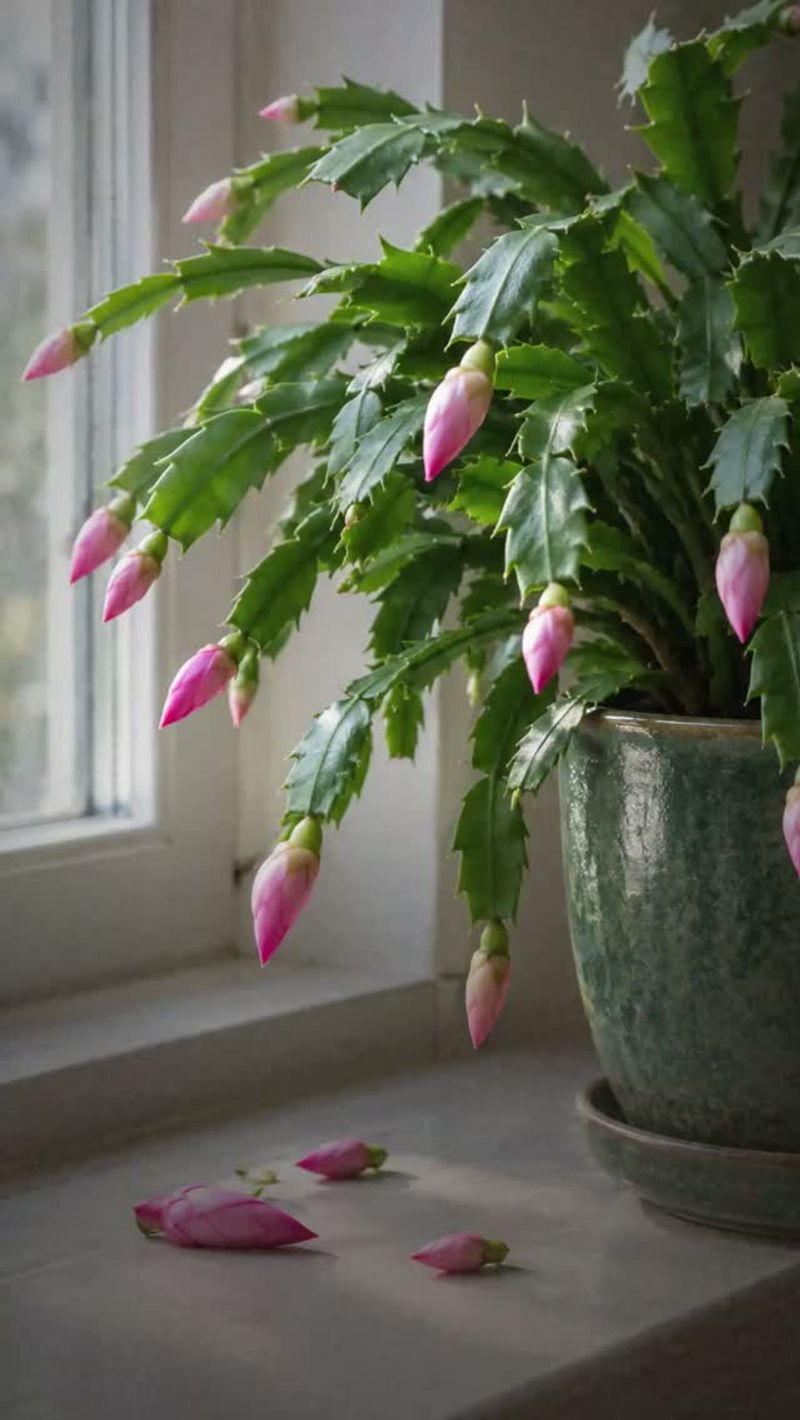
Once buds show up, think of your plant as settling in for the long haul. Moving it around can be tempting, but it is better to leave it be.
Iowa State advises not moving the plant during bud development. A steady spot with the same light and temperature day after day may reduce stress.
Drafts and heaters are the usual troublemakers. A cold window, a door that opens often, or a heating vent can swing conditions quickly.
UF/IFAS and University of Minnesota Extension both identify temperature or environmental changes as possible causes of bud drop.
Keep the wording in mind: possible causes, not the only ones. A stable spot is a precaution that may help, not a guarantee.
Buds can still fall if the mix has been too wet or too dry, so keep checking the soil.
If you bring your plant indoors from a porch, or want to rearrange a room, try to make changes before buds form, or make them as small as you can. Then pick a home for the plant and let it stay put.
Let the plant, not the clock, guide your next step
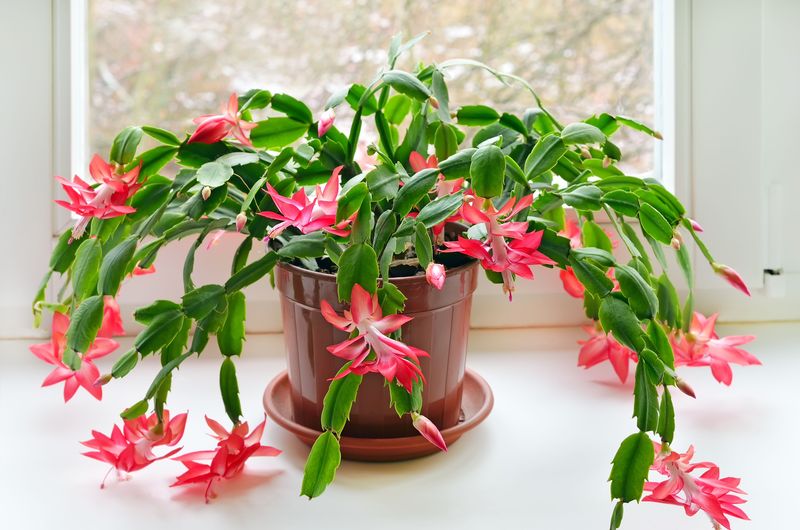
Before you water, press a finger into the mix. If the top inch is dry, water and let the extra drain, as UNH Extension advises.
Then give the plant the long nights and cool air that Iowa State links to flowering.
Good care can protect buds, but no one can promise a bloom on a particular holiday, especially if buds have not formed yet.
Your cactus keeps its own calendar, and it rewards patience more than perfect timing.