
Why Your Christmas Cactus Leaves Turn Limp And Wrinkled Indoors, And The Root Check That Helps You Choose Your Next Step
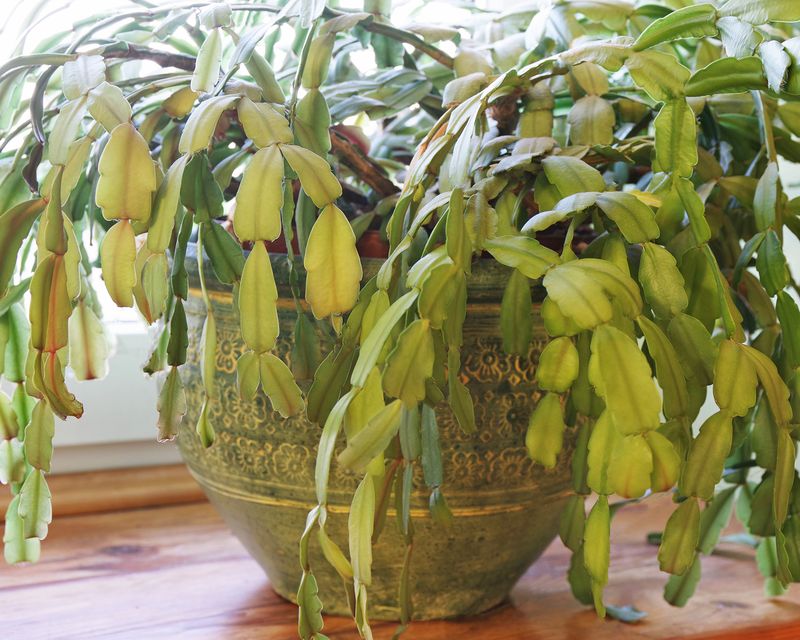
A Christmas cactus with floppy, wrinkled stems can make any plant owner panic. Your first guess might be that it needs a drink, but that guess can sometimes make things worse.
A few quick checks can tell you what your plant is really asking for. Here is a calm, step-by-step way to sort it out before you reach for the watering can.
Wrinkled segments do not tell you whether the plant needs water
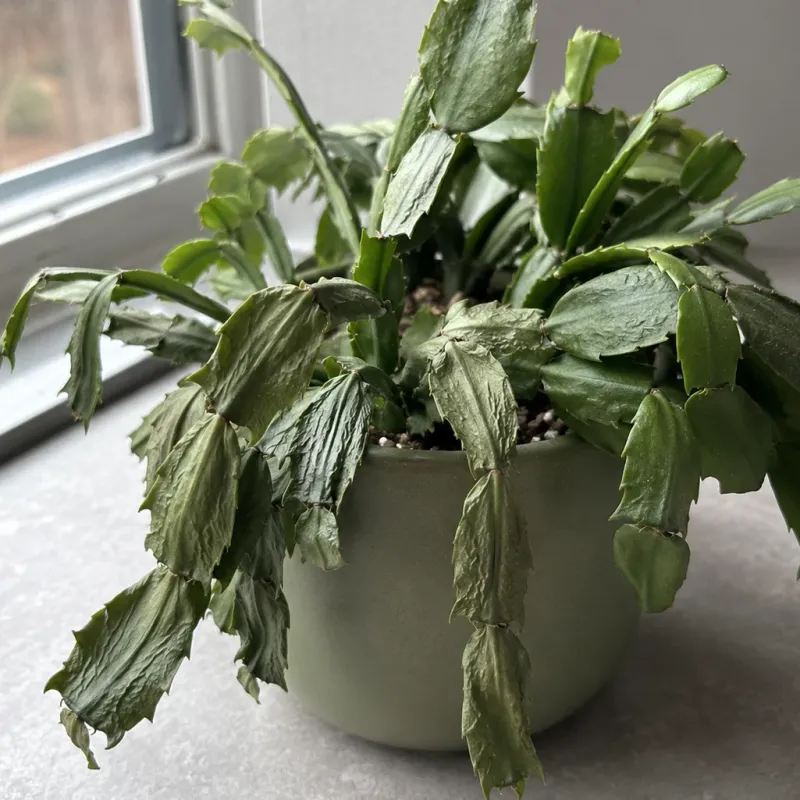
Wrinkled stems look like a plant begging for water, but the wrinkles themselves do not say which way things went wrong. Illinois Extension guidance notes that both underwatering and overwatering can leave holiday cactus stems wilted and wrinkled.
So a limp plant is not proof that you drowned it, and it is not proof that you forgot it either.
A small point about wording: the flat, scalloped parts most people call leaves are really stem segments. Many plants sold as Christmas cactus are actually Thanksgiving cactus or hybrids, and their care is very similar.
Everything here applies to all of them.
Before you water, check the potting mix. Push a finger an inch or two into the soil and see whether it feels dry, damp, or soggy.
Lift the pot too, since a pot that feels light often means dry mix, while a heavy one suggests water is still sitting there.
Holiday cacti are not desert plants, so they need more moisture than a typical cactus. They also should not sit in waterlogged mix or standing water.
University of New Hampshire Extension suggests watering based on how quickly the mix dries, not on a set day of the week.
Put the two clues together: how the mix feels and how the plant looks. If the mix is dry, a thorough drink may be all it needs.
If the mix is wet and the stems are still limp, keep reading, because that combination is where the next steps matter.
Wet mix can leave a Christmas cactus unable to take up water
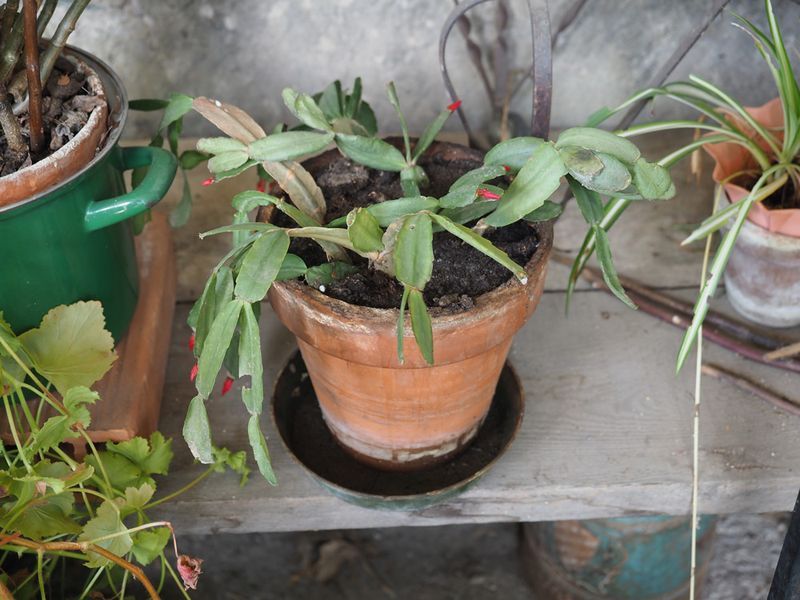
Here is the twist that surprises many plant owners: a plant can look thirsty while its mix is wet. When roots sit in soggy conditions, they can get damaged and stop taking up water.
The stems then lose their firmness even though water is right there in the pot, a pattern described in Illinois Extension advice on holiday cacti.
That does not mean you watered too often. Poor drainage, a dense mix, a pot with no hole, or a saucer that never gets emptied can keep roots wet even with modest watering.
Any of these can contribute, and often more than one is at work.
Slow-drying mix is a clue worth noticing. University of Wisconsin-Madison Extension points out that a plant with few healthy roots may use water unusually slowly.
So mix that stays wet for a long time can reflect root loss, not just frequent watering.
Try not to jump to a conclusion from the stems alone. Limp growth with wet mix is a reason to look closer, not a diagnosis.
Light, temperature, and the size of the pot all change how fast mix dries, so your plant may differ from a friend’s.
The good news is that you do not have to guess. A quick look at the roots can show whether they are firm and healthy or damaged, and that tells you what to do next.
When is a root check warranted?
Think of the root check as a decision point with two paths. If the mix is dry, treat it as a watering problem, give the plant a good drink, let the extra drain away, and watch how the stems respond over the next few days.
There is no reason to assume root rot when the soil is simply dry.
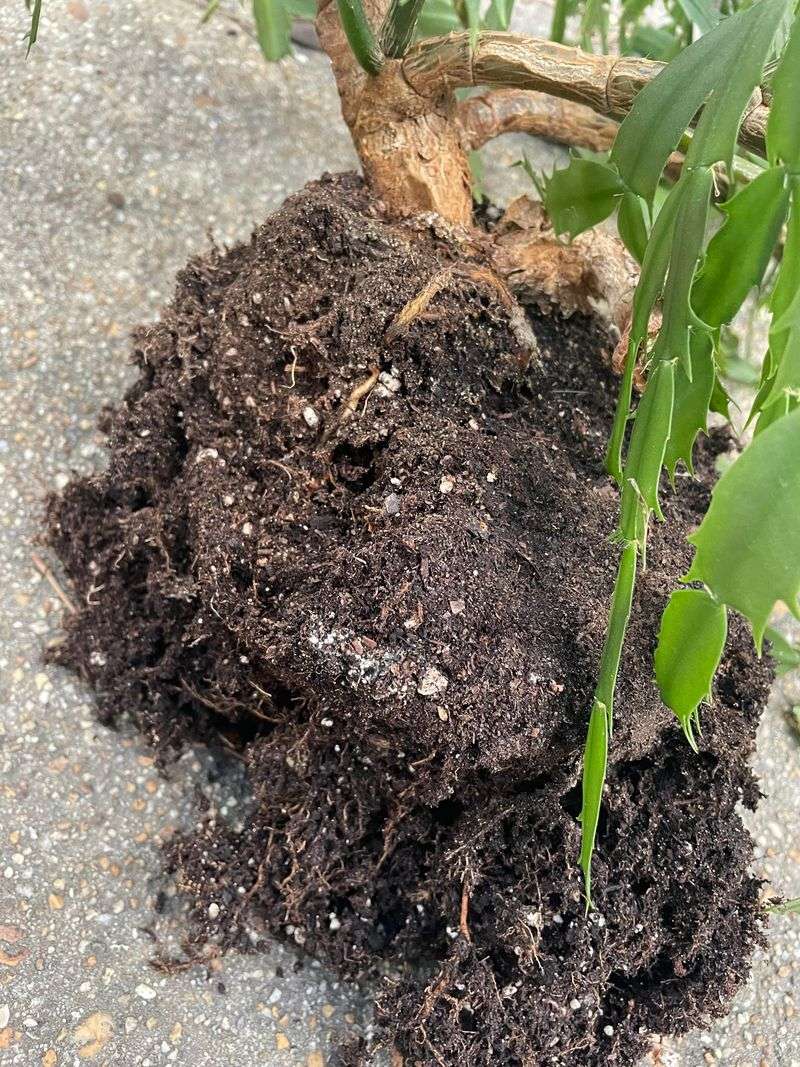
If the plant stays limp while the mix is wet, it is time to look at the roots. Slide the plant gently out of its pot, supporting the base, and loosen some of the mix with your fingers.
Work slowly so you do not tear healthy roots.
Healthy roots tend to look firm and light in color. According to Ask Extension, blackened root tips, or roots that look dark and are falling apart, are signs consistent with rot.
Mushy texture and a sour smell can add to your concern.
Keep the limits in mind. Limp growth alone is not proof of root rot, and Illinois Extension reminds us that watering problems in either direction can cause similar symptoms.
A home check also cannot tell you which specific organism is involved.
If the roots look mostly firm, you can slip the plant back into its pot and focus on drainage and watering. If you see clear damage, the next section explains what to do.
Either way, you now have real information instead of a guess.
A targeted repot can address damaged roots
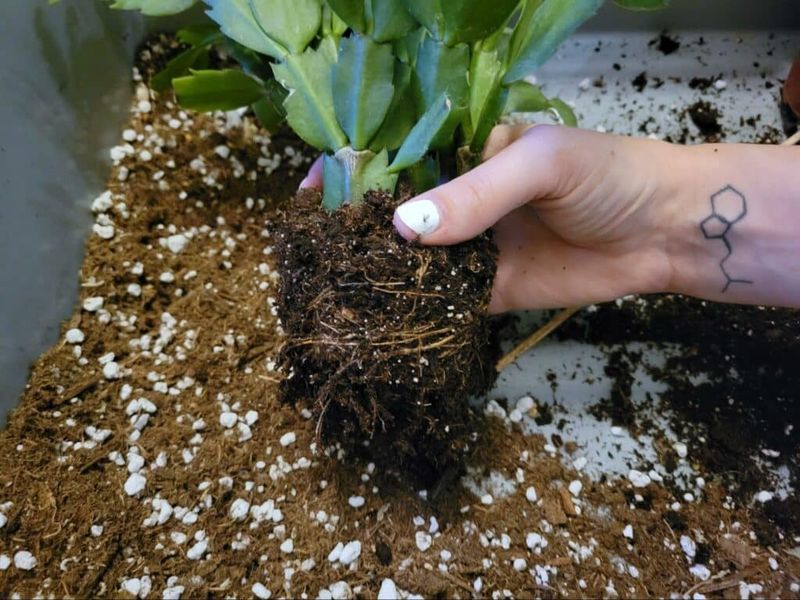
When roots are clearly dead or diseased, a targeted repot is a reasonable response. University of Wisconsin-Madison Extension advises cutting back dead or diseased roots, letting the pruned roots air-dry for a few days, and then repotting in fresh, well-drained mix.
Use clean scissors, and trim back to firm tissue.
Set the plant somewhere out of direct sun while the cut roots dry. Then pot it into fresh mix, not the old soggy stuff.
These steps may help a stressed plant, but they cannot guarantee that it recovers.
The pot matters as much as the mix. Choose a container with drainage holes, and do not automatically jump to a bigger one.
A pot only slightly larger than the remaining root ball is usually plenty, since extra mix can stay wet longer.
It helps to separate this rescue from routine repotting. According to Iowa State Extension, holiday cacti can flower well while somewhat pot-bound and may go years between repottings.
Repot them when they have outgrown the container, ideally in spring or early summer when they are not blooming.
So wrinkled segments alone are not a reason to repot. If your roots look healthy, leave them alone.
Save the trimming and fresh mix for plants with obvious root damage.
After repotting, let the mix guide watering
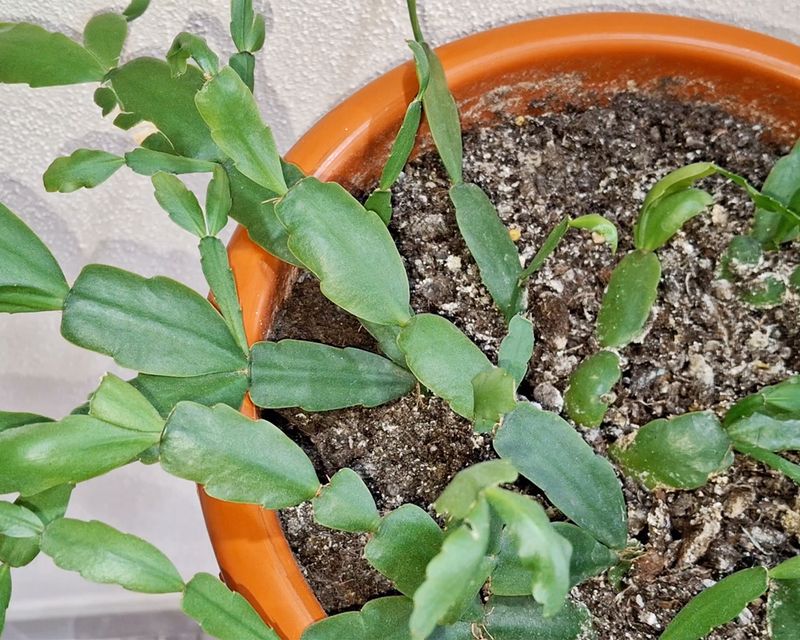
After a rescue repot, go easy. The Wisconsin extension advice is to water sparingly afterward while the plant settles and any trimmed roots begin to recover.
Sparingly does not mean never, and you do not need a rigid calendar.
Let the mix tell you what to do. Check it with a finger, water when it has dried somewhat, and let the extra drain freely out of the bottom.
Then empty the saucer or decorative cachepot so the roots are not sitting in a puddle.
Remember that this is a tropical forest plant, not a desert cactus. University of New Hampshire Extension notes that holiday cacti need good drainage, not long stretches of bone-dry soil.
Letting one go severely dry can stress it just as soggy roots do.
Season matters too. Iowa State says to keep the mix evenly moist while the plant is budding or flowering, and a bit drier when it is not.
The common ground is simple: avoid both waterlogging and severe drying.
For the mix itself, pick something loose and well-drained. Iowa State Extension says a specialized cactus mix is not essential if the mix you choose drains well.
Check it again after a few waterings and adjust if it stays wet for too long.
Severe root loss can limit recovery
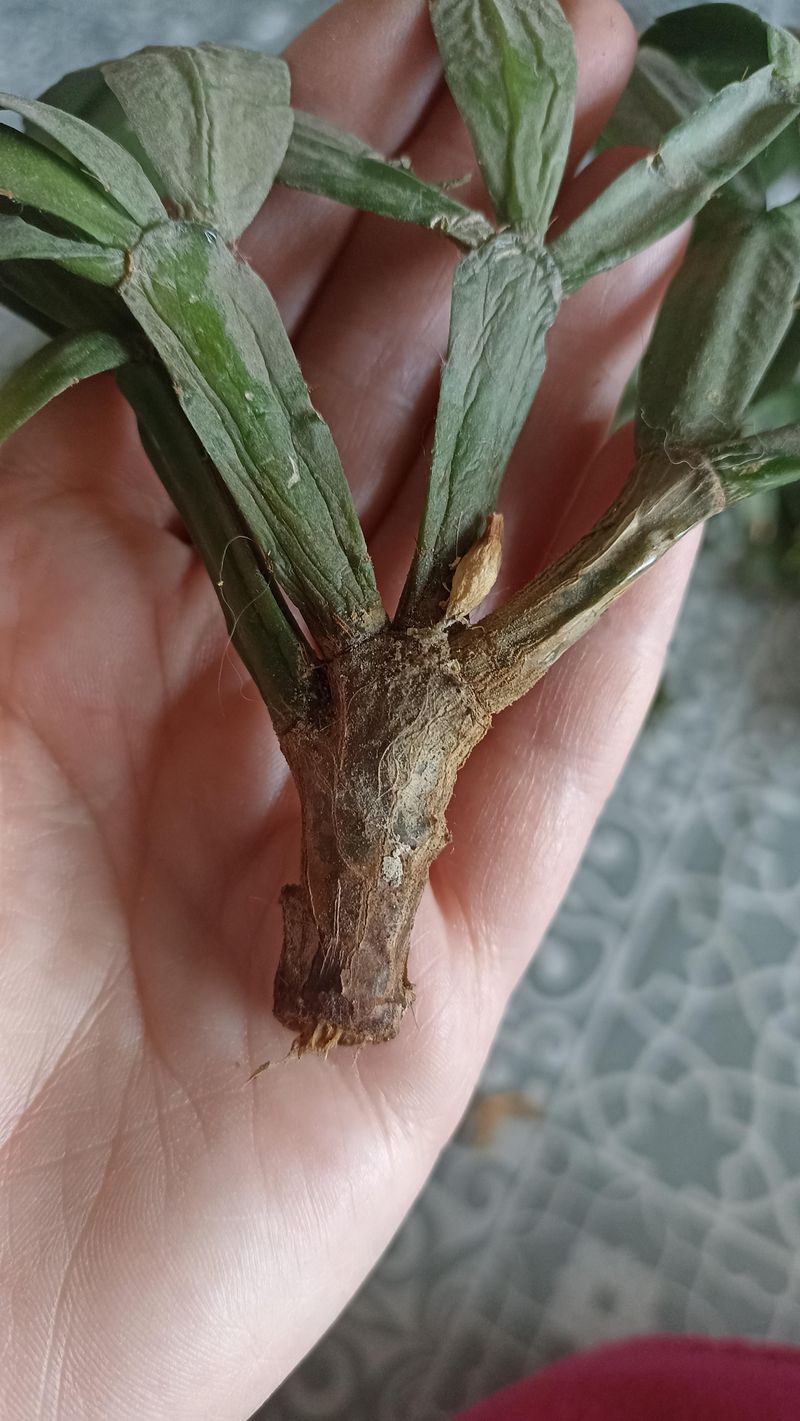
Sometimes the roots tell a hard story. If most of them are dark, mushy, or gone, the plant has very little left to take up water.
University guidance, including Wisconsin Extension, says recovery is not assured when root loss is severe.
Root rot can involve different organisms, and Penn State Extension lists several, including Phytophthora and Pythium. Severe cases can be difficult or impossible to save.
That is no reflection on your care, since these problems can take hold quietly.
If some stems are still firm and green, take a few as a backup. Healthy stem cuttings can be rooted in fresh, well-drained mix, giving you a second chance at the same plant.
Success is not guaranteed, and stressed cuttings may root poorly, so it helps to take several.
Treat the cuttings as a fallback, not a cure. Keep the mother plant going if it has any healthy roots left, and enjoy whichever one rallies.
Use the mix and roots to choose your next move
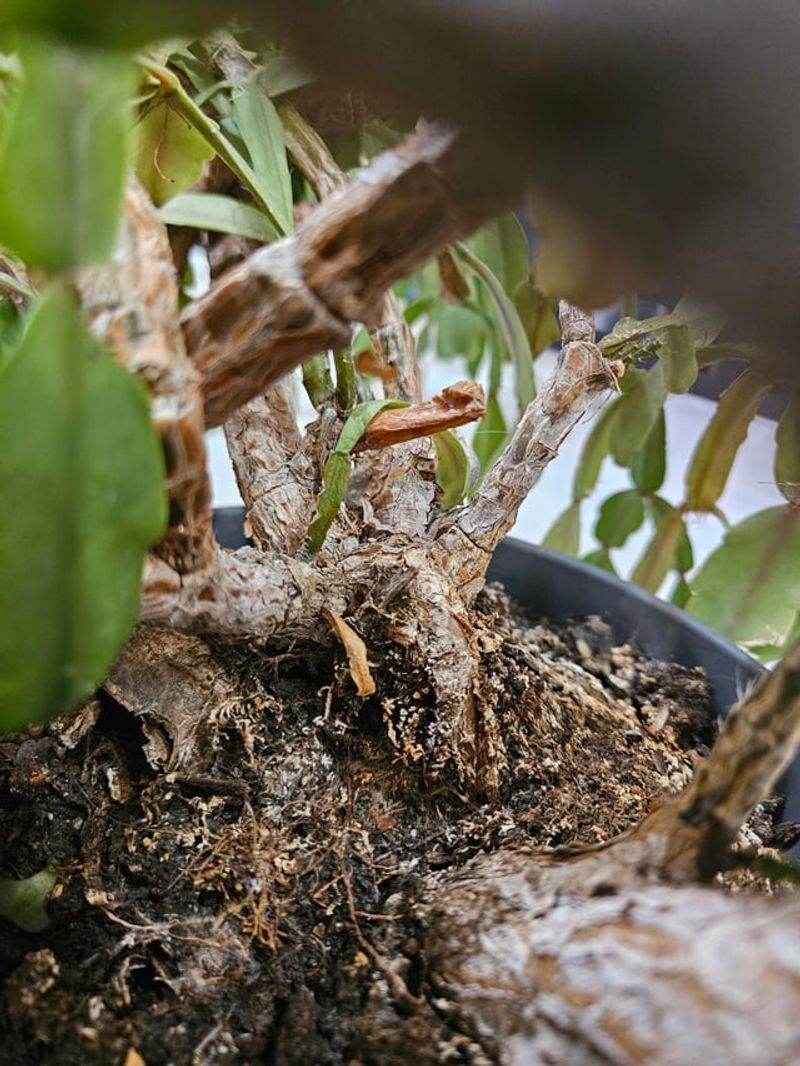
Start with the mix. Dry mix points to watering, while wet mix with limp stems calls for a gentle look at the roots.
Save the trimming and fresh mix for roots that are clearly damaged.
A healthy plant does not need a new pot just because it looks wrinkled. Iowa State Extension says these cacti can stay put for years, and Wisconsin Extension reminds us that recovery is never certain.
Your plant’s stems are just telling you something is off, and a few calm minutes with your fingers and a flowerpot can tell you what.