
Weekly Deadheading May Help Your Petunias Keep Blooming Longer
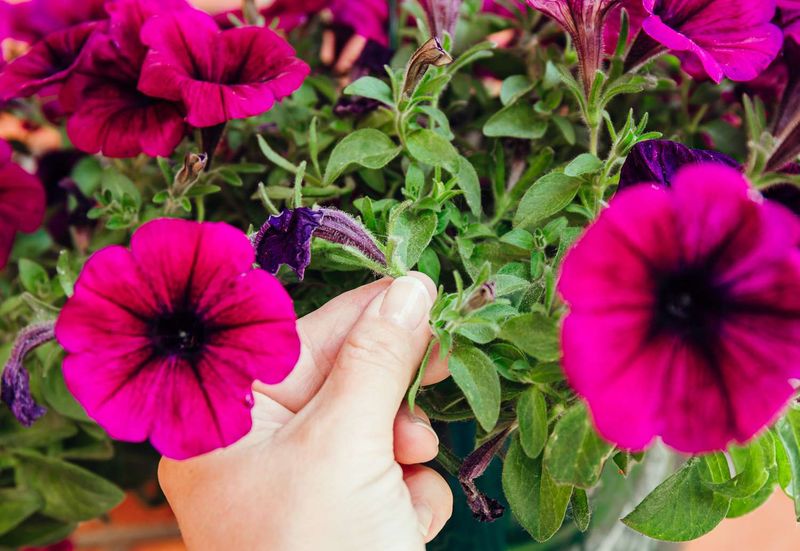
Petunias can look full and bright one week, then suddenly seem tired and patchy the next. That does not always mean you did something wrong.
Faded flowers are a normal part of the plant’s cycle, and one small routine may help you keep the show going longer. Here is what it is, how to do it, and when you can skip it.
The weekly habit is deadheading
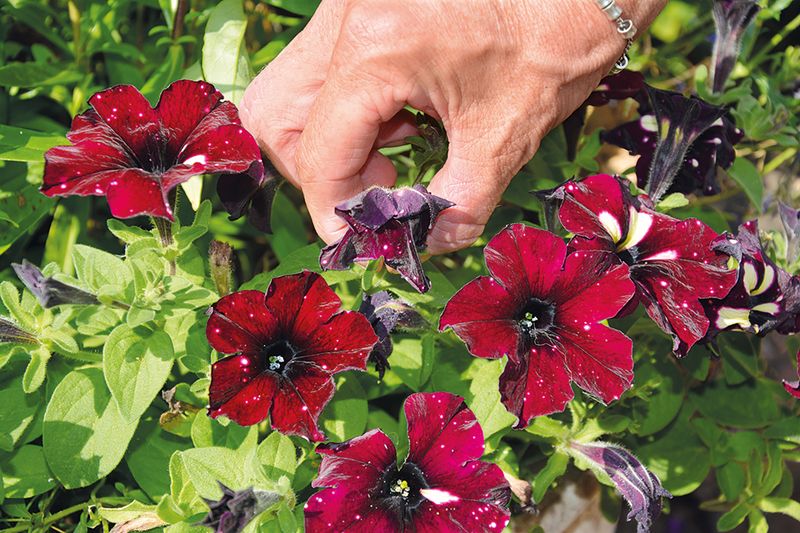
Here is the habit that many gardeners overlook: once a week, walk by your petunias and remove the flowers that have faded. That simple chore is called deadheading.
It takes only a few minutes, and it gives you a regular excuse to look closely at your plants.
The weekly timing comes from Mississippi State University Extension, which recommends checking petunias every week. The same source says the practice can extend blooming and help maintain the plant.
Think of once a week as a handy rhythm, not a rule that every petunia must follow to the day.
Why would removing old flowers matter? A faded bloom is on its way to making seeds.
When the plant puts energy into that job, it may have less to spend on fresh color. Clearing the old flowers is a way of nudging the plant back toward blooming.
It helps to be honest about what this habit can and cannot do. Deadheading may prolong your display, but it is not a cure for every bloom problem.
A petunia that is shaded, soggy, or stretched out may still struggle, no matter how neatly you pinch.
If your plants look a little worn in midsummer, take a breath. Some fading is normal, and a weekly check is an easy, low-cost step to try before you worry that you are losing the plant.
The next section shows exactly what to remove.
Remove the seed capsule with each faded bloom
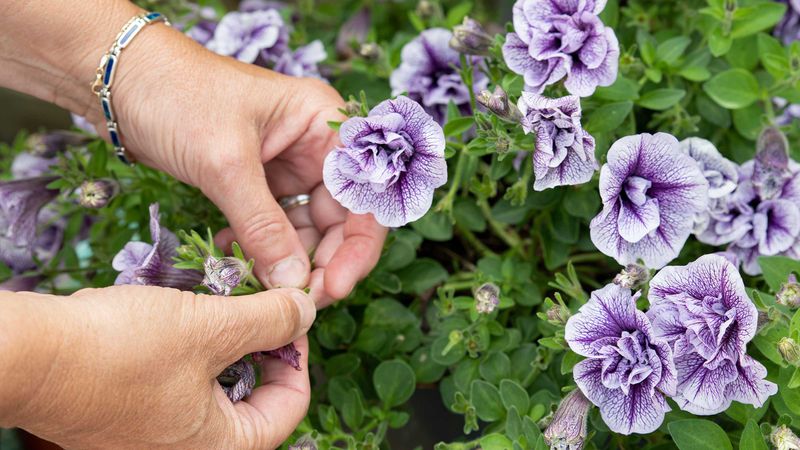
Grab a faded petunia flower and look just below it. You will see a small green bulge where the bloom meets the stem.
That is the seed capsule, and it is the part many people leave behind.
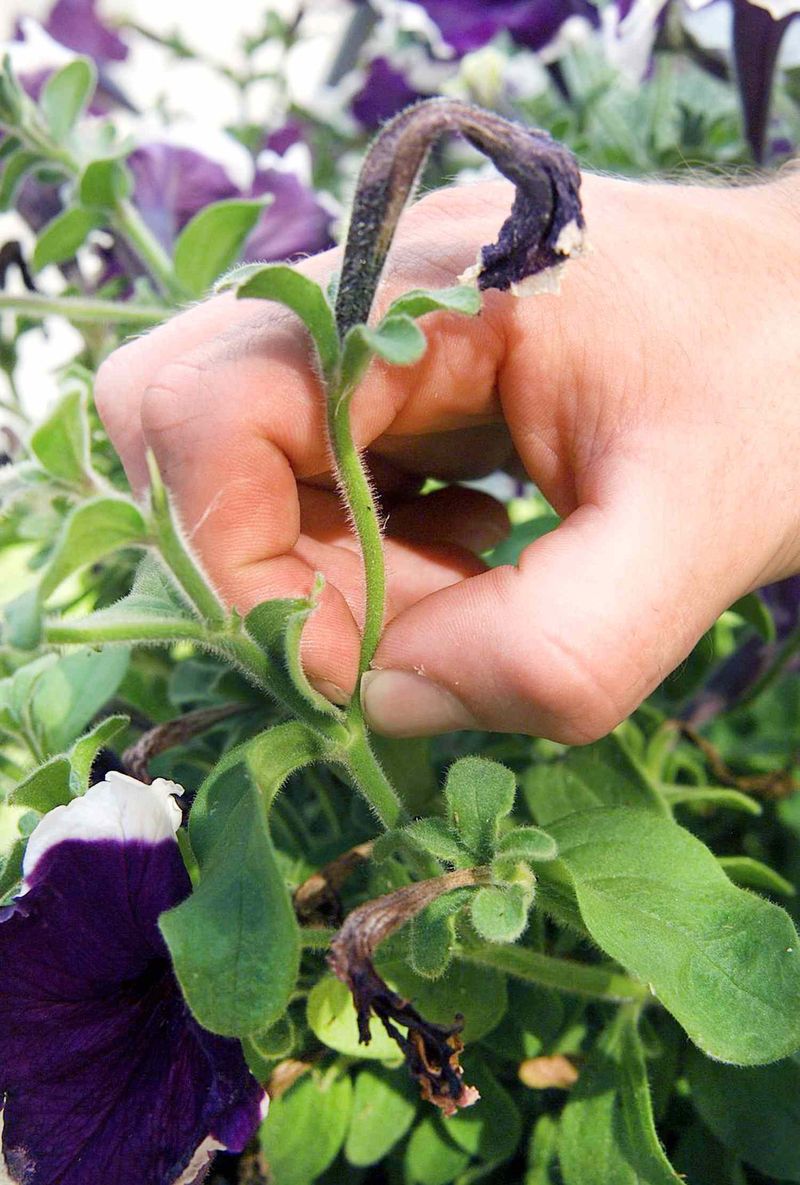
The method is simple. Pinch or snip off the faded flower together with the capsule beneath it, as Mississippi State University Extension describes.
Your fingernails or a pair of small snips will do the job, so there is no need to buy anything special.
Pulling off only the petals is tempting because it looks tidy. The trouble is that it can leave the developing seed structure on the plant.
The capsule is what keeps making seeds, so removing it is the step that completes the task.
Work your way around the plant slowly. Faded blooms often hide under healthy foliage or tucked inside a hanging basket, so lift the leaves gently and look underneath.
A good clue is a flower that looks shriveled, papery, or limp while its neighbors are bright.
N.C. Cooperative Extension also points out in its petunia care guidance that removing the spent flower and its capsule is part of keeping plants going through the season.
Leave any fresh buds alone. They are tomorrow’s flowers.
Once you have done a round or two, the job becomes quick and almost automatic. Many gardeners pair it with a morning coffee stroll through the yard.
Does your petunia need deadheading?
Not every petunia asks for the same care. Some do better with regular deadheading, while others mostly take care of themselves.
Knowing which kind you have can save you a lot of pinching.
According to N.C. Cooperative Extension, petunias grown from seed often need deadheading.
Some vegetatively propagated varieties, which are grown from cuttings, are described as self-cleaning. For those, manual deadheading is optional.
Self-cleaning means the plant drops or hides its spent flowers more neatly, so you see fewer shriveled blooms. You may still enjoy tidying them, but you do not have to worry that skipping it will ruin the plant.
University of Illinois Extension also lists petunias among annuals that may not need manual deadheading. That fits the bigger picture: the value of this chore varies by variety.
So how do you tell? Check the plant tag or the label from the garden center.
Words like self-cleaning or no deadheading needed are good hints. If you have no tag, watch the plant for a week or two and see whether old, papery flowers pile up.
If they do, a weekly pinch is a sensible habit. If your plant stays fresh on its own, enjoy the extra free time.
Either way, a few drooping flowers are not a sign that you failed.
Sun and moisture still shape the bloom display
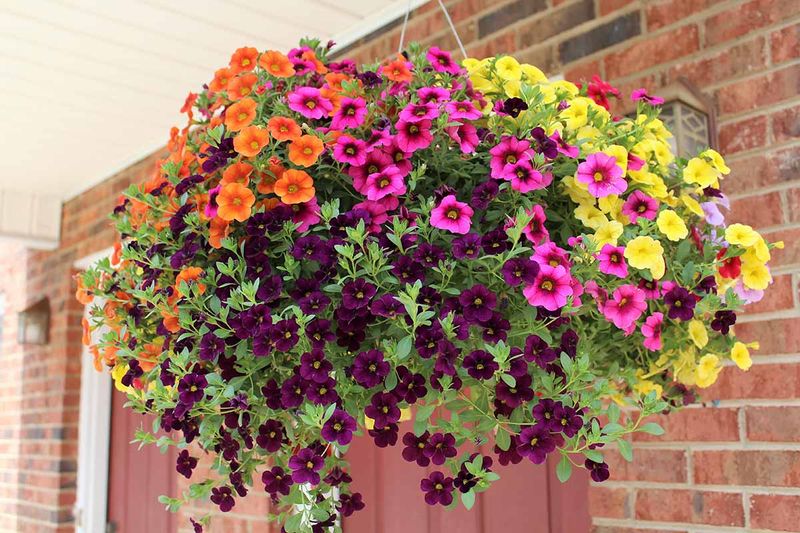
Deadheading works best as one part of a bigger care plan. It cannot make up for a spot that does not suit the plant.
If your petunias are struggling, the growing conditions are worth a look before you blame your pinching.
Petunias generally do best in full sun and well-drained soil. N.C.
Cooperative Extension recommends at least six hours of sunlight. The same guidance advises consistent watering, while warning that overly wet conditions can contribute to disease.
Consistent does not mean constant. Soil that stays soggy can cause its own trouble, and soil that swings from bone dry to drenched can stress the plant.
A quick finger test in the soil is a better guide than a calendar.
Containers add another twist. How fast a pot dries out depends on its size, the potting mix, and the weather, as University of Minnesota Extension explains for container plants.
A small hanging basket on a hot, windy day may need checking far more often than a large pot or a garden bed.
The same source suggests following fertilizer labels, since overfertilizing can damage container plants. So there is no single feeding schedule to copy, and more is not better.
Newer petunia types are also bred for plenty of color, as University of Missouri Extension notes, but they still need a sunny, suitable home. Get the light and moisture right, and your weekly deadheading has a much better chance of paying off.
Leggy stems need more than deadheading
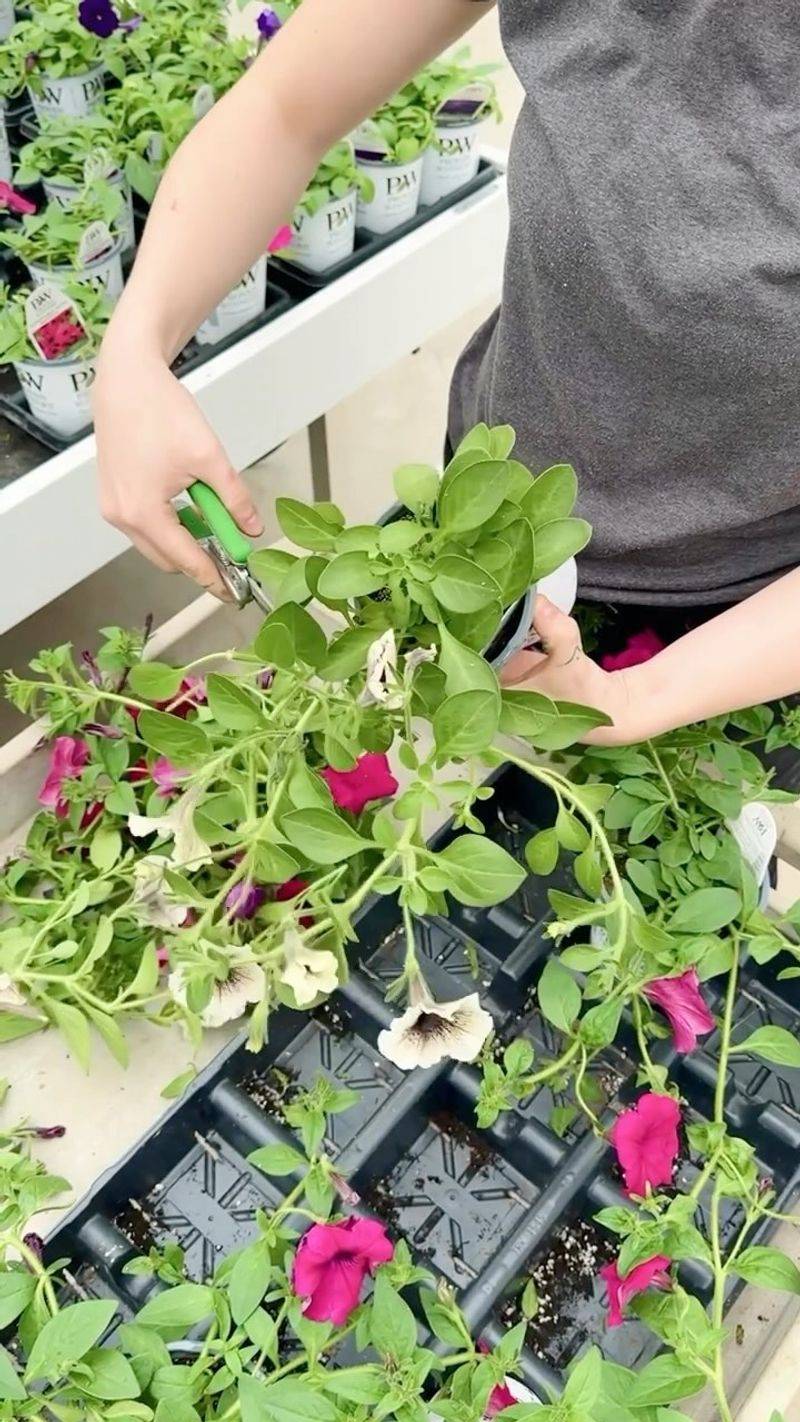
Sometimes a petunia looks tired for a different reason. The stems have grown long and stringy, with flowers only at the tips and bare patches near the center.
Pinching off faded blooms will not fix that shape.
For leggy plants, N.C. Cooperative Extension advises pruning the long stems back to a bud or node.
A node is the spot on a stem where leaves or buds grow. Cutting just above one encourages new growth from that point.
Be ready for a short pause. After a substantial trim, a plant may take a week or two to resume flowering.
That quiet stretch is not a failure. It is the plant putting energy into fresh stems.
This is a different job from the weekly check. Deadheading removes spent flowers and their capsules in a quick, light pass.
Pruning is an occasional reset for a plant that has lost its shape.
Not every petunia needs a hard trim. A compact, tidy plant with plenty of buds can simply keep getting its regular check.
If only a few stems are straggling, you can trim those and leave the rest.
If you want to avoid a flowerless gap, try cutting back a few stems at a time. That way, some blooms stay on the plant while the trimmed parts recover.
Keep the habit, not the promise of nonstop blooms
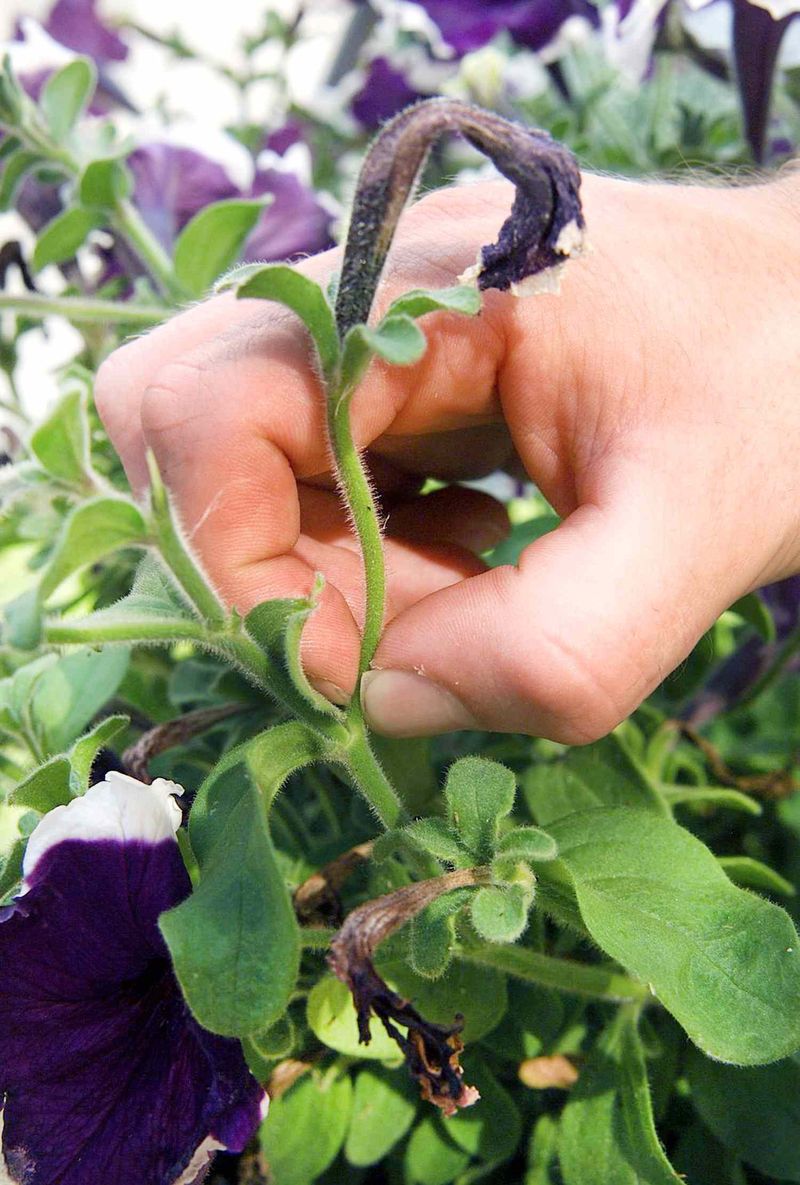
Here is the takeaway: check your petunias about once a week and remove faded flowers along with the seed capsules beneath them. As Mississippi State University Extension suggests, it is a simple way to help maintain the plant.
It matters most for varieties that benefit from it, and N.C. Cooperative Extension notes that some are self-cleaning.
No routine guarantees blooms every day. Variety, sun, and moisture all still count.
A petunia may rest, rebound, and surprise you again.