
Holiday Cactus Dropping Buds? Check the Heater Vent, but Check These Other Things Too
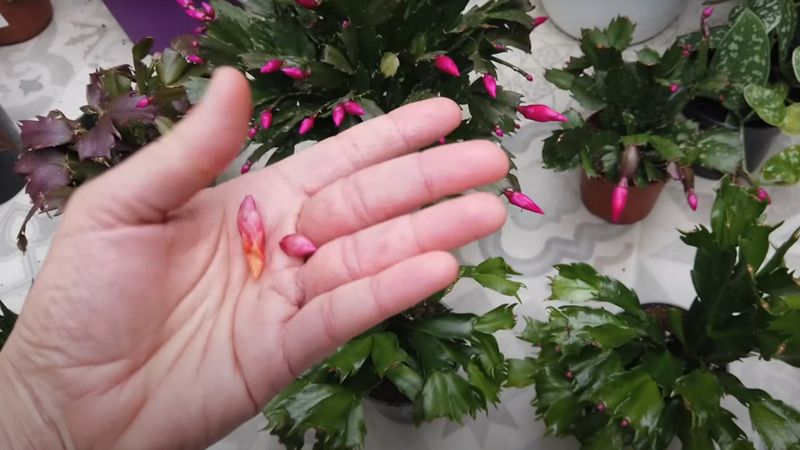
Few things feel worse than seeing tiny pink buds litter the floor under your holiday cactus. Before you panic or start changing everything, take a breath.
Bud drop has several possible causes, and a heater vent is only one of them. A few quick checks can help you sort out what your plant is dealing with.
Falling buds do not automatically mean the plant is dying
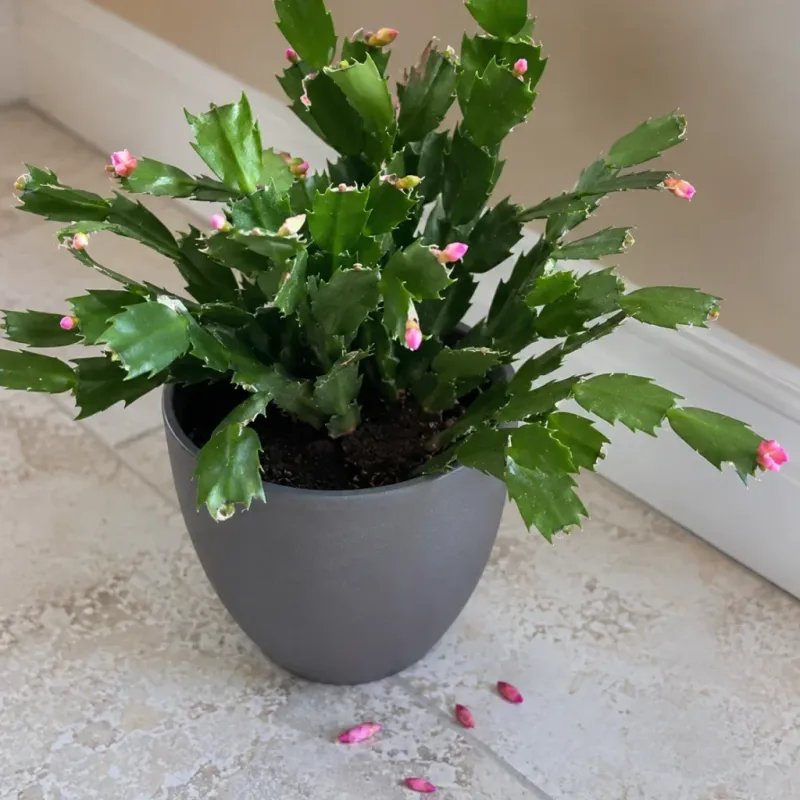
Finding buds on the floor is alarming, especially when your holiday cactus looked so full of promise a week ago. Take heart: dropped buds alone do not prove the plant is dying.
Plants can shed buds as a stress response, and sometimes they simply let go of more than they can support.
That said, bud drop is not meaningless either. It is a signal worth a quick look at how the plant is living.
As Clemson Cooperative Extension describes, bud drop can be tied to environmental problems, so it makes sense to check the conditions around the plant instead of ignoring the loss.
A good rule of thumb is to look at the stems. Firm, plump, green segments are a hopeful sign, even if some buds have fallen.
Limp, shriveled, or mushy segments point toward a bigger problem with the roots or moisture, and those deserve closer attention.
Also keep in mind that the plant you bought as a Christmas cactus may be a related holiday cactus or hybrid. University of Connecticut Extension notes that these plants vary, so your cactus may follow its own schedule.
An otherwise healthy plant can still bloom again, so there is no need to toss it. Think of the fallen buds as a nudge to investigate, not a verdict.
The next sections walk through what to check, one step at a time.
A heater vent can contribute, but it is not the only suspect
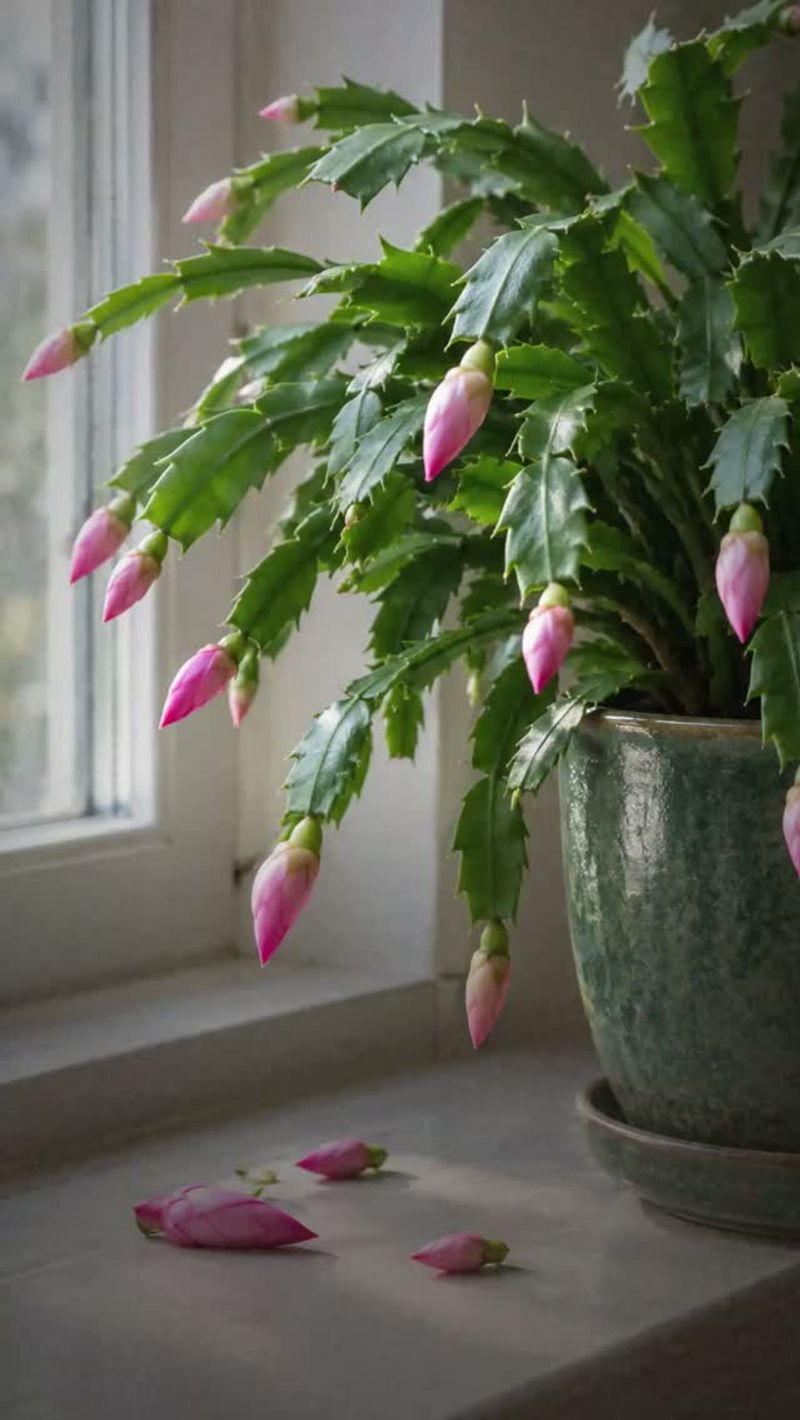
Here is a correction to the popular claim that the heater vent is usually to blame. Extension guidance does name vents and heat sources as possible risks, but no source shows they are the most common cause.
A vent is one suspect on a list, and a fair one to check first because it is easy to spot.
UF/IFAS Extension advises keeping the plant away from drafts and heat sources. Iowa State Extension likewise points to temperature swings and moves as stressors during bud development.
Vents are not the only way a plant gets hit with sudden change. A cold draft from a door, a window that gets icy at night, or a spot that just got more or less light can do similar things.
University of Minnesota Extension also lists watering and light among the factors that affect buds.
Clemson’s guidance adds that overly dry or soggy mix can play a role as well. So the smart approach is to check more than one thing instead of blaming a single cause.
A simple test: hold your hand near the plant for a minute. If you feel a steady stream of warm or cold air, you have found one stressor.
If you feel nothing, move on to the other checks in this article.
Move it once if hot air is blowing directly on it
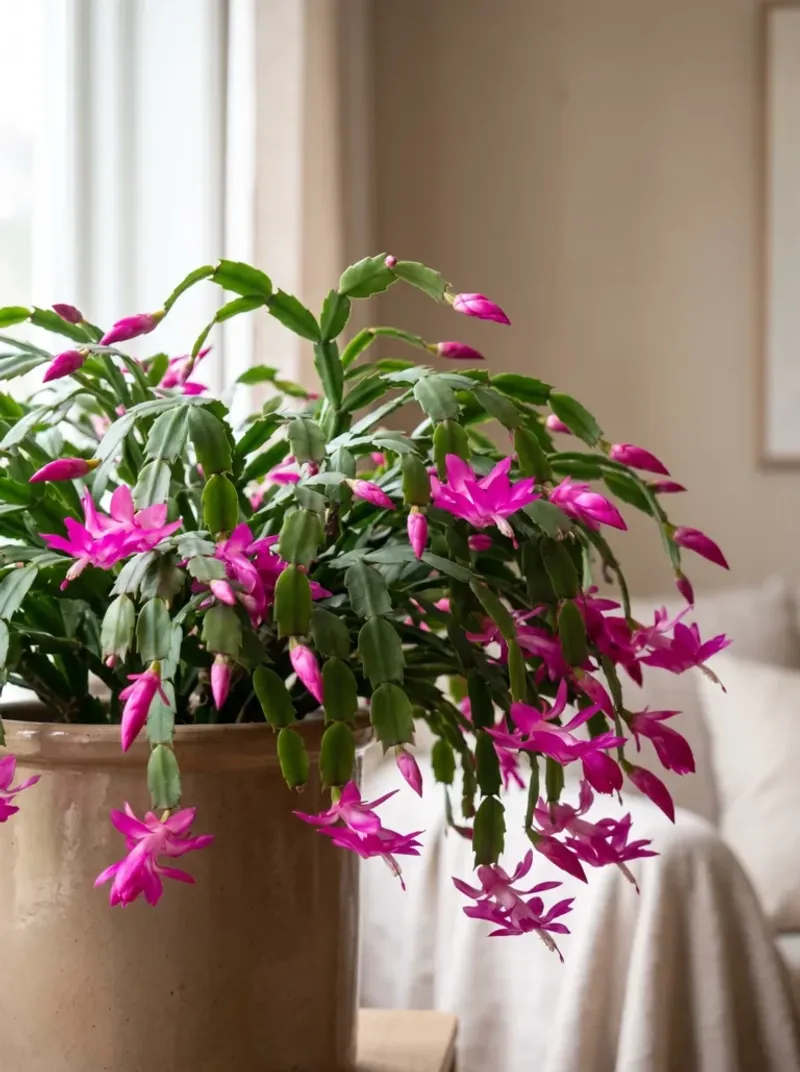
If you did feel air blowing on your cactus, here is your first action. Move the plant one time to a spot that is out of the direct stream.
Pick a place that is bright and away from doors, vents, and other drafty spots, then leave it there.
This is a purposeful move, not a habit. UF/IFAS Extension recommends avoiding drafts and heat sources, and that is exactly what one careful relocation accomplishes.
The catch is that plants do not like being shuffled around once buds form. Iowa State Extension advises against moving the plant during bud development.
So one move to fix a clear problem makes sense, while nudging it around every few days does not.
Before you carry it, pick the new spot first. Check it for airflow, check the light, and make sure it is not right against cold glass.
That way you only need to move once.
Be realistic about the results. Getting out of the airflow removes one stressor, but it cannot promise that buds will stop falling.
Buds that already dropped will not return, so judge progress by what the plant does over the coming weeks.
Keep conditions steady while buds develop
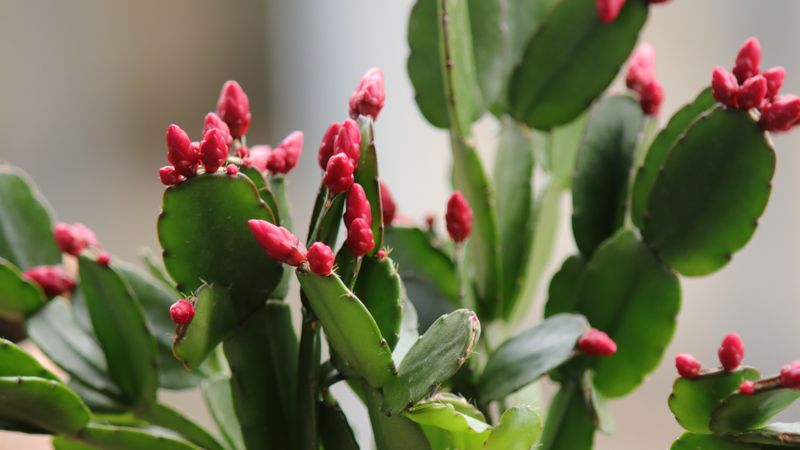
Once your cactus is in a good spot, the best thing you can do is leave it alone. Holiday cacti seem to prefer routine while buds form, and sudden shifts in light or temperature can add stress.
A steady, bright place gives the plant fewer surprises to react to.
Skip the urge to rotate the pot for even growth. Iowa State Extension advises not moving the plant while buds are developing, and turning it counts as a change in how light reaches those buds.
Bright but not harsh light is the goal. University of Minnesota Extension discusses how light and temperature affect these plants, and sources describe different temperature ranges, so there is no single magic number for every home.
Aim for a spot that feels comfortable and consistent day to day.
Watch for hidden changes too. Switching on a space heater nearby, opening a window often, or placing a new lamp close by can all alter the conditions without you moving the plant at all.
Stability helps reduce stress, but it does not guarantee every bud will hang on. Some shedding can still happen.
If buds keep falling after a few quiet weeks, the next place to look is the pot itself.
Check the potting mix before changing your watering routine
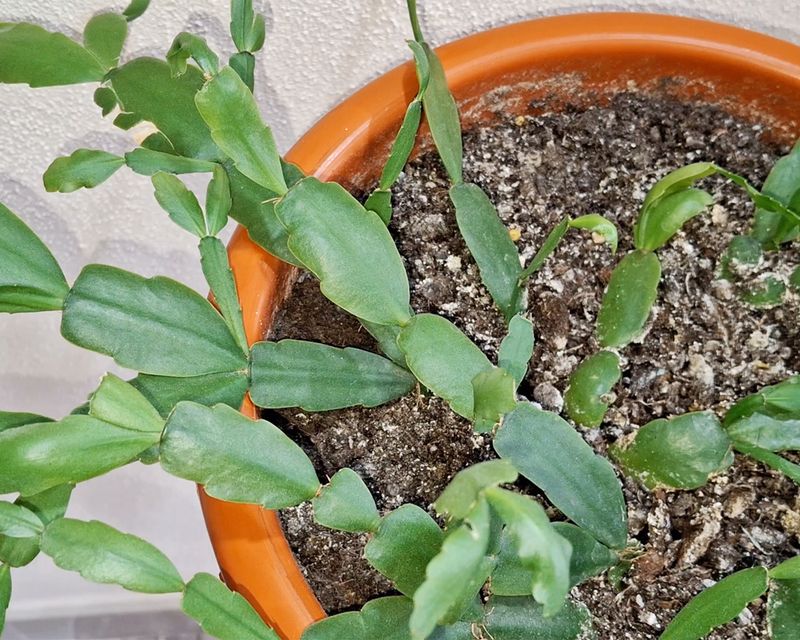
Watering gets blamed a lot, and it can be a factor, but a calendar is a poor guide. Pots, soil, light, and room warmth all change how fast the mix dries.
Instead of adding or cutting water by habit, test the pot.
Push a finger about an inch or two into the mix. Then lift the pot and look at the drainage hole and saucer.
UF/IFAS Extension and University of Minnesota Extension both stress avoiding soggy conditions and standing water.
Both extremes can cause trouble. Clemson Cooperative Extension notes that wet soil can lead to root rot, while a mix that dries out too much can also contribute to bud drop.
A soggy pot with no drainage needs a different fix than a bone-dry one.
For a practical rhythm, University of New Hampshire Extension explains that watering frequency depends on the plant’s conditions, not a fixed schedule. Water when the mix tells you it needs it, and empty any water left in the saucer.
Resist the quick fixes. Do not automatically add water, feed the plant, or repot just because buds dropped.
First look at moisture, drainage, any recent change in placement, and airflow. Once you know what you are dealing with, any change you make is based on facts instead of guesses.
Other conditions and plant types can complicate the diagnosis
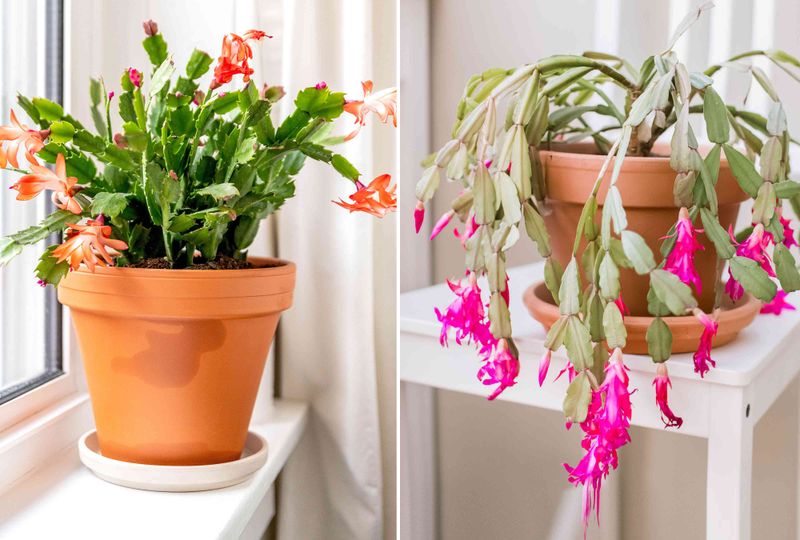
Sometimes the vent is innocent and the pot is fine. Two other documented possibilities are low light and a plant that set more buds than it can carry.
A cactus with plenty of buds may drop a few as it sorts out what it can support.
University of Minnesota Extension covers light needs for these plants, and Clemson Cooperative Extension lists the plant setting too many buds among possible reasons for drop. If your cactus sits in a dim corner, a brighter location may help.
Then there is the name itself. University of Connecticut Extension explains that holiday cacti include several related plants, and many sold as Christmas cactus may be other species or hybrids.
Their bloom times can differ.
That means timing is a shaky clue. Buds dropping close to Christmas does not point to any one cause, and a plant blooming earlier or later than a neighbor’s is not necessarily in trouble.
A question on Ask Extension about falling buds shows how often gardeners wonder about this.
Instead of guessing from the calendar, rely on what you can observe: the light, the pot, the airflow, and the look of the stems.
Make a careful adjustment, then give the plant time
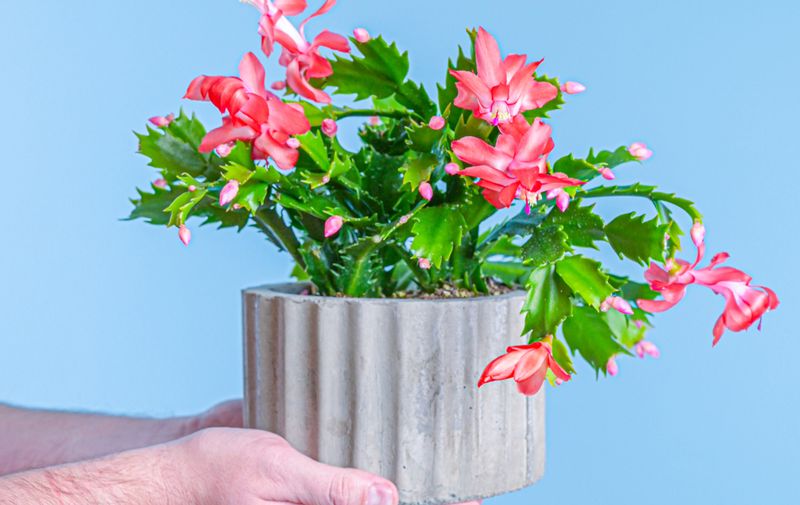
Start by moving the cactus out of any direct vent airflow, once. Settle it in a bright, relatively steady spot, then check the mix and drainage before changing how you water.
Guidance from UF/IFAS Extension supports this kind of calm, limited approach.
These steps may ease a few stressors, but they cannot promise that buds will stop falling or come back. Give the plant a few weeks and keep changes to a minimum.
A holiday cactus rewards patience far more often than fuss.